What Conveyor Bracket Procurement Covers
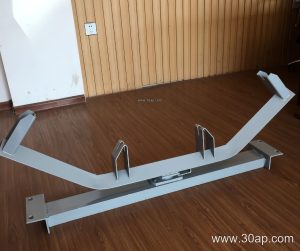
Conveyor bracket procurement is the process of sourcing the steel support frames that hold idler rollers in position along a conveyor structure. These frames, often called idler brackets or roller support brackets, sit between the conveyor stringers and the rollers, and they determine the trough angle, roller spacing and alignment that the belt sees in service. A buyer who gets this part of the package right usually finds that belt tracking, roller life and maintenance access all improve together.
The bracket is a simple-looking item, but it is not a commodity. A frame sized for a B800 belt at 35 degrees is not the same as one built for a B1200 belt at 45 degrees, and the mounting hole spacing and crossbeam length change with both the belt width and the trough angle. Treating these as interchangeable is one of the most common procurement mistakes.
How a Bracket Is Built
Most conveyor brackets are fabricated from angle steel, channel steel or folded steel plate. The material choice follows the load and the environment: channel sections are common on heavy-duty carrying frames, while folded plate is often used for lighter return brackets. Fabrication quality matters as much as the section size. Weld quality, hole position and squareness all affect whether the rollers sit at the intended angle once the frame is bolted down.
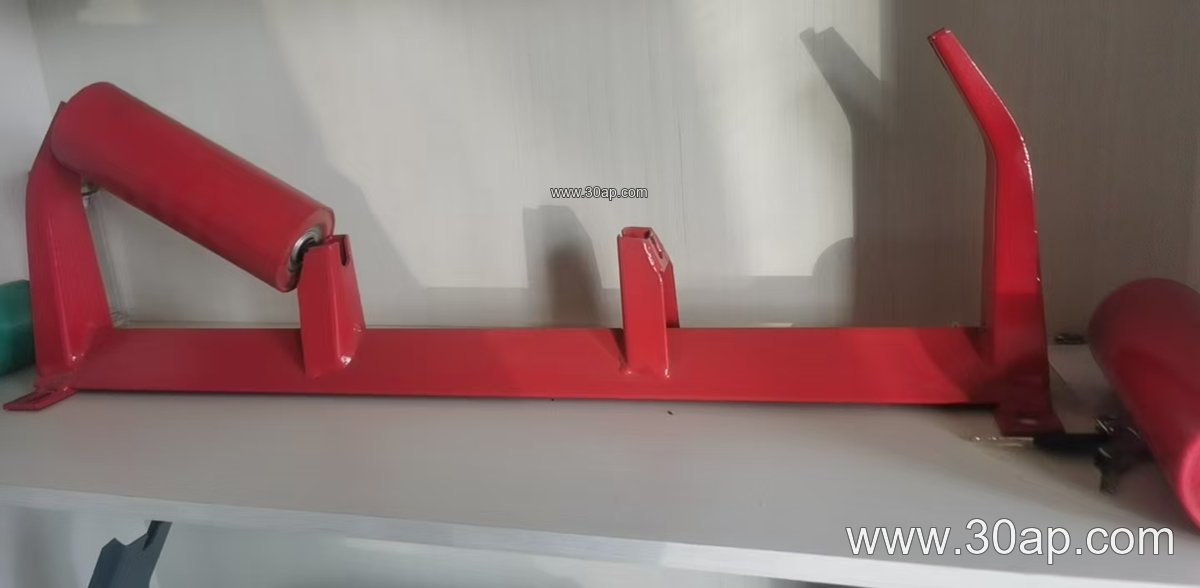
Surface treatment is usually specified alongside the steel. In a coal preparation plant or a power plant coal handling line, a painted or galvanized finish helps the frame survive washdown and humid air. In a quarry or crushing circuit, abrasion and dust are the bigger concerns, so the bracket needs enough stiffness to resist vibration without deforming.
Common Bracket Types and Where They Sit
The carrying side and the return side use different frames, and mixing them up causes problems during installation. A short overview helps when preparing an enquiry:
- Troughing brackets support the three-roller carrying idlers and set the trough angle, commonly 20, 30, 35 or 45 degrees.
- Transition brackets sit near the pulleys and ease the belt from flat to troughed profile.
- Return brackets carry the lower run, including flat return frames and V-type return frames.
- Impact brackets are placed under loading points to support impact idlers.
- Self-aligning brackets work with training idlers to correct belt drift.
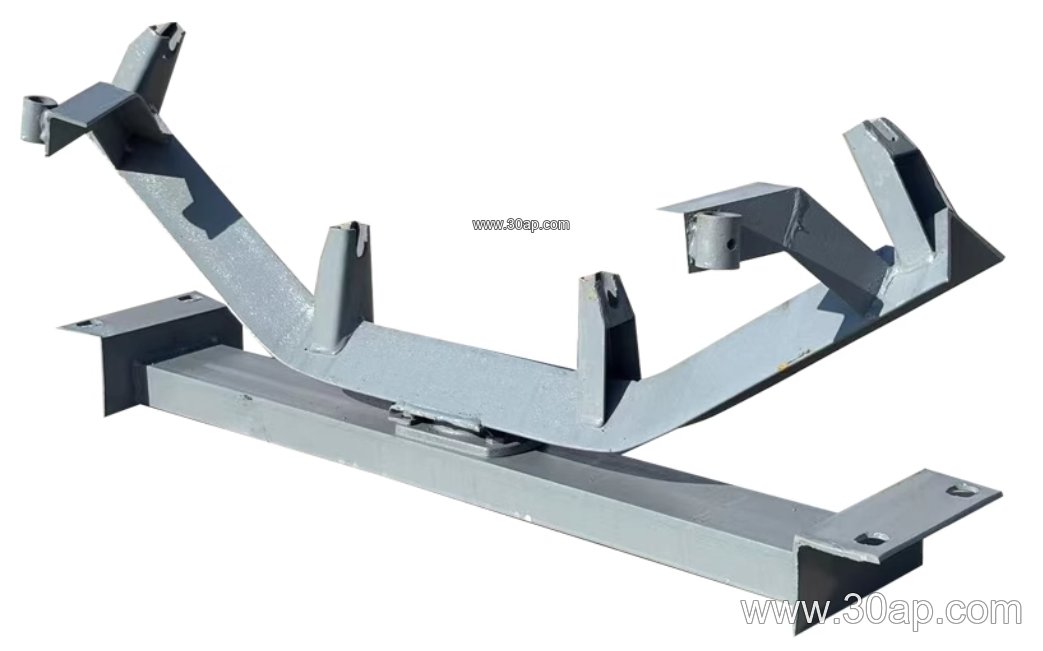
- Adjustable brackets allow the trough angle to be changed on site within a defined range.
Adjustable and fixed frames are worth comparing directly. A fixed bracket is simpler and usually stiffer, which suits long straight runs. An adjustable frame costs more but lets maintenance staff fine-tune the trough angle when belt loading changes or when a new belt is fitted. Neither is universally better; the choice depends on how much flexibility the operation actually needs.
Matching Brackets to Belt Width and Roller Diameter
Belt width and roller diameter are the two dimensions that shape most of the frame. The table below shows typical reference combinations; these are examples for discussion, not fixed rules, and final dimensions are confirmed by design.
| Belt width | Typical trough angle | Common roller diameter | Typical frame material |
|---|---|---|---|
| B500 | 20 to 30 degrees | Ø89 | Angle steel |
| B650 | 30 degrees | Ø89 to Ø108 | Angle steel |
| B800 | 35 degrees | Ø108 | Channel steel |
| B1000 | 35 to 45 degrees | Ø108 to Ø133 | Channel steel |
| B1200 | 35 to 45 degrees | Ø133 | Channel steel |
| B1400 | 35 to 45 degrees | Ø133 to Ø159 | Channel or folded plate |
| B1600 | 35 to 45 degrees | Ø159 | Channel or folded plate |
| B1800 | 35 to 45 degrees | Ø159 to Ø194 | Folded plate |
| B2000 and above | 35 to 45 degrees | Ø194 | Folded plate |
A wider belt does not automatically dictate a single trough angle or roller size. A B1200 frame at 45 degrees with Ø133 rollers is a normal arrangement, and so is a B1200 frame at 35 degrees with the same roller diameter. What changes is the crossbeam length and the hole positions, which is why the bracket should be ordered against the actual conveyor drawing rather than against belt width alone.
Applications Across Bulk Handling Sites
Bracket demand follows the conveyor itself. In a limestone quarry or a sand and gravel line, troughing and impact frames take a beating at the crusher discharge and need to stay rigid under repeated shock loading. In a cement plant, the same frames carry clinker and raw meal on belts that may be fitted with a heat resistant conveyor belt near the kiln area. In a coal washing plant or a power station coal yard, flame retardant conveyor belt and anti-static conveyor belt specifications usually come with a requirement that the support structure be properly earthed, which affects how the bracket is painted and assembled.
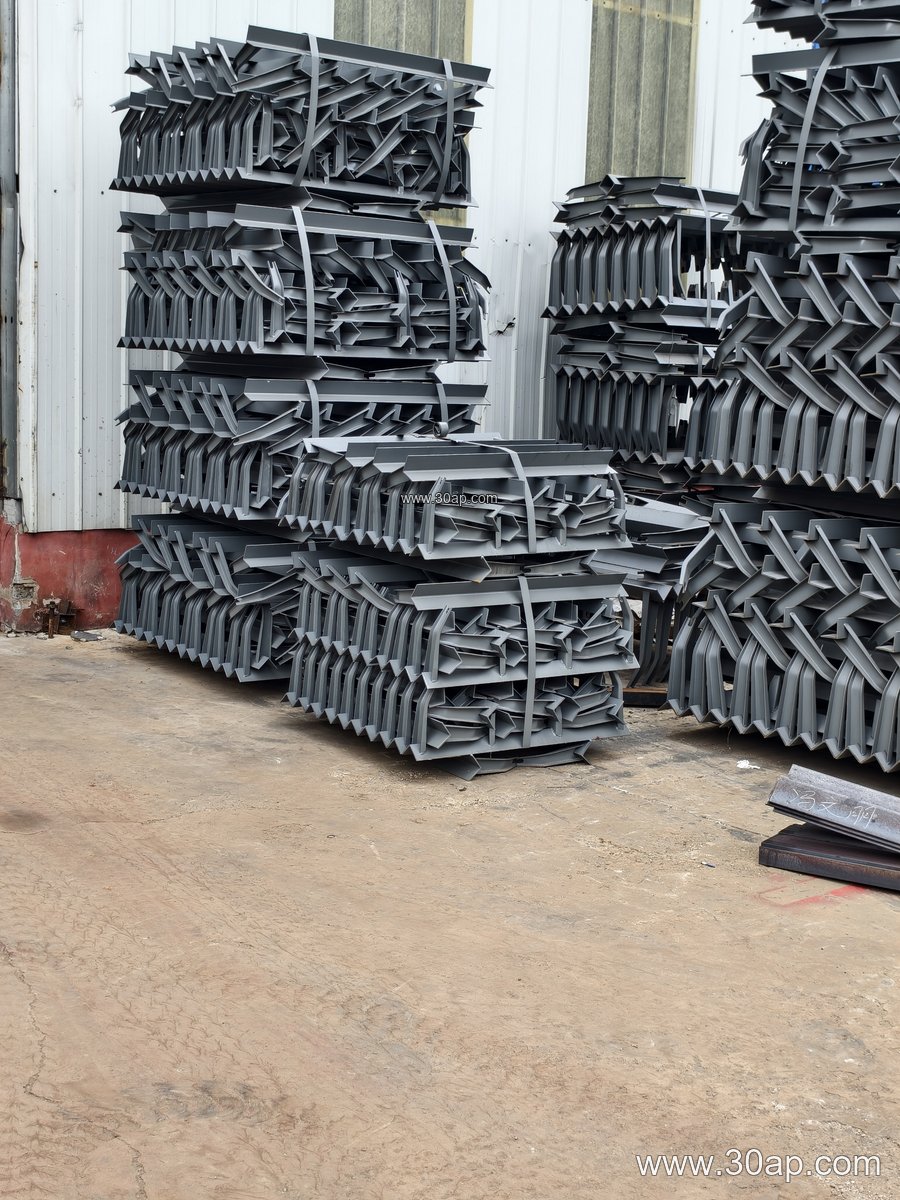
Port terminals and steel plants add another consideration: maintenance windows are short, so brackets that can be replaced without dismantling the whole idler set save real downtime. That is where a well-chosen adjustable or bolted frame earns its cost.
What to Put in the Enquiry
A clear request shortens the quotation cycle. Buyers should state the belt width, the required trough angle, the roller diameter the frame must accept, the frame type, the steel section preference and the surface finish. Supplying a conveyor layout drawing or a photo of the existing bracket removes most ambiguity. It also helps to say whether the frame is for a new installation or a replacement, because replacement frames must match existing hole centres.
For related items, buyers often source the conveyor belt, idler roller and conveyor pulley in the same package, and a consistent bracket specification keeps the whole support system aligned. Further details on frame options are available at https://www.jsconveyorbelt.com/conveyor-bracket/ and matching belt data at https://www.jsconveyorbelt.com/.
Inspection and Long-Term Value
On receipt, check hole spacing, overall length, weld appearance and coating coverage before the frames go to site. During service, watch for bent crossbeams, elongated holes and corrosion at the base, since these indicate overload or poor drainage rather than a manufacturing fault. Buying brackets that match the conveyor design, rather than the cheapest frame that fits the bolt pattern, is the practical route to fewer tracking problems and longer roller life.