What a Rubber Lagged Pulley Does on a Conveyor
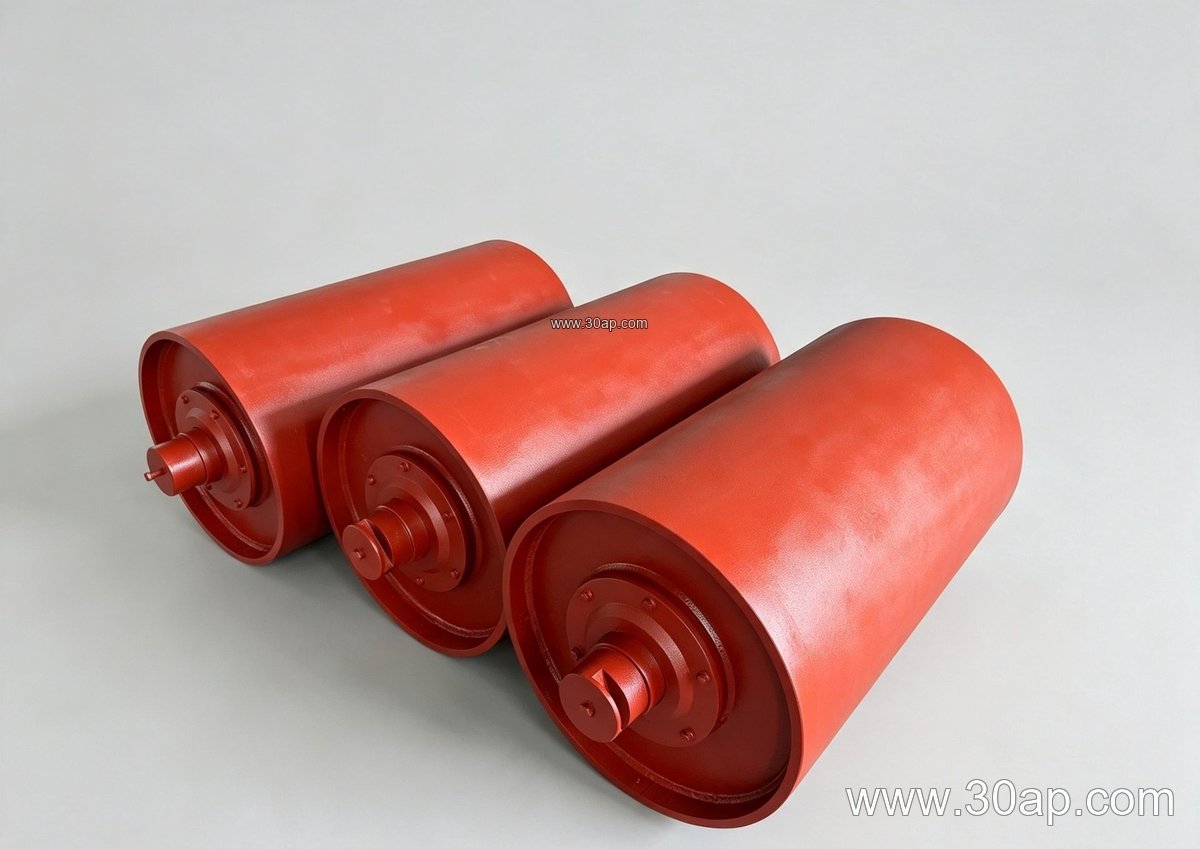
In a belt conveyor system, the pulley that actually transmits drive force to the belt is the drive pulley. When its shell is covered with a rubber layer, it becomes a belt conveyor rubber lagged pulley. That rubber layer, applied by hot vulcanization, cold bonding, or cast-on methods, raises the friction coefficient between pulley and belt, reduces belt slip under load, and protects the pulley shell from abrasive wear. In quarry and aggregate lines, where dust and grit are constant, a lagged surface often decides whether a conveyor starts smoothly or smears the belt under load.
The same rubber covering also appears on tail pulleys and bend pulleys, but the purpose changes. On a drive pulley, lagging multiplies grip. On a tail pulley or bend pulley, it mainly protects the shell and helps shed material. It is important not to treat drive, tail, and bend pulleys as interchangeable; each has a distinct role in belt tracking and tension.
How the Lagging Is Built and Applied
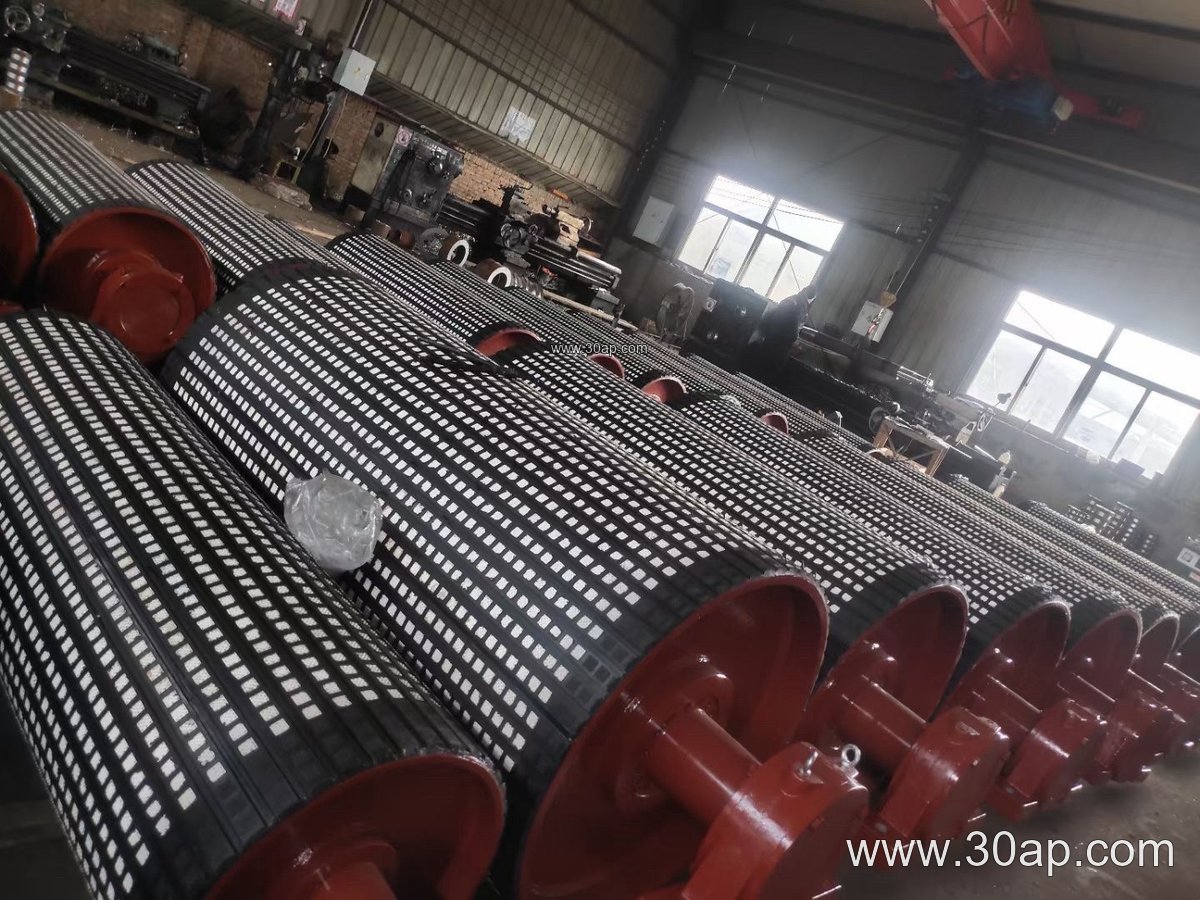
Rubber lagging is usually supplied as sheets or strips with a thickness of 8, 10, 12, 15, or 20 mm, then bonded to a prepared pulley shell. Hot vulcanization gives the strongest bond and is common for heavy-duty mining conveyors. Cold-bonded rubber is easier to install in the field and suits maintenance replacements. Cast-on lagging is another option for smaller pulleys and lighter duty.
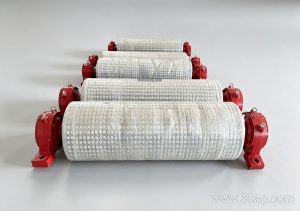
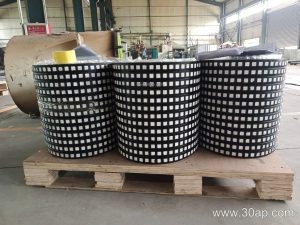
Surface pattern matters as much as thickness. Plain rubber provides uniform contact for general bulk material conveyors. Diamond lagging improves water and fines drainage, which helps in wash plants and port bulk terminals. Chevron or herringbone lagging gives directional grip and is often used on drive pulleys in inclined stone crushing and cement plant circuits. Ceramic lagging, with embedded tiles, is chosen where abrasion is severe, such as iron ore and copper ore transfer points. The right choice depends on belt tension, material, and whether the pulley runs wet or dry.
Matching Pulley Dimensions to the Conveyor
Pulley diameter and face width are selected with the belt width and shaft load in mind. Face width is normally wider than the belt to allow for tracking. Common combinations include B800 with a Ø500 pulley, B1200 with a Ø1000 pulley, and B1400 with a Ø800 bend pulley. These are examples, not fixed rules. A 1200mm wide conveyor belt does not force one specific pulley diameter; torque, belt speed, and wrap angle all influence the final choice.
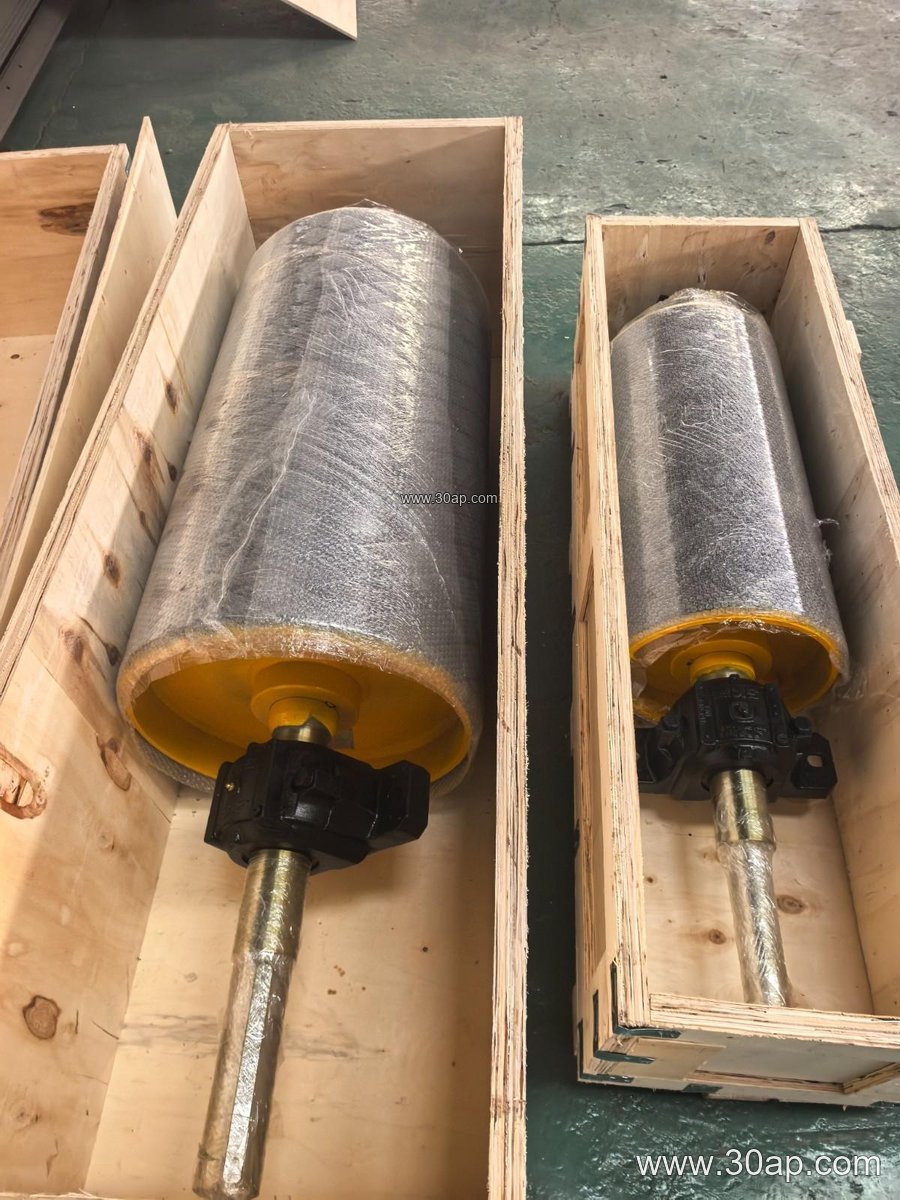
Shaft diameter is determined by torque and load, not by belt width alone. Typical shaft sizes range from Ø50 to Ø200, but a B1000 conveyor may use a different shaft than another B1000 conveyor with different power and tension. The table below lists common reference ranges for a belt conveyor rubber lagged pulley.
| Parameter | Common Reference Values |
|---|---|
| Belt width | B400, B500, B650, B800, B1000, B1200, B1400, B1600, B1800, B2000, B2200, B2400 |
| Pulley diameter | Ø200, Ø250, Ø315, Ø320, Ø400, Ø500, Ø630, Ø800, Ø1000, Ø1250, Ø1400, Ø1600, Ø1800 |
| Lagging thickness | 8 mm, 10 mm, 12 mm, 15 mm, 20 mm |
| Surface pattern | Plain, diamond, chevron, ceramic, hot vulcanized, cold bonded |
| Shaft diameter | Ø50 to Ø200, determined by torque and load |
Where Lagged Pulleys Are Used
Rubber lagged pulleys appear wherever a conveyor belt needs reliable traction. In underground coal mining, flame retardant and anti-static properties of the belt and lagging are critical, and drive pulleys must grip under constant moisture. In a cement plant, clinker conveyors use heat resistant belts and lagged pulleys that resist abrasion. Power plant coal handling and steel plant sinter lines rely on lagged drive pulleys to keep high-tension belts from slipping. Aggregate and sand making plants often run diamond-lagged bend pulleys to shed water and fines.
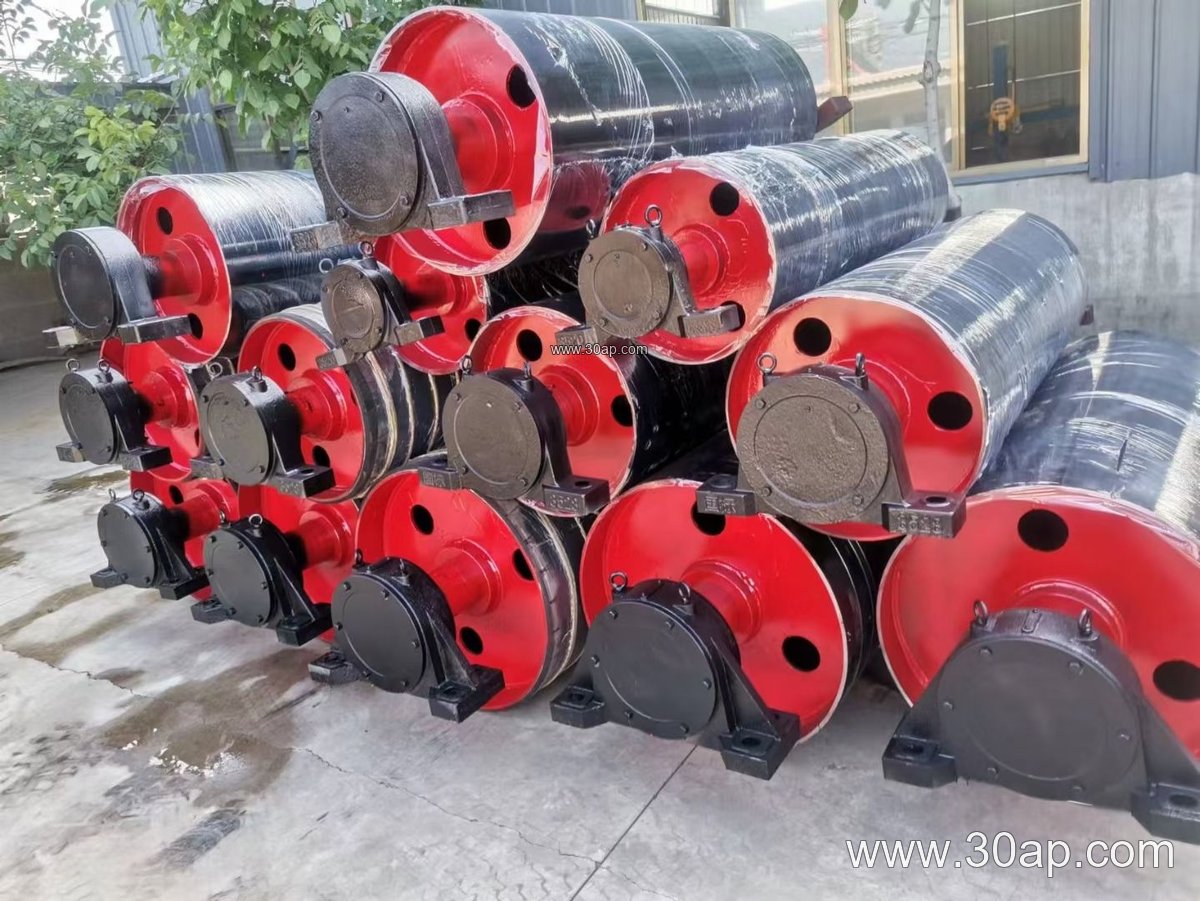
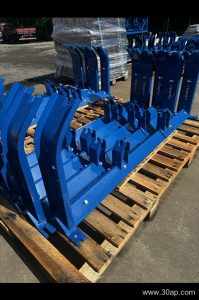
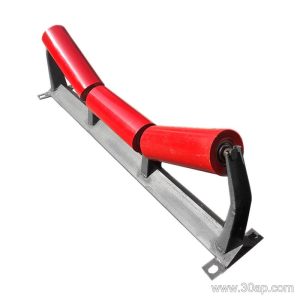
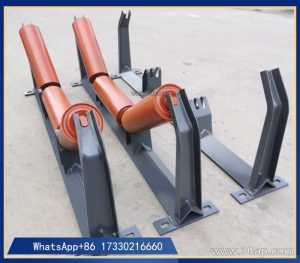
The pulley works alongside the conveyor belt, idler rollers, and conveyor brackets. A well-matched lagged pulley reduces belt edge damage and extends the life of the entire conveyor structure.
Buyer Checklist for a Rubber Lagged Pulley
Before ordering, confirm the pulley position: drive, tail, bend, or take-up. Specify belt width, pulley diameter, face width, shaft diameter, and lagging thickness. State the material being conveyed and the operating environment, since abrasive ore or wet coal may call for ceramic or diamond lagging. Ask for the bonding method and surface pattern, and check that the lagging thickness suits the expected wear life.
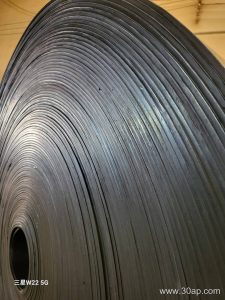
Also review the conveyor belt specification. A heavy-duty mining conveyor belt with high tension may need a thicker lagging and a larger pulley diameter than a lighter aggregate line. For flame retardant or fire resistant belts in underground coal mining, the lagging should be compatible with the belt’s safety requirements. Finally, keep spare lagging sheets and pulley assemblies for critical drives, and inspect lagging wear during scheduled shutdowns.