What a Conveyor Bracket Quotation Covers
A conveyor bracket quotation is a priced offer for the steel supports that hold idlers and shape the belt line on a belt conveyor. Buyers in quarry plants, coal washing stations, cement mills and power plant coal yards often request this quotation together with idler rollers, conveyor pulleys and the belt itself. The bracket is not a single part but a family of frames: trough brackets for carrying idlers, return brackets for the lower run, transition brackets near the head and tail, and adjustable frames where the trough angle must be trimmed on site. A clear quotation states which of these frame types are included, the belt width each fits, the trough angle, and the idler diameter the mounting holes accept. It should also name the material and finish, since angle steel, channel steel and folded plate behave differently in wet or dusty service.
How the Frames Are Built
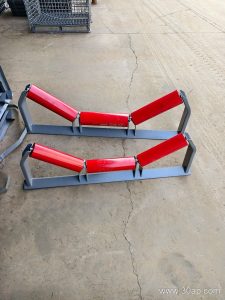
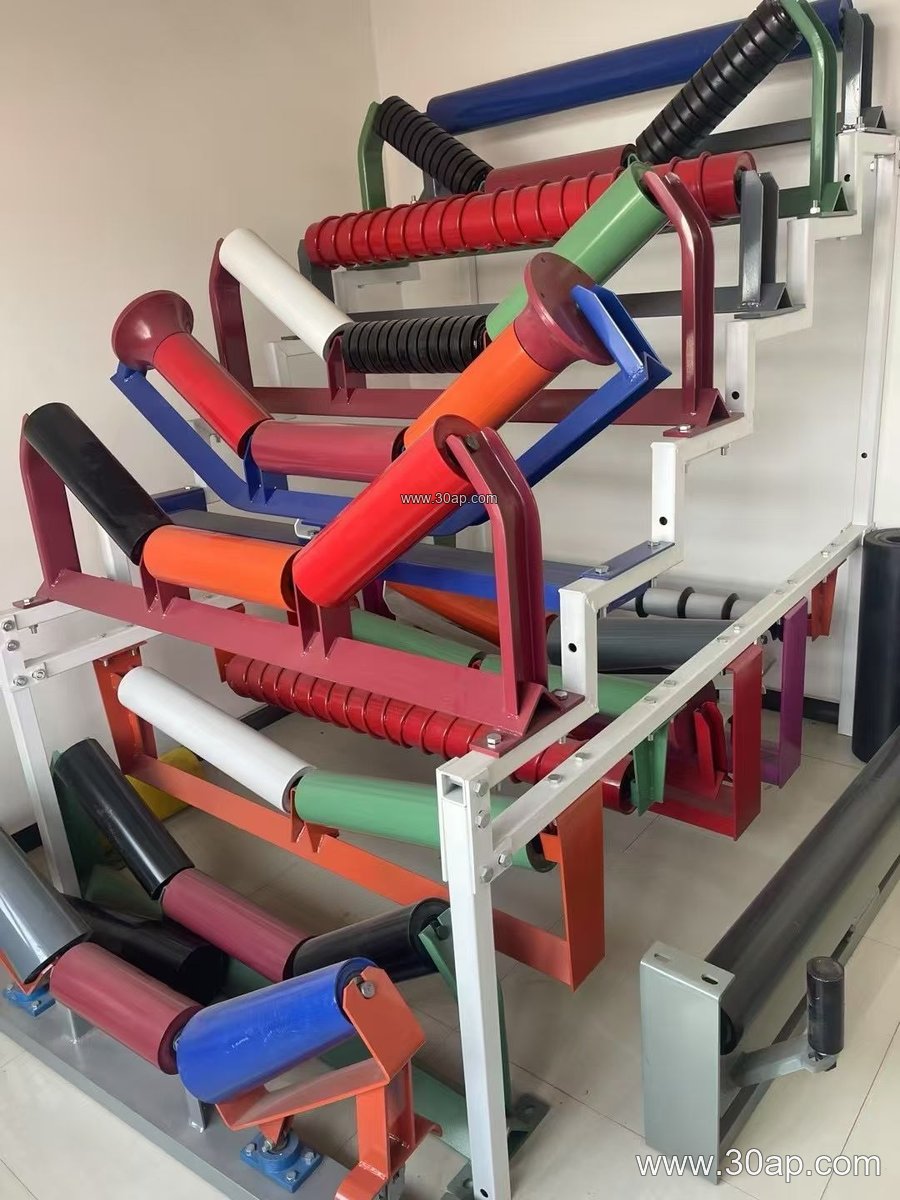
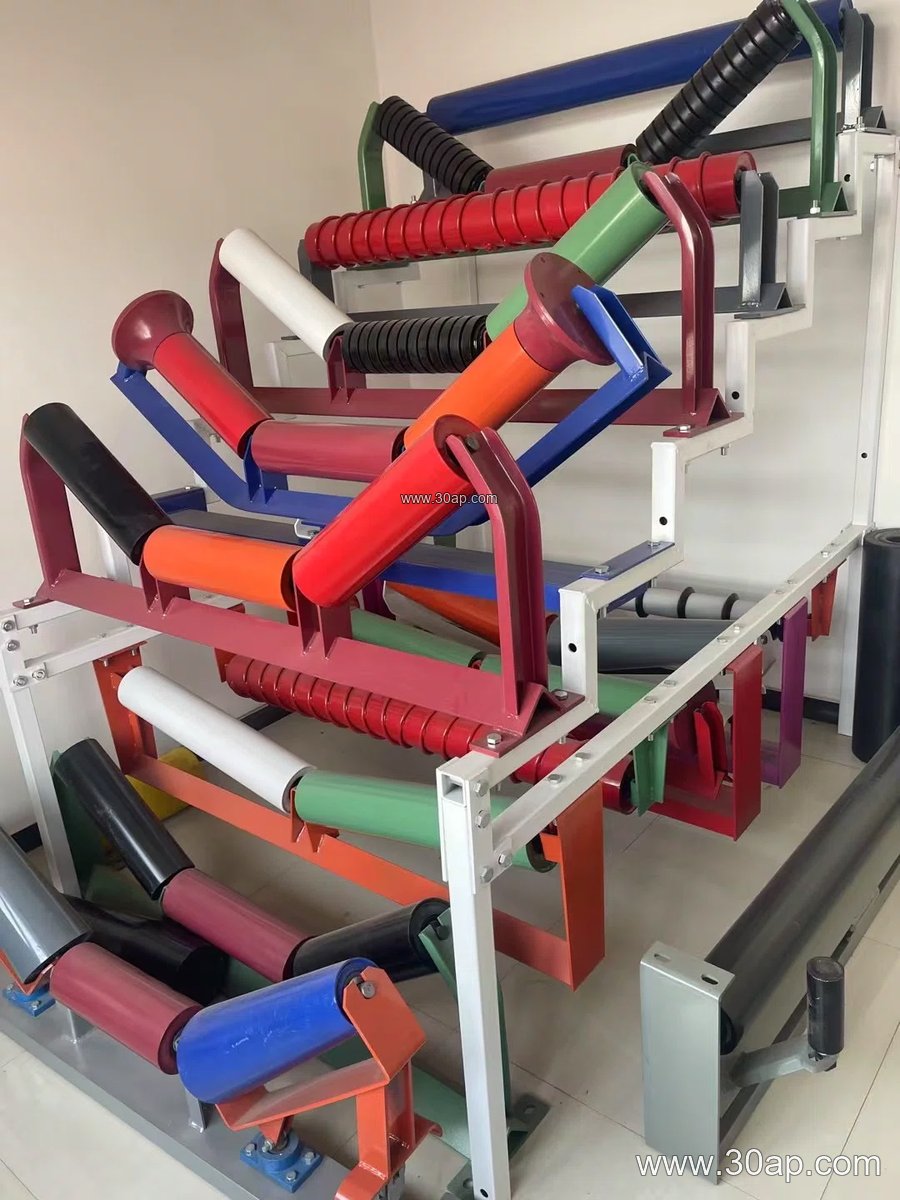
Most support frames are welded or bolted assemblies cut from angle steel or channel steel, with folded plate used where a cleaner profile or extra stiffness is needed. The carrying bracket usually has two inclined arms that set the trough angle, commonly 20, 30, 35 or 45 degrees, and a base that bolts to the conveyor stringer. Adjustable versions allow the angle to be changed within that range, while a forward-tilted bracket may set the idler about 1.5 to 2 degrees ahead of the belt direction to help training. Return brackets are flatter, and V-shaped return brackets use two idlers in a shallow V. Transition brackets sit between the flat pulley zone and the full trough, so the belt is not forced to bend too sharply. Hole spacing and crossbeam length change with belt width and trough angle, so a quotation should list them as design values rather than fixed numbers.
Matching Brackets to Belt Width and Idler Size
The bracket must fit both the belt and the roller. A frame quoted for B650 with a 30 degree trough and Ø89 idlers will not accept Ø133 rollers without different mounting holes. Typical reference combinations include B800, 35 degrees, Ø108 and B1200, 45 degrees, Ø133, but these are examples, not rules. Wider belts such as B1400, B1600 or B1800 usually need heavier channel sections and longer crossbeams, and the quotation should confirm the stringer bolt spacing. When the conveyor carries abrasive rock or ore, the bracket may be paired with an abrasion resistant conveyor belt and impact idlers at the loading point; in a coal mine, a flame retardant conveyor belt is common, and the frame finish should suit the same environment. The quotation should also say whether the bracket is supplied bare, primed or painted.
Where These Supports Are Used
Support brackets appear wherever a belt conveyor changes direction or carries load. In a limestone quarry they hold the troughing idlers along the main haulage incline. In a cement plant they carry clinker and raw meal lines, often with a heat resistant conveyor belt near the kiln area. In a power plant coal yard they support long overland runs, while in a sand and gravel line they sit under crusher discharge belts. Port loading conveyors use them on shuttle and ship-loading booms, and tunneling spoil lines use compact adjustable frames where space is tight. The same bracket family also appears on pipe conveyor belt lines and on skirted conveyor belt sections, though the frame geometry differs with the belt profile.
What to Check Before Accepting a Price
A useful quotation is specific. Check that it lists frame type, belt width range, trough angle, idler diameter, material, surface treatment, and whether fasteners are included. Ask whether the price covers adjustable or fixed brackets, and whether transition and return frames are quoted separately. Confirm the drawing revision and the installation hole pattern, because two suppliers may use different crossbeam lengths for the same belt width. For heavy-duty mining conveyor belt service, ask about plate thickness and weld quality rather than accepting a generic description. Delivery terms, packing and the number of pieces per set should also appear. A quotation that names the exact frame and roller combination is easier to compare than one that lists only a belt width.
Keeping the Quotation Useful Over Time
Once a bracket quotation is approved, keep the drawing with the idler and pulley data. Maintenance teams replacing a worn frame need the same hole spacing and trough angle, and a stored quotation prevents a mismatch. When ordering spares for a conveyor belt line, quote the bracket together with the idler roller size and the pulley type, since a drive pulley, tail pulley and bend pulley each impose different loads on the frame nearby. A well-organized quotation is therefore a small but practical document for the whole conveyor support system.