What a Conveyor Loading Point Impact Idler Does
A conveyor loading point impact idler is the shock-absorbing roller station placed directly beneath the chute or transfer point where material drops onto the belt. Its job is simple to describe and hard to do well: catch falling rock, ore, clinker or aggregate, spread the strike across several rollers, and keep the belt from being hammered against a rigid frame. In a quarry, a coal preparation plant or a cement kiln feed line, this is often the most abused idler position on the whole conveyor.
The same product is also called an impact roller, buffer idler or impact troughing idler set. Those names describe the same item; they are not interchangeable with a drive pulley, tail pulley or bend pulley, which are completely different components of the conveyor.
How the Impact Roller Is Built
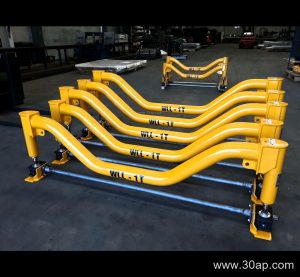
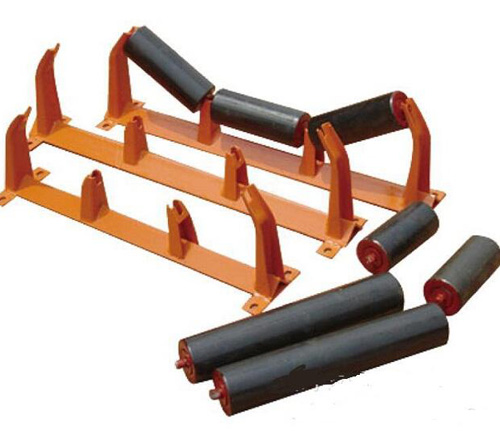
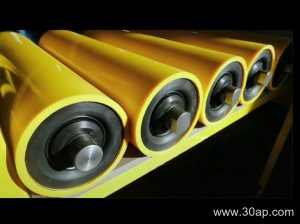
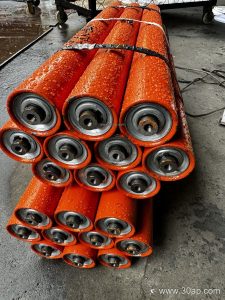
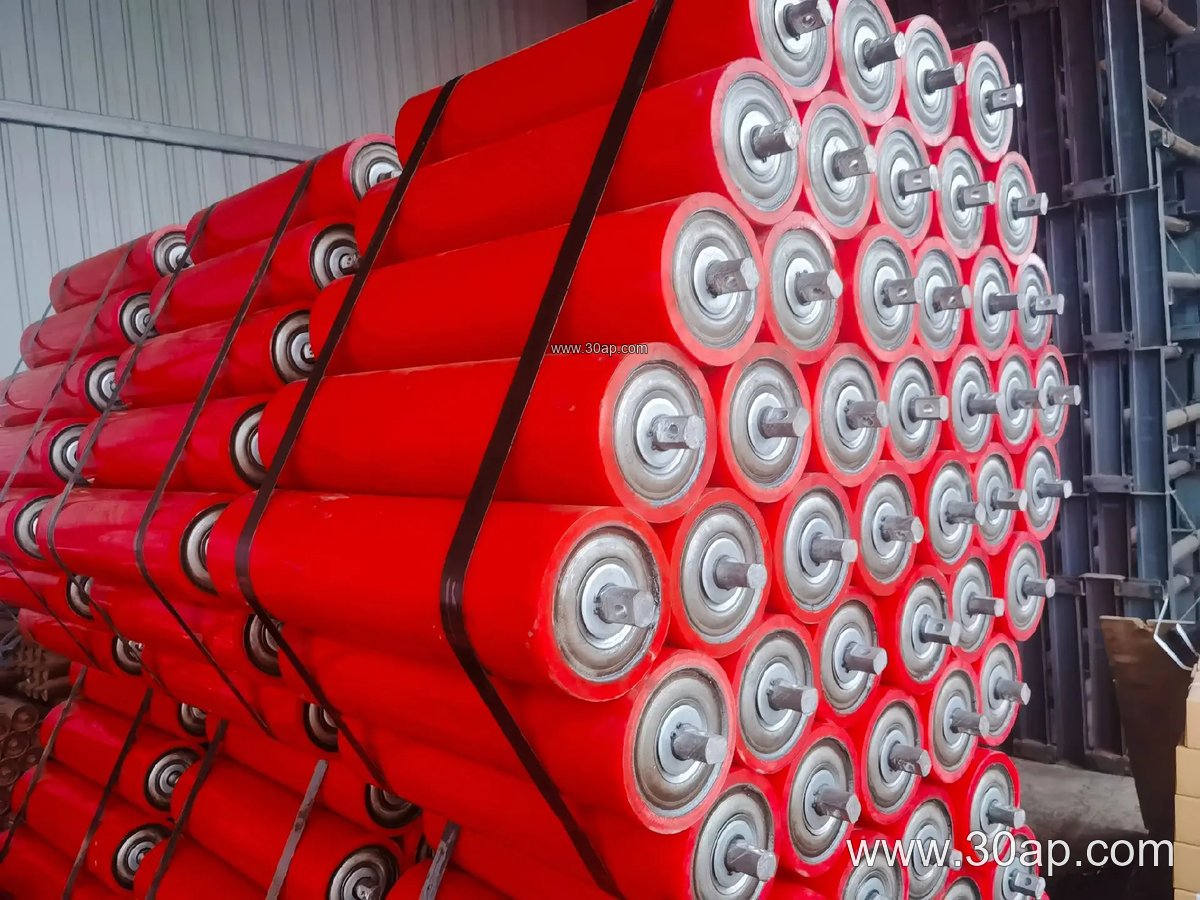
A typical unit combines a steel roller body with a resilient outer layer. The most common surface form is a rubber ring impact idler, where thick rubber discs or a rubber sleeve sit over the shell and flex under load. Some designs use a solid rubber-covered roller, and heavier stations may use several rings per roller so that one damaged ring can be replaced. The roller runs on sealed bearings inside a housing, and the whole set is mounted in a sturdy conveyor bracket or frame that bolts to the stringer.
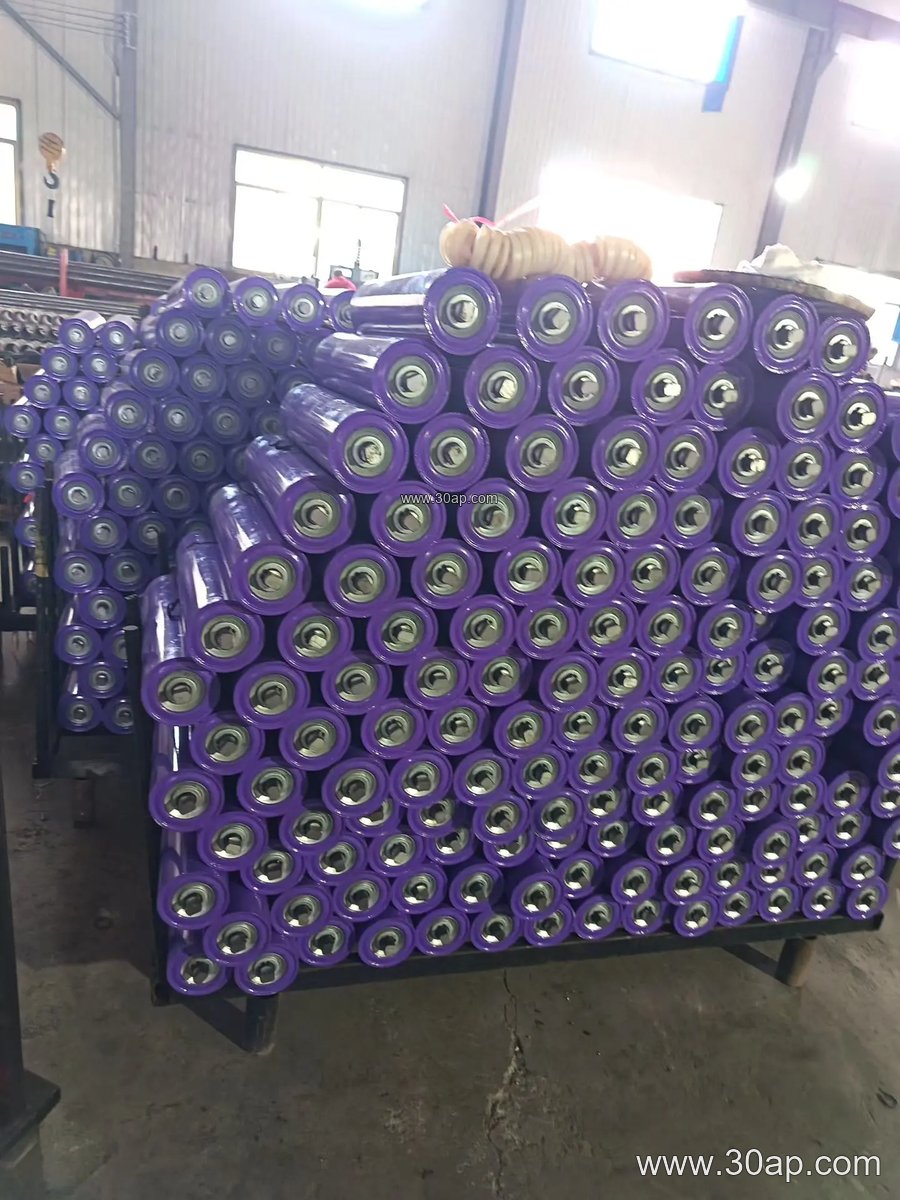
Key construction points a buyer should look at:
- Rubber thickness and hardness of the ring or sleeve, which set the cushioning effect.
- Bearing size and sealing arrangement, since dust and fines at a transfer point attack bearings quickly.
- Shell wall thickness and weld quality, because the roller must resist both impact and bending.
- Frame stiffness and mounting hole spacing, so the station matches the existing bracket.
Where It Sits on the Conveyor
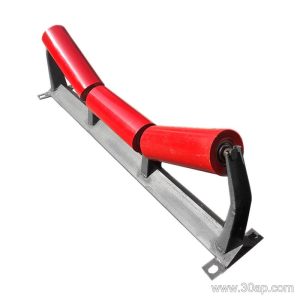
Impact idlers are installed in the loading zone, usually as a group of two to five stations, with the first one right under the material stream. They are commonly arranged as a three-roll troughing set, and the trough angle is usually matched to the adjacent carrying idlers, for example 30 or 35 degrees, so the belt profile does not change abruptly. A transition idler may be used just ahead of the impact zone to ease the belt into the trough.
Typical duty locations include crusher discharge conveyors, screen feed points, truck dump hoppers, ship loading lines and stockyard transfer houses. A belt carrying abrasive ore or sharp stone benefits most, and matching the belt itself matters: an abrasion resistant conveyor belt or a heavy-duty mining conveyor belt will tolerate the same drop that would quickly damage a light general-purpose belt.
Sizing and Selection Notes
Selection starts with belt width, lump size, drop height and throughput, not with a single catalogue number. Roller diameter is chosen from the load and the frame height; common impact roller diameters fall in the Ø89 to Ø159 mm range, with larger sizes used on wide, heavy-duty belts. Roll length follows belt width and trough angle.
| Belt width | Typical roll length, three-roll trough (example) | Common roller diameter range |
|---|---|---|
| B650 | about 250 mm | Ø89 to Ø108 mm |
| B800 | about 315 mm | Ø89 to Ø133 mm |
| B1000 | about 380 mm | Ø108 to Ø159 mm |
| B1200 | about 465 mm | Ø108 to Ø159 mm |
| B1400 | about 530 mm | Ø133 to Ø159 mm |
| B1600 | about 600 mm | Ø133 to Ø178 mm |
These figures are common references, not fixed pairings; side rollers and centre rollers can differ, and final dimensions are set by the conveyor design. Bearing choice, such as 6205, 6305 or 6308, depends on load and shaft, and no single bearing is tied to one roller diameter.
Buyer Checklist
- Confirm the belt width, trough angle and existing bracket hole pattern before ordering.
- State the material type and maximum lump size; sharp, heavy rock calls for thicker rubber rings.
- Check whether the belt is a fabric core conveyor belt or a steel cord conveyor belt, since stiffness affects how the impact zone should be supported.
- Ask about ring replacement: a bolted or clipped ring design saves time during maintenance.
- Keep spare rings and at least one complete station at the transfer point, because this is a high-wear position.
For related components, see conveyor idler options, conveyor pulley assemblies and conveyor bracket fittings. A well-chosen impact station protects the belt, reduces spillage and keeps the loading point running between shutdowns.