What the Tail Pulley Assembly Does
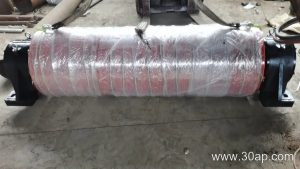
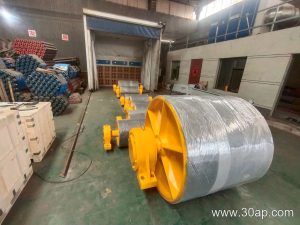
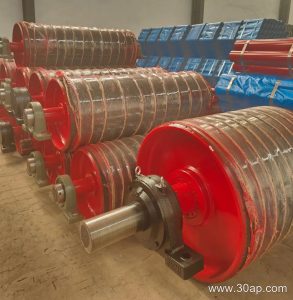
The tail pulley assembly is the return-end package on a belt conveyor: the pulley barrel, shaft, bearings, bearing housings, and the frame or bracket that anchors it at the tail of the machine. The pulley itself may be a plain wing-type or a smooth drum, and its main jobs are to support and guide the returning belt, help maintain belt tension, and keep the belt tracking on the centerline. It is not the drive pulley, and it is not a bend pulley; each position has its own duties. A drive drum delivers torque, a bend drum changes belt direction, while the tail pulley assembly turns freely and sets the geometry of the load-carrying run. Because the belt wraps this unit on the return side, alignment and free rotation matter as much as strength.
Construction and Surface Options
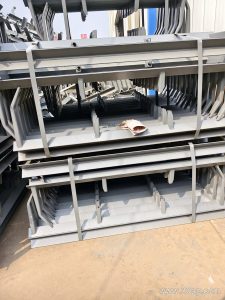
A typical assembly pairs a welded steel barrel with a through-shaft, self-aligning bearing housings, and a take-up bracket arrangement. Barrel diameter is chosen by belt thickness and the minimum bend radius the carcass can accept, while shaft diameter follows torque and load, not belt width alone. Common face surfaces include plain, cold-bonded rubber, hot-vulcanized rubber, diamond grooving, and ceramic lagging; lagging thickness is often 8, 10, 12, 15, or 20 mm depending on the duty.
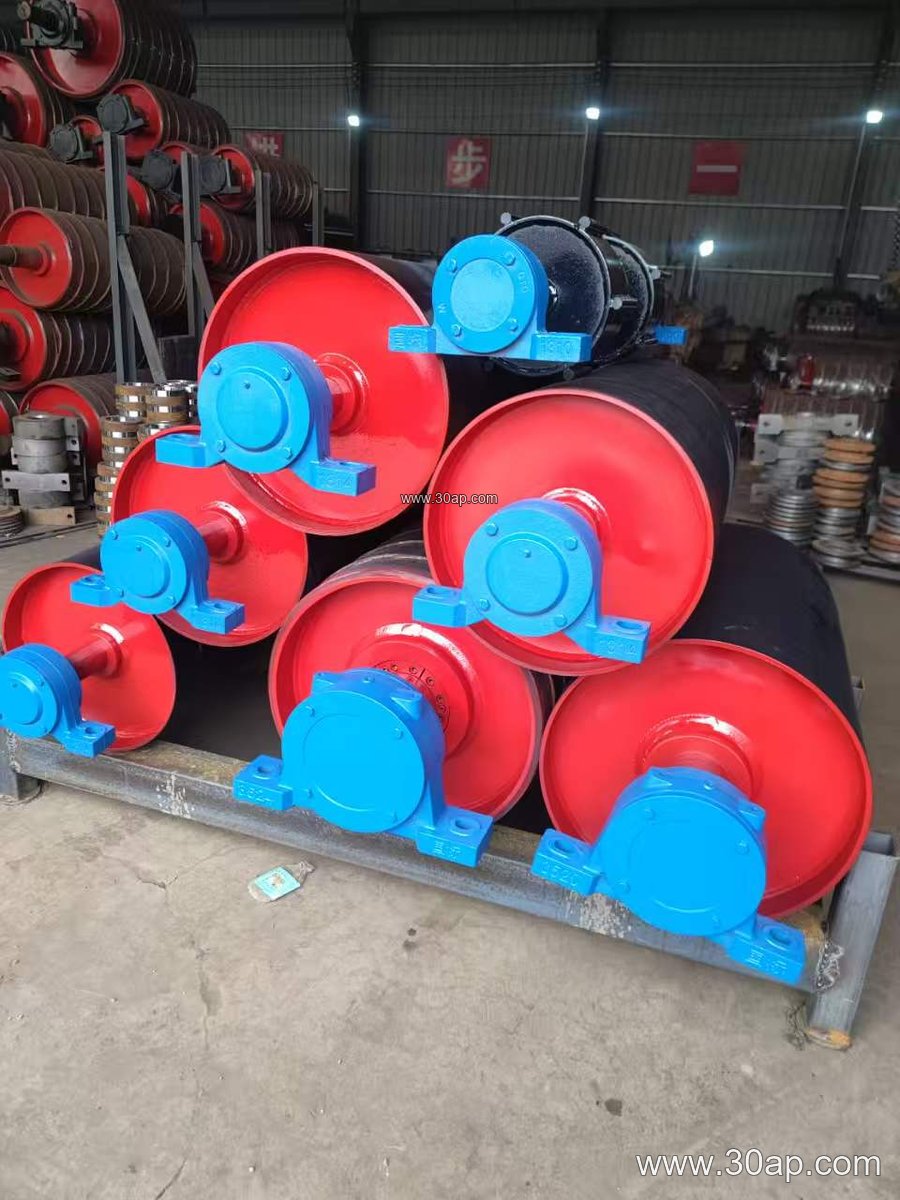
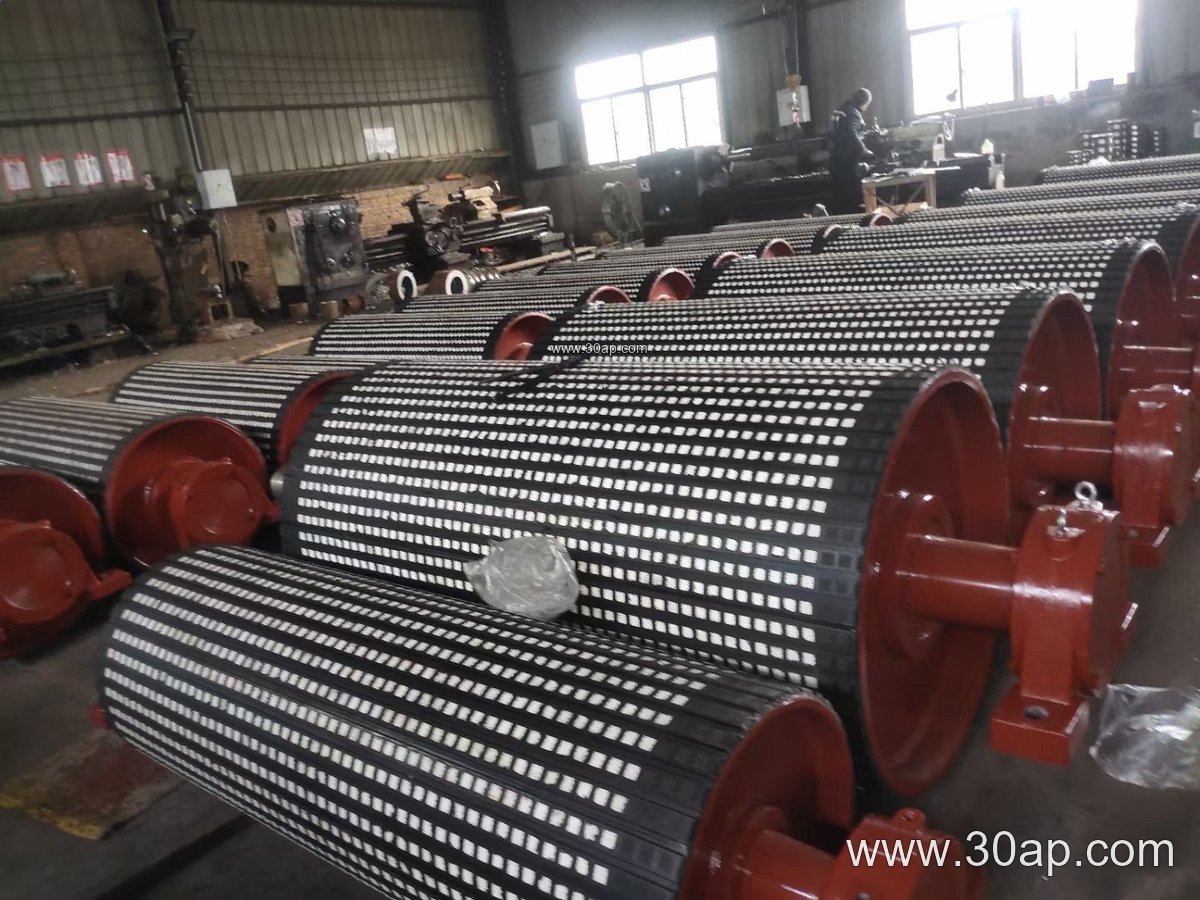
- Plain face: fine for light, clean duties.
- Diamond or herringbone lagging: improves grip and sheds water on wet return runs.
- Ceramic lagging: used where abrasive fines and slip are a concern.
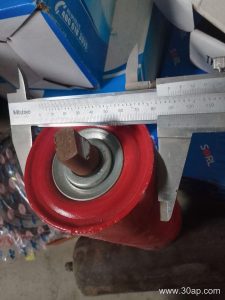
Face width is normally a little wider than the belt. For reference, B800 often pairs with a face around 950 mm and B1200 with roughly 1400 mm, but these are design starting points, not fixed rules. The same logic applies to shaft sizes: Ø80, Ø100, Ø120, or Ø140 may appear on similar belt widths, because the final choice comes from the load case.
Where It Fits in a Plant
You will find tail pulley assemblies on almost every belt conveyor in a quarry, a limestone mine, a cement plant clinker line, or a power station coal handling system. In a crushing and screening circuit they sit under the discharge of a screen or crusher feed, where fines and dust are constant. In a coal washing plant or underground coal mining conveyor, flame retardant and anti-static belt grades are common, and the tail unit must tolerate wet, gritty conditions. Port bulk terminals and iron ore yards place them on long transfer conveyors that run many hours a day.
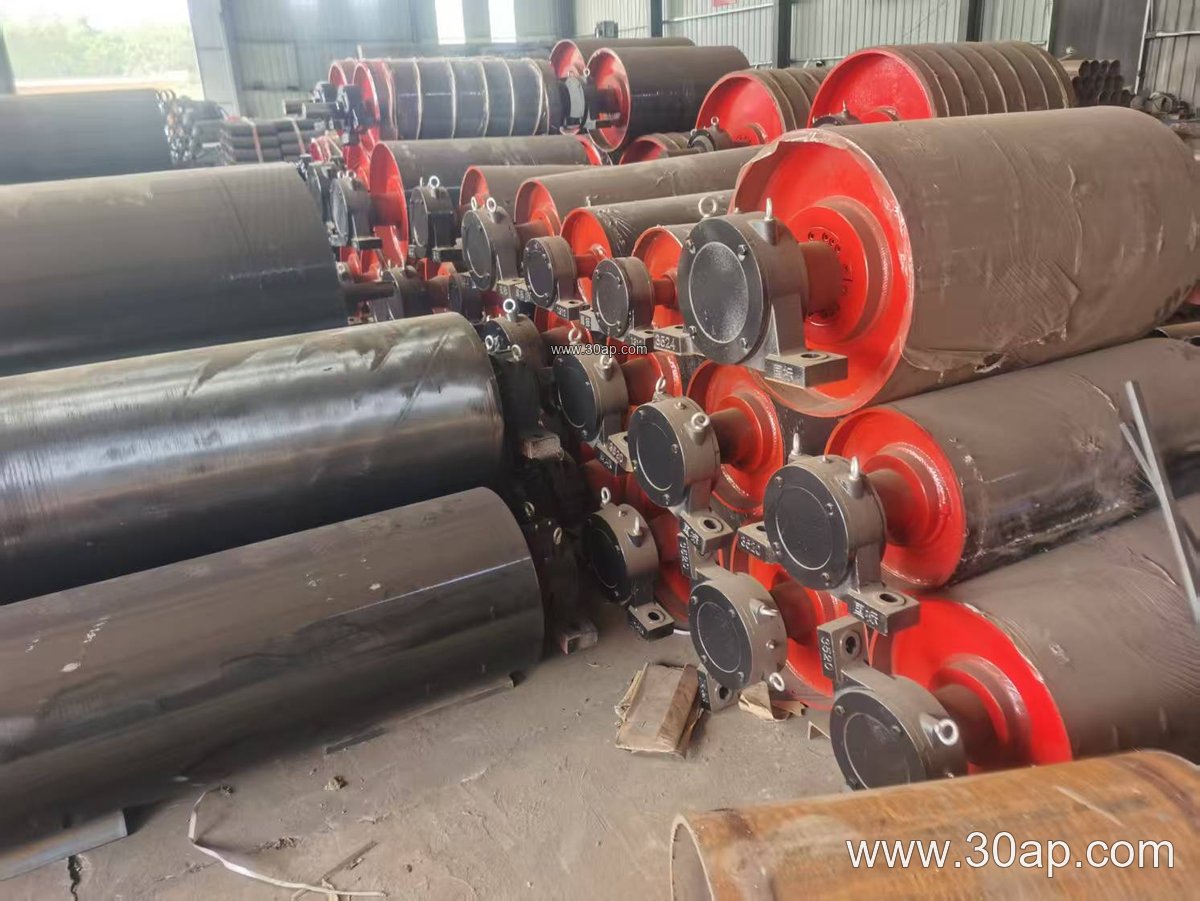
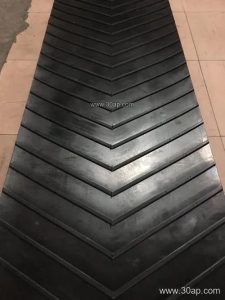
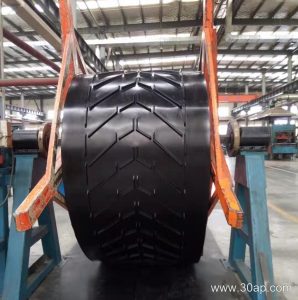
The assembly should match the belt it carries. A heavy-duty mining conveyor belt with a thick cover needs a larger drum and robust bearings; a lighter fabric core conveyor belt may be served by a smaller unit. Where the belt is an EP conveyor belt or a multi-ply fabric core type, the minimum pulley diameter is usually set by the number of plies and the manufacturer’s recommendation. Steel cord conveyor belt lines generally use larger tail drums to protect the cord layer.
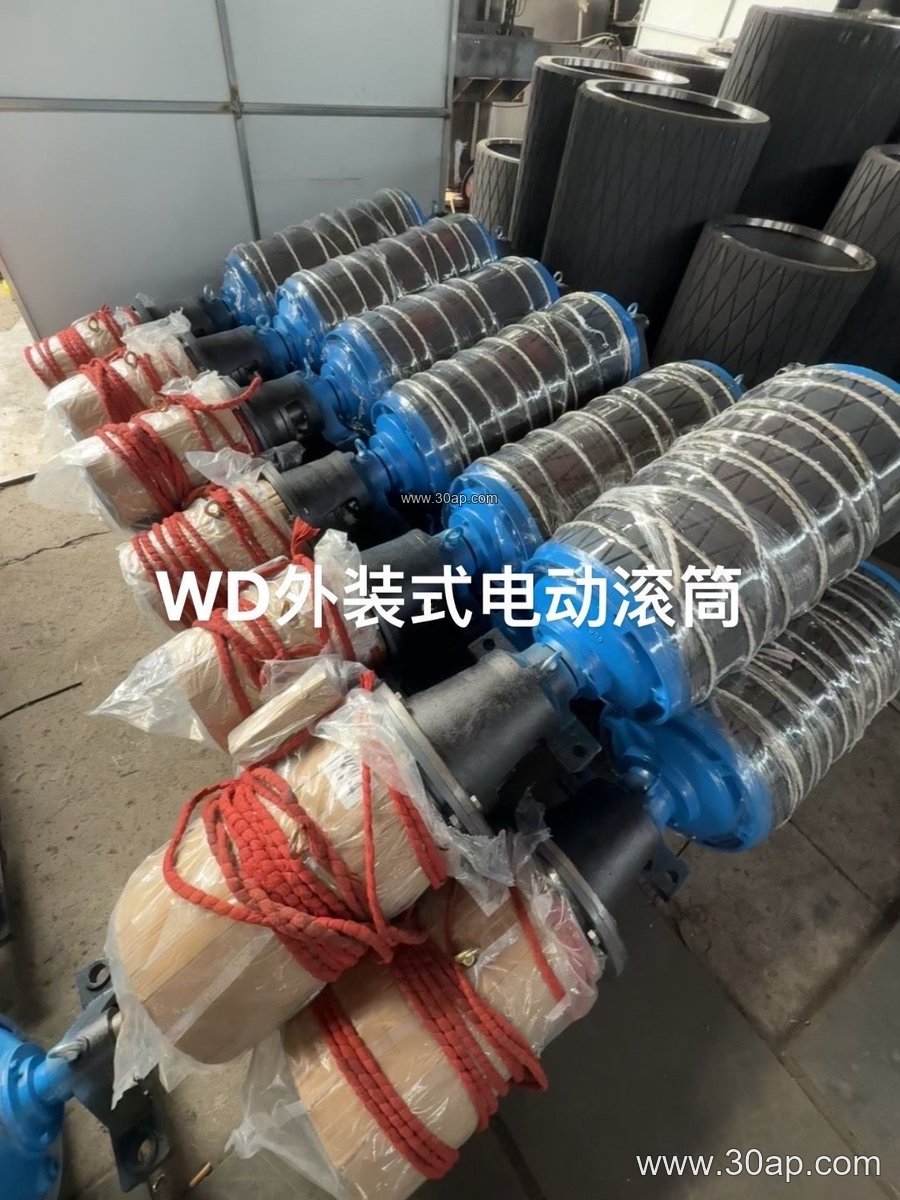
Selection Points for Buyers
Before ordering, confirm belt width, belt type, expected tension, and the take-up method. Ask for the barrel diameter, face width, shaft diameter, bearing type, lagging material, and bracket hole pattern. A B650 or B1000 conveyor belt does not dictate one drum size; the layout and belt construction do. Also check access: a tail pulley assembly is only easy to maintain if the bracket and bearing housings can be reached during a short shutdown.
Maintenance and Inspection
Check lagging wear, belt tracking, and bearing temperature at each planned stop. Material build-up on the barrel face is a common cause of mistracking and should be cleared early. Keep the take-up travel within range so the tail drum can still tension the belt. On abrasive duties, a ceramic or thick rubber face will usually outlast a plain drum.
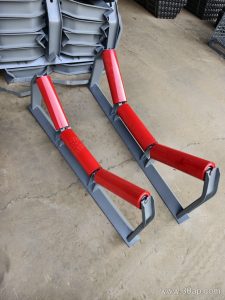
For related components, match the tail unit with quality {{conveyor pulley}}, {{conveyor bracket}}, and {{idler roller}} selections, and confirm belt grade with {{Rubber Conveyor Belt}} and {{Flame Retardant Conveyor Belt}} suppliers. A well-chosen tail pulley assembly keeps the return run stable and protects the belt from unnecessary edge wear.