What a Rubber Lagged Pulley Does on a Conveyor
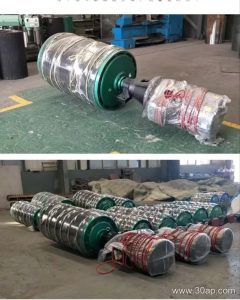
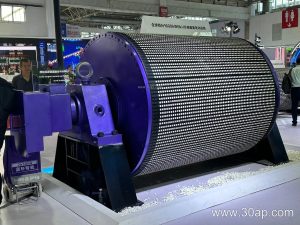
A rubber lagged pulley is a conveyor pulley whose shell is covered with a rubber layer, usually bonded by hot vulcanization or cold vulcanization, to improve grip between the pulley and the conveyor belt. In a belt conveyor system, the pulley is the rotating drum that drives, tensions, or redirects the belt, and the rubber lagging is the wear surface that contacts the belt directly. Plants in mining, coal preparation, cement, power generation, and aggregate production rely on this component because a bare steel shell can slip when the belt is wet, dusty, or heavily loaded.
The rubber lagged pulley is also called a rubber-coated pulley or lagged drum pulley in everyday workshop language. These names describe the same product. It should not be confused with a drive pulley, tail pulley, or bend pulley, which are position-based subtypes. A drive pulley may be rubber lagged, and so may a tail or bend pulley, but the position and the lagging are separate design decisions.
How the Lagging Is Built
The pulley body usually consists of a steel shell, end discs, a shaft, and bearing housings. The rubber layer is applied to the shell surface in one of several forms:
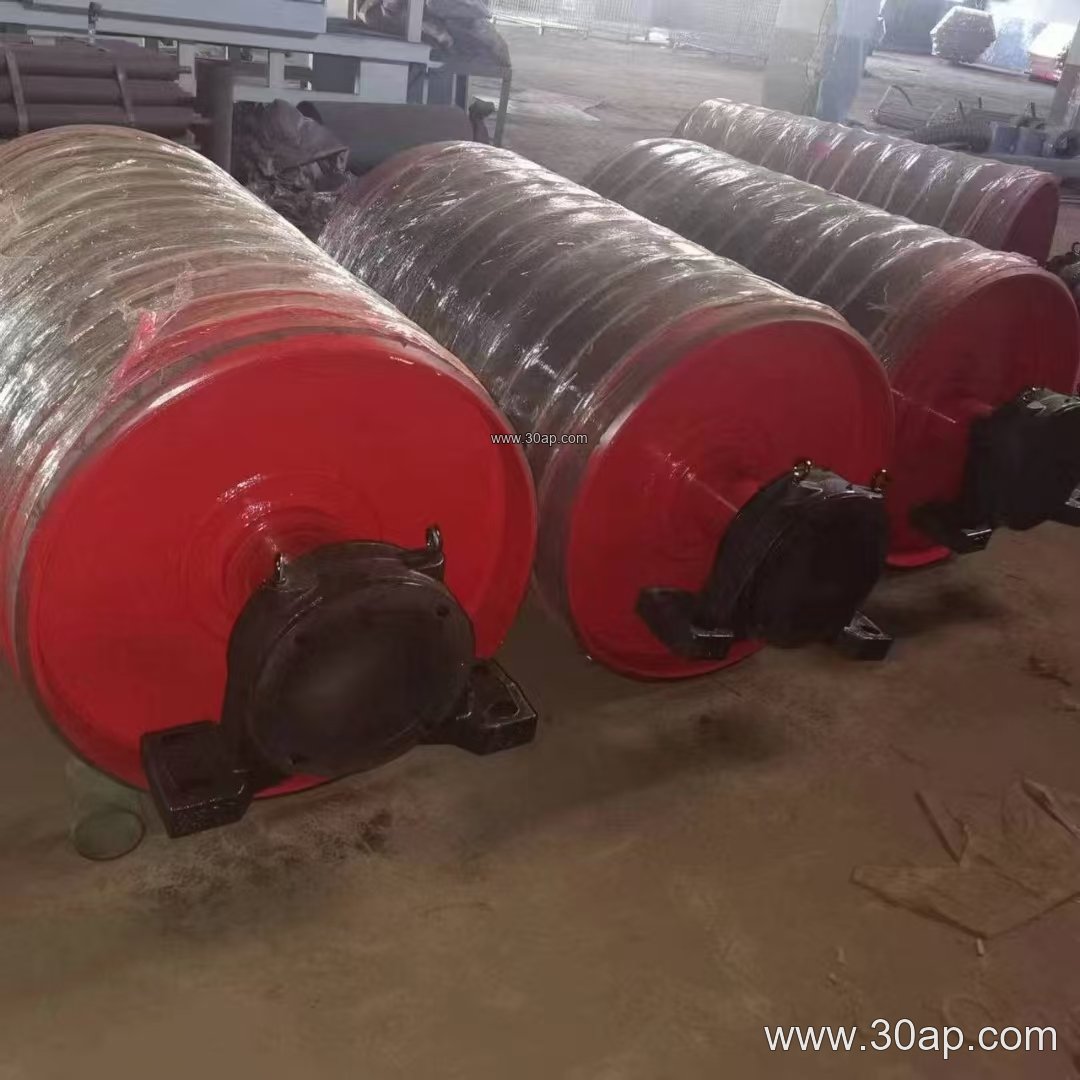
- Plain or flat rubber lagging for general grip and wear protection
- Diamond grooved lagging to help water and fine dust escape
- Herringbone lagging for better traction in one or both rotation directions
- Ceramic lagging embedded in rubber for high-wear drive positions
Common lagging thicknesses are 8, 10, 12, 15, and 20 mm. Thicker lagging suits high-torque drive pulleys and abrasive service, while thinner layers are often enough for bend or tension positions. Hot vulcanized lagging generally gives a stronger bond than cold-bonded sheet, and the choice affects service life in dusty or wet conditions.
Matching Pulley Dimensions to Belt Width
Belt width and pulley face width are related but not identical. The pulley face is usually somewhat wider than the belt so the belt stays supported across its full width. Reference values often used in design include:
| Belt width | Typical pulley face width |
|---|---|
| B400 | about 500 mm |
| B500 | about 600 mm |
| B650 | about 750 mm |
| B800 | about 950 mm |
| B1000 | about 1150 mm |
| B1200 | about 1400 mm |
| B1400 | about 1600 mm |
| B1600 | about 1800 mm |
Pulley diameters commonly range from Ø200 to Ø1800, for example Ø400, Ø500, Ø630, Ø800, Ø1000, and Ø1250. A combination such as B800 × Ø500 or B1200 × Ø1000 is a design example, not a rule. One belt width can work with several pulley diameters depending on belt tension, wrap angle, and space. Shaft diameter is set by torque and load, with common sizes including Ø80, Ø100, Ø120, Ø140, and Ø160; it should never be assumed from belt width alone.
Where It Fits in the Conveyor
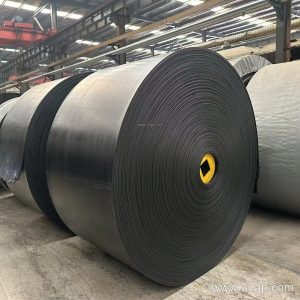
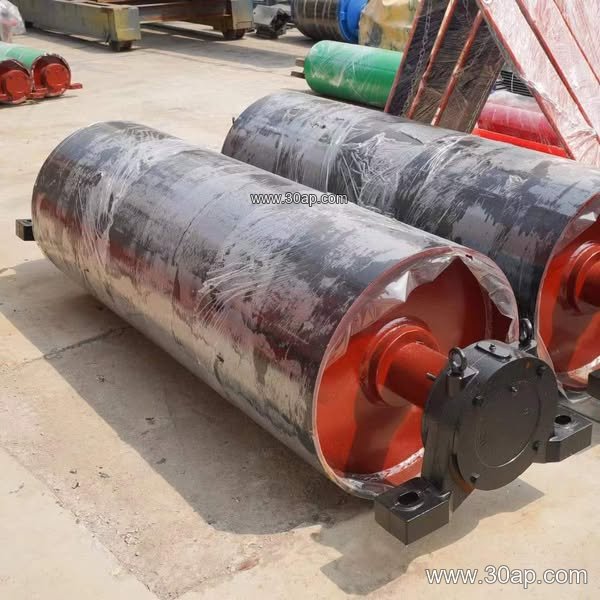
On a quarry or limestone crushing line, a rubber lagged pulley at the head drive transmits power to an abrasion resistant conveyor belt carrying heavy rock. At a coal handling plant, flame retardant and anti-static belts are common, and the drive pulley lagging helps maintain traction in damp conditions. In a cement plant, clinker dust and heat make lagging selection important, and a heat resistant conveyor belt may run alongside a pulley with suitable rubber compound.
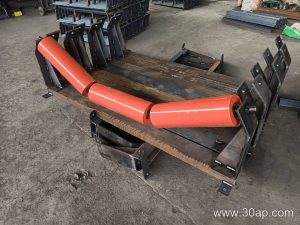
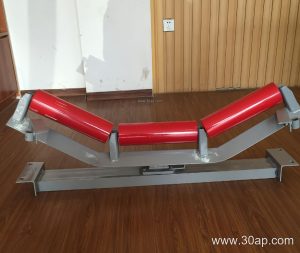
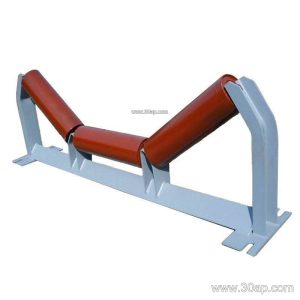
A tail pulley with lagging can reduce belt slip at the tension end, while a bend pulley with light lagging protects the belt on a redirect. The pulley works together with the conveyor idler roller and supporting conveyor bracket to keep the belt tracking correctly.
Buyer Checklist
- Confirm the pulley position: drive, tail, bend, or tension. Each has different traction and wear needs.
- Specify belt width, pulley diameter, face width, and shaft diameter as separate values.
- Choose lagging form and thickness for the duty: diamond for wet service, plain for general use, ceramic for severe abrasion.
- Check belt compatibility, including whether an EP conveyor belt or steel cord belt is used, since tension affects pulley size.
- Ask about bonding method and rubber hardness, and confirm balancing and bearing details.
Accurate drawings, load data, and belt tension figures let the supplier size the rubber lagged pulley correctly instead of copying a standard table. For high-tonnage mining or port systems, this early detail work prevents slip, belt edge damage, and premature lagging wear.