What a Conveyor Self-Aligning Idler Does
A conveyor self-aligning idler is a training idler that automatically corrects belt misalignment. Also called a self-centering idler or self-tracking roller, it pivots around a vertical axis so that when the belt drifts to one side, the idler angles itself and gently steers the belt back to the center. This action reduces edge damage, spillage, and downtime on bulk handling lines. The self-aligning idler is especially valuable on long overland conveyors and in dusty, high-tonnage operations where constant manual adjustment is not practical.
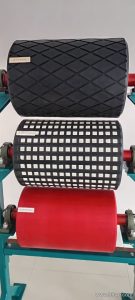
The self-aligning idler works together with the conveyor belt and other components such as the conveyor pulley and conveyor bracket. It is not a substitute for a drive pulley, tail pulley, or bend pulley; those parts serve different functions in the conveyor system.
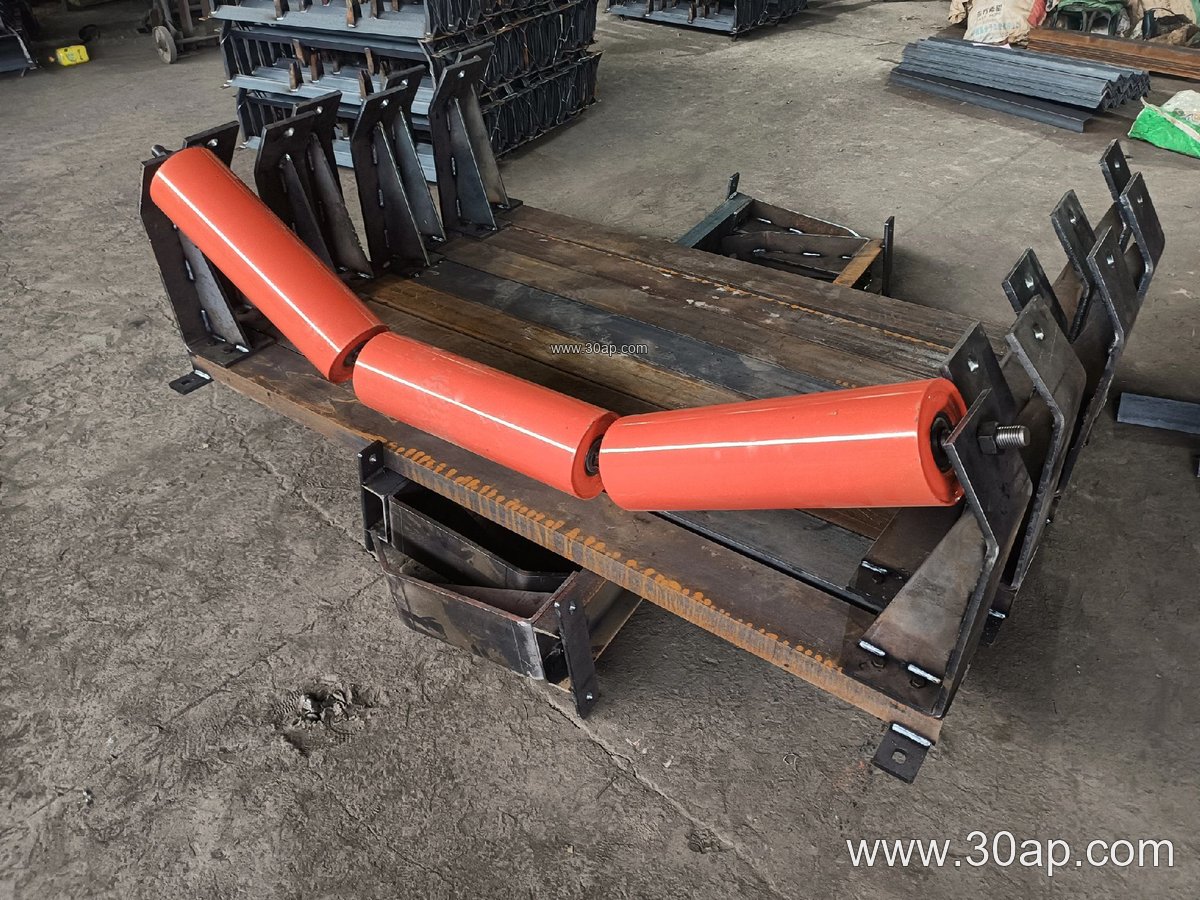
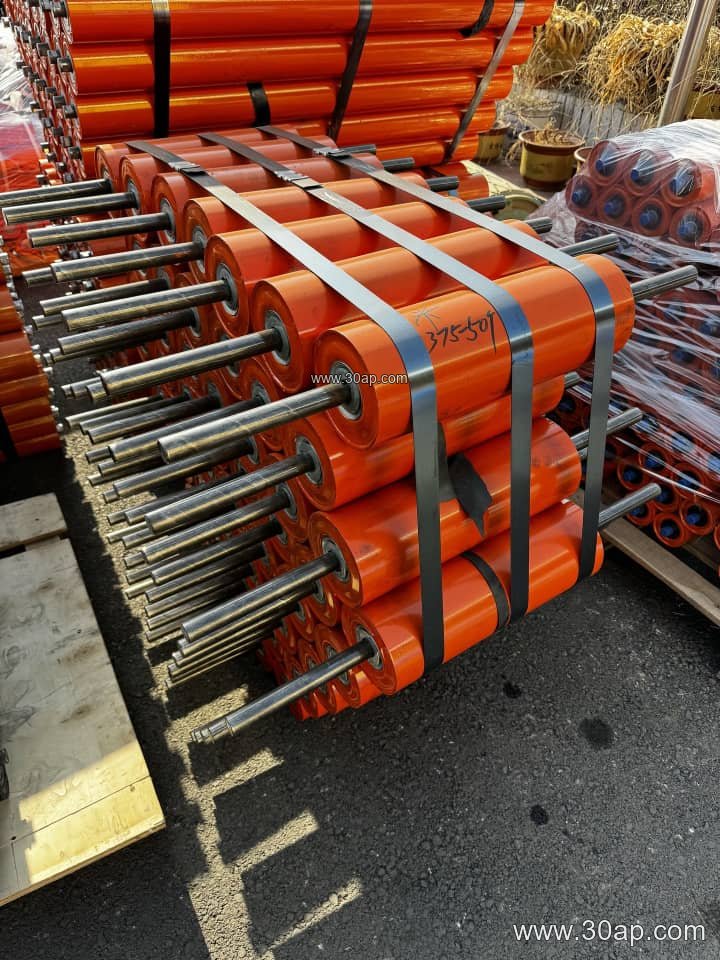
Construction and Working Principle
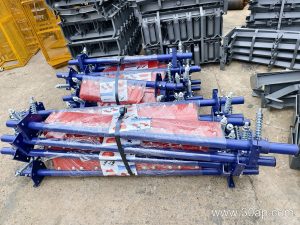
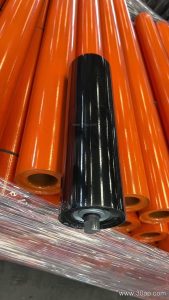
A typical self-aligning idler consists of two or three rollers mounted on a pivoting frame. The frame is supported by a bearing that allows rotation in the horizontal plane. When the belt contacts the idler off-center, friction and pressure cause the frame to swing slightly. This angular change creates a steering force that guides the belt back toward the center line. Many designs include a slight forward tilt of about 1.5 to 2 degrees to enhance the self-correcting effect. Roller surfaces may be steel, nylon, ceramic, or rubber-covered depending on the application.
Common roller diameters for self-aligning idlers include Ø89, Ø102, Ø108, Ø127, Ø133, Ø159, and Ø178 mm. Bearing sizes such as 6204, 6205, 6305, 6306, 6308, and 6310 are frequently used, but the bearing is selected according to load and speed, not by roller diameter alone.
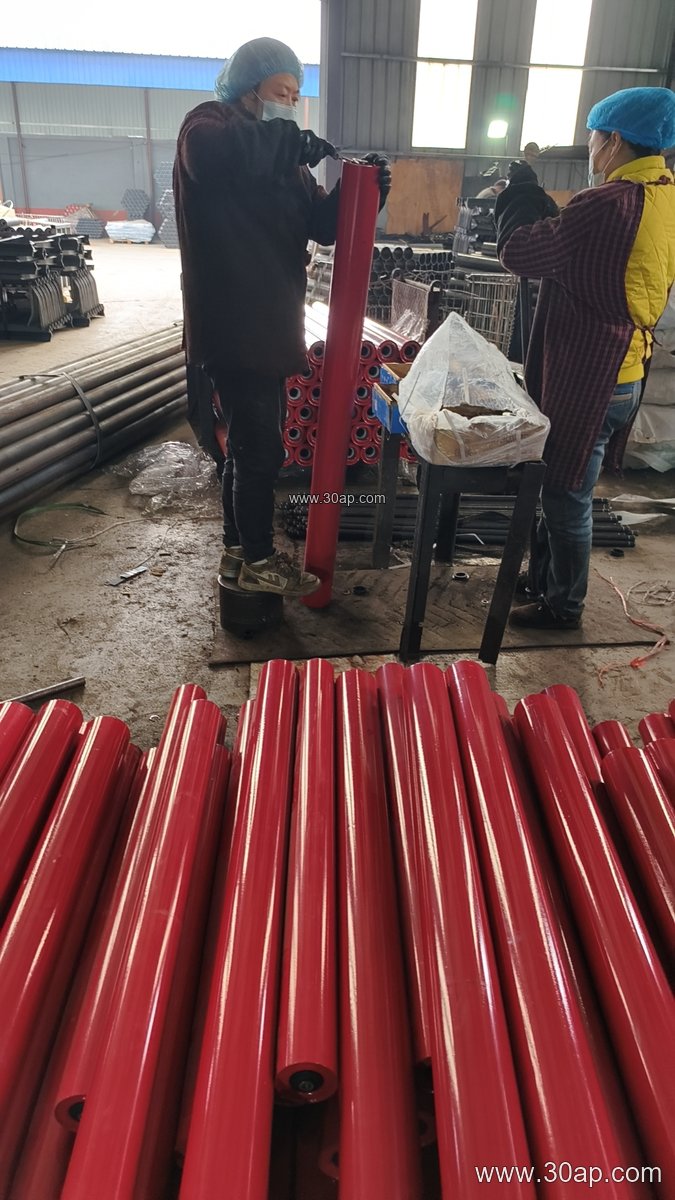
Where Self-Aligning Idlers Are Used
These idlers are found in quarry and aggregate lines, coal preparation plants, cement works, power station coal handling, and port bulk terminals. They are often installed on the carrying side after the loading point and before the head pulley, and on the return side where belt wander is common. In a typical stone crushing plant, a self-aligning idler helps keep the belt centered after a transition section. In a coal stockyard, it reduces the risk of belt edge contact with the structure. The self-aligning idler is also useful on conveyors handling abrasive materials where a Rubber Conveyor Belt or EP Conveyor Belt is in service.
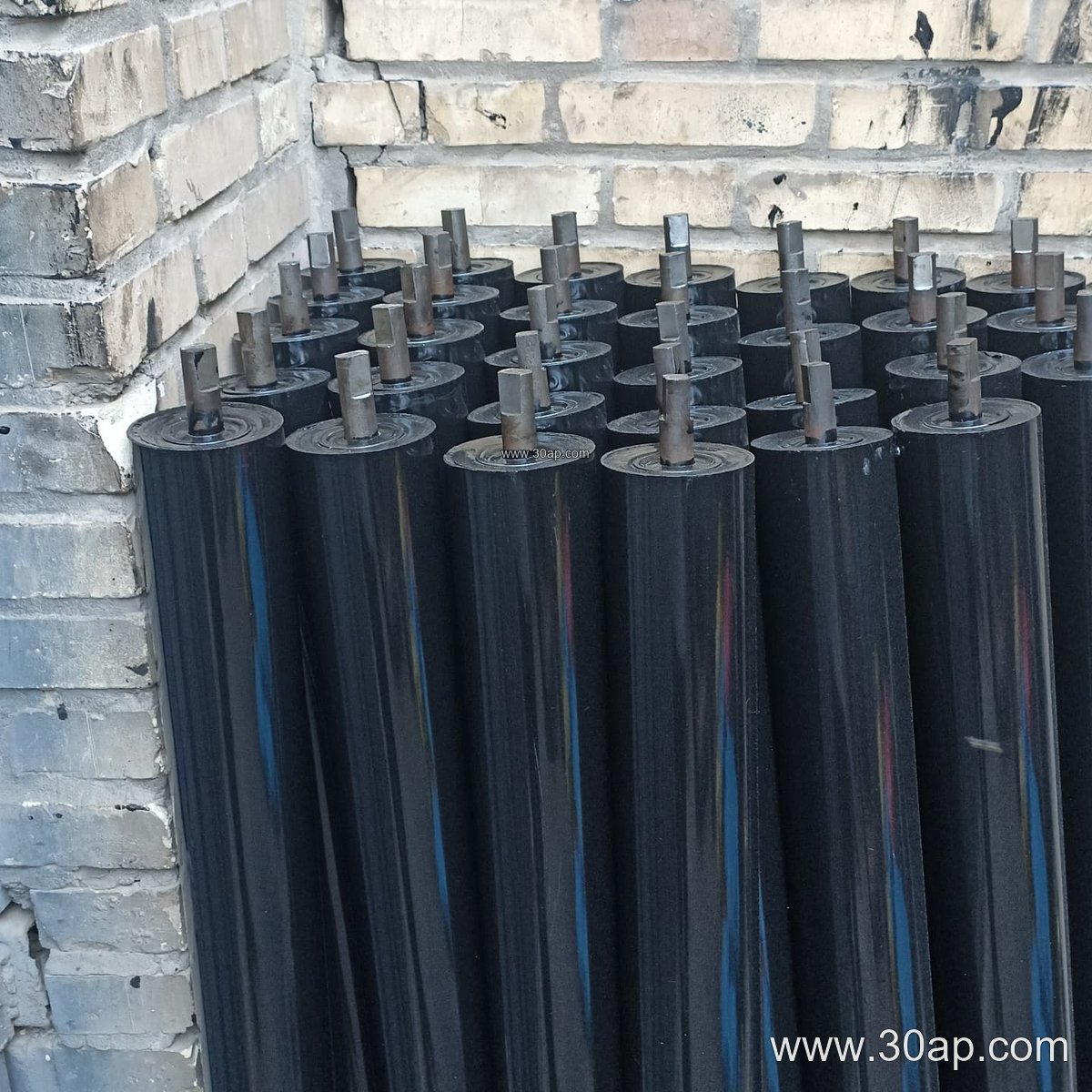
Common Sizes and Configuration Examples
The table below shows typical reference values for self-aligning idlers. These are examples only; actual dimensions depend on belt width, trough angle, and the idler group design. Side rollers and center rollers may differ in length.
| Belt Width | Typical Roller Length (three-roll trough) | Common Roller Diameter Range | Typical Trough Angle |
|---|---|---|---|
| B500 | 200 mm | Ø63 – Ø89 mm | 20° – 35° |
| B650 | 250 mm | Ø76 – Ø108 mm | 20° – 35° |
| B800 | 315 mm | Ø89 – Ø127 mm | 20° – 35° |
| B1000 | 380 mm | Ø102 – Ø133 mm | 30° – 35° |
| B1200 | 465 mm | Ø108 – Ø159 mm | 30° – 45° |
| B1400 | 530 mm | Ø127 – Ø159 mm | 30° – 45° |
| B1600 | 600 mm | Ø133 – Ø178 mm | 35° – 45° |
| B1800 | 670 mm | Ø159 – Ø194 mm | 35° – 45° |
| B2000 | 750 mm | Ø178 – Ø219 mm | 35° – 45° |
For wider belts, such as B2200 and B2400, self-aligning idler frames are built with longer rollers and heavier bearings. The trough angle may be 35 or 45 degrees depending on material surcharge and belt speed.
Buyer Checklist for Self-Aligning Idlers
- Confirm belt width and trough angle, as these determine roller length and frame geometry.
- Check the recommended roller diameter for the load and belt speed; do not assume one diameter fits all widths.
- Specify the roller surface: steel for general use, rubber-covered for impact or grip, ceramic for severe abrasion.
- Ask about bearing size and sealing arrangement; good sealing extends life in dusty conditions.
- Verify that the pivoting mechanism is protected from material build-up.
- Consider the conveyor bracket and mounting height to ensure compatibility with existing idler stations.
Self-aligning idlers are often used alongside other idler types such as trough idlers, impact idlers, and return idlers, but the self-aligning function remains distinct. For conveyors carrying heavy or sharp material, a Steel Cord Conveyor Belt or Abrasion Resistant Conveyor Belt may be present; the self-aligning idler should be selected to match the belt and the environment. Regular inspection of the pivot and roller condition helps maintain effective belt training.