What Pulley Lagging Actually Does
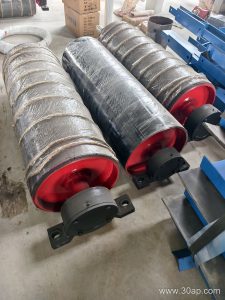
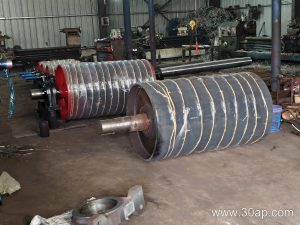
Pulley lagging is the rubber, ceramic, or composite layer bonded to the shell of a conveyor pulley where the belt makes contact. Its job is simple to describe and hard to overstate: it raises friction, protects the pulley shell from wear, and helps keep the belt tracking straight under load. In a quarry or a cement plant, a drive pulley without lagging is a drive pulley waiting to slip, especially when the belt is wet or carrying fine dust.
The lagging is not a separate accessory bolted on as an afterthought. It is part of the traction interface between the conveyor belt and the pulley, and its condition directly affects how much torque the drive can transmit before the belt starts to slide.
How the Lagging Is Built and Attached
Most lagging starts as a rubber sheet, often with a patterned surface, that is either cold-bonded with adhesive or hot-vulcanized onto the pulley shell. Hot vulcanization generally gives a stronger bond and is preferred where the pulley sees heavy shock loads. Ceramic lagging uses embedded tiles in a rubber matrix, which suits wet and abrasive conditions but demands care during installation because the tiles can chip if the belt is misaligned.
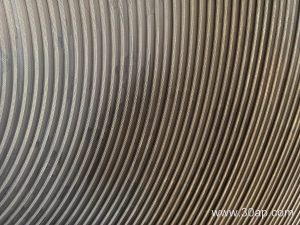
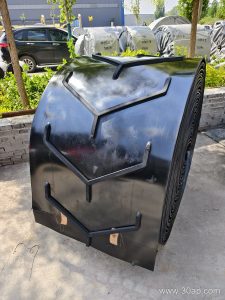
Surface patterns matter. Diamond lagging sheds water and fines well and is a common general-purpose choice. Herringbone patterns are popular on drive pulleys because the grooves channel water outward as the pulley turns. Plain lagging is used where a smooth, non-marking contact is needed. Thickness is usually specified in the 8 to 20 mm range, with 10 to 15 mm common on medium-duty drives.
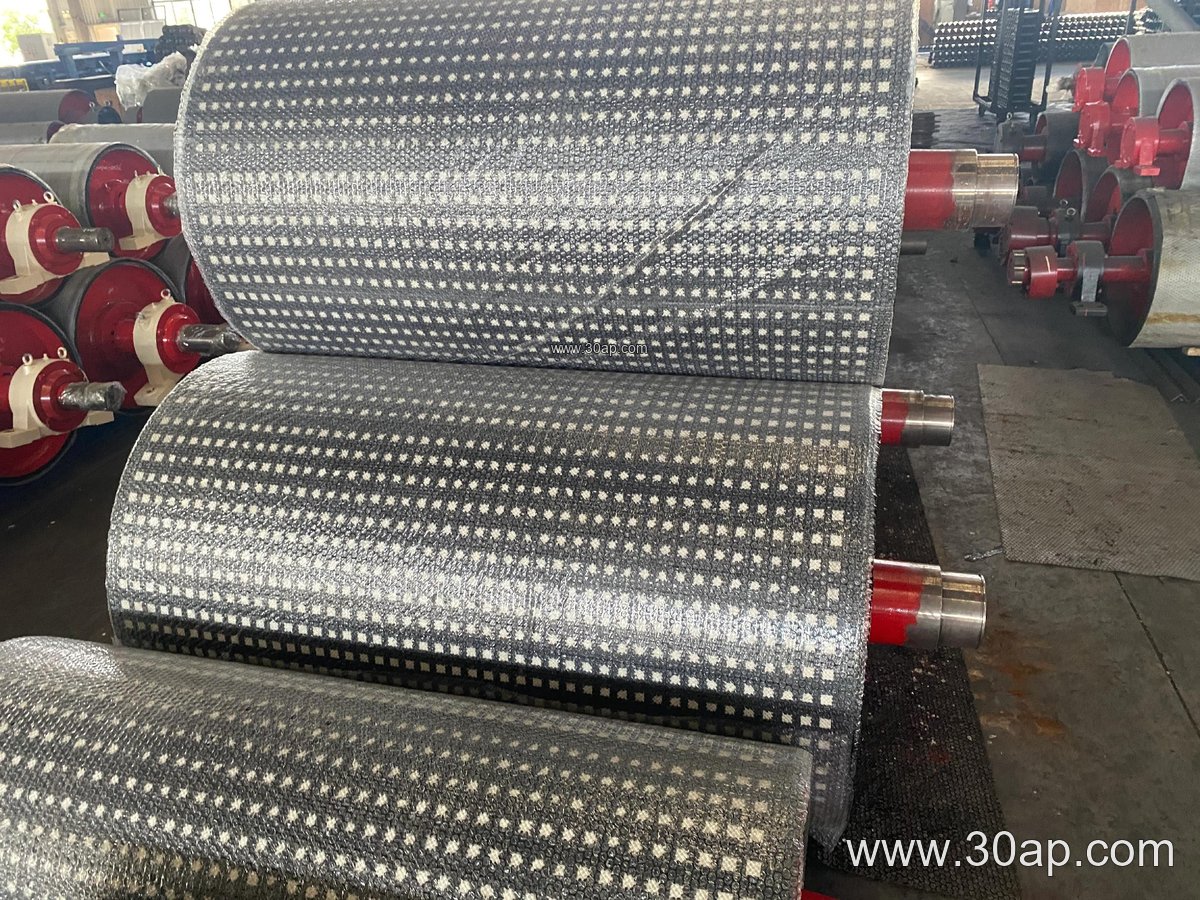
The shell itself is only half the story. Shaft diameter is determined by torque and load, not by belt width, so a B800 pulley might run a Ø500 shell with a shaft sized to the actual drive duty. Buyers should treat any catalog combination as a starting reference, not a fixed rule.
Where the Product Fits in a Conveyor System
Lagging appears on drive pulleys, tail pulleys, and bend pulleys, but the requirements differ by position. A drive pulley needs maximum grip and wear resistance because it transmits the full belt tension. A tail pulley mostly needs protection and decent friction to keep the belt from wandering. A bend pulley may use thinner lagging because it carries lower tension and is often in a tighter space.
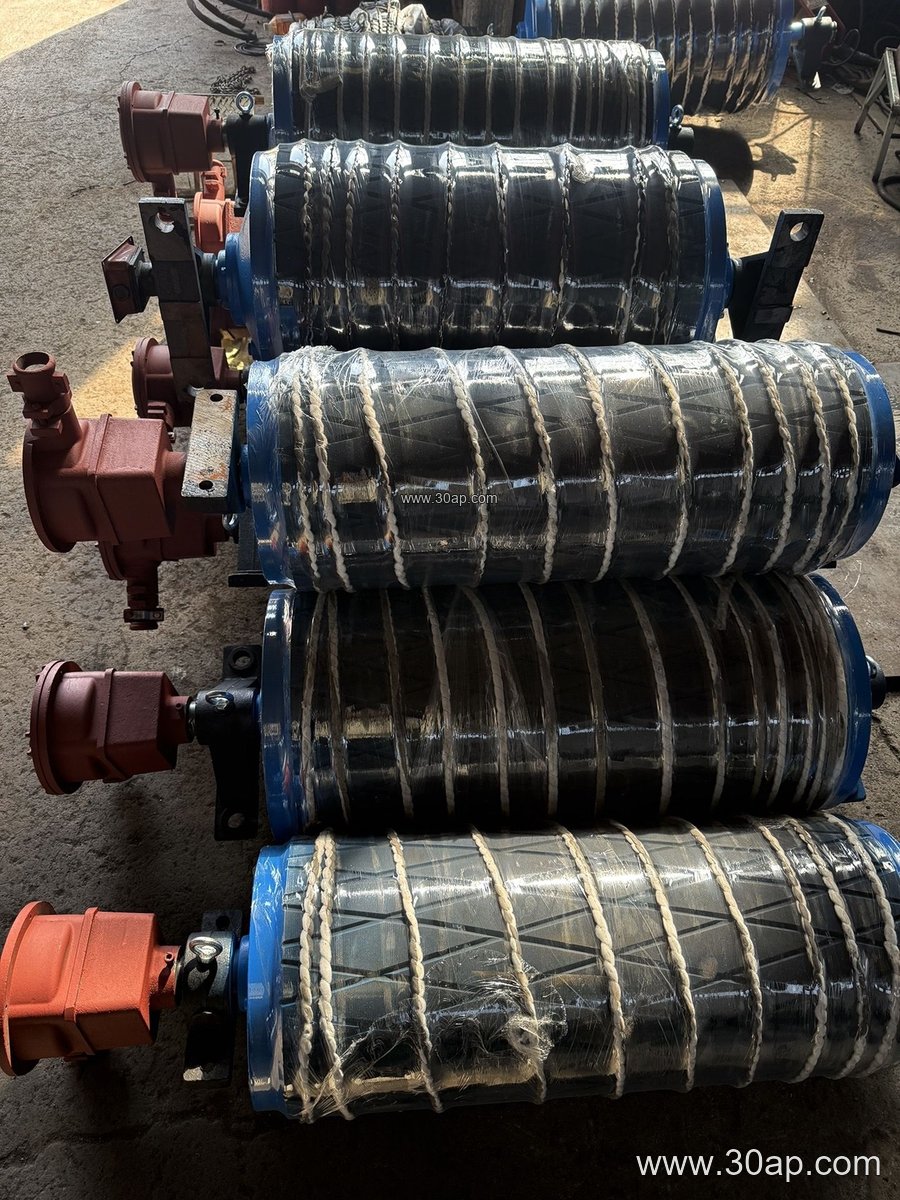
In a coal washing plant, lagging on the drive pulley has to cope with constant moisture and fine coal dust. In a limestone quarry, the enemy is abrasive grit that grinds into the rubber. In a power plant coal handling line, heat and dust combine, and a lagging that hardens too quickly will lose grip. The same product, specified differently, serves all three.
Matching Lagging to Belt and Pulley Size
Lagging width should cover the pulley face, which is normally a little wider than the belt. A B650 belt typically runs on a pulley face around 750 mm, while a B1200 belt may use a face near 1400 mm. These are common proportions, not mandatory pairings. The table below shows reference combinations that appear in normal design work.
| Belt width | Typical pulley face | Reference pulley diameter | Common lagging thickness |
|---|---|---|---|
| B500 | about 600 mm | Ø320 to Ø400 | 8 to 10 mm |
| B650 | about 750 mm | Ø400 to Ø500 | 10 mm |
| B800 | about 950 mm | Ø500 to Ø630 | 10 to 12 mm |
| B1000 | about 1150 mm | Ø630 to Ø800 | 12 to 15 mm |
| B1200 | about 1400 mm | Ø800 to Ø1000 | 15 mm |
| B1400 | about 1600 mm | Ø1000 to Ø1250 | 15 to 20 mm |
Shaft sizes such as Ø80, Ø100, Ø120, or Ø160 are selected from the actual torque and bearing load, so the same B1000 pulley can carry different shafts depending on the drive arrangement. A buyer should always confirm the shaft and bearing data with the pulley manufacturer rather than inferring it from belt width.
What to Check Before Ordering
- Confirm the pulley position: drive, tail, or bend, because the traction demand differs.
- Match the lagging pattern to the material: diamond for wet fines, herringbone for water shedding, ceramic for severe abrasion.
- Check the bonding method. Hot-vulcanized lagging is usually the safer choice for high-torque drives.
- Verify the pulley face width against the belt, allowing for tracking movement.
- Inspect the existing shell for wear before relagging; a worn shell will not hold new rubber.
Lagging is a small part of the conveyor cost but a large part of its reliability. When it is chosen for the actual duty and installed properly, the belt runs straighter, the drive slips less, and the pulley lasts longer between shutdowns.