What the Ø108 Mining Idler Is
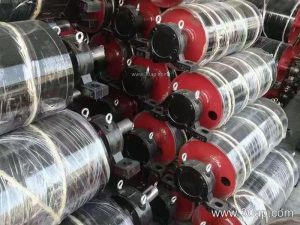
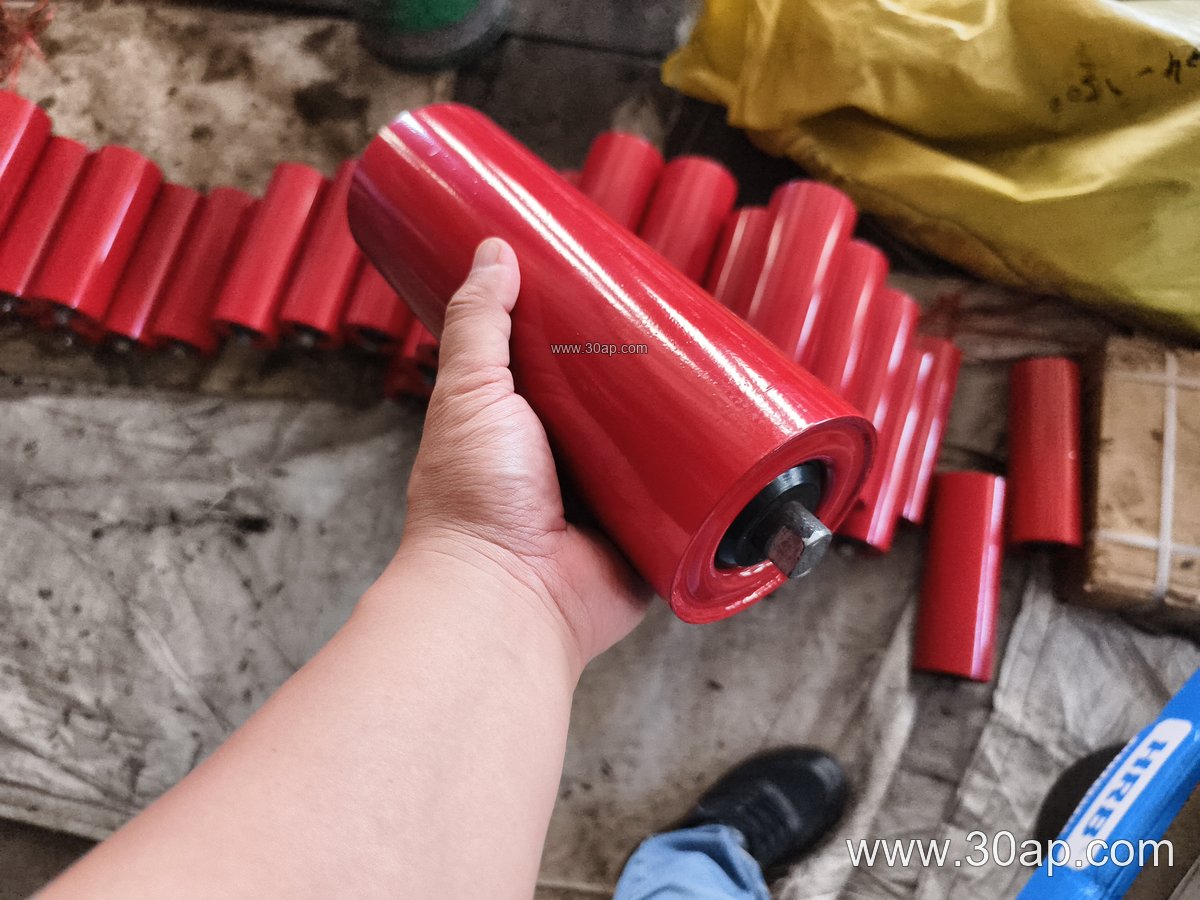
An Ø108 mining idler is a heavy-duty conveyor roller with a nominal outside diameter of 108 mm, built to support the belt on the carrying side of a bulk material conveyor. In a typical troughing arrangement, three of these rollers form a cradle that shapes the conveyor belt into a trough, keeping coal, ore, aggregate, or cement clinker centered as it moves. The 108 mm roller diameter sits in the middle of the common size range, making it a practical choice for medium to wide belts where a balance between load capacity and rotational efficiency matters. The same basic roller can also be specified as a return idler or a transition idler when the application calls for it.
Construction and Materials
The roller body is usually a steel tube with machined ends, fitted with sealed bearings and a shaft that mounts into a conveyor bracket or frame. Bearing sizes commonly paired with this diameter include 6205, 6305, and 6306, though the exact selection depends on load and speed rather than diameter alone. The roller surface may be plain steel, nylon, ceramic, or rubber rings; rubber rings are particularly useful on impact zones where lumps fall onto the belt.
Sealing is critical in mining and quarry environments. Dust, grit, and moisture attack bearings from the outside, so a well-designed labyrinth seal or multi-stage seal extends service life. Buyers should ask about the seal type and bearing clearance, not just the tube thickness.
Where It Fits in the Conveyor
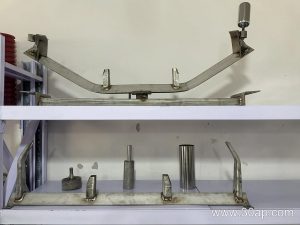
The Ø108 mining idler appears in several positions along a conveyor system. On the carrying side, it is most often used in three-roll troughing sets at 20, 30, 35, or 45 degree trough angles. At the tail end, transition idlers with a smaller trough angle help the belt move smoothly from flat to troughed. On the return side, a single flat roller or a V-return set supports the empty belt. Impact idlers with rubber rings are placed under loading points in coal handling plants, iron ore mines, and aggregate crushing circuits.
Roller length varies with belt width, trough angle, and roll configuration. Common examples for three-roll troughing sets are shown below; side and center rolls can differ.
| Belt Width | Typical Roller Length (three-roll set) |
|---|---|
| B500 | 200 mm |
| B650 | 250 mm |
| B800 | 315 mm |
| B1000 | 380 mm |
| B1200 | 465 mm |
| B1400 | 530 mm |
| B1600 | 600 mm |
These are reference values only; actual dimensions should be confirmed against the conveyor design. Note that belt width and pulley diameter are independent choices—a 108 mm idler can work with several belt widths, and the conveyor pulley at the drive or tail end is selected separately.
Applications Across Industries
This roller diameter is common in coal preparation plants, limestone quarries, copper and iron ore operations, cement plants, and power station coal yards. It also appears in sand and gravel lines, crushing and screening plants, and tunnel spoil handling. In each case, the environment dictates the surface and seal choice: abrasive dust favors ceramic or rubber-covered rollers, while wet conditions call for enhanced sealing.
Buyer Checklist
- Confirm the trough angle and roller length required for the belt width and frame.
- Specify bearing size and seal type based on load, speed, and dust exposure.
- Choose roller surface: plain steel for general use, rubber rings for impact, ceramic for abrasive wear.
- Check shaft end dimensions and mounting to match the existing conveyor bracket.
- Ask for the roller’s dynamic load rating and maximum speed rather than relying on diameter alone.
When comparing alternatives, a smaller diameter idler may suit lighter belts, but the Ø108 size offers a robust balance for many mining and quarry conveyors. Drive, tail, and bend pulleys are separate components and should not be confused with the idler roller itself.