What a Trough Idler Bracket Set Does
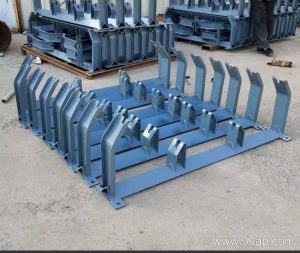
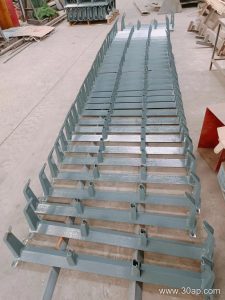
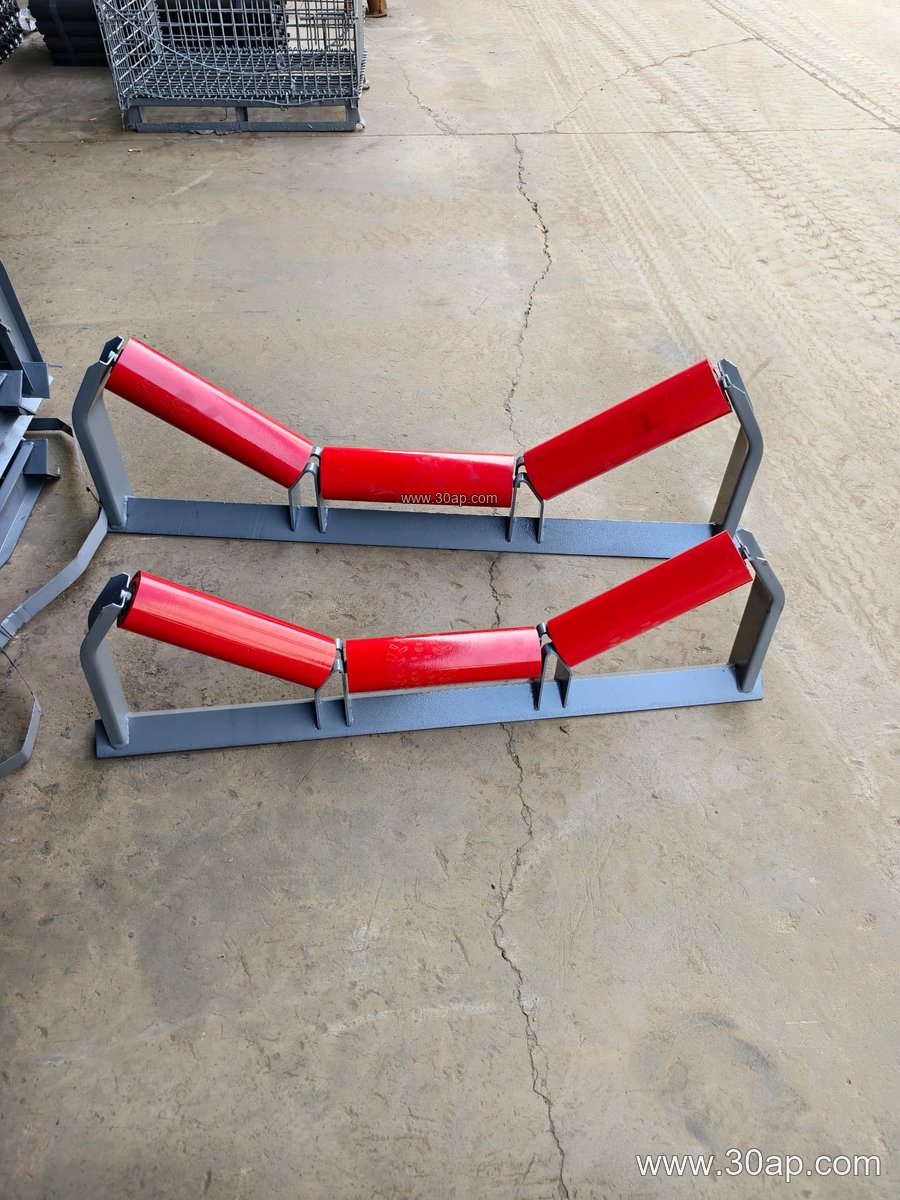
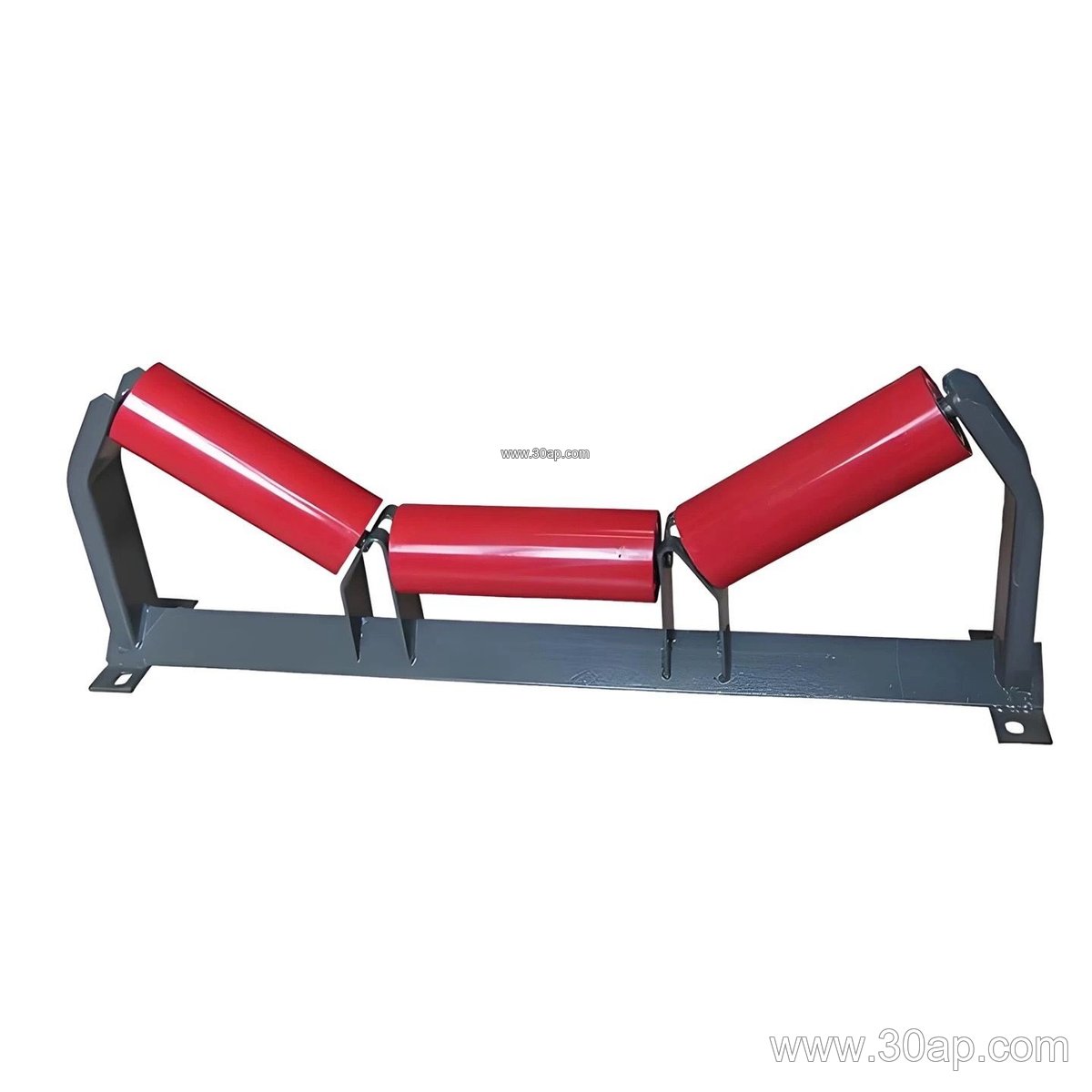
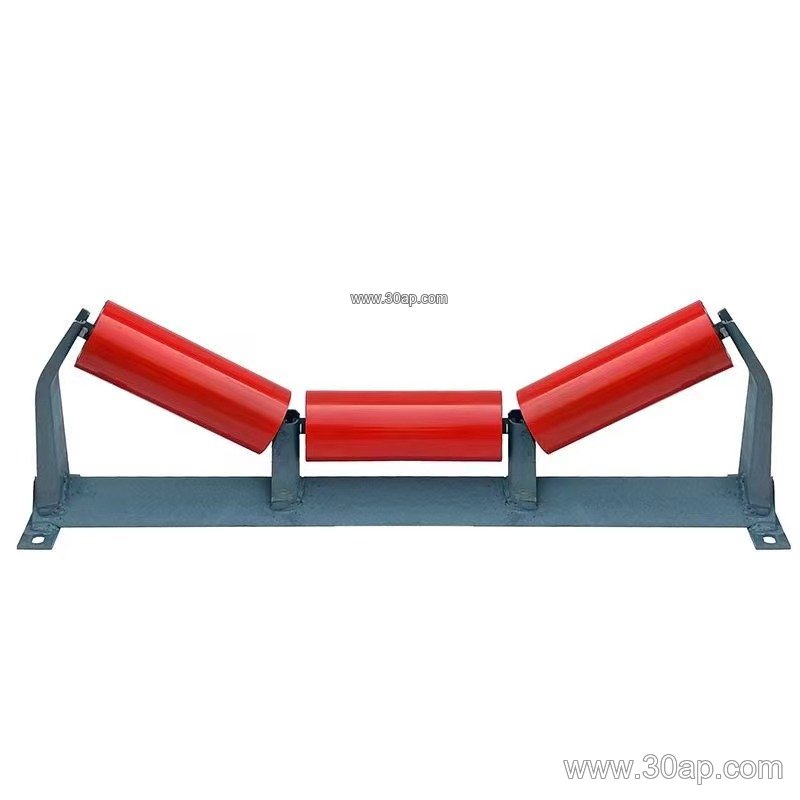
A trough idler bracket set is the mounting frame that holds the three-roll troughing assembly on the carrying side of a conveyor. In everyday plant language it is often called a troughing bracket set or a troughing idler frame. The set supports the angled side rollers and the centre roller so that the conveyor belt forms a trough, keeping bulk material centred on the belt. Without a correctly aligned bracket set, the idler rollers sit unevenly, the belt trains poorly and spillage increases.
The set is a structural part, not a wear part in the same sense as the roller shell. It locates the idler roller shafts at the right height and angle along the conveyor stringer. In a quarry, a coal washing plant or a cement kiln feed line, this frame is one of the most repeated components on the whole conveyor.
Construction and Common Materials
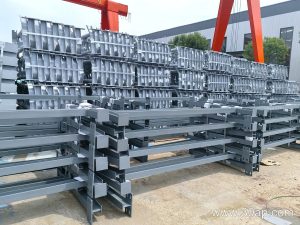
Most trough idler bracket sets are fabricated from angle steel, channel steel or folded steel plate. The two end brackets carry the side rollers at the trough angle, while the centre bracket or cross beam supports the middle roller. Slots or drilled holes allow the rollers to be positioned and, on adjustable designs, the trough angle to be changed.
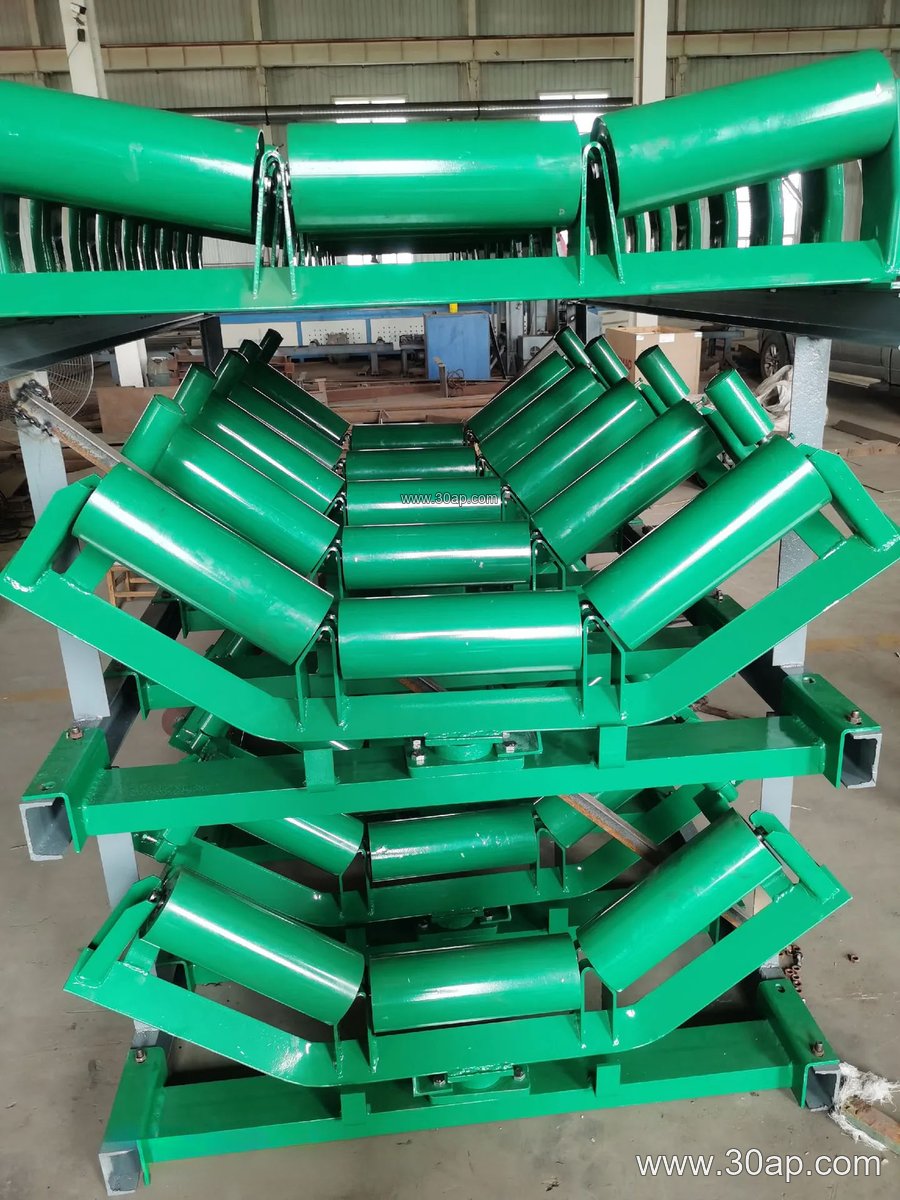
- End brackets formed from angle or folded plate
- Cross beam in channel or folded section
- Mounting slots for shaft location and adjustment
- Bolted or welded connection to the conveyor stringer
Installation hole spacing and cross beam length usually follow the belt width and trough angle, so they are determined by design rather than fixed for every conveyor.
Where It Fits on the Conveyor
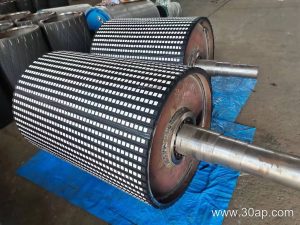
The bracket set belongs to the carrying run. It is not a substitute for a conveyor pulley at the drive, tail or bend position, and it is not the same as a return bracket on the lower strand. A typical arrangement uses trough idler bracket sets spaced along the carrying side, return brackets underneath, and a conveyor pulley at each end to drive and tension the conveyor belt.
In a limestone mine or a sand and gravel line, troughing sets are usually spaced closer together at the loading point and further apart on the long straight sections. Buffer or impact bracket arrangements are often used under the chute where material falls onto the belt.
Common Sizes and Configurations
The table below shows indicative combinations only. Belt width, trough angle and roller diameter are selected together with the conveyor design, and one belt width does not lock the conveyor to a single angle or roller size.
| Belt width | Trough angle | Roller diameter | Typical use |
|---|---|---|---|
| B500 | 20 degrees | Ø89 | Small transfer conveyors |
| B650 | 30 degrees | Ø89 | Aggregate and sand lines |
| B800 | 35 degrees | Ø108 | General bulk handling |
| B1000 | 35 degrees | Ø108 | Coal and cement plants |
| B1200 | 45 degrees | Ø133 | High capacity carrying runs |
| B1400 | 35 degrees | Ø133 | Iron ore and sinter lines |
| B1600 | 45 degrees | Ø159 | Port and power plant conveyors |
| B1800 to B2200 | 35 to 45 degrees | Ø159 to Ø194 | Heavy duty bulk systems |
Adjustable bracket sets can be set between common trough angles such as 20, 30, 35 and 45 degrees. Forward tilted brackets, often around 1.5 to 2 degrees, are a separate design choice used for belt training, and they should not be confused with a standard fixed troughing set.
Buyer Checklist
Before ordering a trough idler bracket set, confirm the belt width, the required trough angle, the idler roller diameter and the shaft end type. Check the stringer hole pattern on the existing conveyor, because a bracket that does not match the frame will not align the rollers correctly. Ask whether the set is fixed or adjustable, and whether the application needs impact or training features.
Material and surface treatment matter in wet or dusty plants. A galvanised or painted finish is common, but the correct choice depends on the site. Finally, keep spare bracket sets for the most heavily loaded positions, since a bent bracket can disturb belt tracking long before the rollers themselves wear out.