What a Corrugated Sidewall Conveyor Belt Is
A corrugated sidewall conveyor belt is a heavy-duty rubber belt fitted with raised, wave-shaped walls along both edges. The sidewalls let the belt carry bulk material at steep angles, sometimes close to vertical, without the material sliding back or spilling over the edges. In mining, coal preparation, cement plants, power stations and aggregate yards, this design often replaces a conventional troughed conveyor plus an inclined transfer tower, saving space and transfer points. The same product is also known as a sidewall belt or a belt with corrugated cleats and sidewalls.
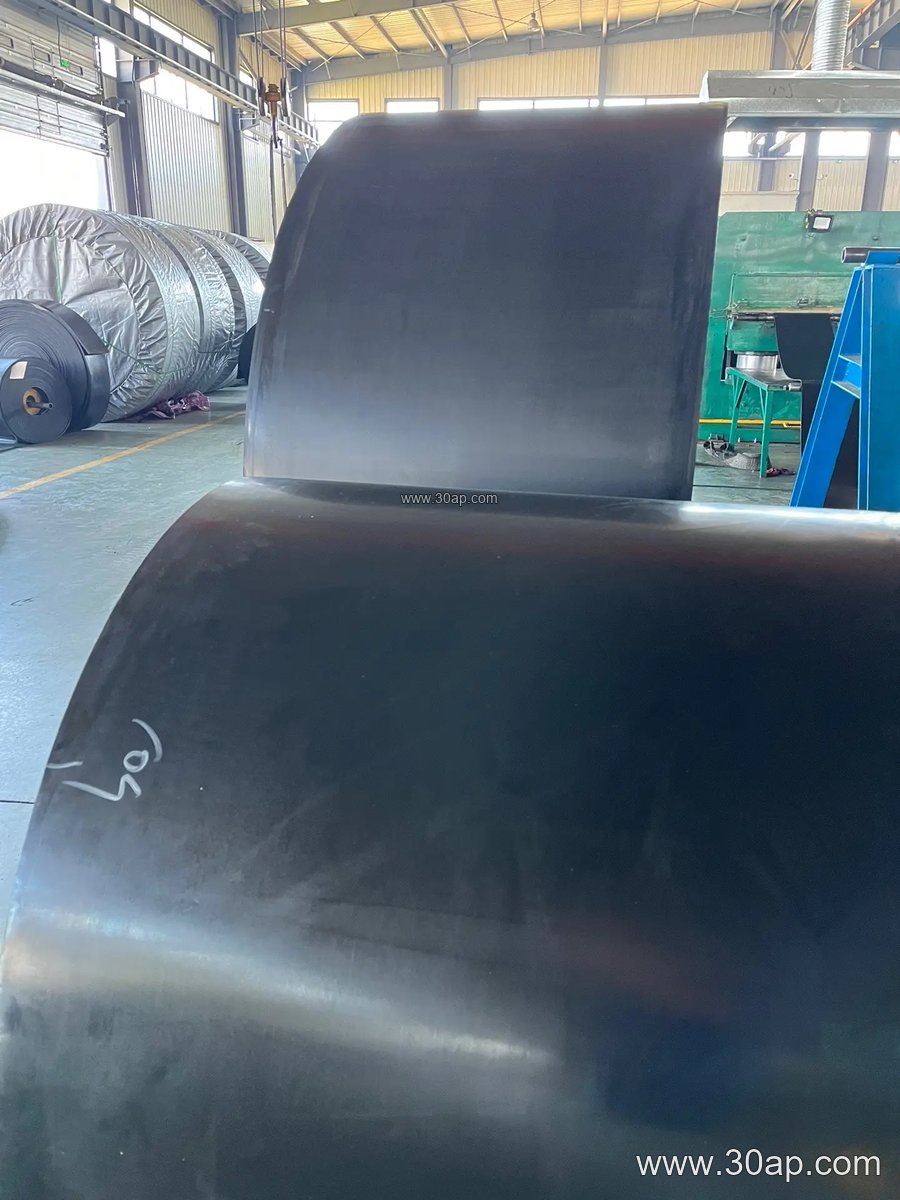
How the Belt Is Built
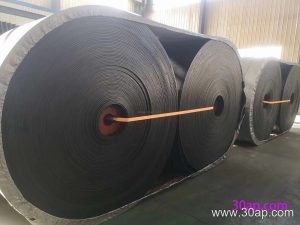
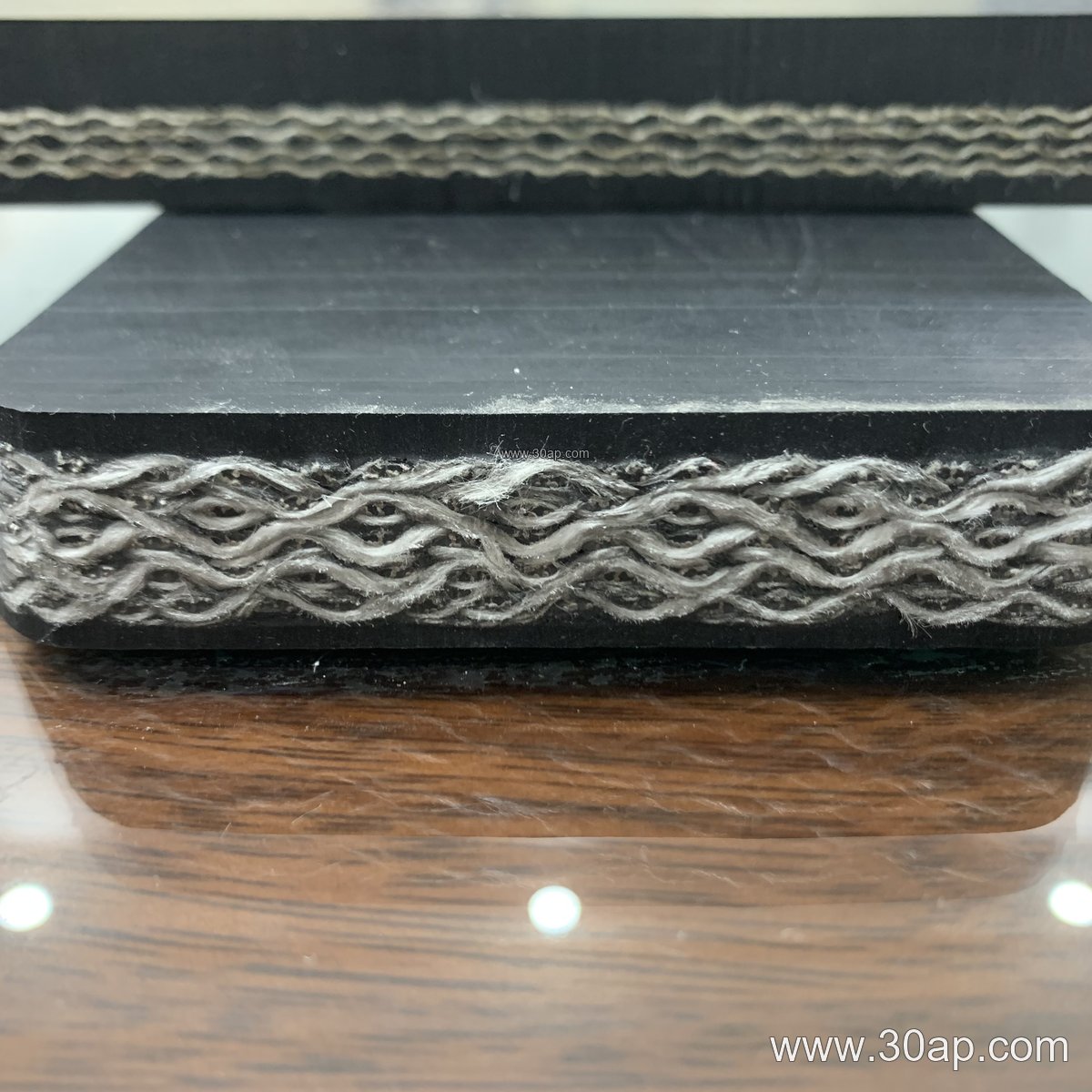
The base belt is usually a multi-ply fabric construction. Common carcass options include EP (polyester-cotton) and NN nylon plies, with 2 to 6 layers typical; steel cord carcass is used for higher tensions. Cross-rigid cleats are vulcanized between the two sidewalls at intervals, forming open boxes that hold the load. The sidewalls and cleats are made from rubber compounds selected for abrasion, oil, heat or flame resistance as the duty requires. Cover rubber grades such as 3+1.5, 4+2, 5+2, 6+2 and 8+3 mm are often quoted, with the first figure being the top cover and the second the bottom cover.
Common Specifications
The table below shows reference values; actual sizes depend on the conveyor design and the manufacturer. These are not fixed pairings, and a given belt width does not dictate one pulley or shaft size.
| Parameter | Typical reference values |
|---|---|
| Belt width | B500, B650, B800, B1000, B1200, B1400, B1600, B1800, B2000 |
| Carcass type | EP, NN nylon, steel cord |
| Tensile strength (EP) | EP200, EP315, EP400, EP500, EP630, EP800, EP1000, EP1250, EP1600, EP2000 |
| Cover thickness | 3+1.5, 4+2, 5+2, 6+2, 8+3 mm |
| Sidewall height | Commonly 40 to 200 mm, set by the required capacity |
| Cleat pitch | Usually 100 to 500 mm, chosen for the material and incline |
Where It Fits in a Conveyor
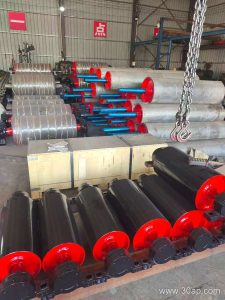
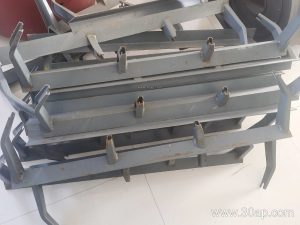
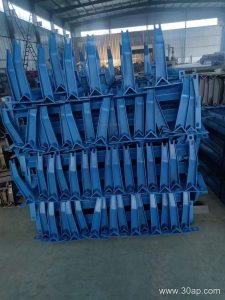
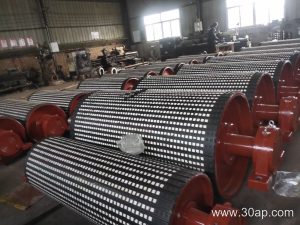
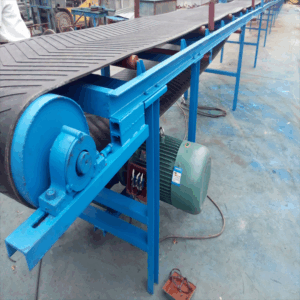
The belt runs between drive, tail and bend pulleys, with the bend pulleys keeping the sidewalls clear of the return path. Idler rollers support the carrying run, and conveyor brackets hold the frame and pulley assemblies in place. Because the sidewalls are tall and stiff, the pulley diameters and transition lengths must be matched to the belt by the conveyor designer. Do not assume that a specific belt width implies a particular pulley diameter or shaft size; those come from the tension and torque calculation.
Applications Across Industries
- Coal mines and coal handling plants: inclined haulage from bunkers and stockpiles.
- Cement plants: clinker, limestone and raw meal lifts.
- Power stations: fuel and ash transport on confined layouts.
- Sand and gravel yards: steep stockpile feed and barge or truck loading.
- Fertilizer, salt and other bulk chemical plants where spillage must be controlled.
The ability to run at steep angles also reduces the number of transfer points, which lowers dust generation and maintenance work on conveyor pulleys and idler rollers.
What a Buyer Should Check
Start with the material: lump size, bulk density, moisture, temperature and any oil or chemical exposure. These decide the carcass, cover grade and sidewall compound. Next, confirm the incline angle and capacity, since the cleat pitch and sidewall height must match the duty. Ask for the belt drawing showing sidewall position, cleat spacing and splice details. For flame or antistatic service in coal and underground work, specify the required grade in writing. Finally, confirm that the drive, tail and bend pulleys, plus the supporting idler rollers and conveyor brackets, are engineered for the selected belt. A sidewall belt is not a drop-in replacement for a standard conveyor belt, so the whole conveyor geometry should be reviewed before ordering.