What a Conveyor Vertical Roller Does
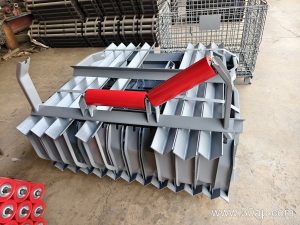
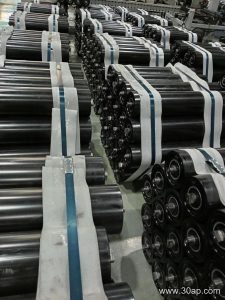
A conveyor vertical roller is the inclined side roll in a troughing idler set. Mounted on a bracket at the wing position, it lifts the edges of the conveyor belt so the belt forms a trough that keeps bulk material centered on the carrying run. In most installations the vertical roller works together with a horizontal center roll, and the pair is often described simply as a troughing idler or carrying idler. The roller itself is a steel tube with bearing housings at each end, a shaft, and sealing that keeps dust and moisture away from the bearings.
The name comes from the roll’s position rather than its shape. In a three-roll troughing set, the two outer rolls sit at an angle and are therefore called vertical rollers or side rollers, while the middle one is the center roll. Two-roll sets use the same idea with a single inclined roll on each side. The exact tilt is set by the bracket, not by the roller alone.
Construction and Surface Options
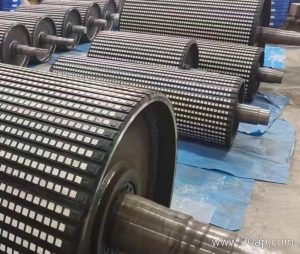
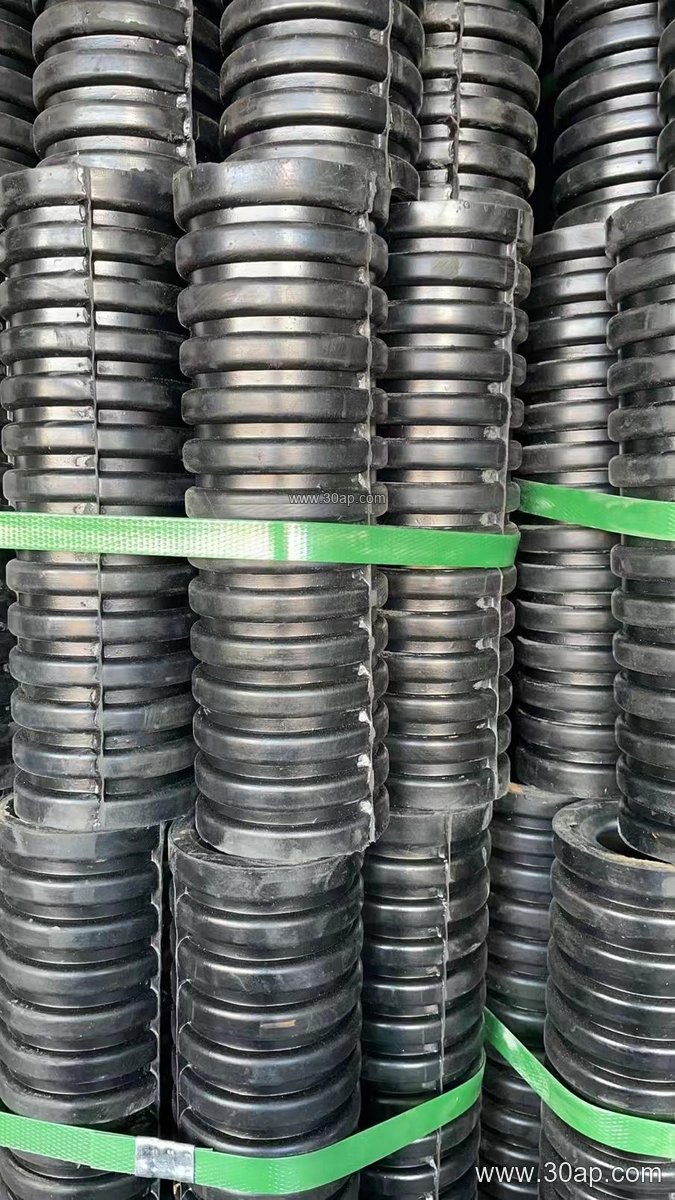
A typical vertical roller combines a tube, a shaft, bearing units, and a sealing arrangement. Tube materials include plain steel, nylon-coated steel, and ceramic-covered steel, and rubber rings are used where impact or noise matters. Bearing sizes vary with load and roll diameter; common choices include 6204, 6205, 6305, 6306, 6308, and 6310, matched to the duty rather than to a single tube size.
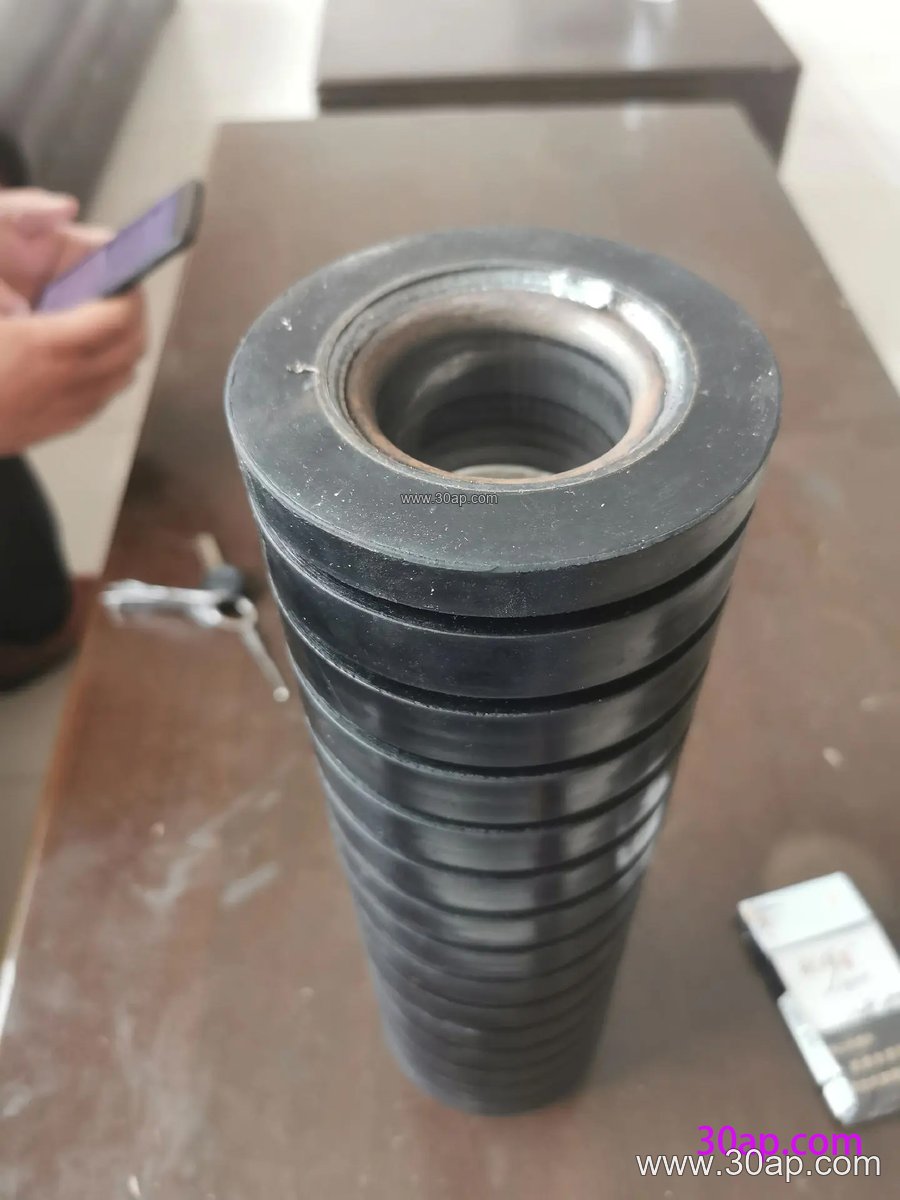
- Tube: steel, nylon, ceramic, or rubber-ringed
- Bearing: deep-groove ball bearings in stamped or cast housings
- Seal: labyrinth or contact seal, sometimes with a dust lip
- Shaft: flat or stepped ends to fit the conveyor bracket
Roller diameter is chosen from the load and belt speed. Common diameters run from Ø63 and Ø76 for light duties up to Ø159, Ø178, Ø194, and Ø219 for heavy carrying runs, with Ø89, Ø102, Ø108, Ø127, and Ø133 covering much of the middle range. Roll length changes with belt width, trough angle, and the number of rolls in the set, so the side roll is not always the same length as the center roll.
Where Vertical Rollers Are Used
These rollers appear wherever a belt must be shaped into a trough. In a limestone quarry or sand and gravel line they carry crushed rock on the main haulage conveyor. In a coal preparation plant and in a power station coal yard they keep damp, heavy fuel centered through long runs. Cement plants use them on clinker and raw meal belts, while a steel works or sinter plant relies on them in hot and dusty service where sealing quality matters.
Transition zones between the tail pulley and the first full troughing set are a special case. Here the belt changes from flat to troughed, and transition idlers with smaller angles are often fitted so the belt is not over-stressed. The vertical roller in these sets may be shallower in angle than the standard 20, 30, 35, or 45 degree arrangement used farther along the line.
Matching Roller, Belt, and Bracket
Belt width and roll length are linked, but not in a fixed one-to-one way. For reference, three-roll troughing sets commonly use side roll lengths of about 200 mm at B500, 250 mm at B650, 315 mm at B800, 380 mm at B1000, 465 mm at B1200, 530 mm at B1400, 600 mm at B1600, 670 mm at B1800, and 750 mm at B2000. These are typical examples only; side rolls and center rolls can differ, and the final length is set by the bracket design and trough angle.
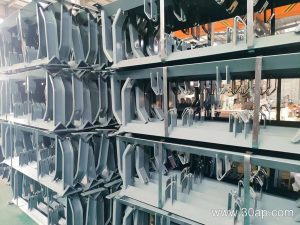
Buyers should confirm the shaft end form, the bracket hole spacing, and the trough angle before ordering. A roller that fits the belt but not the conveyor bracket is useless. It also helps to state the environment: wet washing plant, dusty crushing circuit, or outdoor stockyard all point to different seal and surface choices.
Maintenance Notes
Check vertical rollers for free rotation and for seal leakage during routine walks. A seized side roll can wear the belt edge quickly, and a roller running dry will usually show heat or noise before it fails. Keep spare rollers matched to the installed diameter, length, and bearing size so a replacement does not disturb the trough profile. When replacing a set, inspect the conveyor bracket for wear or misalignment, because a loose bracket changes the roll angle and the belt path.