What a Belt Conveyor Trough Idler Does
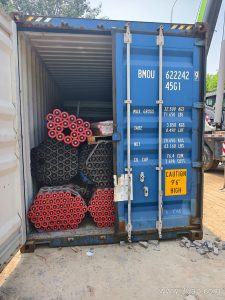
A belt conveyor trough idler is the set of rollers that supports the loaded side of a conveyor belt and shapes it into a trough. The angled rolls lift the belt edges, so loose material sits in a shallow channel instead of spilling over the sides. In a quarry, a coal preparation plant, or a cement plant, this troughing roll assembly carries the belt between the loading point and the discharge pulley, and it is one of the most frequently replaced wear parts on the line.
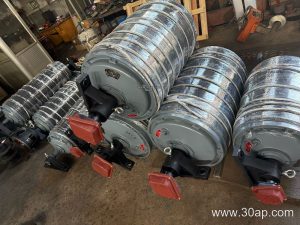
The same component is also called a troughing idler or a carrying idler. It is not a drive pulley, a tail pulley, or a bend pulley; those parts transmit power or change belt direction, while the trough idler only supports and guides the belt.
How the Assembly Is Built
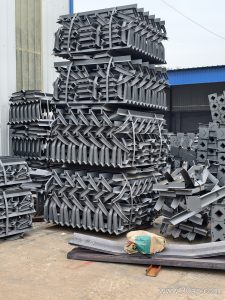
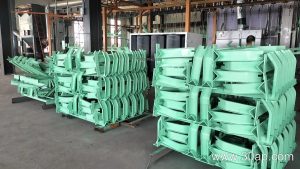
A typical station uses two or three rolls mounted on a common frame. Three-roll sets are common on wider belts, with a shorter centre roll and two side rolls set at an angle. Each roll body is usually a steel tube fitted with a shaft, sealed bearings, and a labyrinth or contact seal to keep out dust and water. Roll surfaces may be plain steel, nylon, ceramic, or rubber rings, and the choice depends on whether the aim is long wear life, low belt friction, or impact damping.
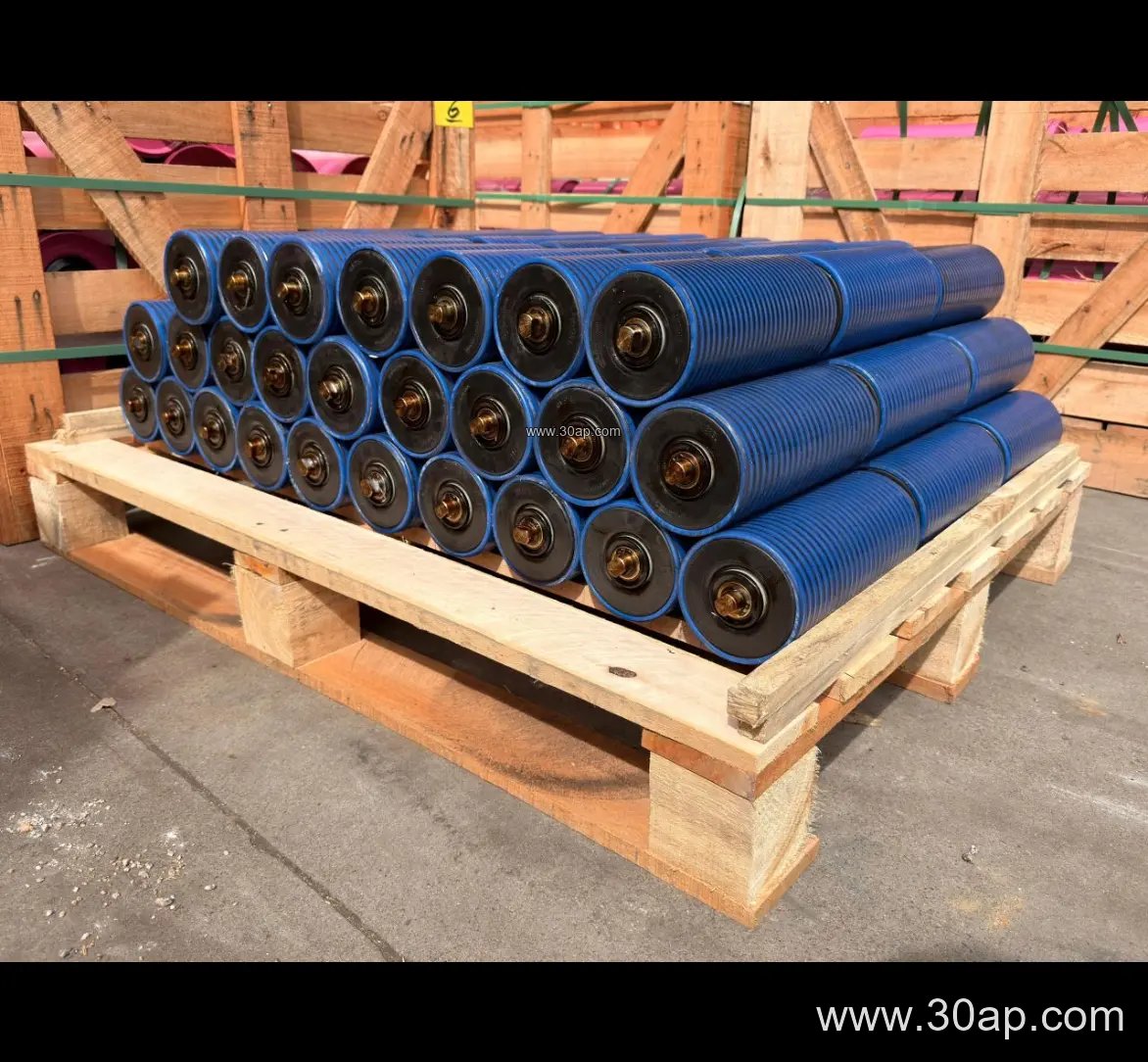
- Roll diameter: commonly Ø89, Ø102, Ø108, Ø127, Ø133, Ø159, or larger for heavy belts
- Trough angle: often 20, 30, 35, or 45 degrees
- Roll length: set by belt width, trough angle, and frame design
- Bearings: 6204, 6205, 6305, 6306, 6308, or 6310 are common, matched to load and speed
Roll length is not fixed by belt width alone. As a rough reference, three-roll sets on B500 may use rolls around 200 mm long, B800 around 315 mm, B1200 around 465 mm, and B1800 around 670 mm, but side rolls and centre rolls can differ, and the final figure comes from the conveyor design.
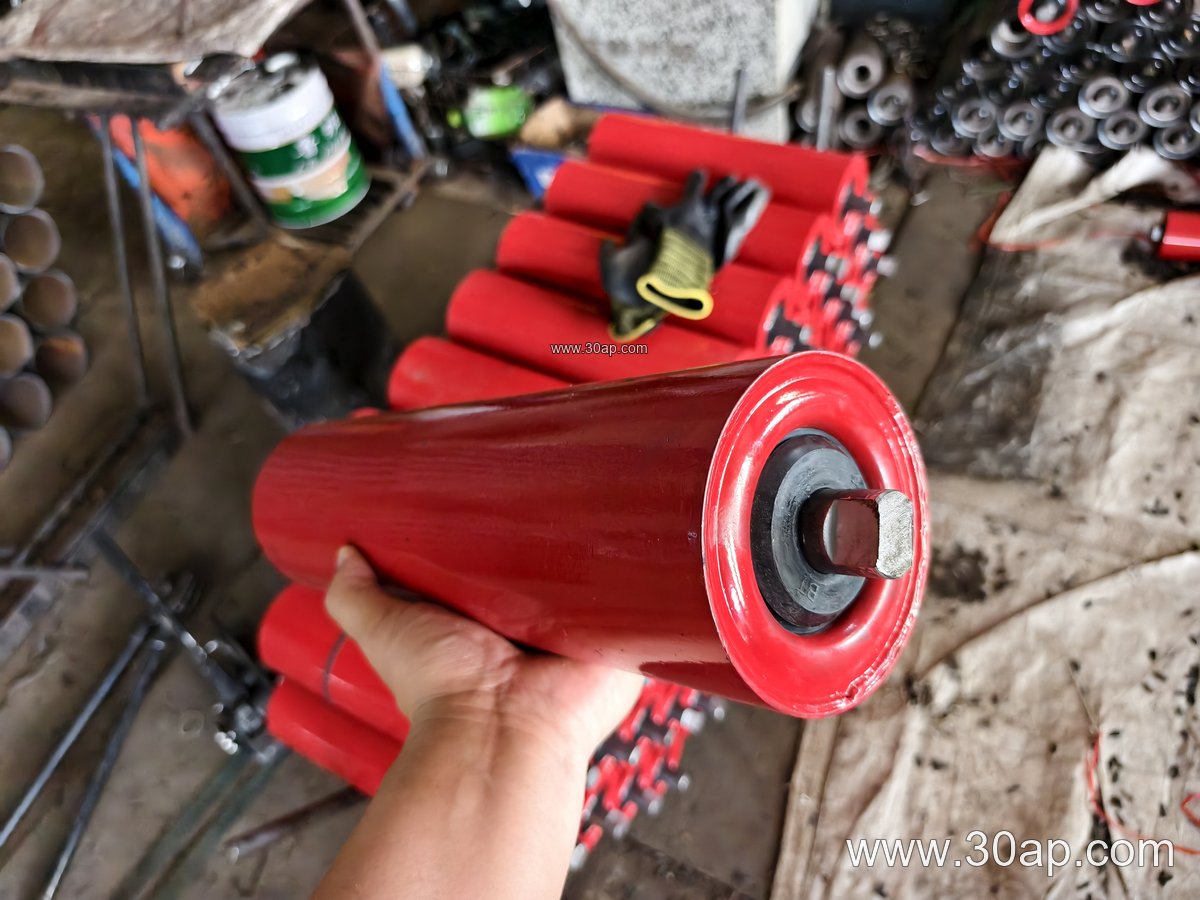
Where Trough Idlers Are Used
These idlers appear wherever a belt carries bulk material. In an iron ore or copper ore operation they support heavy, abrasive loads on long overland lines. In a power plant coal yard they keep fuel centered on the belt before it reaches the crusher house. Aggregate and sand plants use them under crusher discharge belts, while a port or ship loading system relies on them to hold a steady trough profile at high capacity. The belt itself may be an abrasion resistant conveyor belt, a flame retardant conveyor belt for coal service, or a steel cord conveyor belt on a long, high-tension route.
Selection should match the trough idler to the belt and the load, not the other way round. A heavy-duty mining conveyor belt with a thick cover needs rolls that can carry the weight without excessive deflection. A fabric core conveyor belt on a shorter line may accept a lighter, smaller-diameter roll. Matching the idler to the conveyor pulley layout also matters, because belt tension and sag between the head pulley and tail pulley affect how the troughing rolls perform.
Specification Reference
The table below shows common reference values, not fixed supply commitments. Actual dimensions follow the conveyor design, belt width, and duty.
| Item | Common Reference Values |
|---|---|
| Idler type | Troughing, carrying, three-roll or two-roll |
| Roll diameter | Ø63 to Ø219 mm depending on load |
| Belt width | B400, B500, B650, B800, B1000, B1200, B1400, B1600, B1800, B2000 |
| Trough angle | 20°, 30°, 35°, 45° |
| Roll surface | Steel, nylon, ceramic, rubber ring |
| Bearing | 6204, 6205, 6305, 6306, 6308, 6310 |
For example, a B1000 belt on a three-roll 35-degree set may use rolls near 380 mm long, while a B1400 line may use rolls near 530 mm. These are typical examples only; the frame, shaft, and bearing are chosen from the calculated load.
Buyer Checklist
Before ordering, confirm the belt width, the trough angle, the number of rolls, the roll diameter, and the shaft and bearing arrangement. Ask how the seal is designed, since dust ingress is a leading cause of idler failure in crushing and screening circuits. Check that the roll surface suits the material: rubber rings help at transfer points with falling lumps, while ceramic or nylon may suit abrasive fines. Also confirm the mounting dimensions fit the existing conveyor bracket and frame, and that replacement rolls match the current troughing set.
On site, check for seized rolls, worn shells, and misaligned frames during routine walks. A worn trough idler can let the belt sag, spill material, and increase power draw. Replacing a failed roll early is usually cheaper than repairing the belt and the pulley downstream.