What a Heavy-Duty Conveyor Pulley Does on a Bulk Line
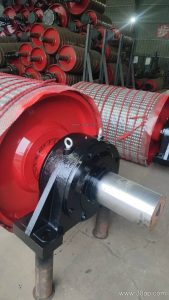
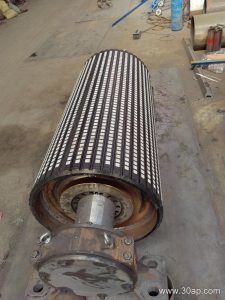
A heavy-duty conveyor pulley is the rotating drum that transfers motion to the conveyor belt and carries the belt’s tension at the head, tail, or bend points of a conveyor. In a limestone quarry or a coal preparation plant, the pulley is often the part that decides whether the belt tracks cleanly under full load. It is not simply a tube with a shaft; it is a complete assembly of shell, shaft, hubs, lagging, and bearing housings built to survive grit, moisture, and continuous starting torque.
The accurate equivalent name for this component is a heavy-duty conveyor drum pulley. Both terms describe the same assembly, and both appear in specifications and spare-parts lists.
How the Assembly Is Built
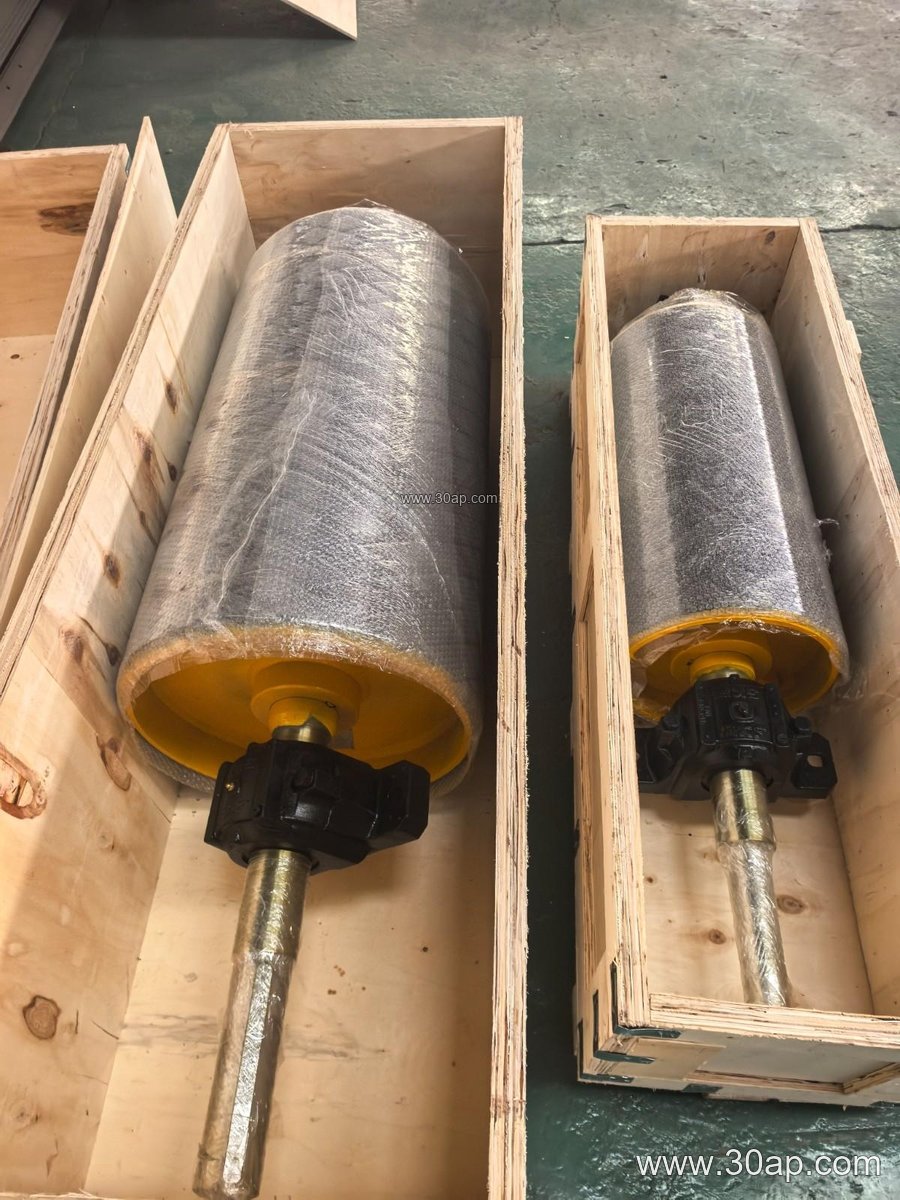
The shell is usually a rolled steel cylinder, machined at the ends and welded to end discs or hubs. The shaft is sized from torque and radial load, not from belt width alone, so a B800 line and a B1200 line may use very different shaft diameters depending on wrap angle and tension. Common shaft diameters include Ø80, Ø100, Ø120, Ø140, Ø160, and Ø180, but the final value is set by design calculation.
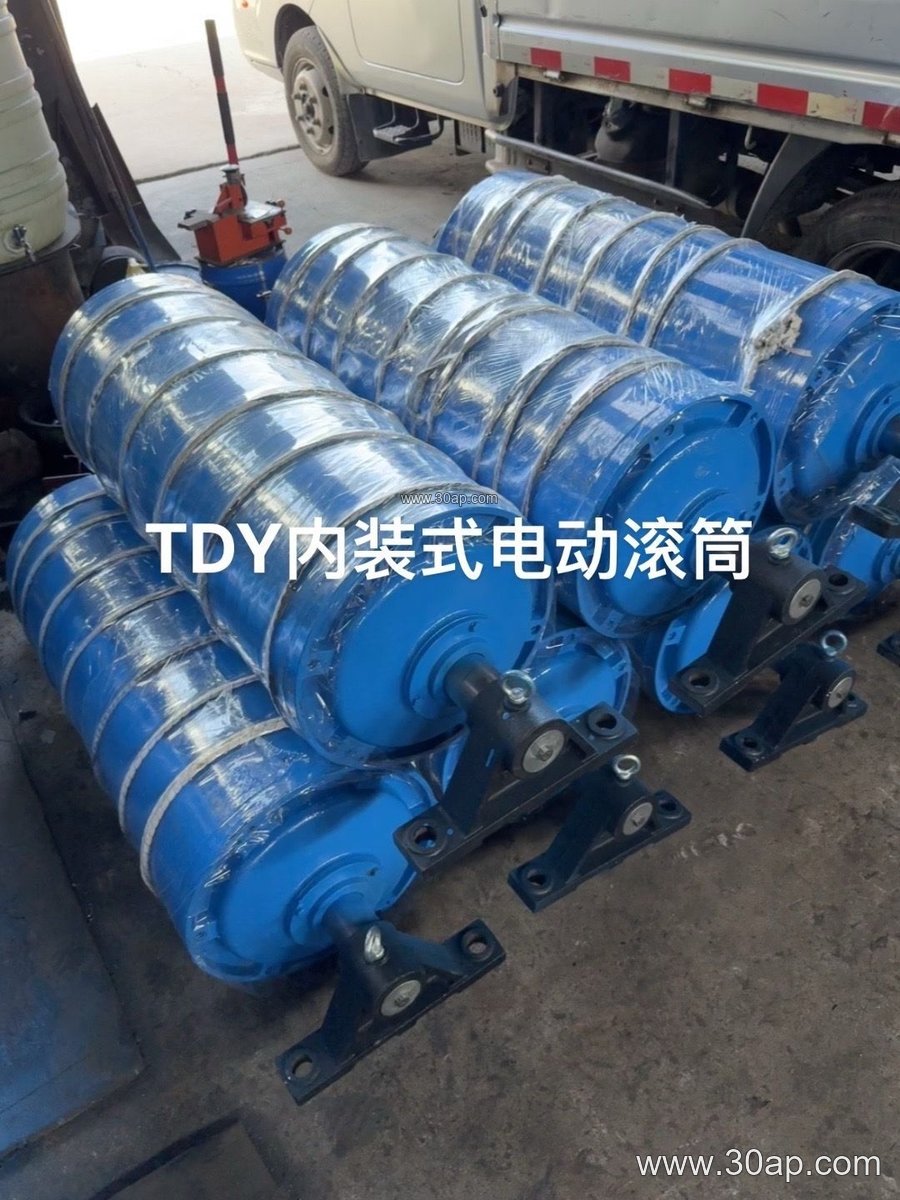
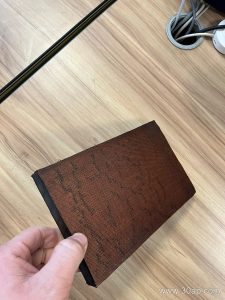
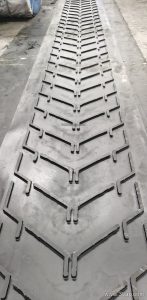
Lagging is the outer layer that grips the belt. Plain finish suits some non-drive positions, while rubber lagging is common on drive pulleys in wet or dusty service. Diamond and herringbone patterns help shed water and fines; ceramic lagging is chosen where slip and abrasion are severe. Lagging thickness is often 8, 10, 12, 15, or 20 mm, selected with the duty rather than copied from a catalogue.
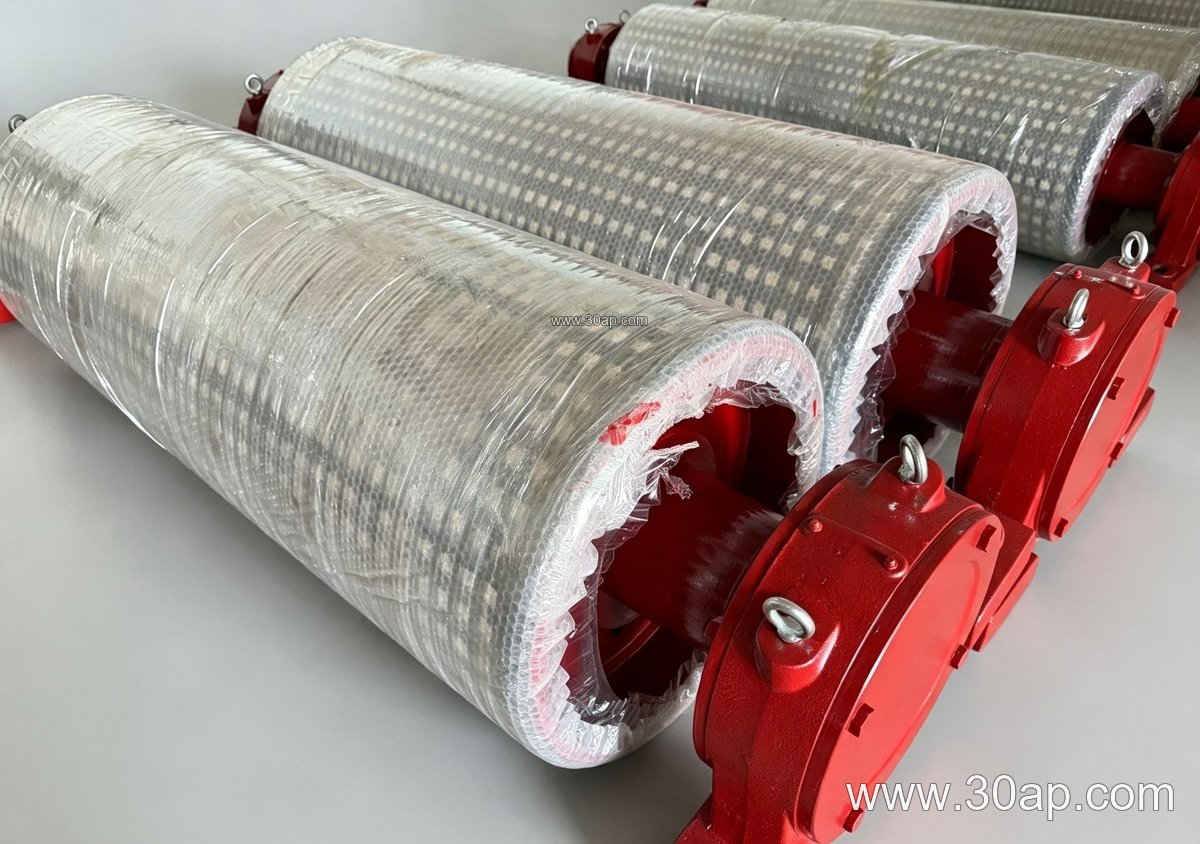
- Shell and end discs welded and machined for concentricity
- Shaft with keyed or shrink-fit hubs
- Bearing housings with seals against dust and washdown
- Lagging bonded or vulcanized to the shell surface
Where It Fits in the Line
Position matters. A drive pulley at the head pulls the loaded belt and usually carries the highest tension, so it gets the strongest lagging and the heaviest bearing support. A tail pulley at the loading end turns the belt back and often runs in the dirtiest area. A bend pulley changes belt direction and may see high wrap angles without driving. These roles are not interchangeable, and a tail pulley should never be substituted for a drive pulley in a specification.
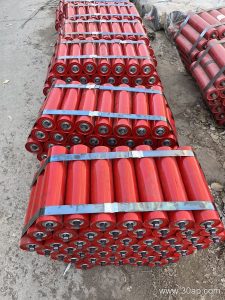
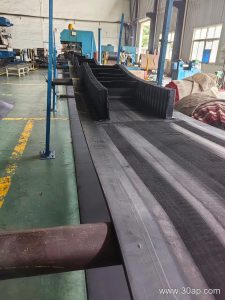
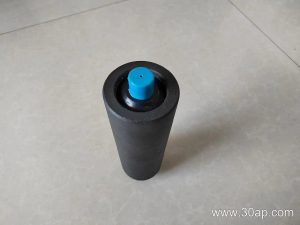
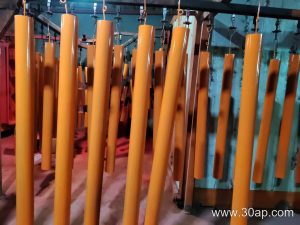
Typical service locations include aggregate crushing and screening circuits, cement clinker lines, power station coal handling, and port bulk terminals. In each case the pulley works alongside the conveyor belt, conveyor idler rollers, and conveyor brackets, so alignment of the whole frame affects pulley life as much as the pulley itself.
Common Reference Sizes
The table below shows reference combinations, not fixed rules. A given belt width can accept more than one pulley diameter, and shaft size still depends on load.
| Belt width | Typical pulley face width | Example diameter |
|---|---|---|
| B400 | about 500 mm | Ø200, Ø250 |
| B650 | about 750 mm | Ø315, Ø400 |
| B800 | about 950 mm | Ø500 |
| B1000 | about 1150 mm | Ø630, Ø800 |
| B1200 | about 1400 mm | Ø1000 |
| B1400 | about 1600 mm | Ø800, Ø1000 |
| B1600 | about 1800 mm | Ø1250 |
Face width is usually slightly wider than the belt so the belt does not run off the shell edge. Larger diameters reduce belt bending stress and can extend belt life, but they also raise frame height and cost.
What Buyers Should Check Before Ordering
Start with the duty: peak tension, wrap angle, belt speed, and whether the pulley drives, turns, or only redirects. Confirm the lagging type and thickness against the material and moisture level. Check that the shaft diameter and bearing size match the calculated load, and that the face width suits the belt. Ask for the balancing grade and runout tolerance if the belt runs fast.
Finally, plan maintenance. Grease points, seal condition, and lagging wear should be inspected on a schedule, because a worn drive pulley in a dusty cement plant can slip and damage the belt long before the shell fails. Matching the pulley to the conveyor belt, idler rollers, and brackets as one system is the most reliable way to keep a heavy-duty line running.