What a V-Type Idler Bracket Does
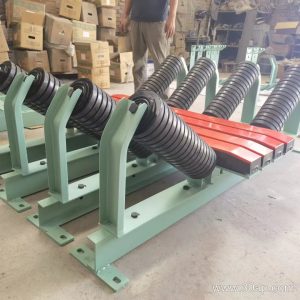
A V-Type Idler Bracket is a return-side support frame that holds two idler rollers in a shallow V arrangement beneath the carrying run of a conveyor belt. Because the two rolls sit at an angle rather than flat, the belt rests in the trough formed by the bracket and tends to stay centred as it travels. In a coal preparation plant or a limestone crushing line, this self-centring effect reduces edge damage and spillage on the return strand, which is often where belt misalignment first becomes visible.
The bracket is a distinct component from the carrying-side frames. It should not be confused with a troughing bracket used on the top run, nor with a transition or impact bracket, each of which serves a different position and load case. The V-Type Idler Bracket is specifically a return-frame item, commonly paired with a pair of return idler rollers.
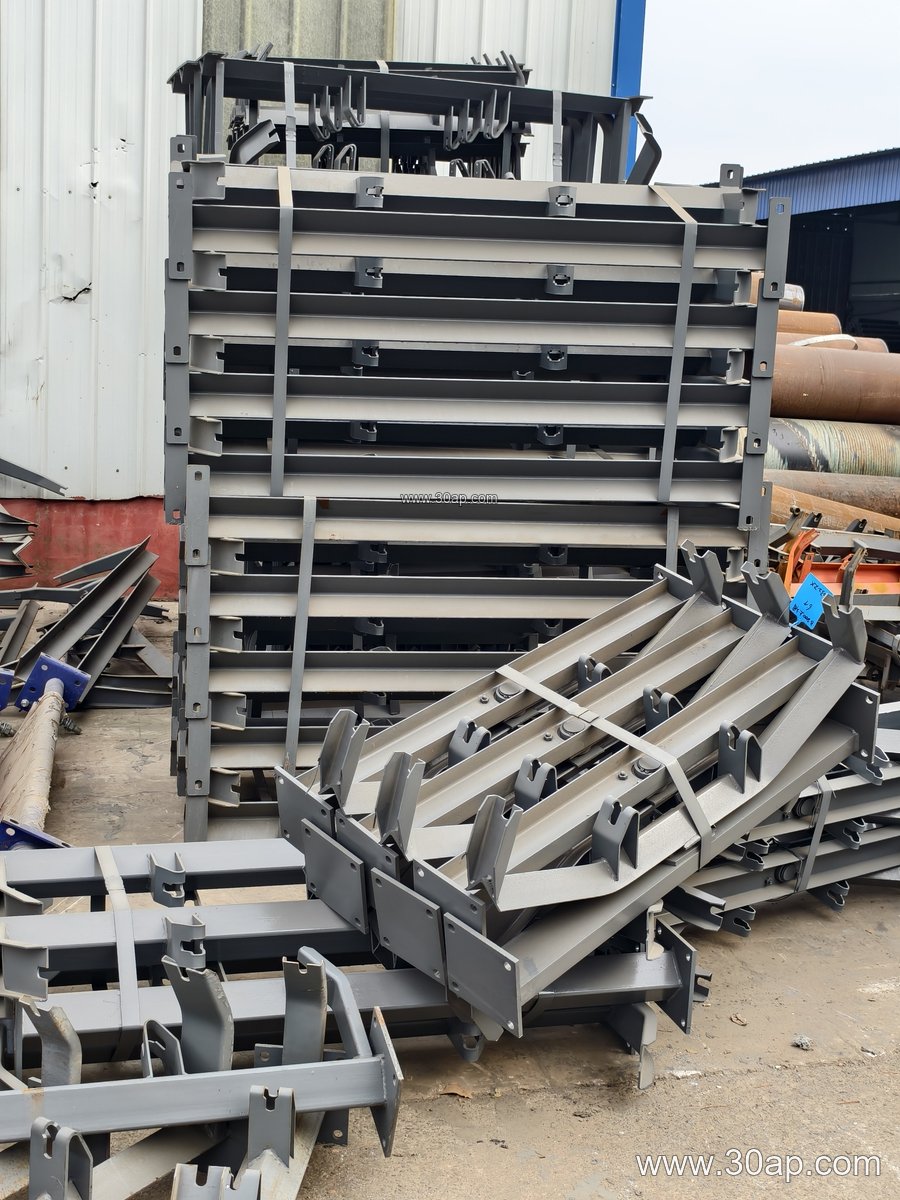
Construction and Typical Materials
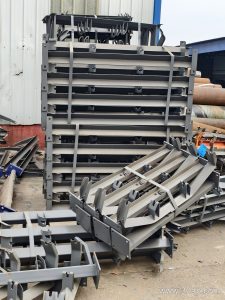
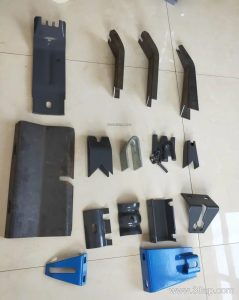
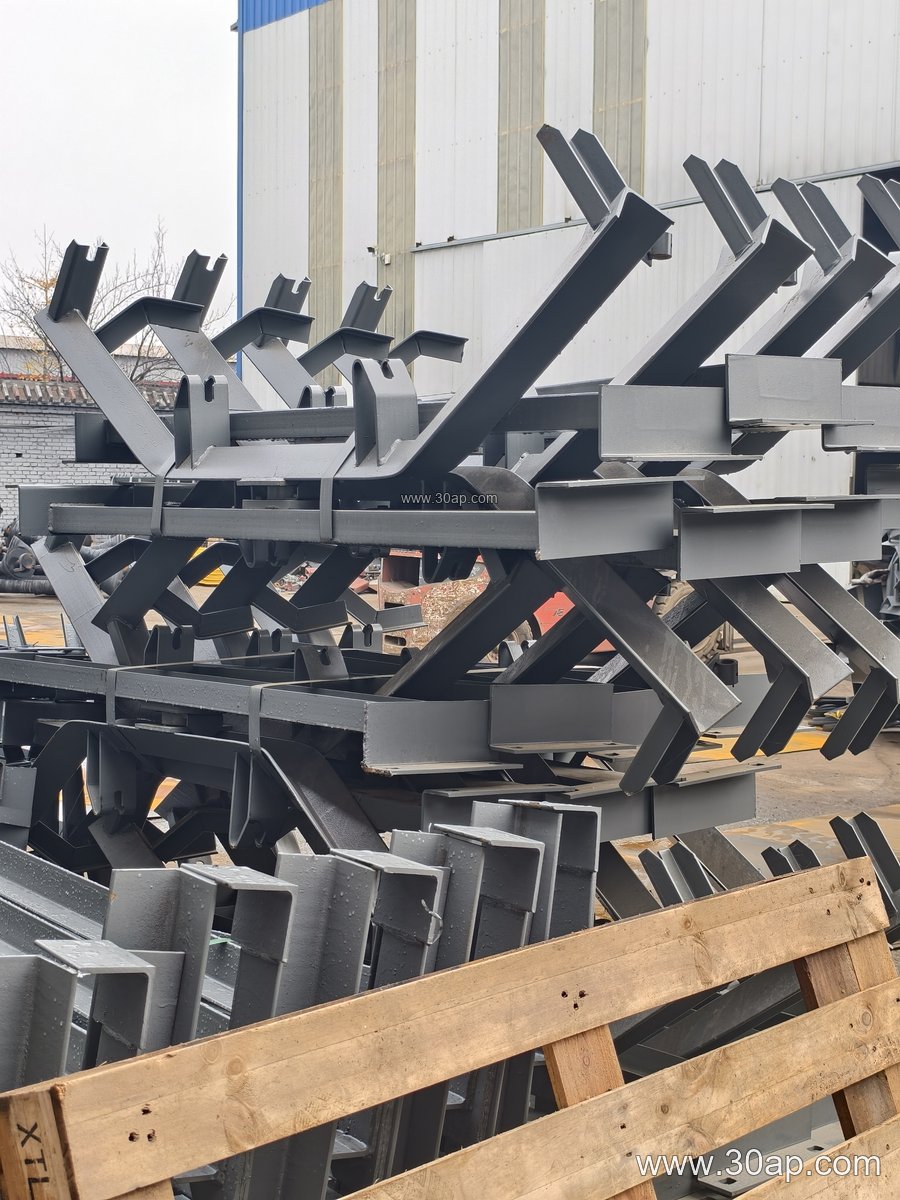
Most brackets are fabricated from angle steel, channel steel, or folded steel plate, then drilled for mounting and welded at the V angle. The finish is usually painted or galvanised, depending on the environment. In a port terminal handling damp bulk cargo, galvanised or coated frames are often preferred, while a dry sand and gravel line may use painted steel.
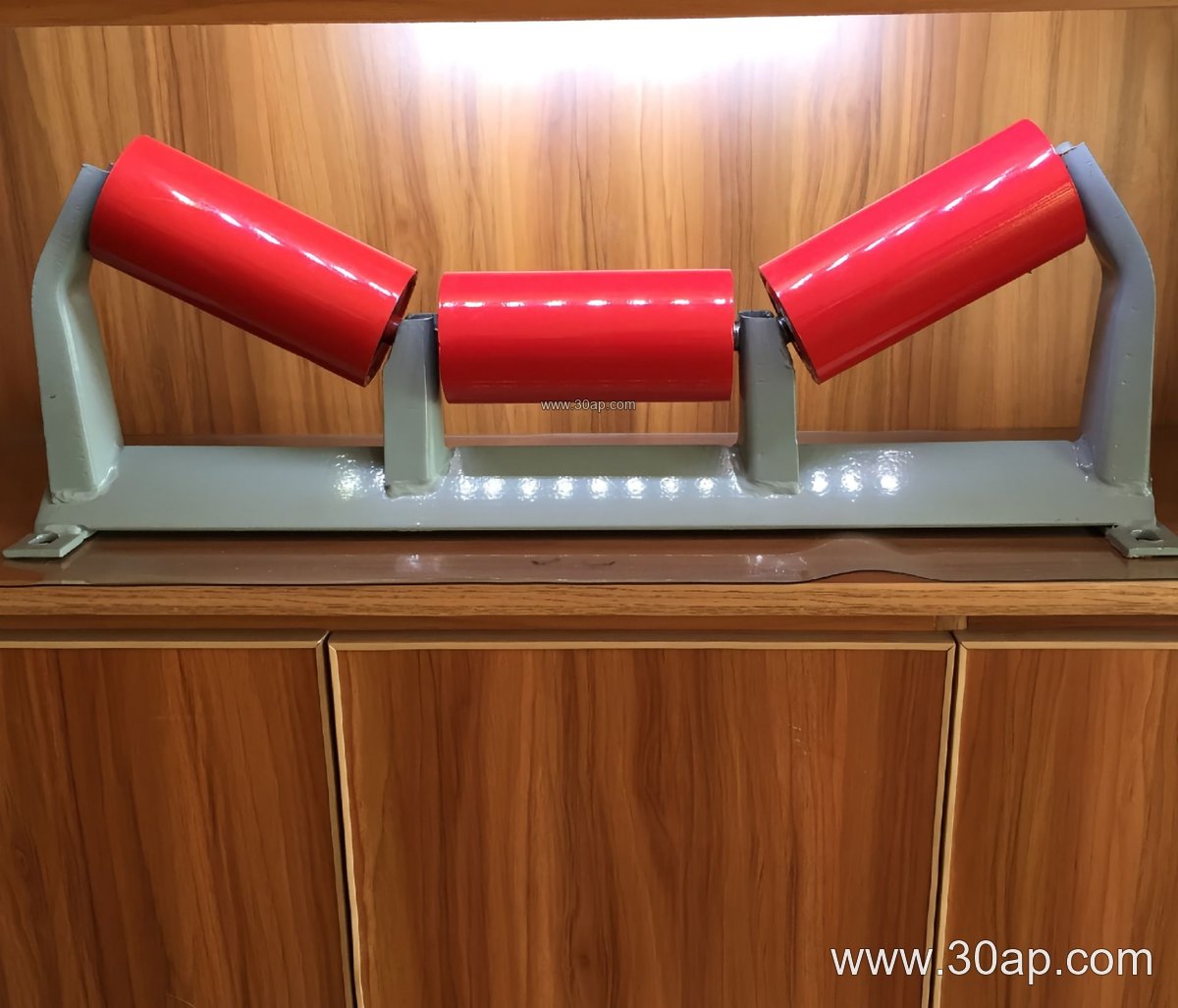
Key details a fabricator controls include the V angle, the mounting hole spacing, the crossbeam length, and the roll support seats. These are determined by the belt width and the idler diameter selected for the return run, so they vary from one installation to another rather than following one fixed pattern.
Where It Fits in a Conveyor
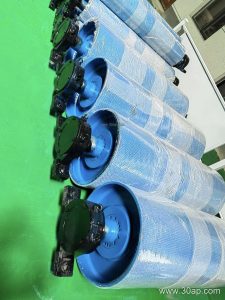
The bracket is bolted to the conveyor stringer or frame, below the return strand, at intervals along the return run. It works together with the conveyor belt, the return idler rollers, and the conveyor pulley at the drive and tail ends. In a cement plant or a power station coal yard, return brackets are usually spaced more widely than carrying idlers because the return belt carries little material, though the exact spacing is set by the conveyor designer.
On a belt that is prone to wander, V-type return support is a practical addition. It is not a substitute for a training idler on the carrying side, but the two measures complement each other.
Common Reference Dimensions
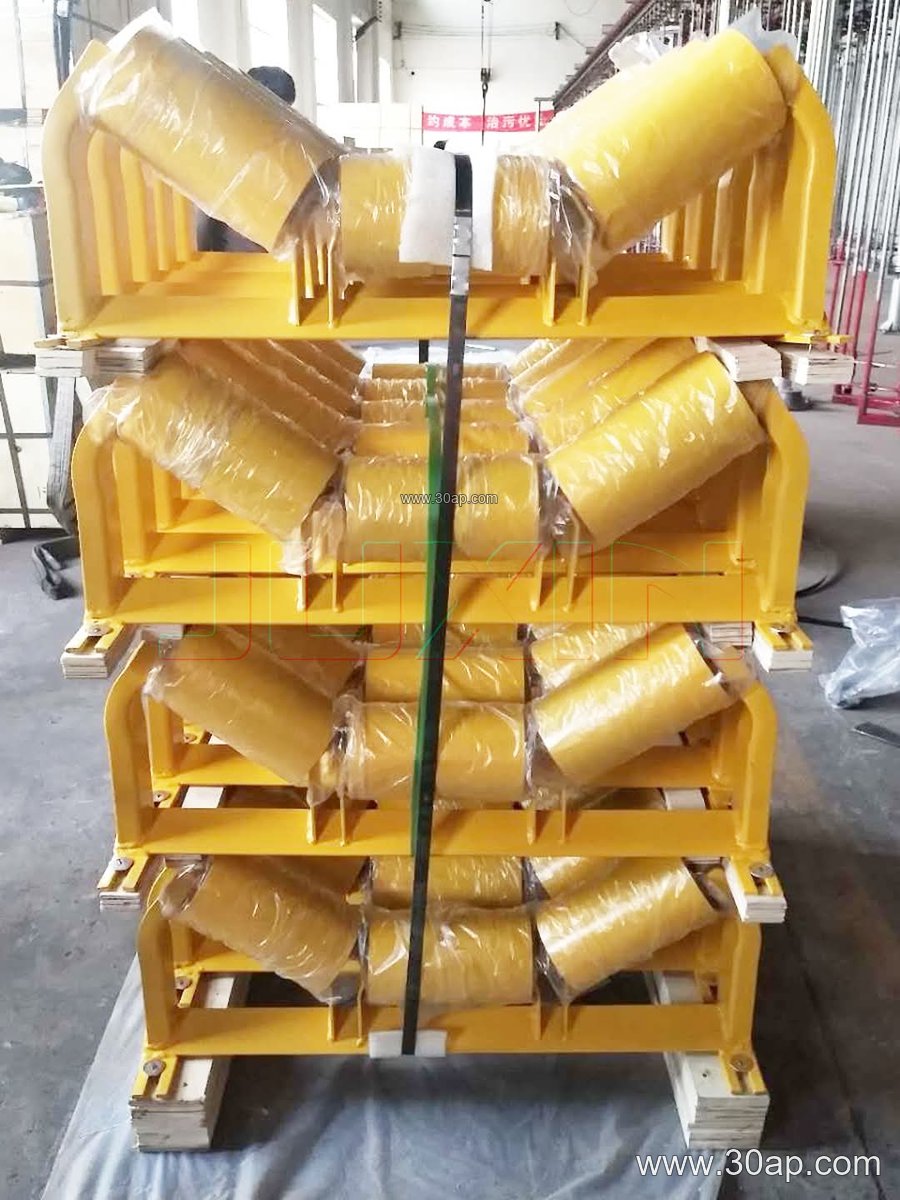
The values below are reference data for orientation only. Actual mounting dimensions follow the conveyor design and the selected roller size.
| Reference item | Common examples |
|---|---|
| Belt width | B500, B650, B800, B1000, B1200, B1400, B1600 |
| Return roller diameter | Ø89, Ø108, Ø133, Ø159 |
| V angle | Typically set by design; shallow angles are common on return runs |
| Frame material | Angle steel, channel steel, folded plate |
A bracket for a B800 belt with Ø108 return rollers is a frequent combination, and a B1200 line with Ø133 rollers is equally common. These are examples, not fixed rules: a given belt width can be built with more than one roller diameter, and the bracket seats must match whichever roller is chosen.
Fixed Versus Adjustable Frames
Some V-Type Idler Brackets are welded at a fixed angle, while others allow the roll seats to be repositioned so the V angle can be adjusted during installation. Adjustable versions are useful where belt tracking needs fine tuning after commissioning, for example on a long overland run at a mine or a tunnel spoil conveyor. Fixed frames are simpler and stiffer, and suit applications where the geometry is settled at the design stage.
Buyer Checklist
- Confirm the belt width and the return roller diameter before ordering, since both drive the seat spacing.
- Ask for the mounting hole spacing and crossbeam length, as these are not universal.
- State the environment so the finish matches it: dusty, wet, or corrosive.
- Decide between fixed and adjustable geometry based on how much tracking adjustment you expect.
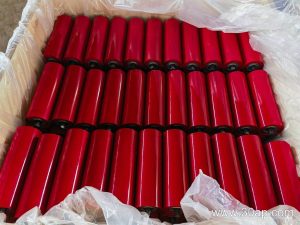
- Check that the bracket pairs correctly with the return idler rollers you already stock.
Matching the bracket to the existing conveyor bracket pattern and roller inventory avoids field rework. For a new installation, the conveyor designer’s drawing remains the authority on spacing and angle.