What a Conveyor Belt Guide Idler Does
A conveyor belt guide idler is a small-diameter roller mounted where the belt is most likely to wander, typically just ahead of a pulley or along a section where loading is uneven. Its job is not to carry the main material load. Instead, it touches the belt edge or the belt surface at a slight angle and nudges the belt back toward the center line. In a busy aggregates line or a coal handling plant, a few of these guide rollers can prevent edge damage, spillage and the rub that shortens belt life.
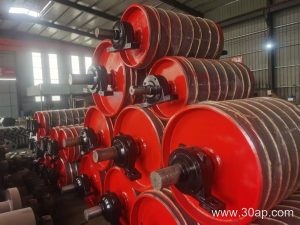
Because the guide idler works at the belt edge, it is often grouped with tracking accessories rather than with the main carrying idlers. It is a distinct item from a conveyor pulley: drive, tail and bend pulleys transmit power or change belt direction, while a guide idler only influences alignment. The two are not interchangeable, even though both sit close to the belt.
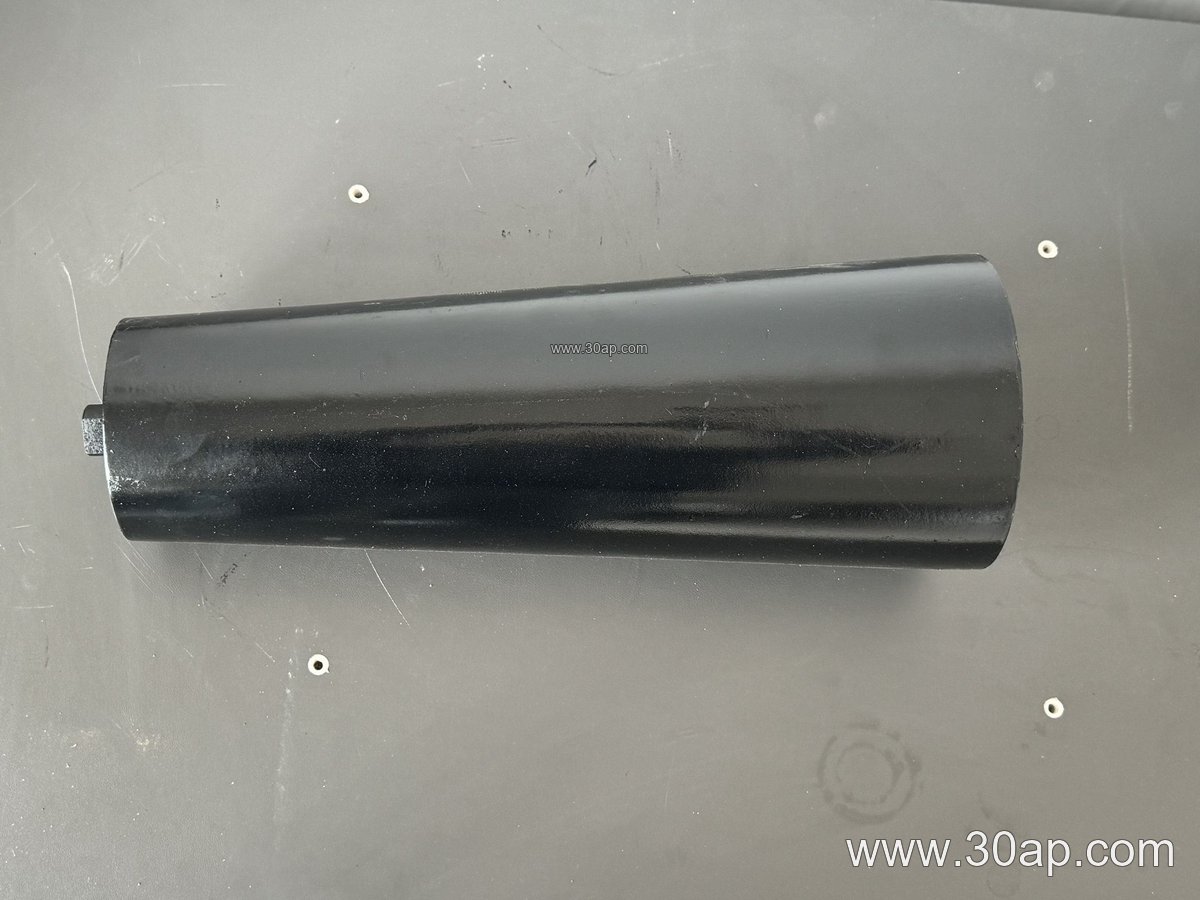
How the Roller Is Built
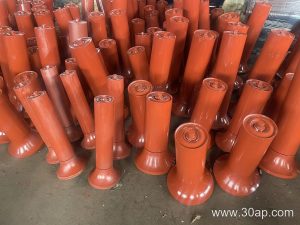
Most units use a steel tube shell with sealed ball bearings at each end, held in a compact bracket that bolts to the conveyor frame. A typical guide roller may be fitted with a rubber or polyurethane sleeve so that contact with the belt edge is gentle. The shaft is usually short and supported at one end or between two small plates, depending on the frame design.
Common roller diameters for this duty follow the general idler range, from about Ø63 mm up to Ø133 mm, with Ø76, Ø89 and Ø108 being frequent choices on medium belts. Bearings such as 6204, 6205 or 6305 appear in many light tracking rollers, but the bearing is selected from load and speed, not from belt width alone. A 1000 mm belt does not automatically dictate one shaft size.
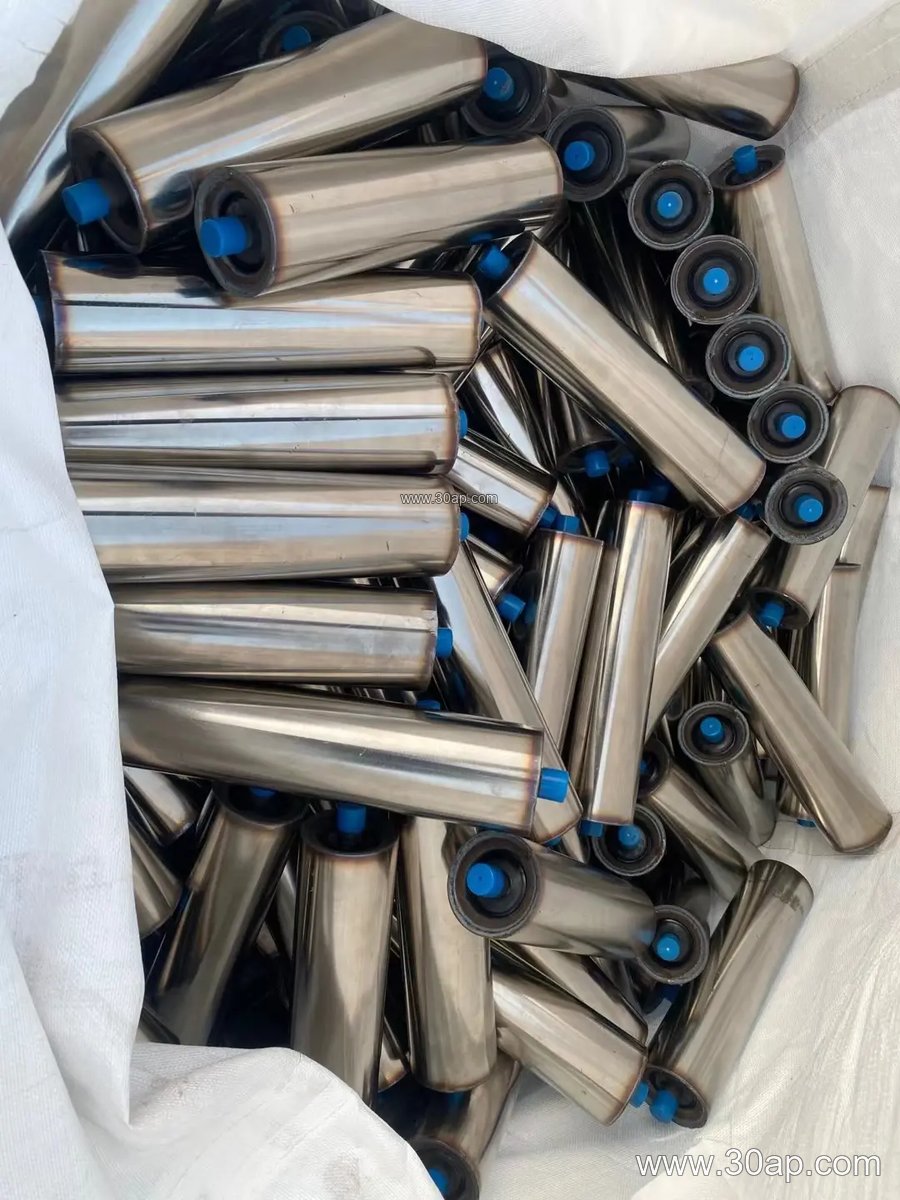
Typical reference values
| Item | Common range | Note |
|---|---|---|
| Roller diameter | Ø63 to Ø133 mm | Larger sizes for heavy frames |
| Belt width served | B400 to B2000 | Selected by design, not fixed pairing |
| Bearing | 6204, 6205, 6305, 6306 | Depends on load and speed |
| Surface | Steel, rubber sleeve | Rubber reduces edge wear |
Where It Fits on the Conveyor
Guide idlers are common on the carrying side near the head end, where a misaligned belt is about to meet a conveyor pulley and where a small correction has the most effect. They also appear on short transfer conveyors in a crushing and screening circuit, on tunnel spoil belts that shift as the machine advances, and on fertilizer or grain lines where the belt must stay centered to avoid spillage.
Some plants use them together with a self-aligning idler set. A friction self-aligning idler reacts to belt drift over a longer span, while the guide roller gives a local correction at a specific point. The two can work as a pair, but they are different components and should not be treated as substitutes.
Choosing the Right Unit
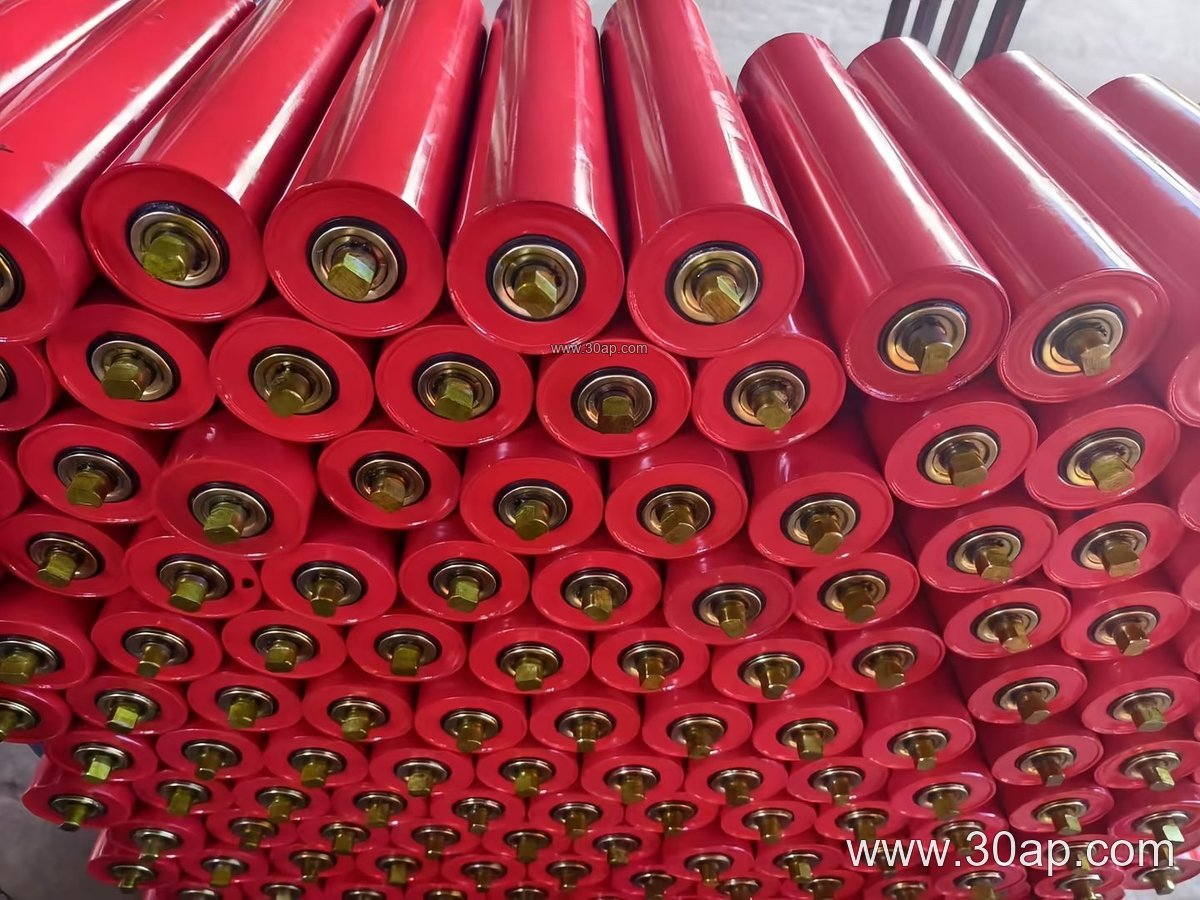
Start with the belt width and the space available at the frame. Then confirm the mounting pattern of the conveyor bracket, because a guide roller that does not fit the existing holes is useless. Check the roller surface: a rubber-sleeved roller is kinder to the belt edge, while a plain steel roller is simpler and often adequate where the belt is well trained already.
- Match the roller length to the frame, not to a catalog assumption.
- Confirm bearing sealing for dusty service in a quarry or cement plant.
- Check that the roller can be adjusted sideways for fine tracking.
- Keep spare sleeves and bearings on hand for fast replacement.
During maintenance, inspect the guide idler for a seized bearing or a worn sleeve. A stuck roller can scrub the belt edge and cause more misalignment than it prevents. Rotate it by hand, listen for roughness, and replace the bearing or the whole roller when play appears. On a coal plant or a limestone mine, that simple check during a shutdown often avoids a much larger belt repair later.
Used correctly, a conveyor belt guide idler is a low-cost tracking aid that protects the belt, the conveyor bracket and the structure around it.