What a Diamond Grooved Lagged Pulley Does
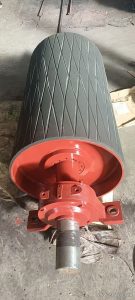
A diamond grooved lagged pulley is a conveyor pulley whose outer surface is covered with a rubber layer moulded into a diamond pattern. The diamond grooves channel water, fine dust and slurry away from the contact patch, so the friction between the shell and the conveyor belt stays more consistent than on a smooth face. This matters most on the drive pulley, where torque has to pass from the pulley into the belt without slipping.
In a quarry, a cement clinker line or a coal handling system, the drive pulley often works in damp or dusty conditions. The diamond pattern provides edges that bite into the belt cover and evacuation paths that stop a film of water from acting like a lubricant. It is also a common choice on a bend pulley when the belt wrap angle is large and tracking needs to stay stable.
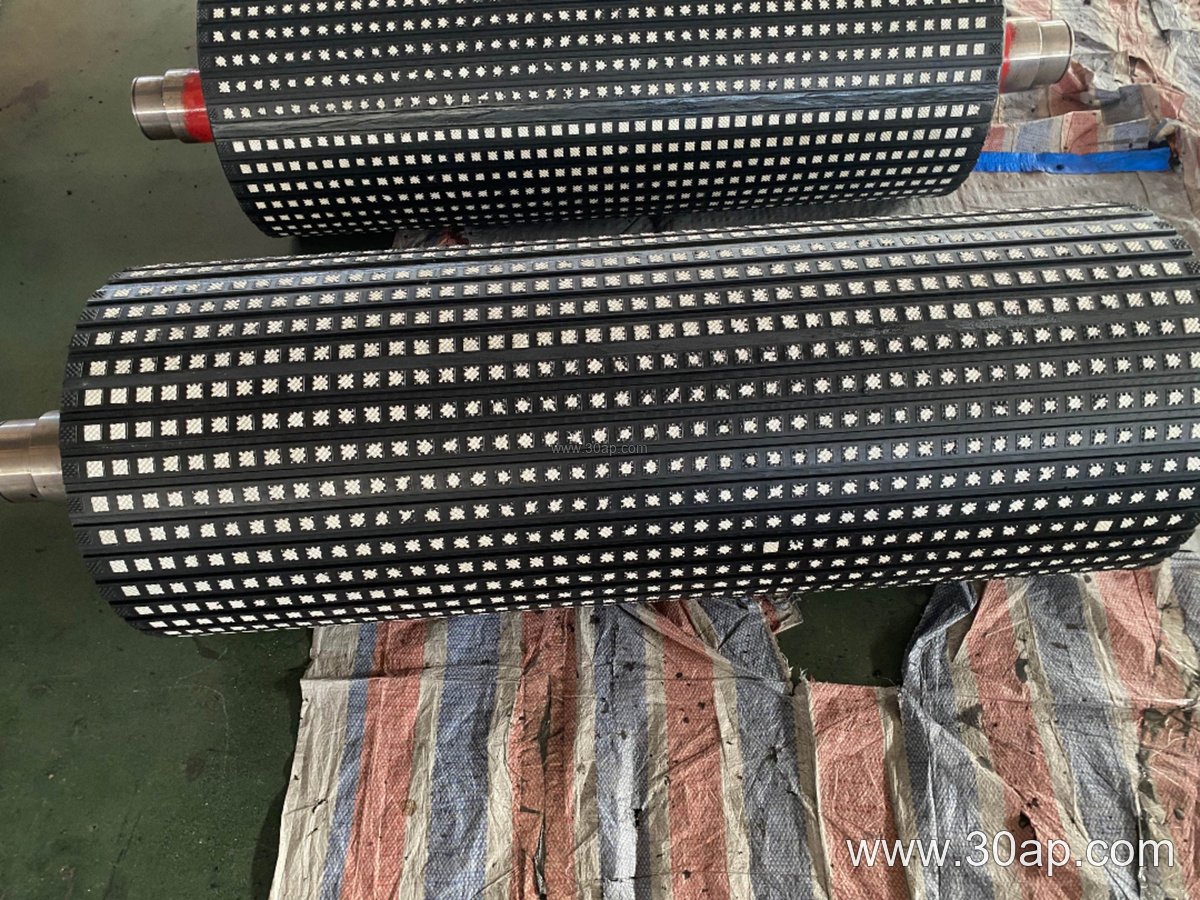
How the Diamond Grooved Lagged Pulley Is Built
The body is usually a welded steel drum with end discs and a shaft, machined so the shell runs true. A rubber lagging is then bonded to the shell by hot vulcanisation, cold bonding or casting. The diamond groove is formed during the moulding process, giving a regular, repeatable pattern across the full face width.
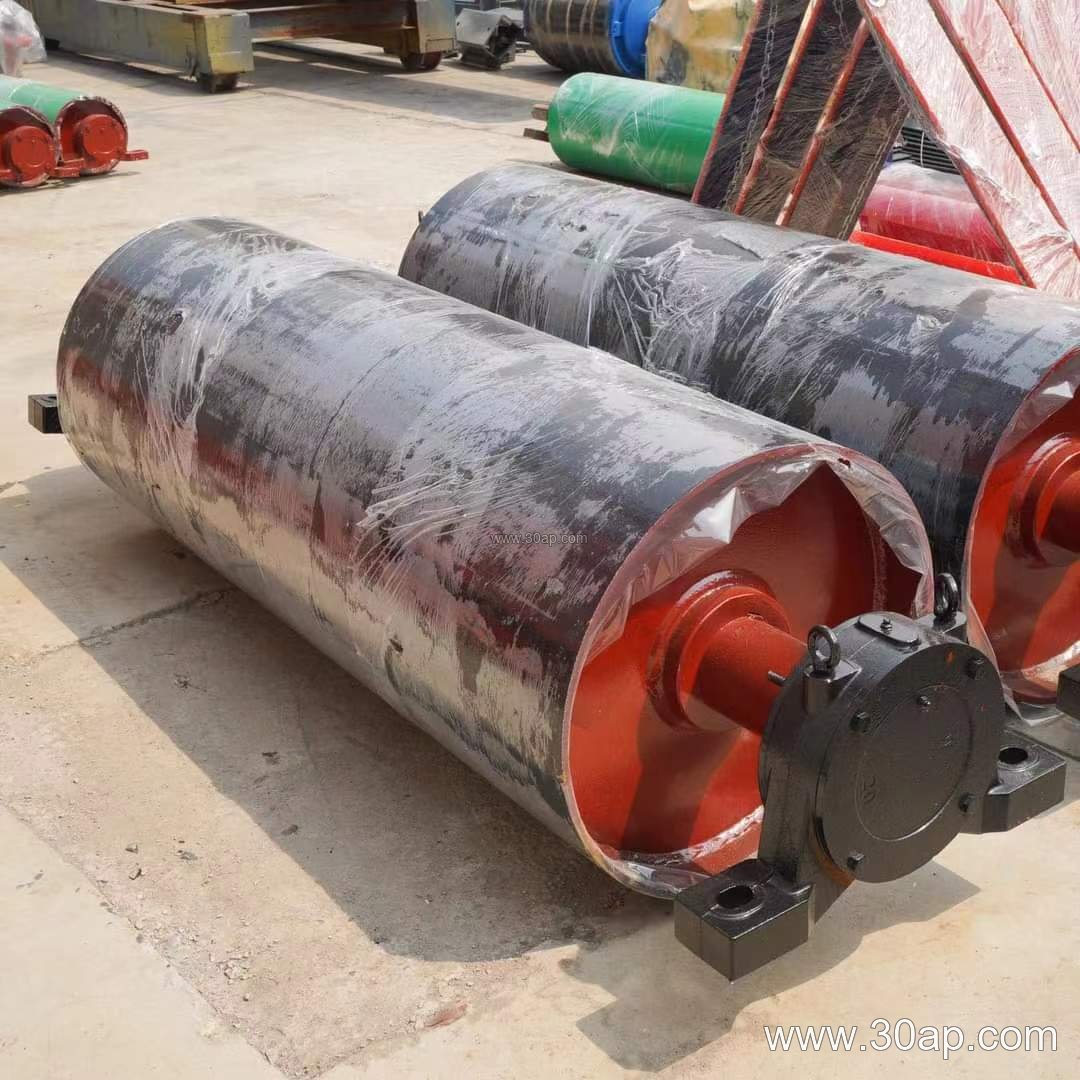
Common surface options on conveyor pulleys include plain, cast rubber, cold bonded rubber, hot vulcanised rubber, diamond, herringbone, ceramic and flat rubber. Only the diamond form is the subject here; the others are mentioned merely to show where the pattern sits in the range. Lagging thickness is often 8 mm, 10 mm, 12 mm, 15 mm or 20 mm, chosen according to belt tension, ambient conditions and how much wear the surface is expected to take.
Typical reference dimensions
The values below are common reference points, not a fixed rule. A wider belt does not automatically lock the pulley to one diameter, and shaft diameter depends on torque and load rather than belt width alone.
| Belt width | Typical face width | Common diameters |
|---|---|---|
| B500 | about 600 mm | Ø200, Ø250, Ø315 |
| B800 | about 950 mm | Ø400, Ø500, Ø630 |
| B1000 | about 1150 mm | Ø500, Ø630, Ø800 |
| B1200 | about 1400 mm | Ø630, Ø800, Ø1000 |
| B1400 | about 1600 mm | Ø800, Ø1000, Ø1250 |
| B1600 | about 1800 mm | Ø1000, Ø1250, Ø1400 |
| B1800 | about 2000 mm | Ø1250, Ø1400, Ø1600 |
| B2000 | about 2200 mm | Ø1400, Ø1600, Ø1800 |
Shaft diameters such as Ø50, Ø60, Ø70, Ø80, Ø90, Ø100, Ø120, Ø140, Ø160, Ø180 and Ø200 appear across these sizes, but each shaft is sized by the torque and load the pulley must carry.
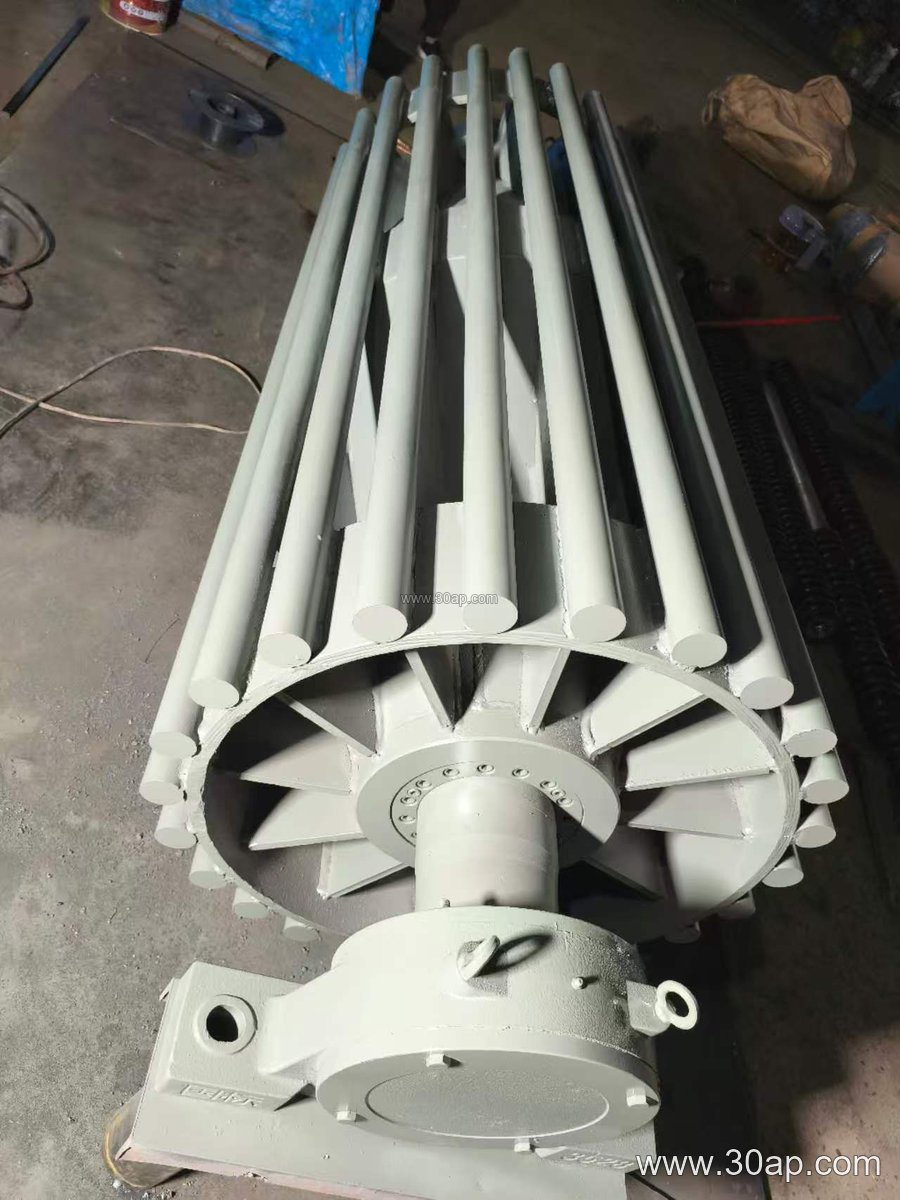
Where It Fits on a Conveyor
The diamond grooved lagged pulley is most often installed as a drive pulley at the head of a belt conveyor, though it can also serve as a tail pulley in some layouts. In a sand and gravel plant, a drive pulley with diamond lagging helps keep the belt moving when rain or wash water reaches the head end. In a power plant coal yard, the same surface resists the fine coal dust that settles on the shell.
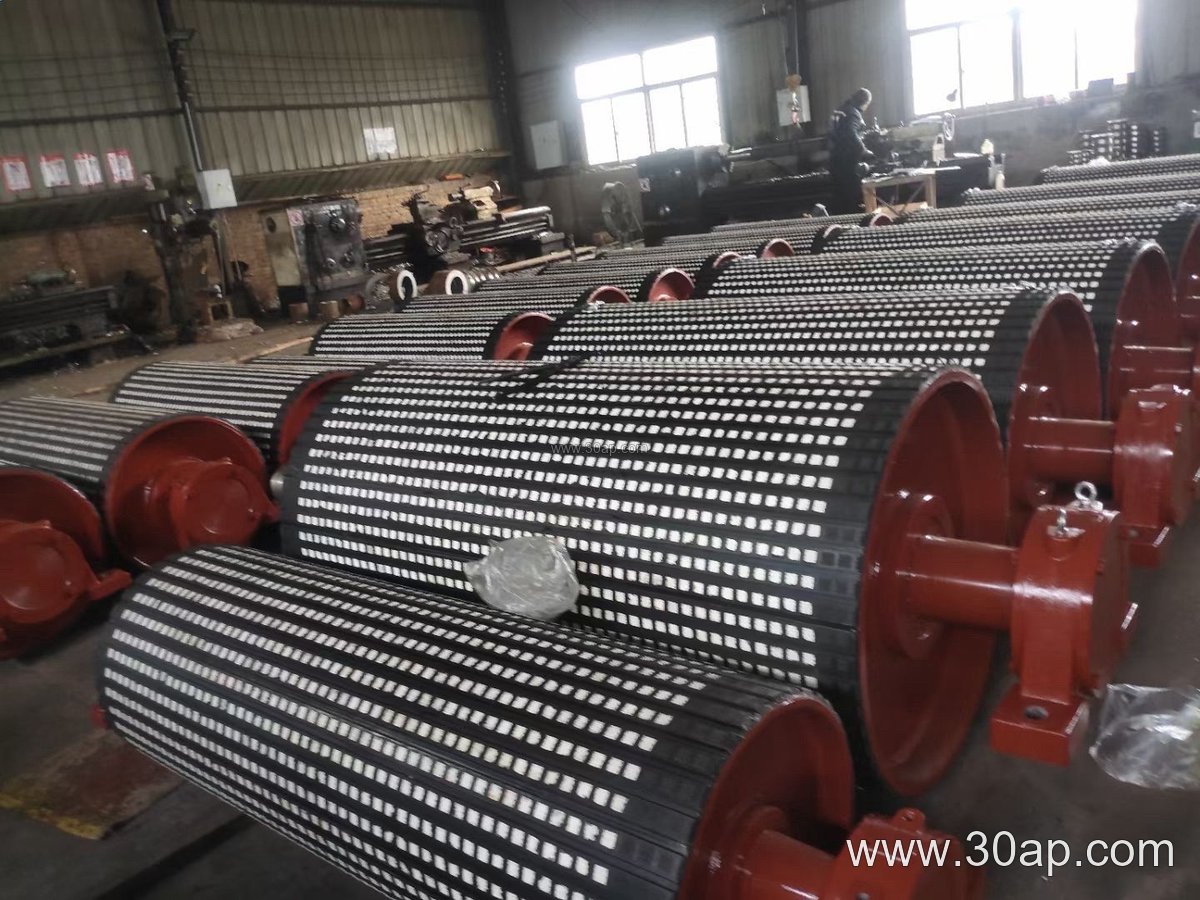
On a long overland conveyor or a downhill section, a bend pulley with diamond lagging can hold the belt in place where a plain surface might allow drift. A tail pulley and a bend pulley are not interchangeable in function; each position sets its own wrap angle, load direction and tracking demands. The diamond pattern is a surface treatment that can be applied to a drive, tail or bend pulley, while the drum and shaft design stays specific to the duty.
Interaction with belt and components
The conveyor belt, idler roller, conveyor bracket and pulley frame all influence how well the lagging performs. A belt with a worn or slick cover may need a deeper diamond groove, while a heavy, sticky material may call for a coarser pattern that sheds build-up. On the return side, a nearby conveyor pulley or idler roller helps keep the belt centred so the belt enters the lagged pulley squarely.
What to Check Before Buying
- Confirm the service position: drive, tail, bend, take-up or snub, because the wrap angle and direction of load differ.
- Match lagging thickness to the belt tension and the amount of water, oil or abrasive dust present.
- Check the diamond pattern depth and pitch, since a shallow groove may not clear water on a fast belt.
- Verify the face width against the conveyor belt width, allowing for a margin that supports the belt edges.
- Size the shaft by the torque and radial load rather than by belt width alone.
- Balance the pulley for the intended belt speed to reduce vibration and extend bearing life.
A diamond grooved lagged pulley is not a universal answer for every conveyor, but in wet, dusty or high-traction positions it is a practical way to keep a belt driving without slip. Buyers who compare the drum, the lagging and the shaft as one assembly will usually get the most reliable result.