What a Building Materials Conveyor Pulley Does
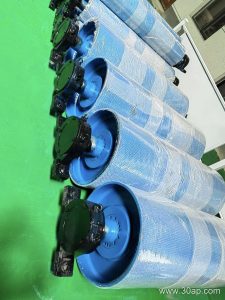
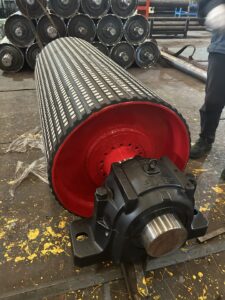
A building materials conveyor pulley is the cylindrical rotating component that transmits power, changes belt direction, or maintains tension on a belt conveyor. In quarries, sand and gravel plants, cement clinker lines, and power plant coal handling systems, this assembly works together with the conveyor belt, idler rollers, and conveyor brackets to keep bulk material moving. Unlike an idler roller, which supports the belt along the carrying side, a pulley is mounted at key transition points and often carries much higher torque and tension loads.
Common Subtypes and Their Positions
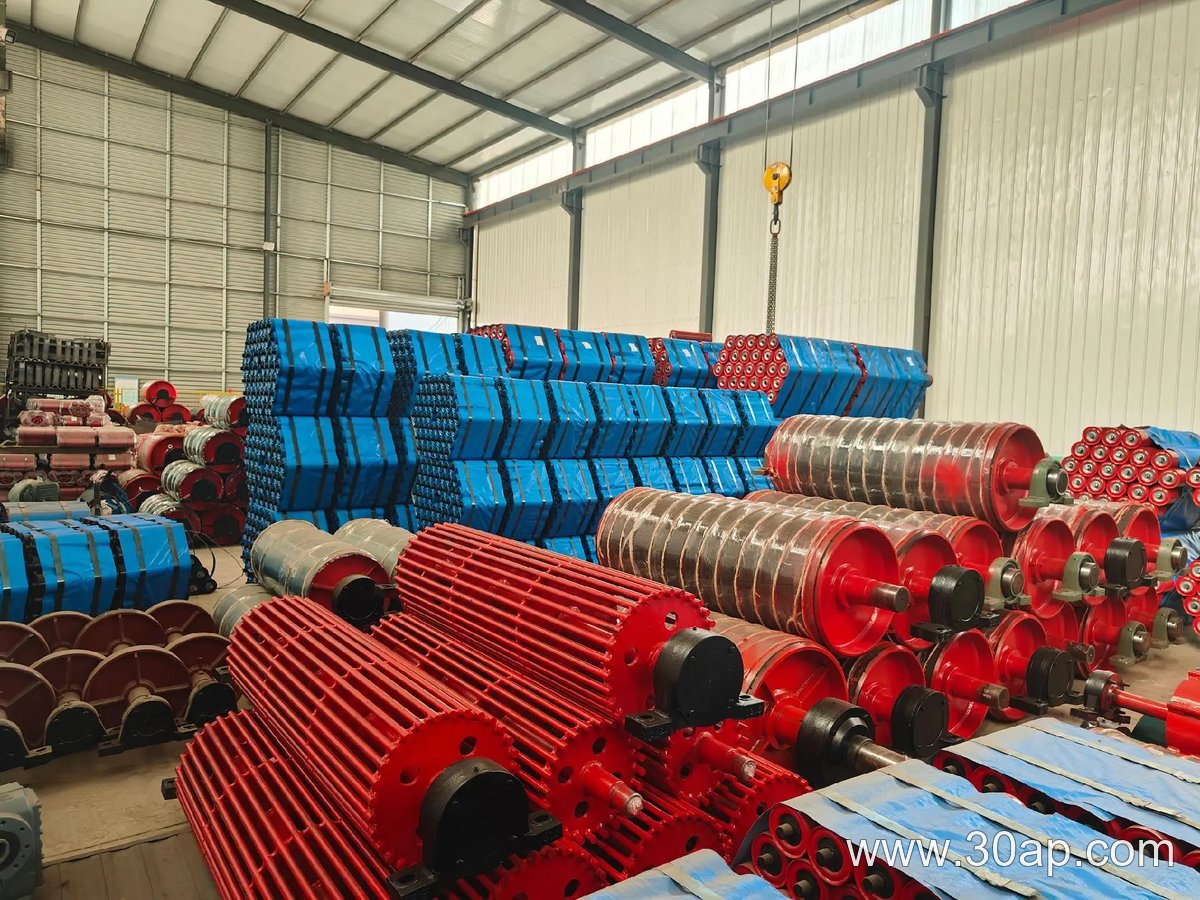
The term covers several distinct positions, and they are not interchangeable. A drive pulley, also called the head or discharge pulley, is connected to the gearbox and drives the belt. A tail pulley sits at the opposite end and can be fixed or used as a tensioning pulley. A bend pulley changes the belt path without driving, while a snub pulley increases wrap angle around the drive. Wing pulleys are sometimes chosen at the tail for sticky materials. Each position has its own load profile, so the correct subtype must be matched to the duty.
Construction and Surface Options
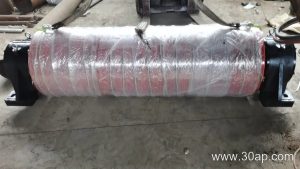
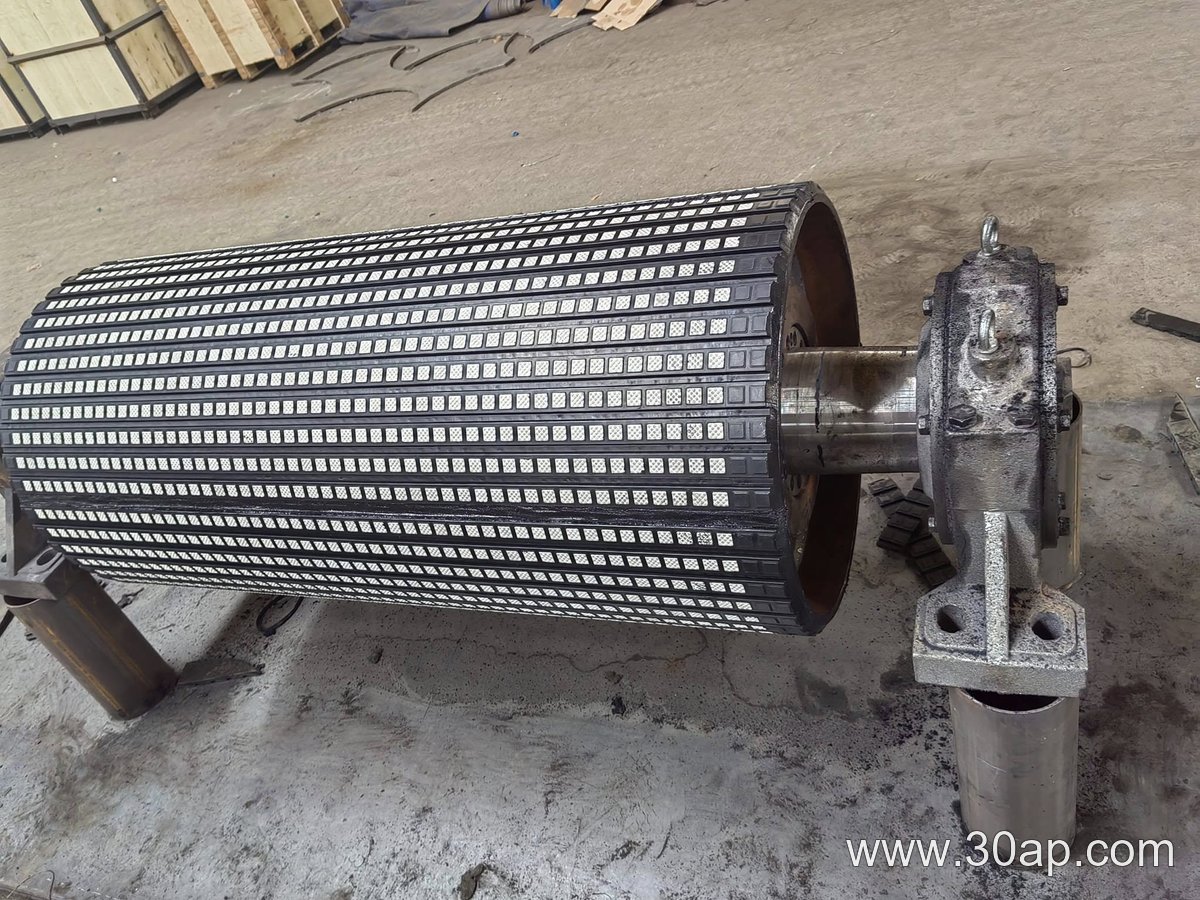
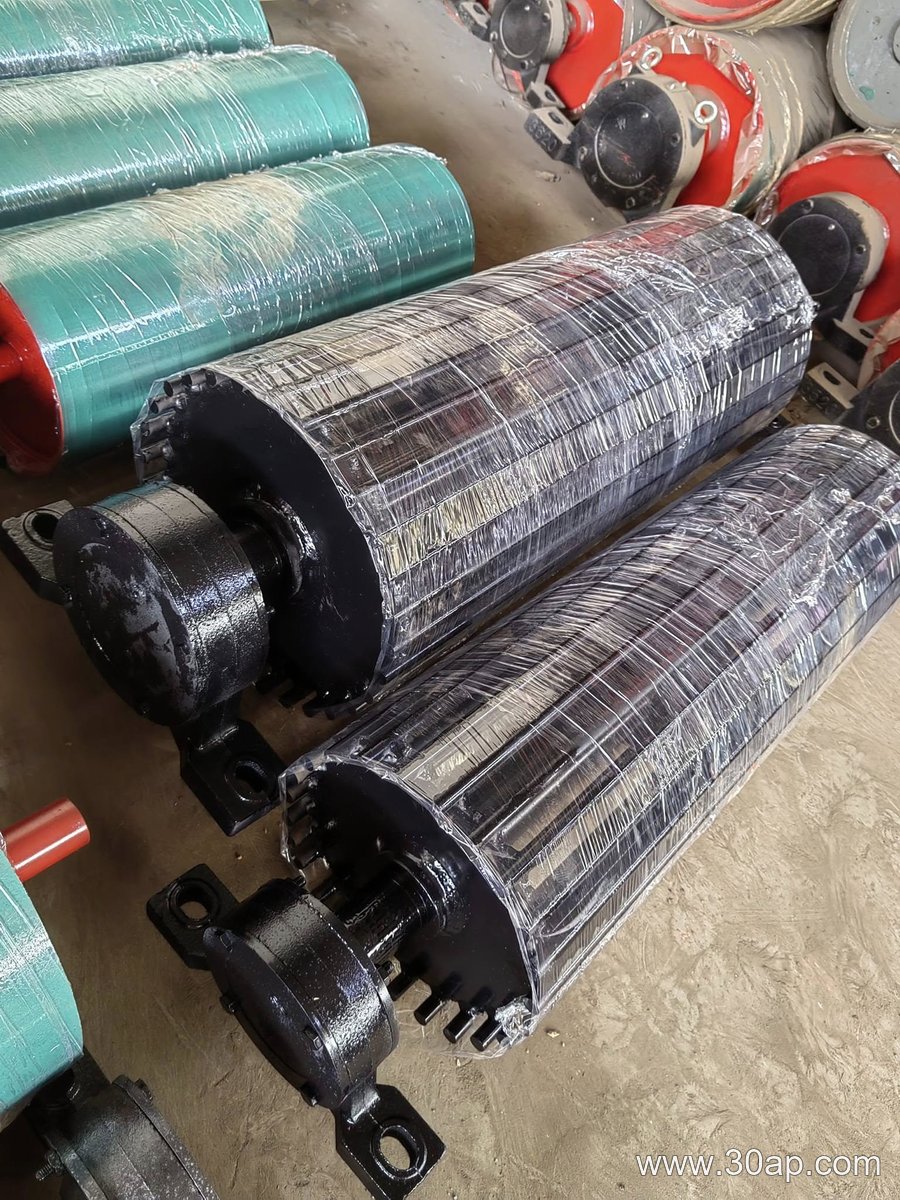
Most units are built from a steel tube or rolled shell, welded to end discs and a central shaft. The shaft diameter is determined by torque and bending load, not by belt width alone. Common shaft sizes include Ø50, Ø60, Ø70, Ø80, Ø90, Ø100, Ø120, Ø140, Ø160, Ø180, and Ø200 mm. The shell surface may be plain, rubber lagged, or ceramic lagged. Lagging improves grip and protects the shell from abrasive fines.
| Surface Form | Typical Use | Common Lagging Thickness |
|---|---|---|
| Plain steel | Light duty, clean material | No lagging |
| Cold-bonded rubber | General aggregate conveying | 8, 10, 12 mm |
| Hot vulcanized rubber | High tension, wet conditions | 10, 12, 15 mm |
| Diamond or herringbone | Slope conveyors, muddy feed | 12, 15, 20 mm |
| Ceramic lagging | Abrasive limestone or clinker | 15, 20 mm |
Dimensions and Belt Width Matching
Shell face width is usually wider than the belt to allow tracking tolerance. For example, a B400 belt often uses a face around 500 mm, B650 around 750 mm, B800 around 950 mm, B1000 around 1150 mm, and B1200 around 1400 mm. Diameter is selected from belt tension, wrap angle, and speed. A B800 conveyor might use Ø500 or Ø630, while a B1200 head pulley could be Ø800 or Ø1000. These are common combinations, not fixed rules. A B1400 system may run Ø800 or Ø1000 depending on the drive design.
Where It Fits in the Plant
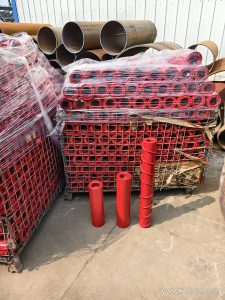
In a sand and gravel line, the head pulley discharges onto a screen or stockpile. In a cement plant, lagged pulleys handle clinker and raw meal. In a coal handling system, wing pulleys may be used at the tail to shed fines. The pulley works with the belt, idler rollers, and conveyor brackets, so alignment and bracket rigidity affect belt tracking and bearing life.
Buyer Checklist
- Confirm the position: drive, tail, bend, or tension.
- State belt width, speed, and material characteristics.
- Specify shaft diameter from torque and load, not width alone.
- Choose lagging type and thickness for grip and abrasion.
- Check bearing type, sealing, and lubrication access.
- Verify face width and mounting dimensions against the conveyor bracket.
When ordering a building materials conveyor pulley, share the duty conditions and existing dimensions. A supplier can then propose a suitable shell, shaft, lagging, and bearing arrangement for the application.