What a Guide Idler Bracket Does
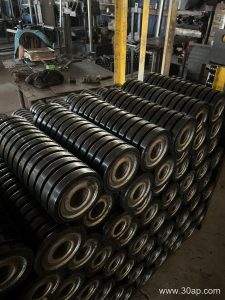
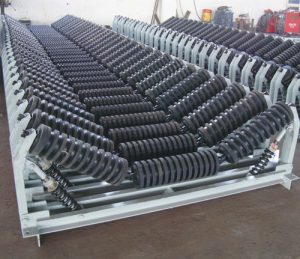
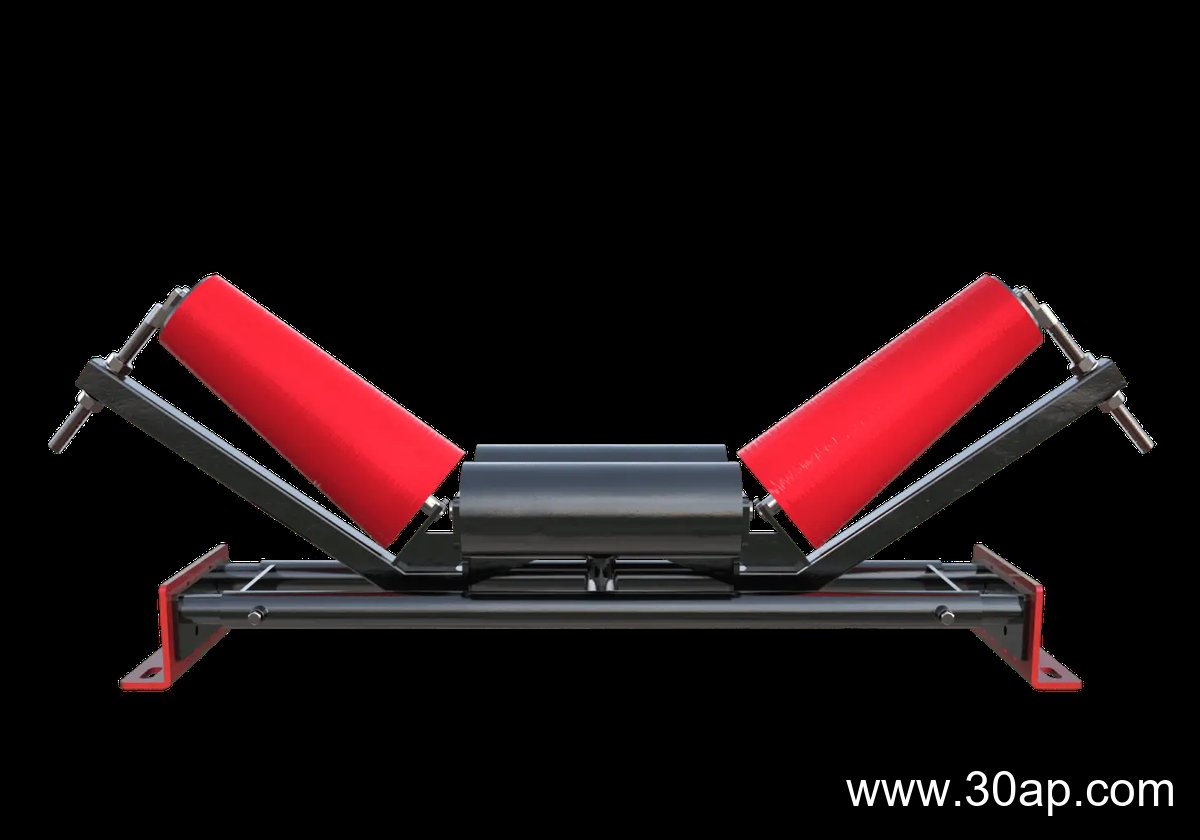
A guide idler bracket, also called a guide roller bracket or aligning idler support, holds idler rollers in a position that keeps the conveyor belt centered. It is not the same as a drive pulley support or a tail pulley frame. The guide idler bracket works together with the idler roller to guide the belt, especially where the belt tends to wander. In many conveyor bracket designs, this part allows small angular adjustments so the idler can steer the belt back to the correct path.
Construction and Common Materials
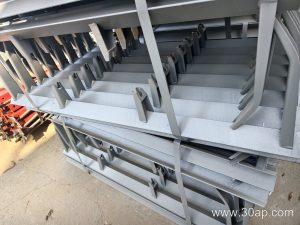
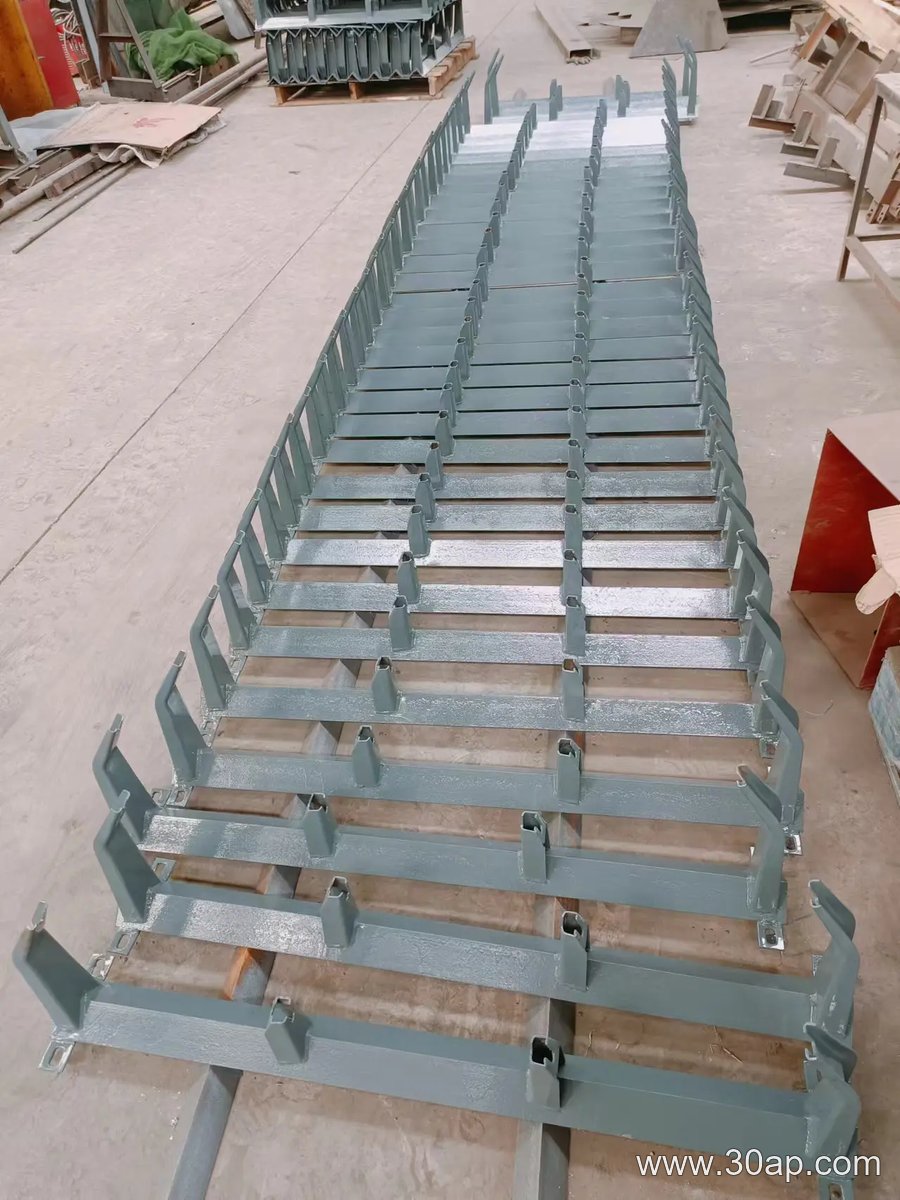
Most guide idler brackets are made from angle steel, channel steel, or bent steel plate. The choice depends on the load, belt width, and mounting location. A typical bracket has slots or multiple bolt holes for adjustment. Surface treatment may include painting or galvanizing, but the exact finish depends on the supplier and the working environment. The bracket is usually bolted to the conveyor frame, and its mounting hole spacing and crossbeam length change with belt width and trough angle. Do not assume one fixed dimension fits every conveyor.
Where It Is Used
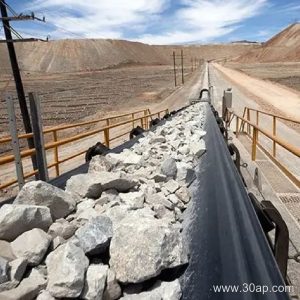
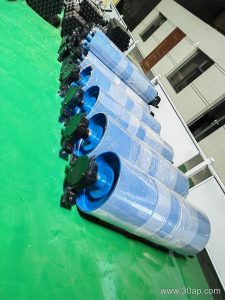
Guide idler brackets appear in bulk material handling systems such as coal preparation plants, aggregate crushing and screening lines, and grain silos. They are often installed on the carrying side or the return side where belt misalignment is a concern. In a typical arrangement, the bracket supports a idler roller that can be tilted slightly to correct belt tracking. This is different from a bend pulley, which changes the belt direction, or a tail pulley, which drives or redirects the belt at the end of the conveyor. The guide idler bracket is a tracking accessory, not a primary drive component.
Types and Adjustability
Several bracket styles exist. A fixed bracket holds the idler at a set angle. An adjustable bracket lets maintenance personnel change the idler position to fine-tune belt tracking. Some designs are meant for troughing idlers with a 20, 30, 35, or 45 degree trough angle. Others are used with return idlers or V-return idlers. A few brackets include a forward tilt of about 1.5 to 2 degrees to help center the belt. The correct type depends on the conveyor layout and the belt width.
Matching Belt Width, Roller Diameter, and Trough Angle
There is no universal rule that one belt width must use one specific roller diameter or trough angle. Common combinations include B800 with 35 degrees and Ø108, or B1200 with 45 degrees and Ø133. A smaller system might use B650, 30 degrees, and Ø89. Larger belts such as B1600 or B2000 usually need heavier brackets and larger rollers, but the final selection is made by the conveyor designer. The table below shows reference examples, not mandatory matches.
| Belt width | Trough angle | Roller diameter | Typical bracket note |
|---|---|---|---|
| B500 | 20° | Ø89 | Light duty, fixed or adjustable |
| B650 | 30° | Ø89 | Common for small conveyors |
| B800 | 35° | Ø108 | Adjustable bracket often used |
| B1000 | 35° | Ø108 or Ø133 | Check frame hole spacing |
| B1200 | 45° | Ø133 | Heavier structure |
| B1400 | 45° | Ø159 | For high capacity lines |
| B1600 | 45° | Ø159 or Ø194 | Designed per application |
These values are common references. Actual selection depends on belt speed, material load, and the conveyor frame. A guide idler bracket should never be chosen by belt width alone.
Buyer Checklist
- Confirm the belt width (for example B800, B1000, B1200).
- Identify the required trough angle (20°, 30°, 35°, or 45°).
- Check the idler roller diameter (Ø89, Ø108, Ø133, Ø159, Ø194).
- Decide between fixed and adjustable bracket.
- Verify mounting hole spacing and crossbeam length with the conveyor frame.
- Consider the environment: dust, moisture, or corrosive material may affect the finish.
A guide idler bracket is a small but important part of belt tracking. When it fits the frame and matches the idler roller, it helps reduce belt edge damage and spillage. When it does not, the belt may still wander even if the pulleys are aligned. Always compare the bracket drawing with the actual conveyor dimensions before ordering.