What a Heavy-Duty Steel Conveyor Bracket Does
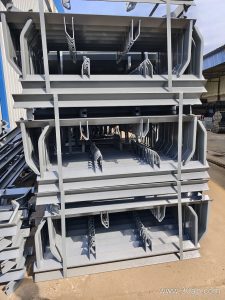
A heavy-duty steel conveyor bracket is the structural support that holds idler rollers in place along a conveyor frame. On a loaded belt line, it carries the weight of the conveyor belt, the material on it, and the roller assemblies themselves. The bracket also sets the trough angle that shapes the belt into a curve, which keeps bulk material centered instead of spilling over the edges. Fabricated from angle, channel, or folded steel plate, this component is often the difference between a line that runs steadily and one that needs constant roller changes.
Because it sits between the frame and the rollers, the bracket is not a cosmetic part. It takes repeated impact at the load zone, vibration along the whole run, and the slow abrasion of fines and dust. A heavy-duty version uses thicker steel and stronger welds so it can keep roller spacing and alignment stable through those conditions.
How the Bracket Is Built
Most heavy-duty conveyor brackets combine two or three structural profiles. A common design uses a folded steel plate base with welded side plates that carry the roller shaft slots. Bolt holes for the conveyor frame are usually punched or drilled before welding so the bracket lines up when it reaches the site. Finish options range from bare steel to painted or galvanized surfaces, depending on the environment.
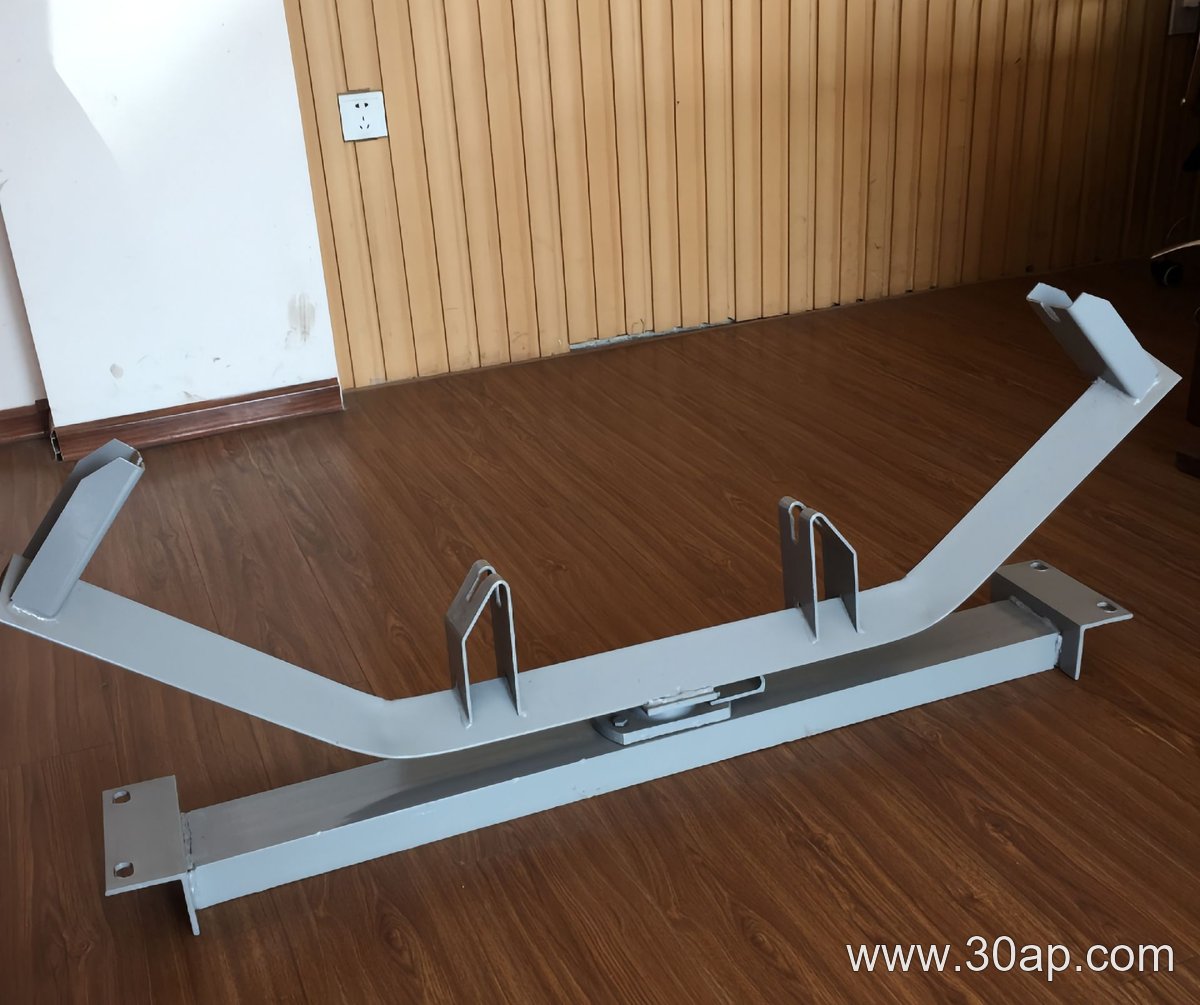
The load path matters. In a troughing bracket, the center roller sits lower than the side rollers, and the bracket geometry creates the trough. The side plates must resist bending from the belt load, so a heavier gauge is used where the material is dense or the drop height is large.
Common Types and Where They Fit
The product family includes several arrangements, each tied to a position on the conveyor:
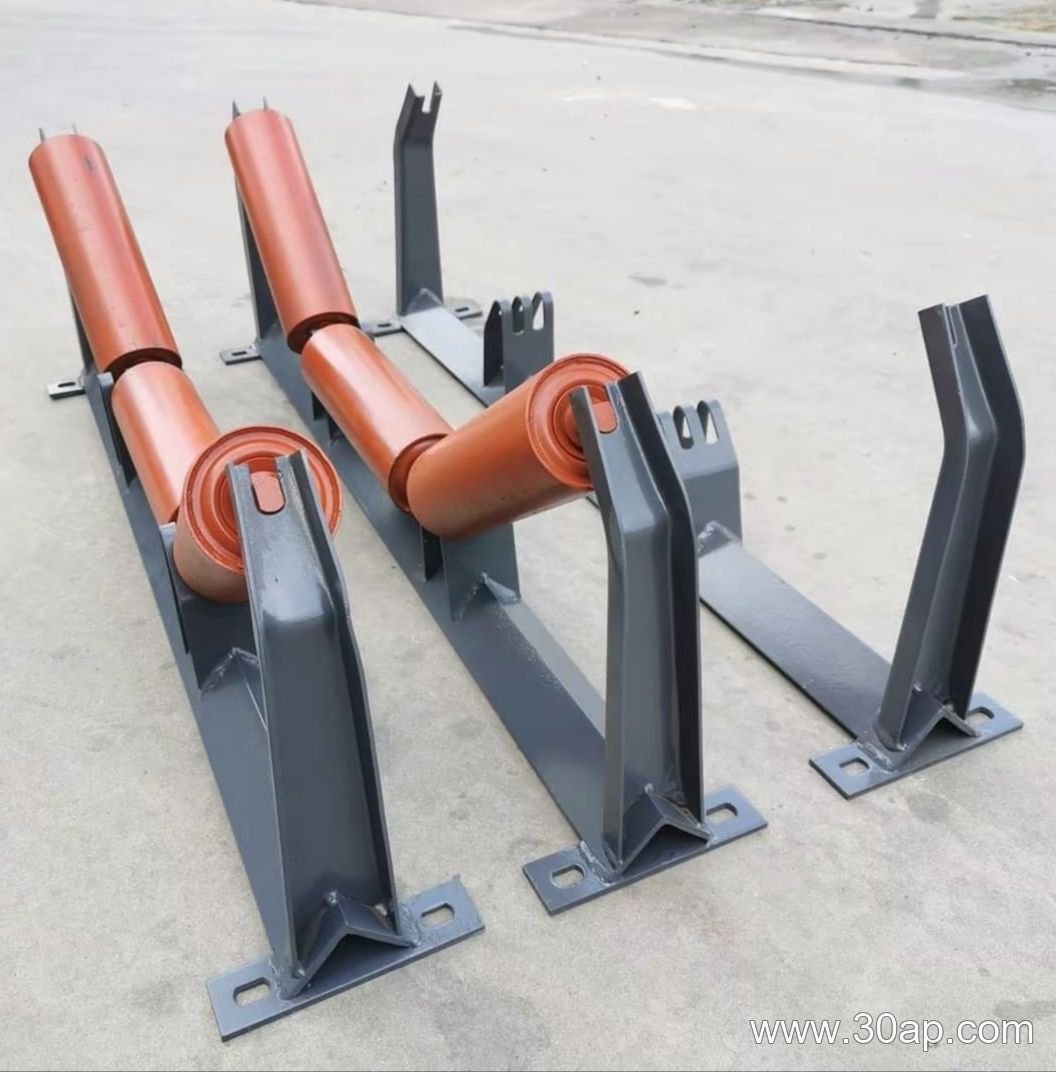
- Troughing brackets and upper trough brackets hold the carrying rollers that form the belt into a trough.
- Transition brackets support the belt where it changes from flat to troughed, easing stress on the conveyor belt.
- Return brackets and flat lower brackets carry the return side of the belt.
- V-return brackets use angled rollers to help center the belt on the return run.
- Impact or buffer brackets sit under the load zone, where they absorb falling material.
- Self-aligning and forward-leaning designs help correct belt drift on long runs.
- Suspended and adjustable brackets allow field changes to roller position or trough angle.
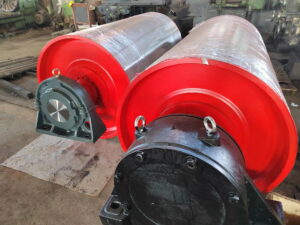
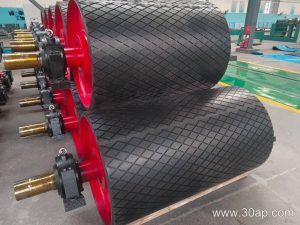
A drive pulley, tail pulley, or bend pulley is a different component with a different job. Those parts transmit power or change belt direction, while a bracket only positions and supports rollers. They should not be treated as interchangeable.
Sizes and Reference Data
Bracket dimensions follow the belt width, trough angle, and roller diameter chosen for the conveyor. Common belt widths include B500, B650, B800, B1000, B1200, B1400, B1600, B1800, B2000, and B2200. Typical trough angles are 20, 30, 35, and 45 degrees, and adjustable brackets can often be set anywhere between those values. Roller diameters such as Ø89, Ø108, Ø133, Ø159, and Ø194 appear in different duty ranges.
These figures are reference points, not fixed pairings. A B800 belt may run with a 35-degree trough and Ø108 rollers in one installation, while a B1200 line may use 45 degrees and Ø133 rollers. The mounting hole spacing and crossbeam length change with belt width and trough angle, so they should be confirmed against the conveyor design rather than assumed.
Forward-leaning brackets commonly tilt about 1.5 to 2 degrees, which encourages the belt to track toward the center. That small angle is set by the bracket geometry and should not be mixed with the trough angle.
Where These Brackets Are Used
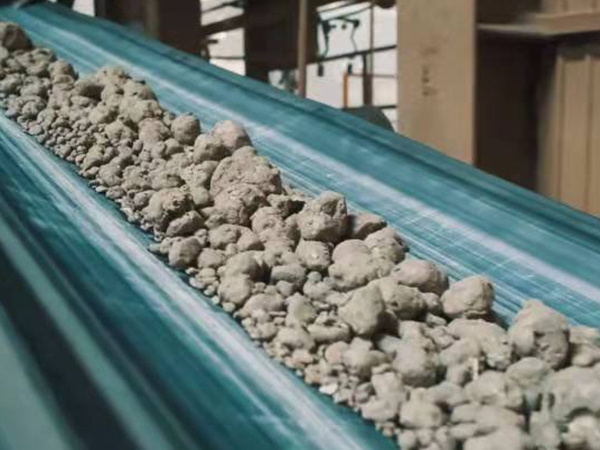
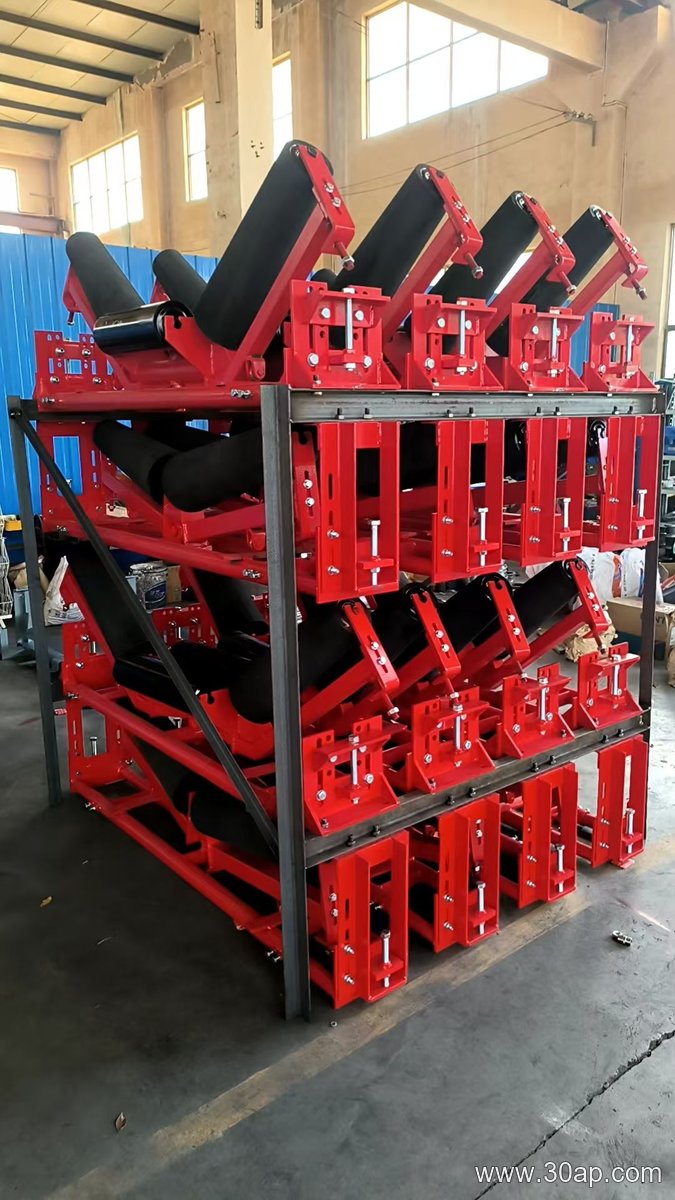
Heavy-duty steel brackets appear in crushing and screening plants, where impact loads are high, and in cement plants, where dust and abrasive material shorten the life of lighter supports. They also serve in coal handling at power stations and in port bulk terminals, where long conveyors run continuously. In each case, the bracket must match the belt width, the roller diameter, and the material load.
What Buyers Should Check
Before ordering, confirm the belt width, trough angle, and roller diameter the line uses. Ask how the bracket mounts to the frame and whether the hole pattern matches the existing stringers. Check the steel thickness and weld quality, since a thin bracket will flex under load and wear rollers faster.
Also consider the environment. Wet or corrosive locations may call for a coated or galvanized bracket, while a high-impact load zone may need a buffer design. Finally, confirm that spare rollers and the conveyor bracket share the same shaft slot dimensions, so replacements fit without rework.