What a Belt Conveyor Idler Does on the Line
A belt conveyor idler is the rotating roller assembly that supports the conveyor belt and the material riding on it. The idler does not drive the belt; it carries the load, keeps the belt in a stable trough shape, and lets the belt travel with as little resistance as practical. Because a typical conveyor has many idlers spaced along its length, small differences in alignment, sealing, or rolling resistance add up over the whole system.
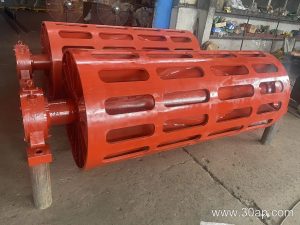
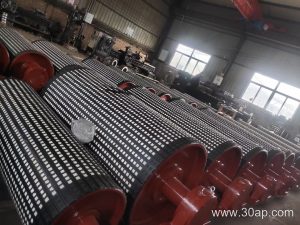
People sometimes use the term idler roller when they mean the same component. The two names describe the same product: a roller with a shaft, bearings, and a shell that turns under the belt. A conveyor pulley, by contrast, is a larger drum used at the head, tail, or bend of the conveyor. Drive, tail, and bend pulleys are separate components with separate jobs, and none of them is an interchangeable name for an idler.
How an Idler Is Built
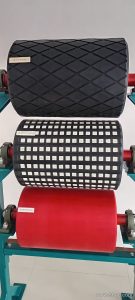
A standard idler has a steel tube shell, a through shaft or stub shafts, bearing housings at each end, and a sealing arrangement. The shell is often made from steel pipe, but other surface forms exist for specific duties. Rubber rings are used on impact idlers in loading zones, while nylon or ceramic surfaces may be chosen where material buildup or abrasion is a concern.
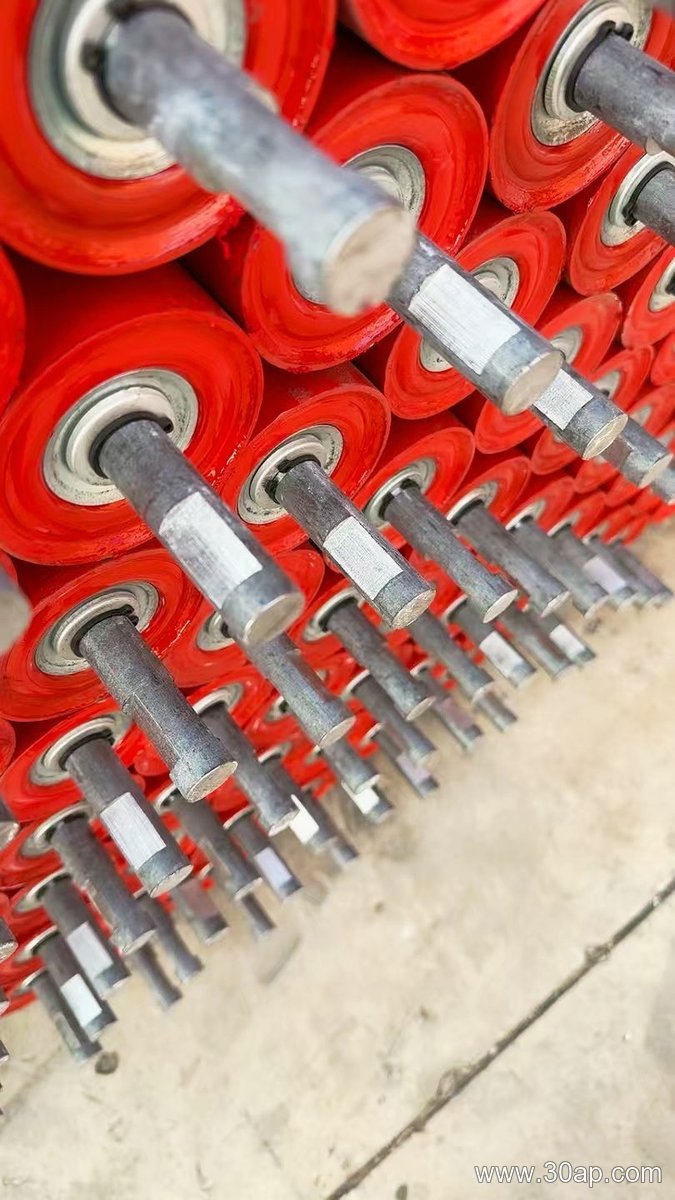
Bearings are commonly deep-groove ball bearings in sizes such as 6204, 6205, 6305, 6306, 6308, or 6310. The bearing size is not fixed by roller diameter alone; a designer matches bearing capacity to load, speed, and expected life. Seals matter just as much as the bearing itself. Labyrinth seals, contact seals, and grease-filled housings all aim to keep fine dust and water out of the bearing cavity.
Common Idler Types and Where They Sit
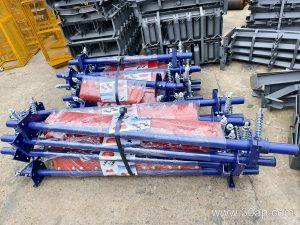
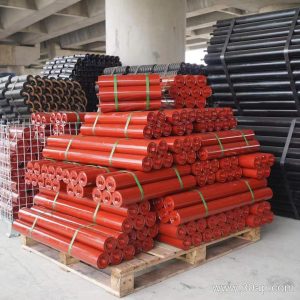
Troughing idlers, also called carrying idlers, are the most familiar group. They support the loaded side of the belt and form it into a trough. A three-roll troughing set is the usual arrangement on wider belts, while a single-roll or two-roll set appears on narrower or lighter conveyors. Trough angles of 20, 30, 35, and 45 degrees are common, and the angle affects how much material the belt can hold without spilling.
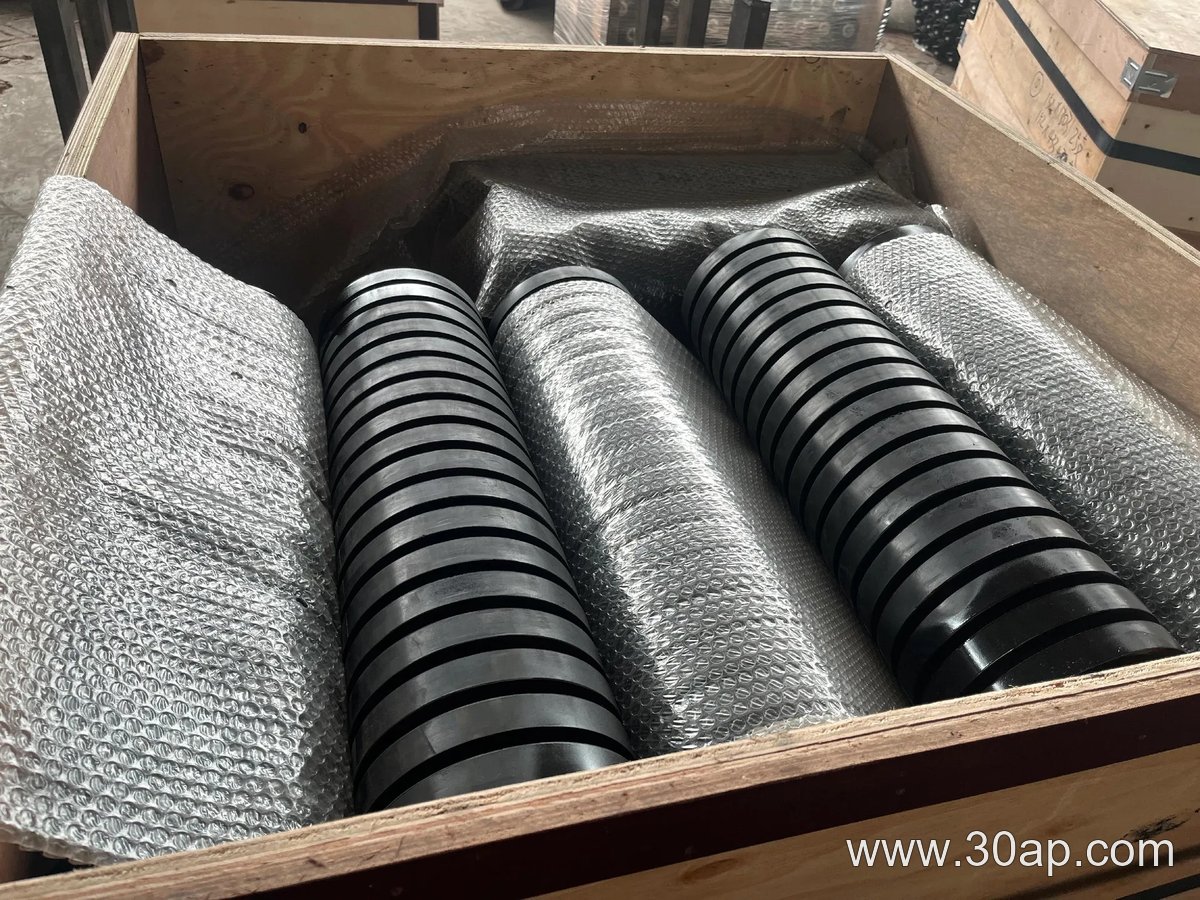
Return idlers support the empty side of the belt. A flat return roller is the simple form, while a V-shaped return idler helps center the belt and shed sticky material. Impact idlers, often fitted with rubber rings, sit under the loading chute where falling material would otherwise damage the belt and rollers. Training idlers, including friction and tapered designs, steer a drifting belt back toward the center. Spiral idlers are used where sticky material tends to build up on the roller face.
Roller Dimensions and Belt Width
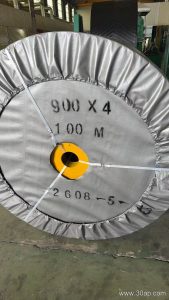
Roller diameter and belt width are related but not locked together. Common roller diameters include 63, 76, 89, 102, 108, 127, 133, 159, 178, 194, and 219 mm. Belt widths range from B400 up to B2400. A wider belt generally calls for a larger roller set and longer rolls, but the exact combination is set by the conveyor design, not by a single rule.
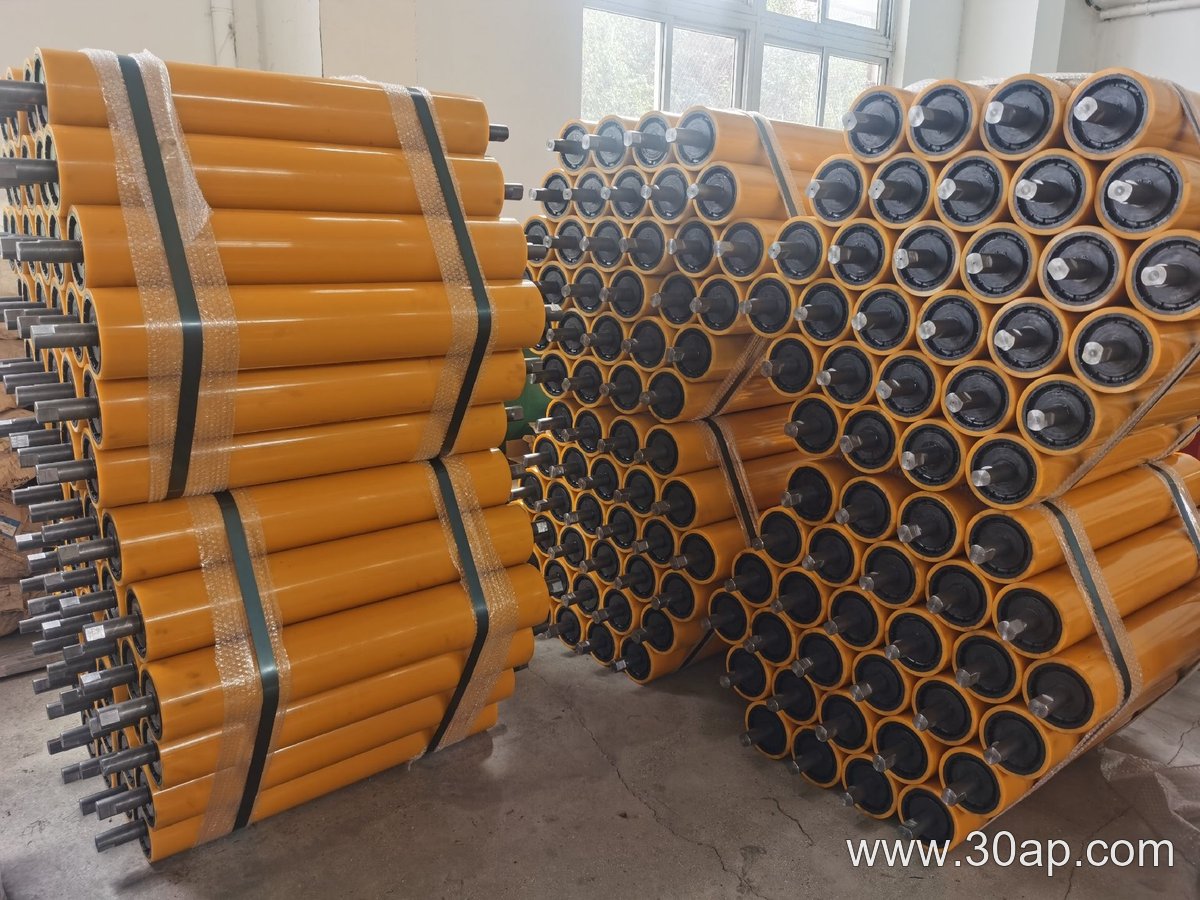
Roll length changes with belt width, trough angle, and the number of rolls in the set. As a rough example, a three-roll troughing set might use rolls around 200 mm long on a B500 belt, about 315 mm on B800, roughly 465 mm on B1200, and near 750 mm on B2000. Side rolls and center rolls can differ, so these figures are reference points rather than fixed matches.
Choosing Idlers for a Specific Duty
A buyer should start with the belt width, belt speed, material, and the load per idler station. From there, the roller diameter, shaft size, bearing class, and seal type follow. The operating environment matters too. A quarry face, a coal handling system, a cement plant, or a port terminal each put different demands on sealing and wear resistance.
It also helps to check the conveyor bracket and frame dimensions before ordering. The idler must drop into the existing bracket without modification, and the mounting centers must match. Maintenance crews often keep a small stock of the most-used sizes so that a failed roller can be replaced without stopping the line for long.
For a reliable result, treat the idler as part of the whole conveyor rather than a stand-alone item. Correct spacing, good alignment, and the right seal for the site will extend roller life far more than any single specification.