Diagnosing Structural Surface Distress on Industrial Components
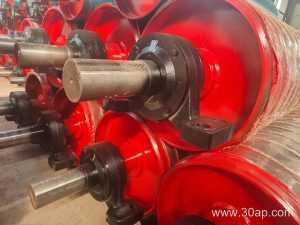
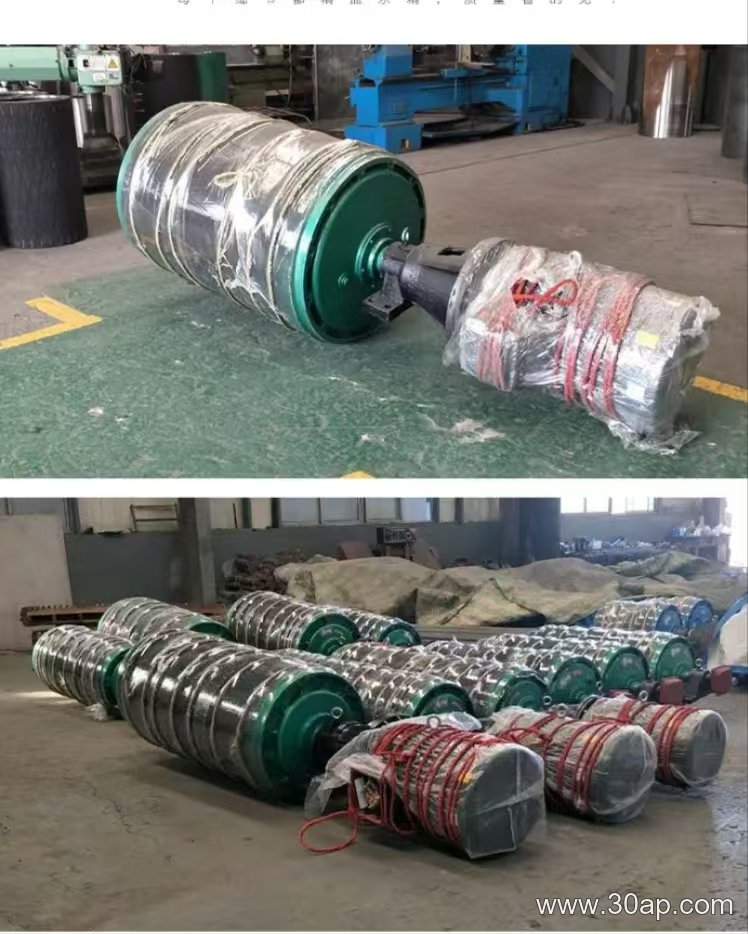
When a conveyor pulley operating in a high-throughput cement plant exhibits sudden surface degradation, plant engineers must look beyond routine belt tracking issues. A conveyor pulley subjected to continuous heavy clinker transport frequently develops severe wear symptoms, including rubber lagging delamination, perimeter groove cracking, and localized shell fatigue. Correctly identifying the root cause of these physical anomalies prevents catastrophic downtime and extends the operational span of the entire material handling line.
Distinguishing Thermal Degradation From Mechanical Overload
Surface distress symptoms often manifest similarly, yet their underlying mechanics diverge significantly. A maintenance technician inspecting a failing conveyor pulley must differentiate between thermal fatigue driven by high-temperature clinker transfer and mechanical overload induced by excessive belt tensioning.
Thermal Breakdown of Elastomeric Lagging
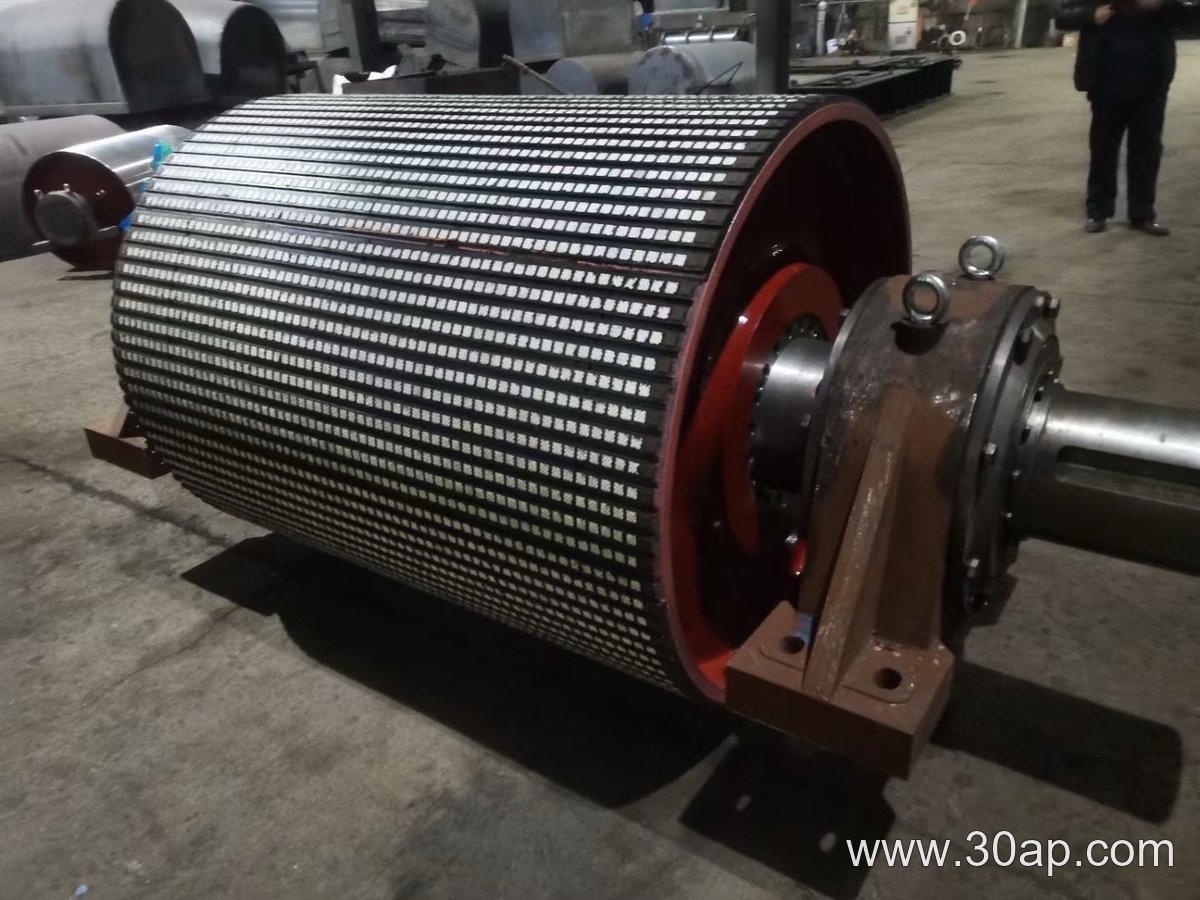
When handling newly processed clinker, elevated material temperatures transfer directly to the pulley face. If the rubber lagging compound lacks appropriate heat resistance ratings, the polymer matrix vulcanizes further, hardening until it becomes brittle. As the belt wraps and flexes under load, thermal hardening leads to circumferential cracking across the lagging face. Furthermore, high interface temperatures degrade the bonding adhesive layer, causing the lagging to shear off the steel shell in large sheets.
Mechanical Fatigue and Shell Deflection
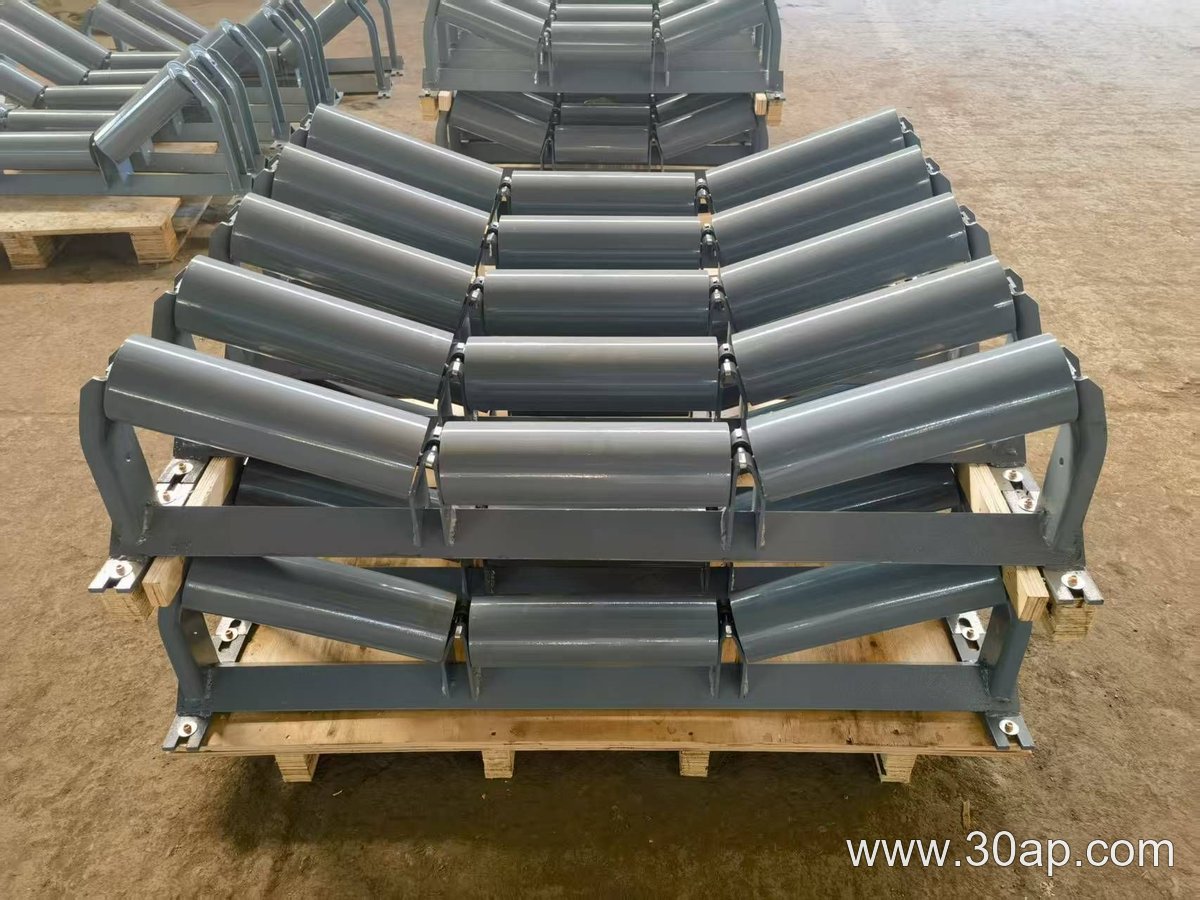
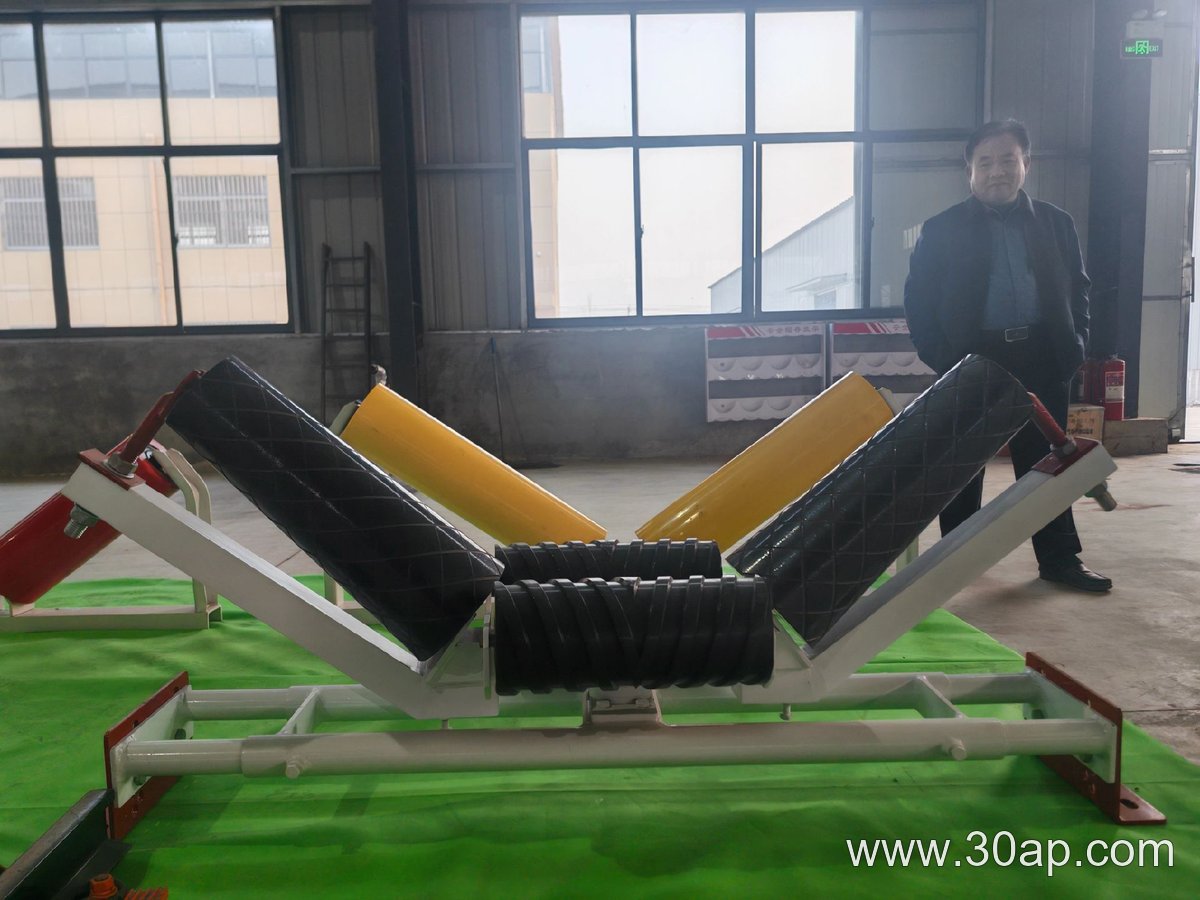
Conversely, mechanical overload presents as localized yielding or cracking along the weld seams connecting the end discs to the cylindrical shell. If take-up units apply excessive force, or if material surges wedge between the belt and the conveyor pulley, extreme radial loads exceed the elastic limit of the steel plate. This produces high-frequency cyclic stress that manifests as parallel fatigue cracks radiating outward from the hub connection or across the outer rim surface.
Evaluating Environmental Contamination and Chemical Attack
A secondary investigation vector involves assessing how fugitive cement dust and ambient moisture interact with the rotating assembly. When fine raw meal mixes with water vapor in semi-enclosed processing bays, it forms an aggressive, abrasive slurry that migrates beneath the belt edges. This slurry enters the micro-gaps between the lagging and the shell, accelerating abrasive wear and creating wedge-like hydraulic pressures every time the belt engages the conveyor pulley.
- Chemical ingress attacks vulnerable bonding agents, accelerating edge peeling on unsealed lagging joints.
- Abrasive fines trapped between the belt and shell create localized high-pressure contact points, gouging the steel surface.
- Moisture accumulation promotes hidden corrosion beneath the lagging edges, weakening the structural adhesion over time.
Establishing Effective Preventive Maintenance Protocols
Mitigating these structural faults requires a structured inspection routine focusing on early warning signs rather than reactive component replacement. Maintenance teams should schedule regular ultrasonic thickness testing of the shell, visual checks for lagging edge separation, and infrared thermography to detect abnormal friction hotspots during full-load operation. By systematically isolating whether surface failure stems from thermal stress, excessive mechanical tension, or environmental contamination, plant operators can adjust take-up settings, upgrade lagging compounds, or modify cleaning scrapers to protect the conveyor pulley through its intended operational lifecycle.