What the Trough Angle Means on a Belt Tracker
A conveyor belt tracker is a self-correcting idler assembly that senses belt drift and steers the belt back toward the center line. On the carrying side, the tracker usually sits inside a troughed idler set, and the trough angle is the angle at which the side rollers rise from the horizontal center roller. Common arrangements are 20, 30, 35 and 45 degrees. The angle is not just a mounting detail: it changes belt contact geometry, the lateral force the tracker can generate, and how the assembly fits the existing conveyor frame. For anyone specifying a conveyor belt tracker trough angle, the value must match the troughing of the adjacent idlers, not be chosen in isolation.
How the Tracker Is Built
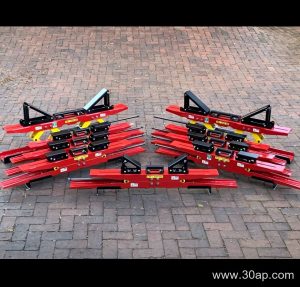
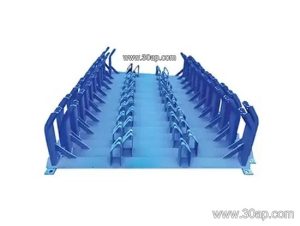
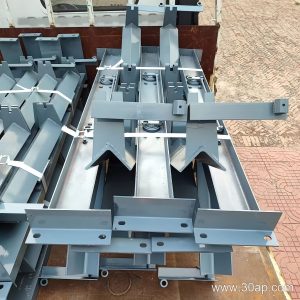
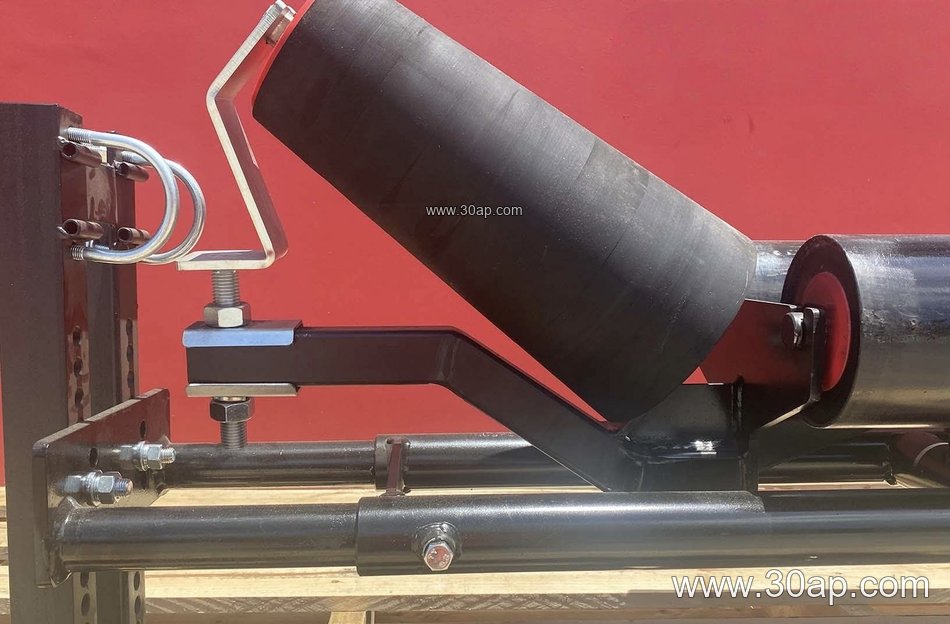
A typical unit combines a pivoting frame, two or three rollers, a central pivot shaft and a linkage or bearing arrangement that lets the frame rotate slightly when the belt contacts a steering roller. Some designs use a vertical-axis pivot with edge rollers; others use a hinged sub-frame that tilts in response to off-center loading. The trough angle is determined by the roller brackets and the frame geometry, so a 35-degree tracker cannot simply be bolted into a 20-degree idler station without checking roller length, bracket height and clearance to the belt edge.
- Pivoting frame with central shaft and bearing housing
- Two or three idler rollers sized to the belt width
- Steering or sensing rollers at the belt edges
- Mounting brackets matched to the conveyor stringer spacing
- Optional linkage, spring or hydraulic return element
Where Trough-Angle Trackers Are Used
Troughed trackers appear wherever a loaded belt is prone to misalignment: coal yards, cement plants, power station coal handling, quarry and aggregate lines, iron ore and copper ore transfer points, and port bulk terminals. A 1200 mm or 1400 mm EP conveyor belt carrying damp aggregate may need a 35-degree station to keep the load centered, while a wider 1800 mm heavy-duty mining conveyor belt on a long overland run often uses 35 or 45 degrees to increase capacity. The same principle applies to a flame retardant conveyor belt in an underground coal mining conveyor, where frame space and clearance are tight and the tracker must fit the existing structure.
Matching the Angle to the Rest of the Line
The tracker should follow the trough angle of the idler stations around it. A mismatch creates a step in belt support, which can itself cause edge wear or a local dip. Buyers should confirm:
- Belt width and actual measured trough angle of existing idlers
- Roller diameter and length, and shaft diameter at the bracket
- Frame hole spacing and mounting height
- Belt speed and running direction, including reversible belts
- Carrying or return-side location
- Belt construction: fabric core, steel cord, chevron or corrugated sidewall
A 1000 mm belt on a 30-degree frame and a 1000 mm belt on a 45-degree frame are not interchangeable without checking these items. Belt width alone does not fix roller diameter, shaft size or the number of trackers required.
Buyer Notes and Maintenance
Ask for a dimensional drawing showing the pivot center, roller positions and bracket holes. Confirm whether the unit is a friction-sensing type or a powered corrective type, since the two behave differently. During installation, check that the tracker is square to the belt center line and that adjacent idlers are aligned. Inspect for seized bearings, worn rollers and material buildup, which can hold the frame off-center. Always stop and lock out the conveyor before adjusting or replacing a tracker; observe belt tracking only from a safe position while running.
For coal mining conveyor belt, cement conveyor belt and power plant conveyor belt projects, the trough angle should be recorded as part of the idler specification, alongside the belt type and frame dimensions. That single dimension often explains why a replacement tracker does or does not fit.