What a High-Strength Pulley Really Is
A high-strength pulley is the heavy-duty drum at the heart of a conveyor’s power transmission and belt routing. In plant language it is often simply called a heavy-duty conveyor pulley or a reinforced drum pulley, and it is designed to carry the belt tension, torque and shock loads that light-duty shells cannot handle. The difference is not cosmetic: thicker shells, stronger hubs, deeper weld preparation and a shaft sized by torque rather than by habit all go into the same component.
This matters in a quarry feeding a crusher, in a coal handling system at a power plant, or on a long overland run where a single stop costs hours. A high-strength pulley is expected to keep its roundness and its grip while the belt above it carries abrasive rock, wet coal or hot clinker.
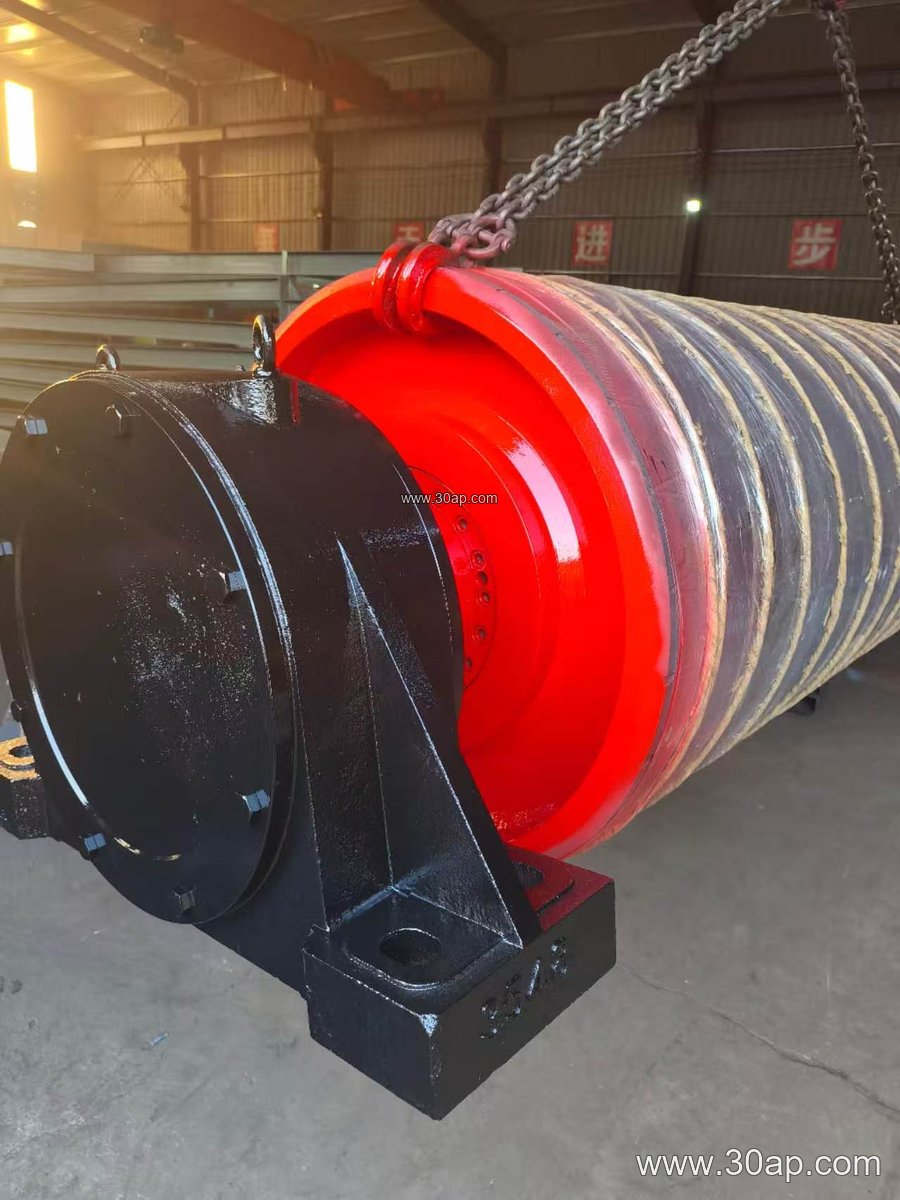
How the Drum Is Put Together
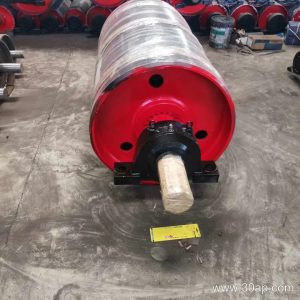
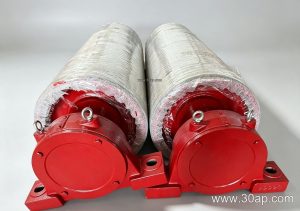
The structure is straightforward but the details decide service life. A typical unit combines a rolled steel shell, two end discs or dished ends, a hub, a through shaft or stub shafts, and a bearing housing on each side. Key construction points include:
- Shell thickness matched to belt tension and face width, not chosen by rule of thumb.
- Continuous welds with stress relief where the design calls for it, so the drum resists fatigue under cyclic loading.
- Shaft diameter determined by torque, bending load and bearing life, with common sizes such as Ø80, Ø100, Ø120, Ø140, Ø160 and Ø180 appearing across heavy ranges.
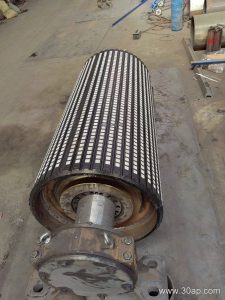
- Lagging applied as plain rubber, cold-bonded rubber, hot-vulcanized rubber, diamond pattern, herringbone pattern or ceramic tiles, usually 8 to 20 mm thick.
Balance and concentricity are checked because an out-of-round drum will hammer the belt, the idler roller frames and the conveyor bracket joints on every revolution.
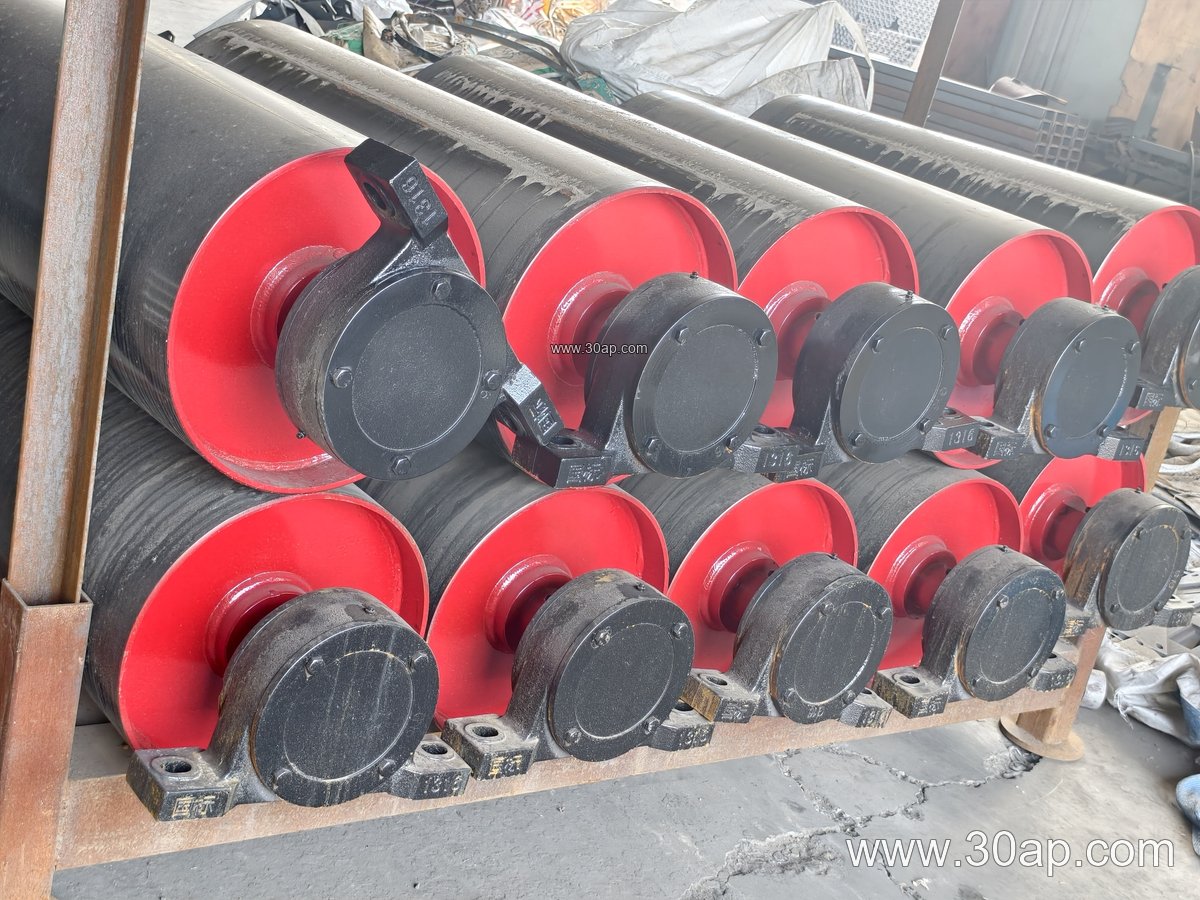
Where It Sits in the Conveyor
A high-strength pulley is not one position only. At the head it drives or discharges; at the tail it turns the belt back; at a bend station it redirects the path; at a take-up it maintains tension. Each duty changes the load case, so a drive pulley and a bend pulley are not interchangeable even when they share a diameter.
Face width normally exceeds belt width so the belt is supported across its full span. Reference pairings used in layout work include B800 × Ø500, B1200 × Ø1000 and B1400 × Ø800, but these are design examples rather than fixed rules. Diameters in the range Ø200 to Ø1800 mm appear across light and heavy duties, and the same belt width can work with more than one drum diameter depending on tension and wrap angle.
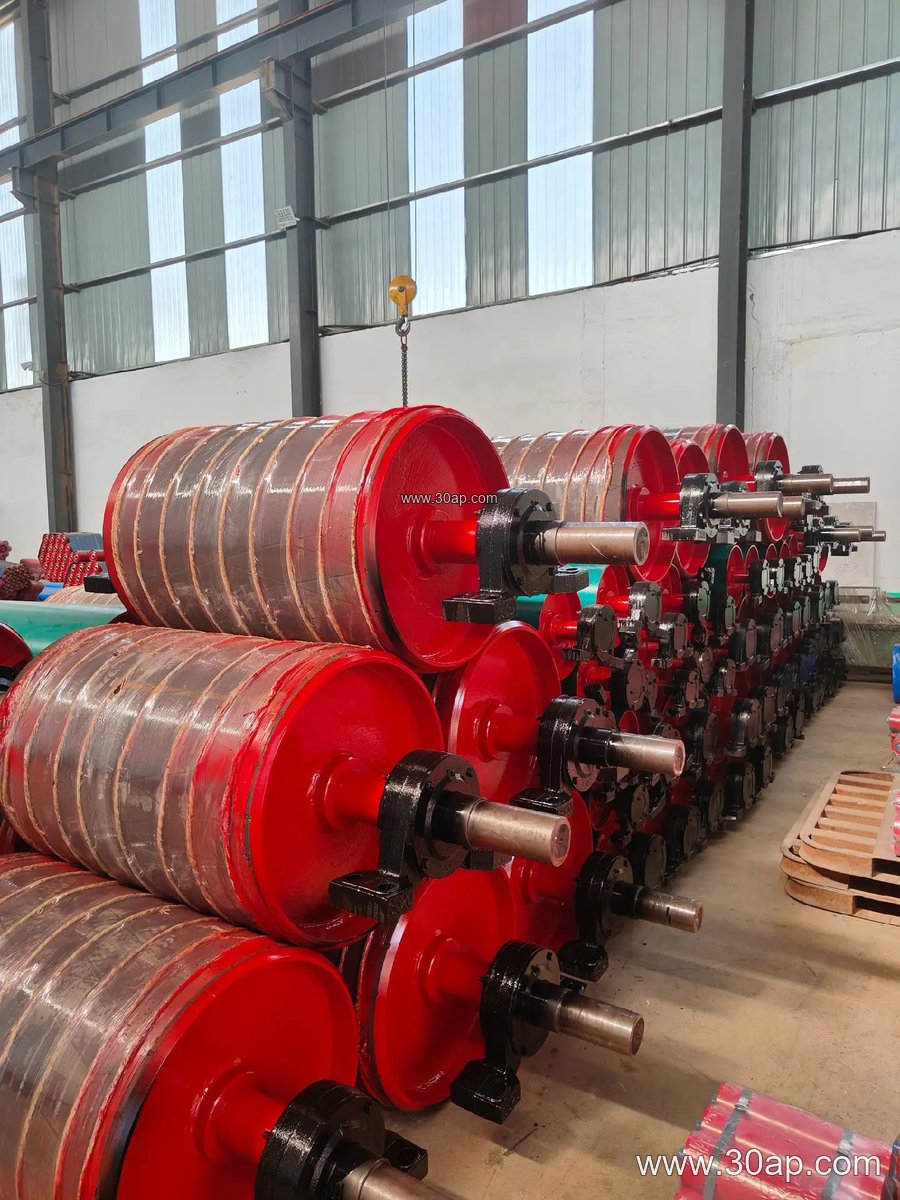
Typical size reference
| Belt width | Usual pulley face width | Example diameter pairing |
|---|---|---|
| B500 | about 600 mm | Ø250 to Ø400 |
| B800 | about 950 mm | Ø400 to Ø630 |
| B1000 | about 1150 mm | Ø500 to Ø800 |
| B1200 | about 1400 mm | Ø630 to Ø1000 |
| B1600 | about 1800 mm | Ø800 to Ø1250 |
| B2000 | about 2200 mm | Ø1000 to Ø1600 |
Values are indicative and should be confirmed against the actual conveyor design.
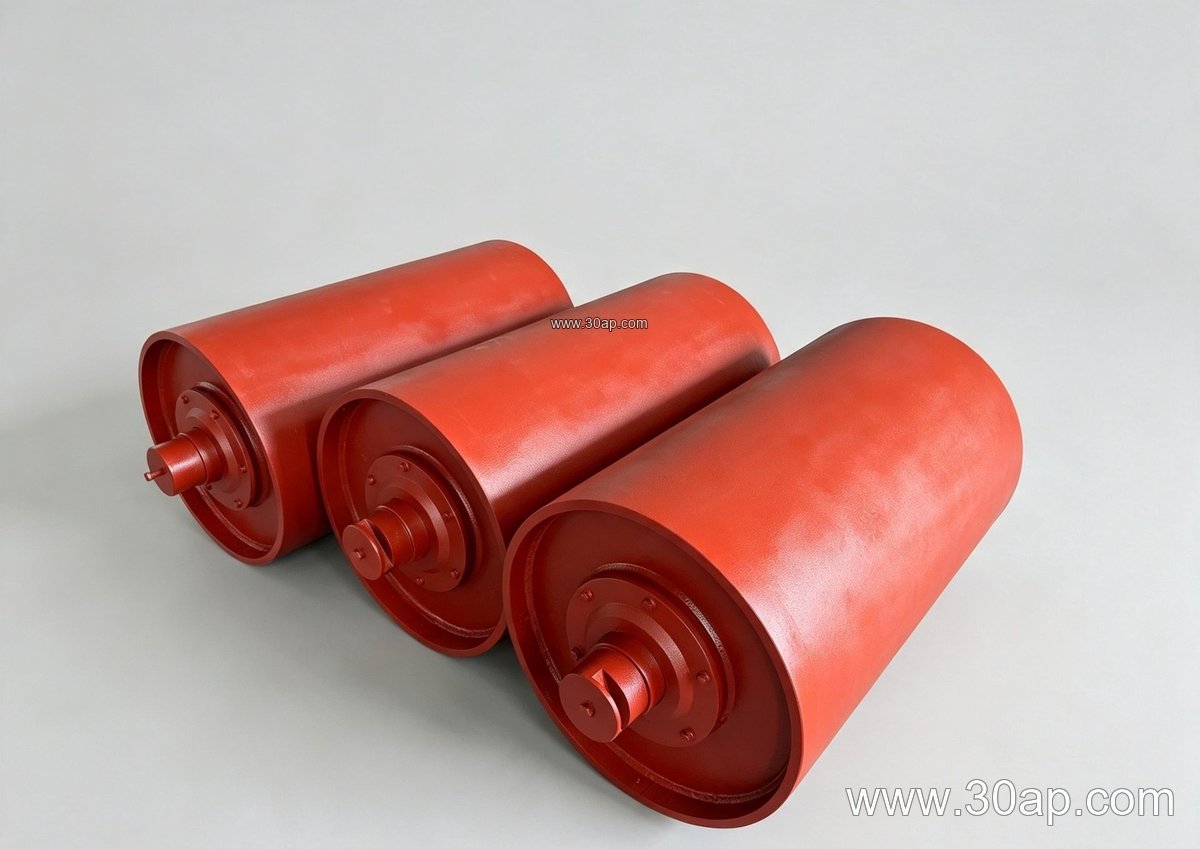
Matching the Pulley to the Belt and the Job
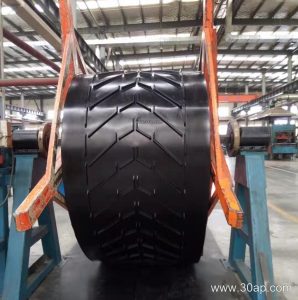
The drum and the belt work as a pair. An abrasion resistant conveyor belt running over a ceramic-lagged drum in a stone crushing line will hold traction far better than a plain shell, while a flame retardant conveyor belt in an underground coal mining conveyor demands lagging and materials that do not add fire risk. On a long incline, a steel cord conveyor belt may call for a larger diameter to limit bending stress, whereas a multi-ply fabric core belt can often run on a smaller drum.
Material type also shapes the choice. Hot sinter or cement clinker suggests heat resistant lagging and attention to bearing clearance. Oily scrap or recycled feedstock may justify an oil resistant covering. Food and grain operations lean toward smooth, cleanable surfaces. In every case the drum, the conveyor belt, the idler roller set and the conveyor bracket should be reviewed together, because a strong pulley bolted to a weak frame simply moves the failure point.
Buyers should ask for the shell thickness, shaft material and diameter, bearing type, lagging specification and dynamic balance grade, plus drawing dimensions for face width, hub projection and keyway. For a full range of matched drums and belts, see the conveyor pulley pages and the conveyor belt sections of www.beltsupplier.com; related hardware such as idler roller assemblies is listed separately.
Selection and Maintenance Notes
Choose by calculated tension, torque and wrap angle, then confirm the shaft and bearings against the actual load. Do not assume one belt width locks in one diameter, and never derive shaft size from belt width alone. During service, watch lagging wear, listen for bearing noise, check bolt torque on the conveyor bracket and verify that the belt tracks centrally. Re-lagging a worn high-strength pulley is usually cheaper than replacing a scored shell, and it keeps the drive efficiency that the whole line depends on.