What a Conveyor Idler Frame Does on the Line
A conveyor idler frame is the structural element that holds the idler rollers in the correct position under or above the conveyor belt. It keeps the rollers spaced, sets the trough angle on the carrying side, and transfers the load of the belt and material into the conveyor stringer or support structure. Without a properly aligned frame, even a good idler roller will wear unevenly and the belt will begin to mistrack. In a quarry, a cement plant, or a coal handling system, the idler frame is a small part of the total cost but a large part of the daily reliability story.
The same component is also called a conveyor idler support or roller frame. These are accurate equivalents for the same product, not different equipment.
How the Frame Is Built
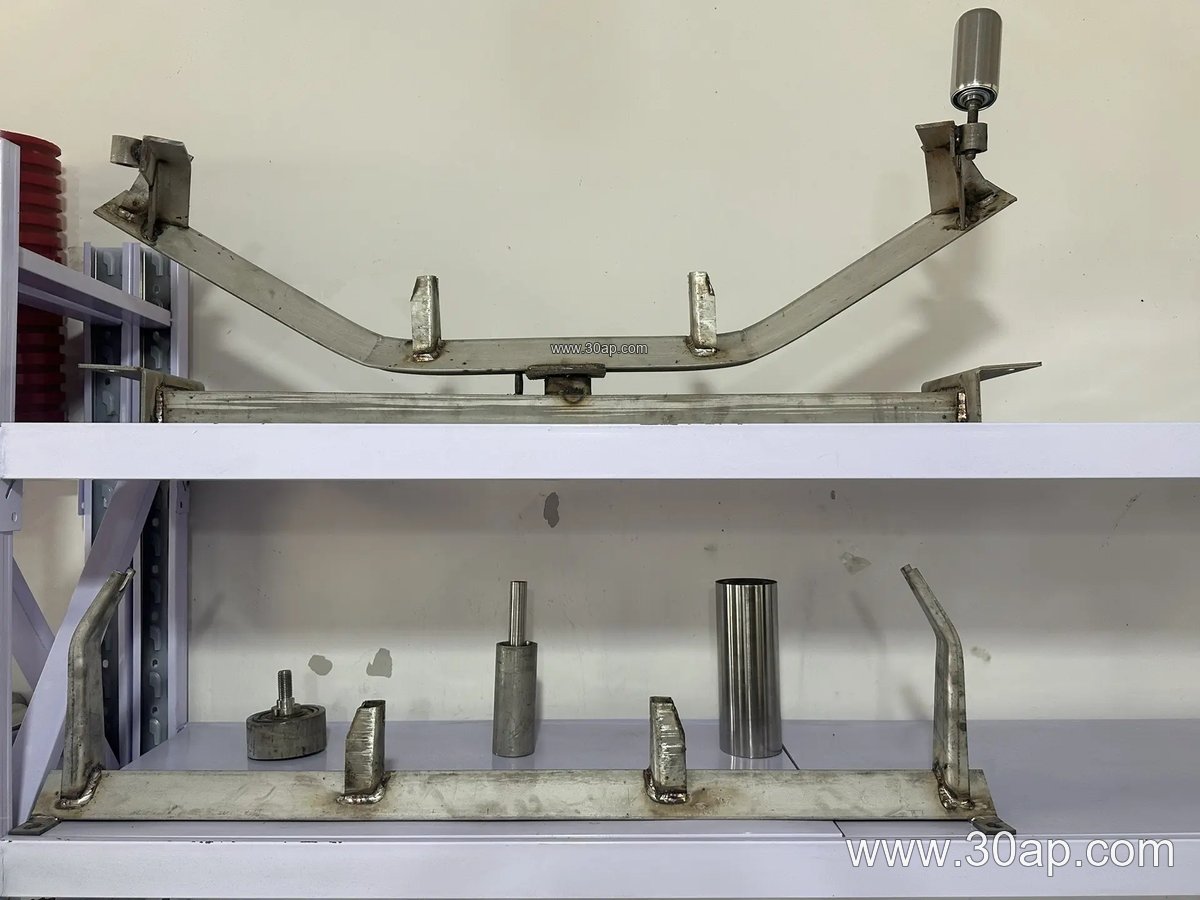
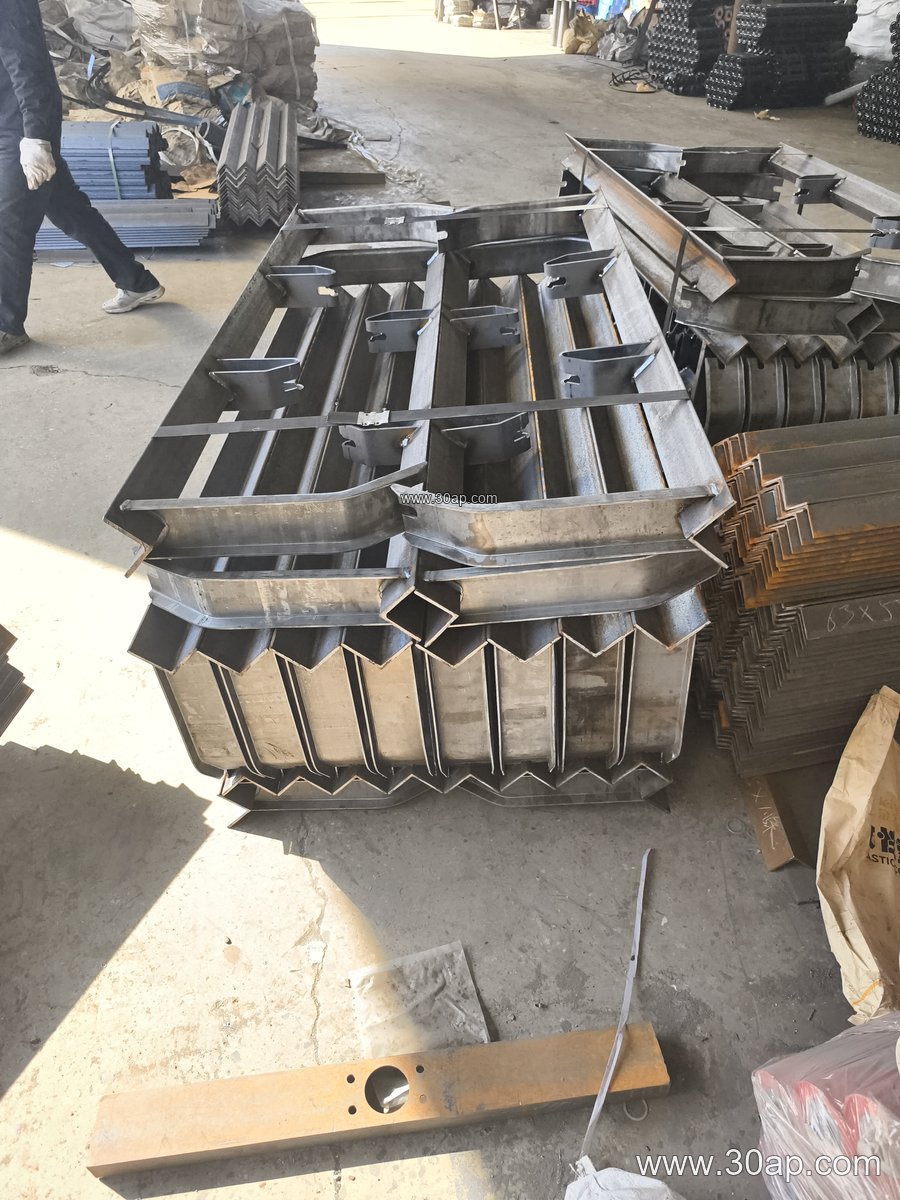
Most frames are fabricated from angle steel, channel steel, or folded steel plate. The material choice depends on the load and the environment. A heavy-duty mining conveyor belt carrying ore needs a stiffer frame than a light aggregate line. The frame usually includes mounting slots or holes so the idler roller can be fixed at a defined position, and the crossbeam length and hole spacing change with belt width and trough angle rather than following one fixed number.
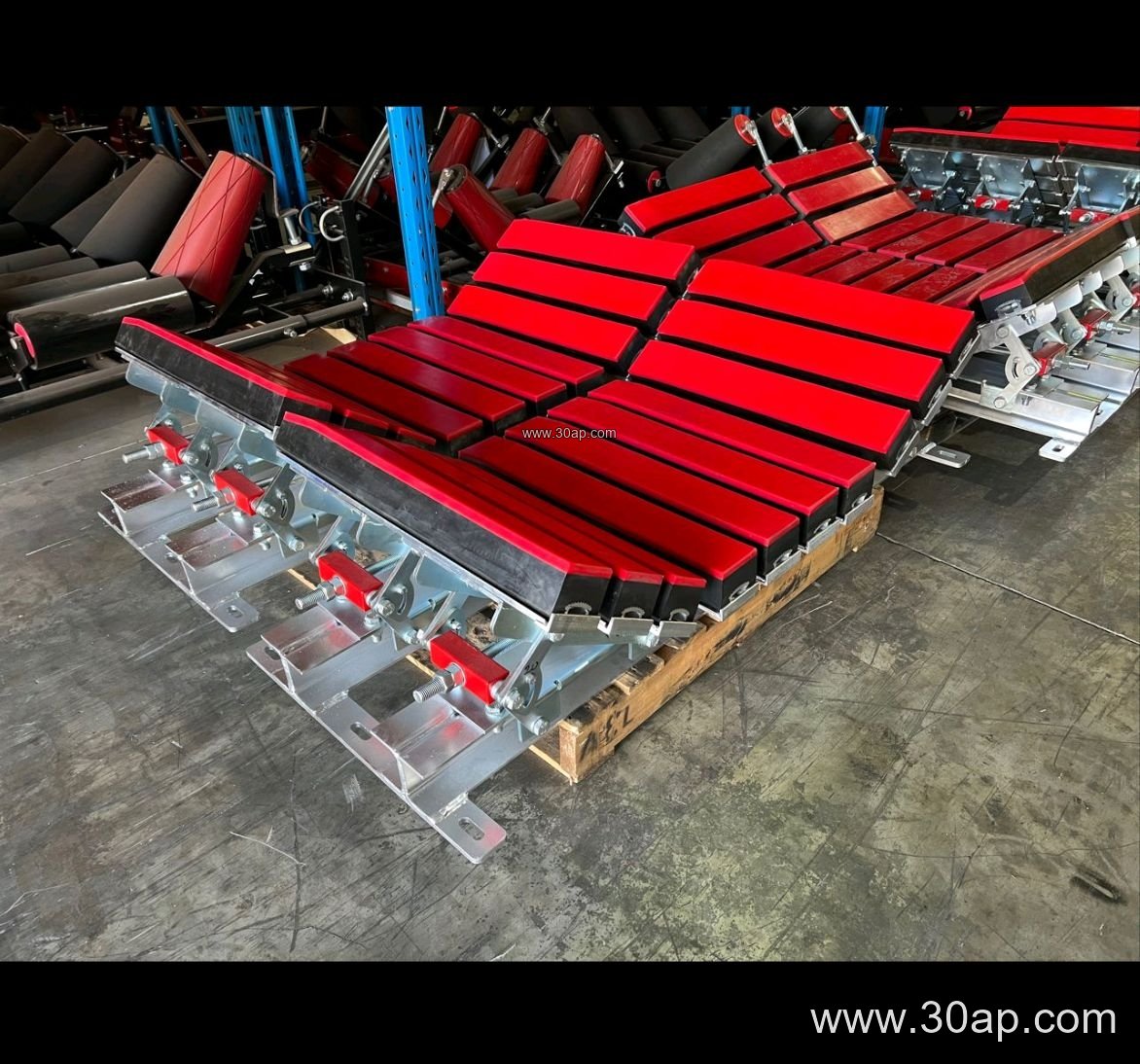
Common constructions include:
- Trough frames for the carrying side, often set at 20, 30, 35, or 45 degrees
- Transition frames used near pulleys to guide the belt from flat to troughed
- Return frames, including flat and V-type return supports
- Impact frames with cushion rollers under loading points
- Self-aligning frames and forward-leaning frames for tracking control
- Adjustable frames that allow the trough angle to be changed on site
Welding quality, hole accuracy, and surface treatment matter more than appearance. A frame that is twisted will force the idler roller out of line and shorten bearing life.
Matching Frame, Belt, and Roller
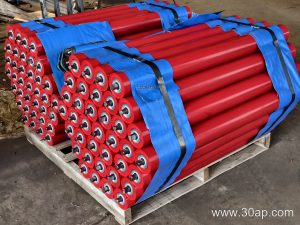
Selection starts with the belt width, the material load, and the belt speed. A B800 frame at 35 degrees with Ø108 rollers is a common combination on a medium-duty line, while a B1200 frame at 45 degrees with Ø133 rollers may suit a heavier bulk material conveyor belt. These are examples, not fixed rules. A B650 frame at 30 degrees with Ø89 rollers can work well on a smaller sand or aggregate line.
| Frame Type | Typical Belt Width | Common Trough Angle | Common Roller Diameter |
|---|---|---|---|
| Trough frame | B500 to B2200 | 20, 30, 35, 45 degrees | Ø89, Ø108, Ø133, Ø159, Ø194 |
| Transition frame | B650 to B1800 | Variable | Ø89 to Ø159 |
| Return frame | B500 to B2000 | Flat or V-type | Ø89 to Ø159 |
| Impact frame | B800 to B1800 | 20 to 45 degrees | Ø108 to Ø194 |
| Adjustable frame | B650 to B1600 | 20 to 45 degrees | Ø89 to Ø159 |
Do not assume that one belt width can only match one pulley diameter or one frame size. The conveyor pulley at the head and tail, the take-up arrangement, and the belt tension all influence the final layout. The frame should be selected together with the idler roller and the conveyor belt, not in isolation.
Where These Frames Are Used
Idler frames appear wherever a belt conveyor runs. In a limestone quarry or a stone crushing line, trough frames carry the aggregate and impact frames protect the belt at the transfer point. In a coal washing plant or a power plant coal yard, flame retardant conveyor belt and anti-static belt grades are often paired with sturdy frames in dusty, enclosed galleries. In a port ship loading system or a cement plant, long overland conveyors use many identical frames, so consistent hole spacing speeds up installation and replacement.
Other industries include iron ore handling, sintering plants, concrete mixing stations, tunnel muck removal, fertilizer plants, and grain silos. Each has its own dust, moisture, and load profile, and the frame coating or galvanizing should reflect that.
Buyer Checklist Before Ordering
- Confirm belt width and required trough angle, not just the frame length
- State the idler roller diameter and bearing type so the mounting fits
- Ask for the crossbeam length and hole spacing drawing
- Specify fixed or adjustable frame if the angle may change
- Check material thickness and surface treatment for the site conditions
- Confirm whether the frame is for carrying, return, transition, or impact duty
A practical order also considers spare parts. If the plant uses a heavy-duty mining conveyor belt, keeping a few spare frames and rollers on site reduces downtime. The conveyor bracket and frame should be checked for corrosion and loose bolts during routine inspections, and any bent frame should be replaced rather than straightened, because alignment affects belt life and energy use.
For more information on matching frames with conveyor belts, idler rollers, and pulleys, visit conveyoridlerframe.com or check our guide pages on belt and roller selection.