What a Conveyor Leg Does on a Belt System
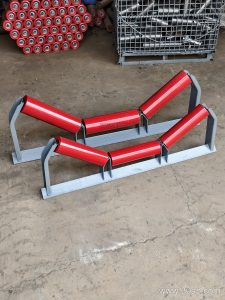
A conveyor leg is the vertical support that carries the idler frames, pulleys, and belt load above the ground or floor structure. In a typical troughing section, the leg works together with a cross beam and a conveyor bracket to hold the idler roller at the correct height and angle. The leg is not a decorative part; it sets the geometry of the whole carrying run, so a weak or poorly aligned leg shows up quickly as belt misalignment, spillage, or uneven wear.
In quarry and aggregate lines, legs are often fixed to a concrete plinth or bolted to a steel walkway. In a coal preparation plant or power plant coal yard, the same support may be designed for heavier loads and for quick replacement during maintenance shutdowns.
How the Support Is Built
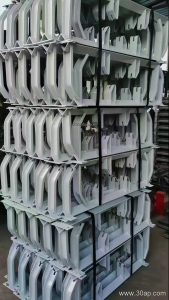
Most conveyor legs are fabricated from angle steel, channel steel, or folded steel plate. A fixed leg is cut and drilled to one height and one bracket position. An adjustable leg uses slotted holes or a telescopic section so the frame height can be corrected on site. The foot may be a flat base plate with anchor holes, or a simple pad that sits on a steel structure.
Key details a buyer should check include the bolt hole spacing, the width of the top plate that meets the cross beam, and whether the leg is designed for a single-side or double-side frame. These dimensions follow the belt width and the trough angle, so they are usually confirmed against a drawing rather than chosen from a catalogue alone.
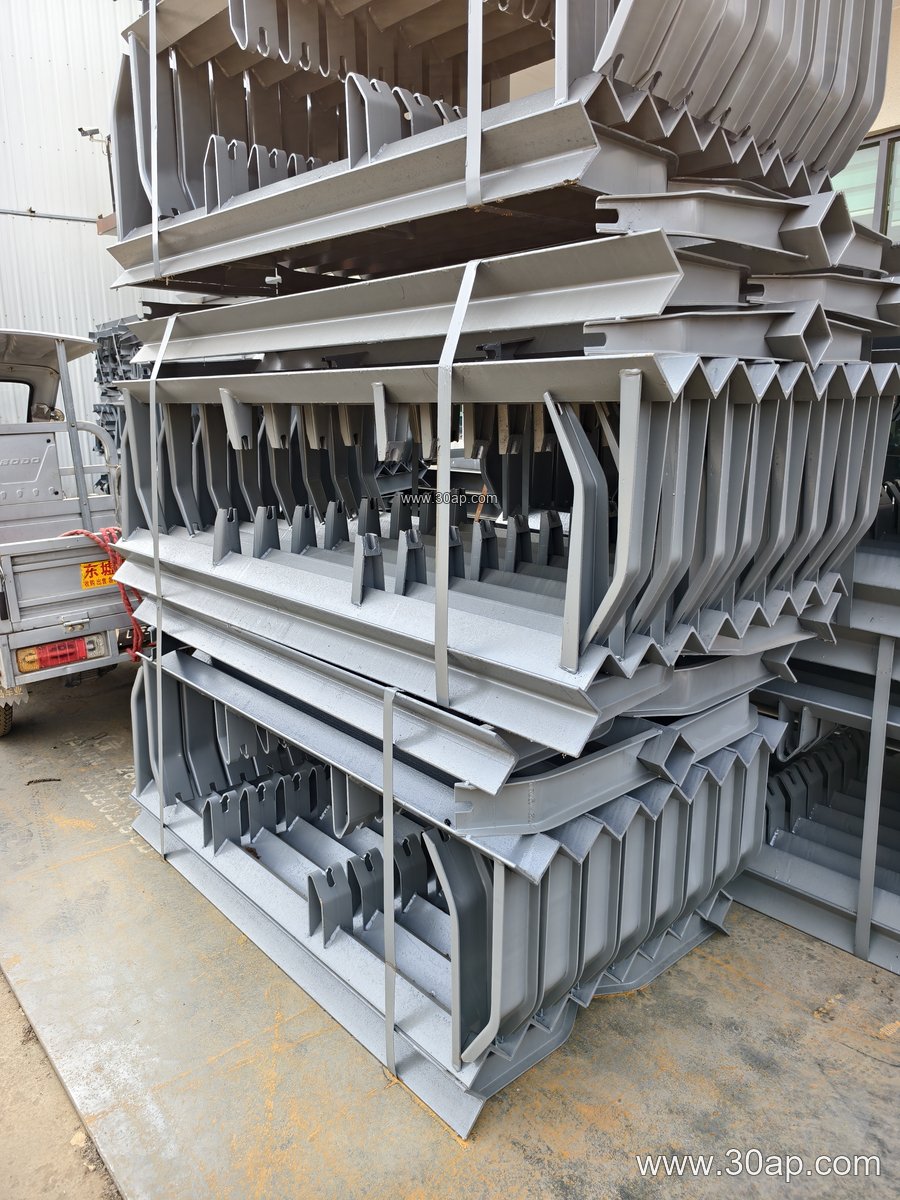
- Material: angle steel, channel steel, or folded plate
- Form: fixed, adjustable, or hinged for folding
- Finish: painted, galvanized, or bare steel for site coating
- Connection: bolted bracket, welded frame, or clamped foot
Matching the Leg to Belt Width and Trough Angle
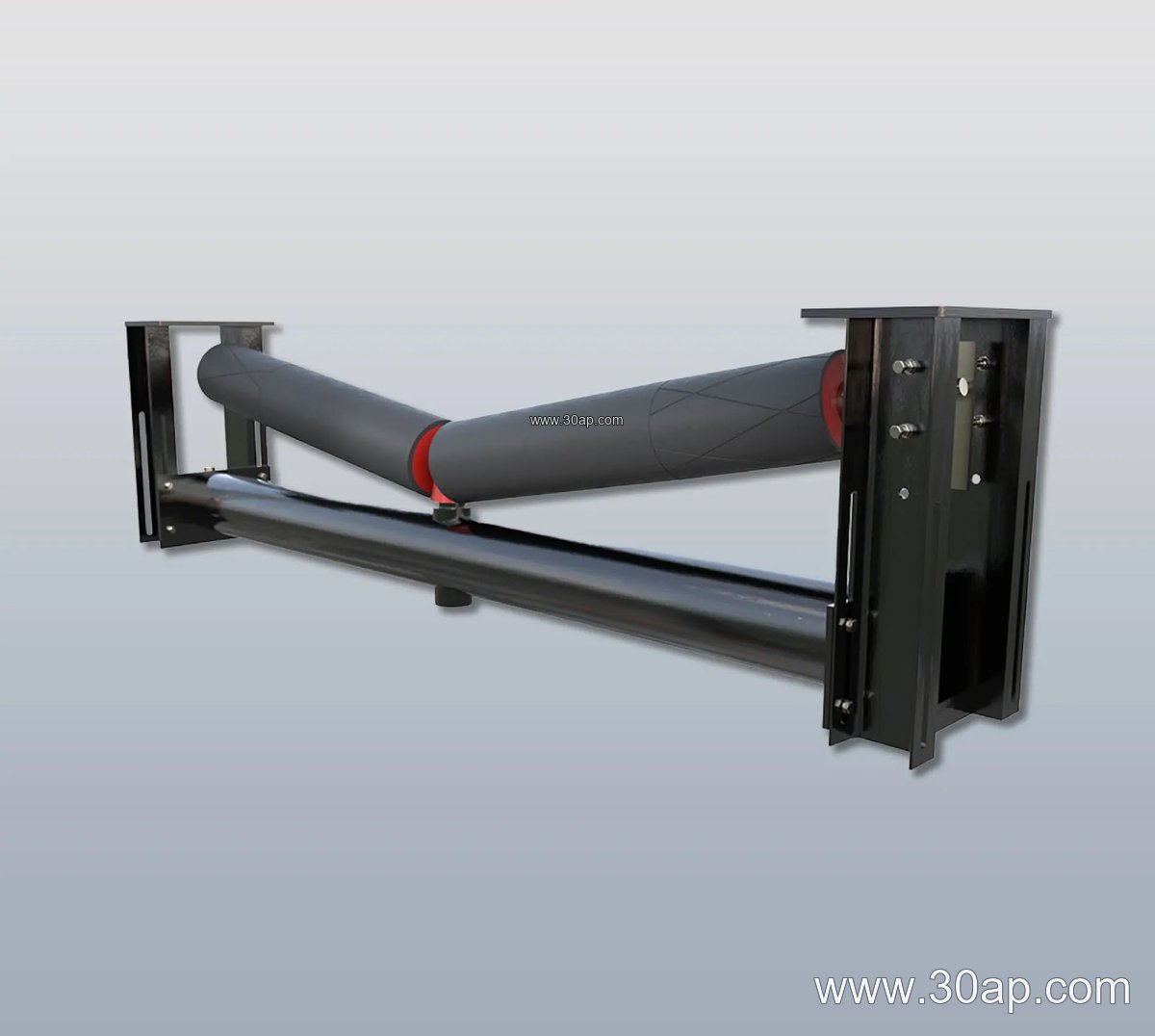
The leg height and the position of the mounting holes are normally set by the belt width, the trough angle, and the idler diameter. Common belt widths in bulk handling include B500, B650, B800, B1000, B1200, B1400, B1600, B1800, B2000, B2200. Trough angles of 20, 30, 35, and 45 degrees are widely used, and an adjustable frame can move between these angles when the material flow changes. Idler diameters such as Ø89, Ø108, Ø133, Ø159, and Ø194 each need a different bracket height, so the leg should be ordered with the frame, not as a stand-alone part.
A common combination might be written as B800, 35 degrees, Ø108, or B1200, 45 degrees, Ø133. These are reference examples only. A wider belt does not automatically require a larger pulley or a single fixed trough angle; the final choice depends on the load, the belt type, and the frame design.
Where These Supports Are Used
Conveyor legs appear wherever a belt line runs above grade. In a limestone quarry or a sand and gravel plant, they support the primary and secondary crushing feed belts. In a cement plant, they carry clinker and raw meal belts through transfer towers. In a steel plant or sintering line, they hold belts that move hot or abrasive material, often paired with a heat resistant conveyor belt or an abrasion resistant conveyor belt. Port terminals and ship loading systems use long runs of legs along the jetty, while tunnel spoil lines use compact frames that fit a narrow gallery.
The support also matters when the belt itself is special. A pipe conveyor belt needs a stable frame to keep the pipe shape, and a corrugated sidewall belt or skirted conveyor belt adds weight that the leg and bracket must carry. In underground coal mining, flame retardant conveyor belt and anti-static conveyor belt are common, and the leg frame should be easy to inspect and re-tighten.
Buyer Checklist Before Ordering
Start with the belt width and the idler diameter, then confirm the trough angle and the frame type. Ask for the hole spacing and the top plate width on the drawing. Check whether the leg is fixed or adjustable, and whether the foot is designed for a floor anchor or a steel beam. For a long overland run, confirm that the leg can be shimmed during installation. For a crusher conveyor belt or an ore conveyor belt with impact loads, check that the leg and the buffer idler bracket are rated for the same load.
Finally, plan the maintenance access. A leg that is hard to reach makes idler roller changes slow, and a loose bracket can cause the belt to train to one side. Spare legs, bolts, and shims kept on site reduce downtime in a busy quarry or power plant.