What a Large-Diameter Pulley Does on a Conveyor
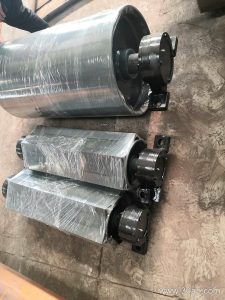
A large-diameter pulley is a conveyor pulley with an outside diameter typically from Ø800 mm upward, often reaching Ø1000, Ø1250, Ø1400, or even Ø1800 in demanding bulk handling circuits. It is not simply a bigger version of a standard drum; the larger diameter reduces belt bending stress, improves traction, and extends the service life of the conveyor belt. In quarry and aggregate lines, cement plants, and iron ore operations, this component is often the backbone of the head drive or the critical tail tension point.
Note that drive, tail, and bend pulleys are distinct functional types. A large-diameter pulley can serve as a drive pulley (head pulley) or a tail pulley, but it is never a drop-in replacement for a bend pulley unless the layout and tension calculations support it. When specifying, always clarify the position and duty.
Construction and Surface Options
The core is usually a welded steel drum with a machined shell, reinforced with internal discs or ribs to handle high torque. Shaft diameters are sized by torque and load, commonly ranging from Ø100 to Ø200 mm for large units, not by belt width alone. The surface form is selected for the application:
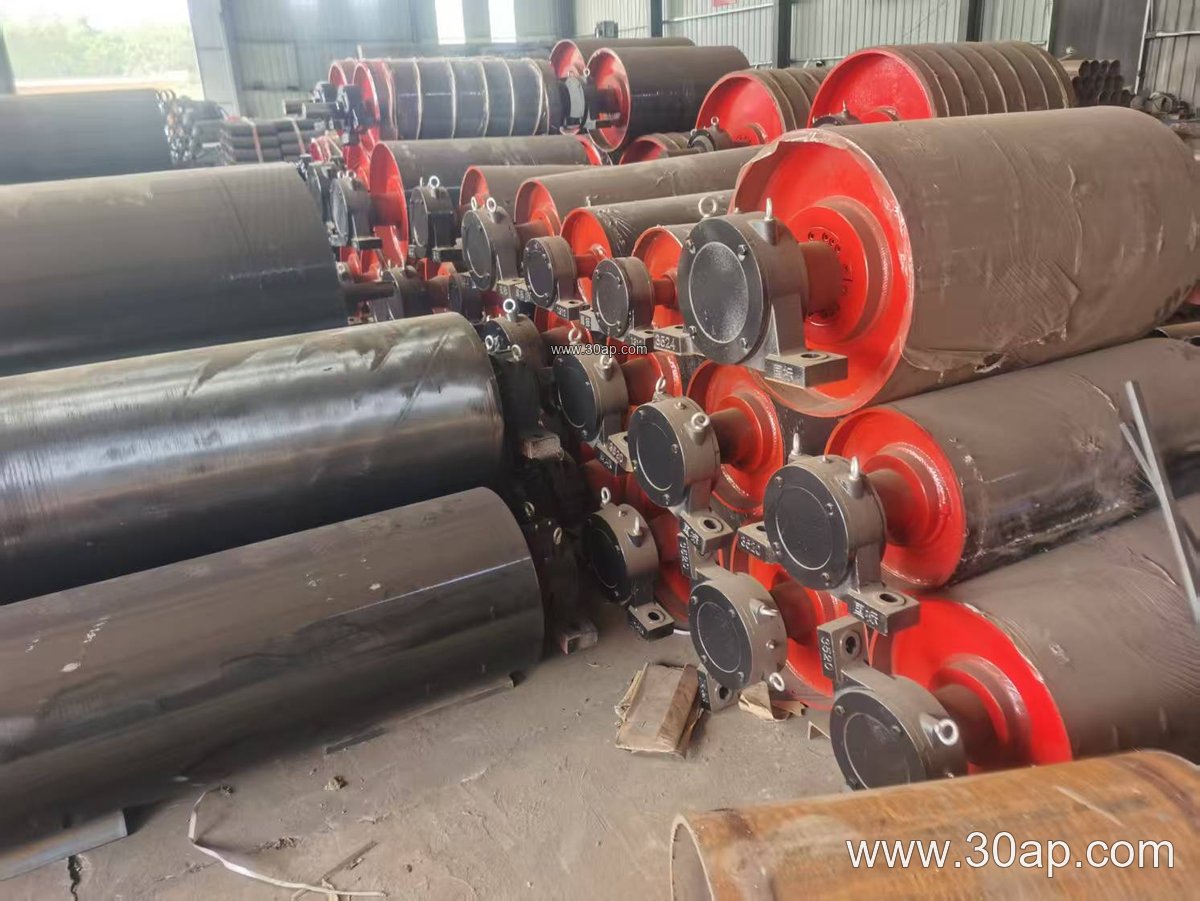
- Plain face for general use
- Cast rubber or cold-bonded rubber for standard grip
- Hot-vulcanized rubber for heavy-duty traction
- Diamond or herringbone grooving for wet or muddy conditions
- Ceramic lagging for high-wear, high-tension drives
Lagging thickness is frequently 8, 10, 12, 15, or 20 mm. The pulley face width is normally wider than the belt, for example a B1200 belt often matches a pulley face around 1400 mm, and B1400 with about 1600 mm. These are reference relationships, not fixed rules.
Where It Fits in the Plant
In a limestone mine or a coal washing plant, a large-diameter pulley at the head end handles the highest tension and must resist abrasive slurry. In a power plant coal yard, a Ø1250 mm drive pulley may be paired with a flame retardant conveyor belt and heavy-duty idler rollers. In a copper ore concentrator, a Ø1400 mm tail pulley keeps the belt tracking under high tension. Port bulk terminals use large-diameter pulleys on ship loading conveyors where belt widths of 1800 mm or 2000 mm are common.
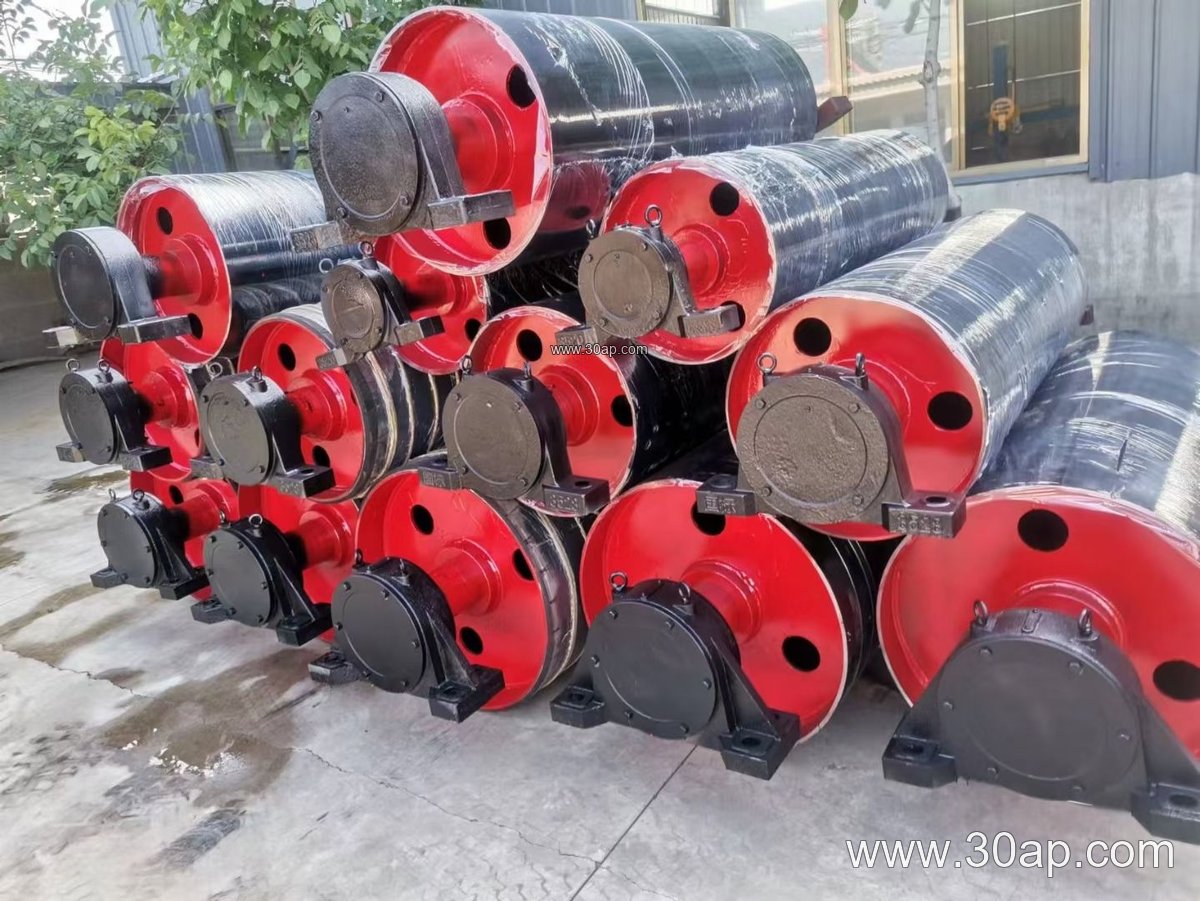
The choice between a large-diameter drive pulley and a smaller bend pulley is a matter of tension ratio and belt fatigue. A bend pulley is typically smaller and only redirects the belt, while a large-diameter drive pulley provides the wrap angle and friction needed for power transmission.
Matching the Pulley to the Belt and Load
A common mistake is to select a pulley diameter from belt width alone. For instance, an EP1000 1200mm conveyor belt may work with a Ø800 mm pulley in one layout and require Ø1000 mm in another with higher tension. The belt construction matters: steel cord conveyor belts generally tolerate smaller diameter-to-thickness ratios than multi-ply fabric core belts. Abrasion resistant conveyor belts used in quarry conveyor lines may need a larger pulley to reduce bending fatigue at the splice.
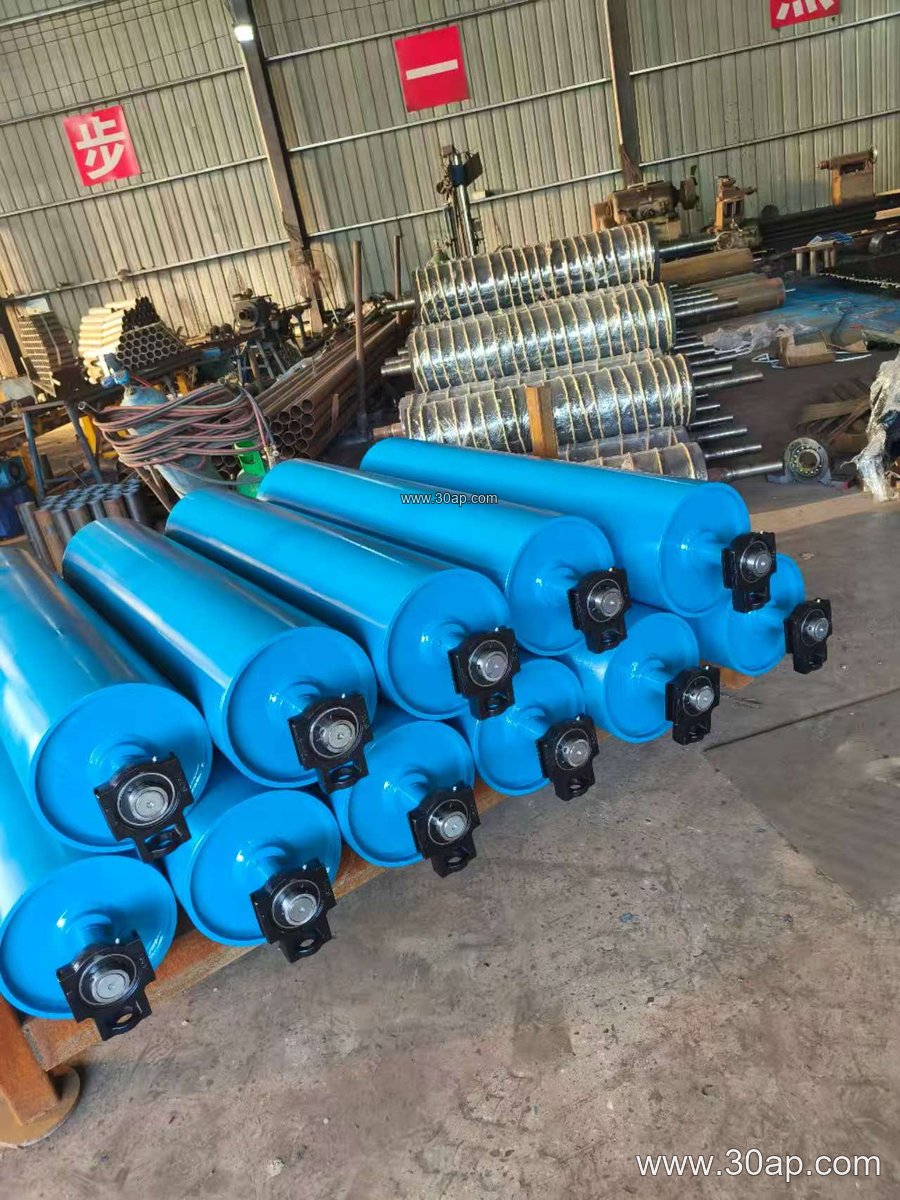
Typical combinations seen in design documents include B800 × Ø500, B1200 × Ø1000, and B1400 × Ø800. Shaft diameter should be confirmed by the pulley manufacturer based on actual torque, not copied from a belt width table.
Buyer Checklist for Large-Diameter Pulleys
- Duty and position: drive, tail, or tension pulley; confirm wrap angle and belt speed.
- Belt interface: belt type (e.g., EP conveyor belt, steel cord, heat resistant), thickness, and splice type.
- Lagging: rubber, ceramic, or plain; thickness and groove pattern for the environment.
- Shaft and bearing: diameter, bearing type, and locking assembly.
- Face width: usually 100–200 mm wider than belt width, e.g., B1000 with 1150 mm face.
- Balance and runout: critical for high-speed conveyors.
For harsh duty such as underground coal mining or sinter plants, specify a flame retardant conveyor belt and a pulley with ceramic lagging. In food or fertilizer plants, a smooth rubber lagging may be preferred to avoid material buildup.
Maintenance and Longevity
Inspect lagging wear, check shaft alignment, and monitor bearing temperature. A large-diameter pulley lasts longer when the conveyor belt is tracked correctly and the idler roller frames are level. In aggregate and cement plants, dust ingress is the main enemy; sealed bearings and regular cleaning add years of service.
For any conveyor project, the pulley should be selected together with the conveyor belt, idler rollers, and conveyor bracket system as one engineered assembly. A large-diameter pulley is an investment in belt life and uptime, but only when its diameter, lagging, and shaft are matched to the actual load case.