What a Five-Roll Idler Bracket Does
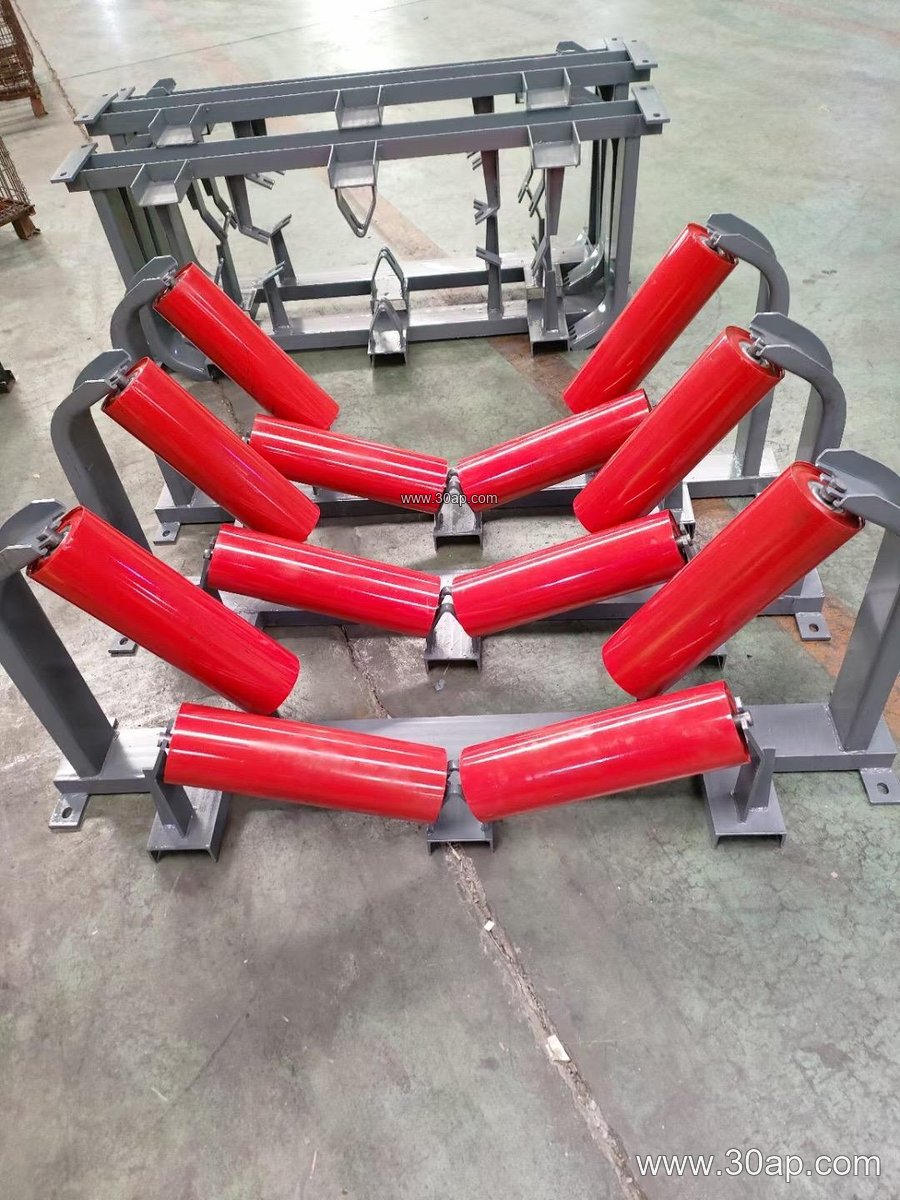
A five-roll idler bracket is the support frame that carries five idler rollers under a conveyor belt, usually with three rolls forming the trough and two additional rolls helping to shape the load zone. Unlike a standard three-roll station, this bracket spreads the belt across more contact points, which can reduce pinch points and improve belt guidance on wide, heavily loaded conveyors. In a quarry, a coal preparation plant, or a power plant coal yard, the bracket is often the quiet component that decides how well the whole idler station behaves.
The bracket is not a pulley. It should not be confused with a drive pulley, tail pulley, or bend pulley, which transmit or redirect belt tension. The five-roll idler bracket belongs to the carrying side support family, together with trough brackets, transition brackets, and return brackets.
Construction and Common Forms
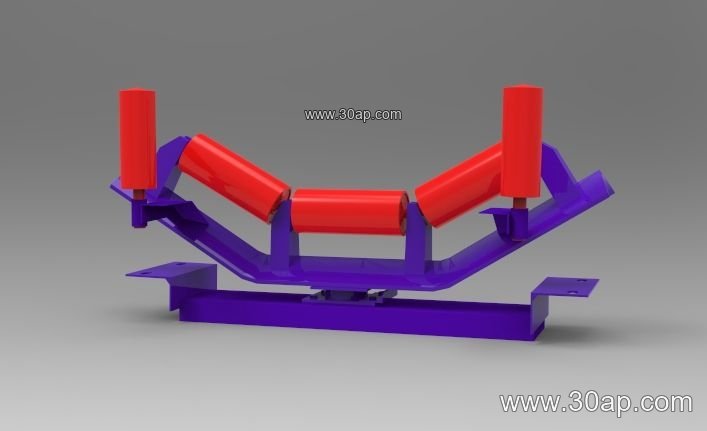
Most five-roll brackets are fabricated from angle steel, channel steel, or folded steel plate. The frame holds five idler roller positions, and the outer rolls are set at a steeper angle than the center roll to create a deeper trough profile. Common trough angles are 20, 30, 35, and 45 degrees, and adjustable brackets allow the angle to be changed within that range. A slight forward tilt of about 1.5 to 2 degrees is sometimes used on training brackets to help keep the belt centered.
- Fixed five-roll bracket for a stable, known belt path
- Adjustable bracket for tuning trough angle during commissioning
- Impact version with cushioning idler positions at the load point
- Brackets with slotted mounting holes for field alignment
Mounting hole spacing and crossbeam length usually change with belt width and trough angle, so a buyer should ask for a drawing rather than assume a universal hole pattern.
Where It Fits on the Conveyor
The five-roll arrangement is most often seen where the belt is wide and the material load is heavy or uneven. In a limestone mine feeding a crusher, the bracket can sit just after the load zone to support a wide conveyor belt carrying run-of-mine rock. In a coal mining conveyor or an underground mining conveyor, the extra rolls help control belt sag between stations. Sand and aggregate lines, cement plants, and steel plant sinter lines also use multi-roll support where belt width and tonnage are high.
The bracket works together with the idler roller set, the conveyor bracket hardware, and the belt itself. A heavy-duty mining conveyor belt or an abrasion resistant conveyor belt may need closer roll spacing, while a pipe conveyor belt or corrugated sidewall conveyor belt follows a different support logic and would not use this bracket in the same way.
Matching Belt Width, Trough Angle, and Roll Diameter
Belt width, trough angle, and roll diameter are chosen together with the conveyor design, not in a fixed one-to-one pattern. The table below shows common reference combinations, not mandatory matches.
| Belt Width | Typical Trough Angle | Common Roll Diameter | Typical Use |
|---|---|---|---|
| B650 | 30 degrees | Ø89 | Small aggregate or sand line |
| B800 | 35 degrees | Ø108 | Quarry feed conveyor |
| B1000 | 35 degrees | Ø108 or Ø133 | Cement plant clinker transport |
| B1200 | 45 degrees | Ø133 | Coal yard and power plant coal handling |
| B1400 | 35 to 45 degrees | Ø159 | Iron ore and heavy bulk material |
| B1600 | 35 to 45 degrees | Ø159 or Ø194 | Large port or mine conveyor |
These values are reference data only. A wide belt does not automatically dictate one trough angle or one roll diameter, and the final choice belongs to the conveyor designer. Buyers should also confirm the belt type in service, since an EP conveyor belt, NN conveyor belt, or steel cord conveyor belt each has its own stiffness and load behavior.
Buyer Checklist
- Confirm belt width and the required trough angle on the drawing
- Check roll diameter and idler shaft size against the existing idler roller
- Ask whether the bracket is fixed or adjustable, and how much adjustment is available
- Verify mounting hole spacing and crossbeam length before ordering
- Match the frame material and finish to the site environment, such as wet coal handling or dusty crushing circuits
- Check that the bracket suits the belt’s training needs, especially on long overland or underground conveyors
For a replacement project, measure the old frame and photograph the mounting points. Small differences in hole spacing can turn a simple swap into a full station rebuild. On a coal mining conveyor belt line, a flame retardant conveyor belt may be specified for safety, but the bracket still needs to match the mechanical layout of the idler station.
Installation and Maintenance Notes
Align the bracket square to the conveyor centerline and tighten fasteners evenly so the five rolls sit in one plane. Check that all idler rollers turn freely after installation. During routine inspection, look for bent frame members, elongated holes, and loose bolts, since a five-roll station carries more load points and small misalignments can show up as belt edge wear. Keeping the bracket and rollers clean helps extend service life in dusty cement, quarry, and crushing environments.