What a Conveyor Impact Idler Does at the Loading Zone
A conveyor impact idler is the support roller placed directly beneath the point where material hits the belt. Instead of carrying a steady, settled load like a standard carrying idler, it absorbs the kinetic energy of falling rock, ore, clinker or aggregate. In a quarry, a coal preparation plant or a cement kiln feed line, the drop height and lump size can be significant, and that is where this component earns its place. Without adequate cushioning, the belt cover takes the punishment, and a worn or punctured belt soon becomes a maintenance problem.
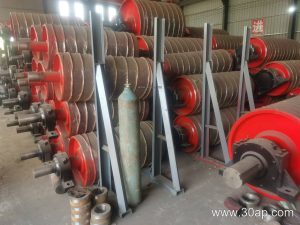
The same roller is also known as an impact roller or buffer idler, and these names describe the same product. It is not a substitute for a bend pulley, a drive pulley or a tail pulley, and it should not be confused with a training idler, which handles belt misalignment rather than load impact.
Construction and Typical Materials
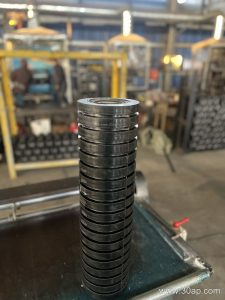
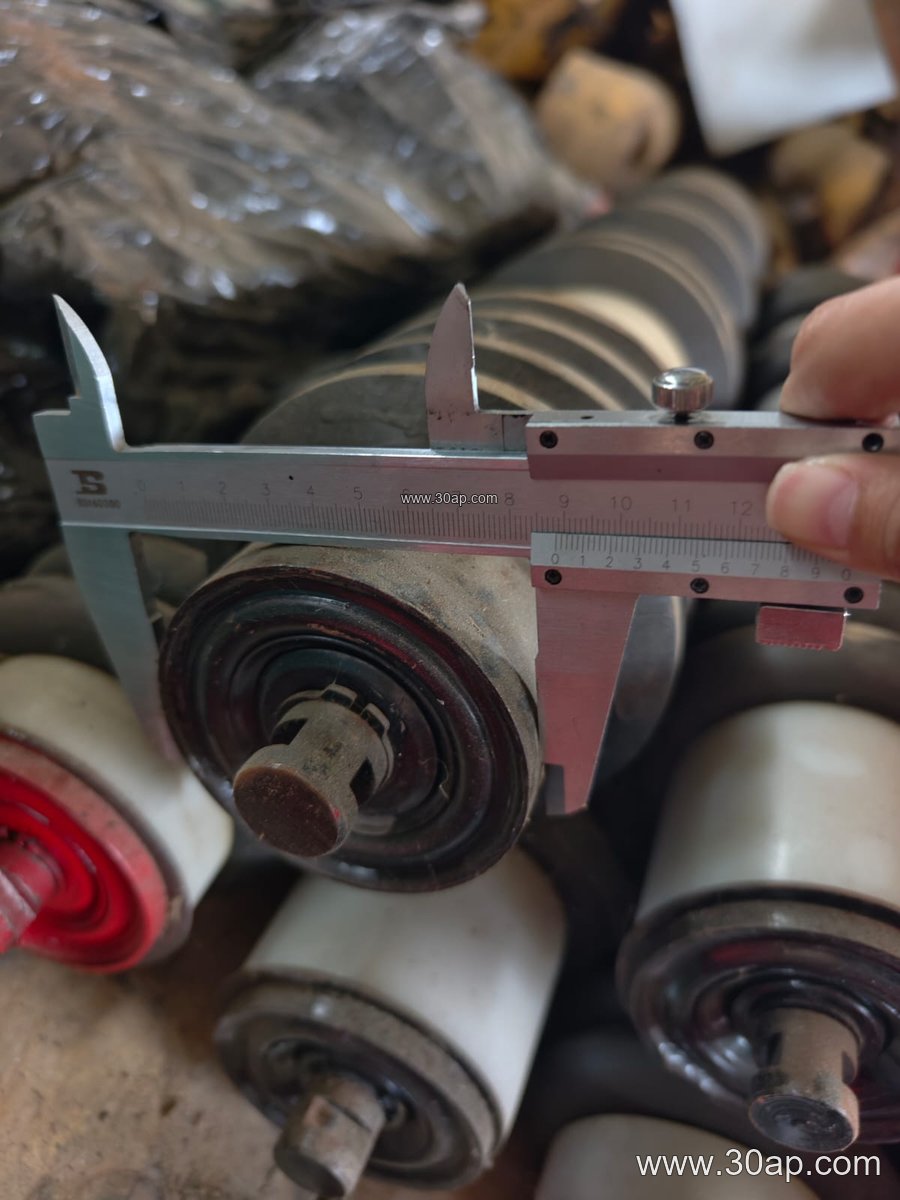
The core of an impact idler is usually a steel tube fitted with a shock-absorbing outer layer. Rubber rings are the most common surface form, mounted as a series of discs along the shell so that the belt rests on a compliant, slightly yielding surface. Some designs use a continuous rubber sleeve, and a few use polyurethane where oil or fine abrasive dust is present. The shaft runs through sealed bearings, commonly 6204, 6205, 6305, 6306, 6308 or 6310 depending on the load and roller diameter, and the bearing housing is protected by a labyrinth or contact seal.
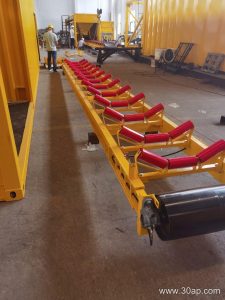
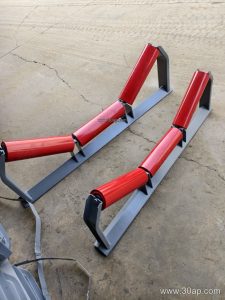
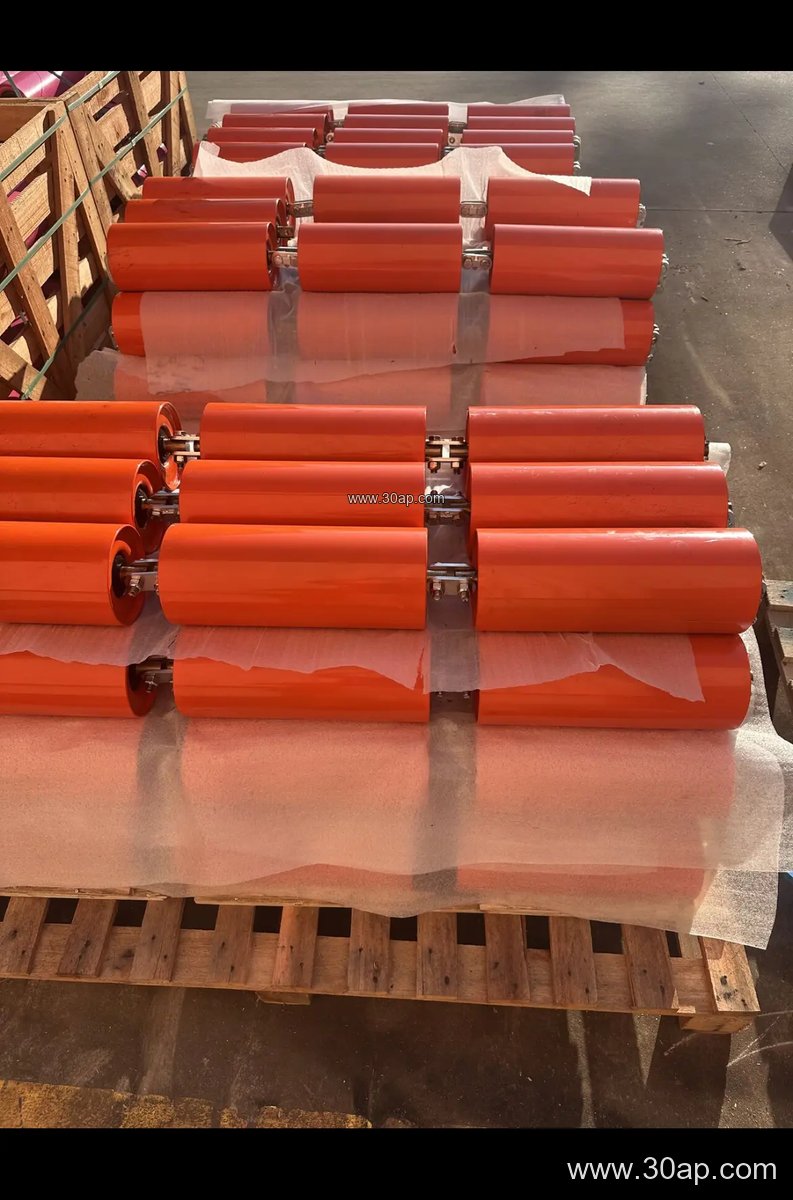
Impact idlers are frequently supplied in three-roller troughing sets with a 20, 30, 35 or 45 degree trough angle. The centre roller and the side rollers may have different lengths; typical three-roll lengths are around 200 mm for B500, 250 mm for B650, 315 mm for B800, 380 mm for B1000, 465 mm for B1200, 530 mm for B1400, 600 mm for B1600, 670 mm for B1800 and 750 mm for B2000, but these are common examples only and the final figure follows the belt width, trough angle and frame design. Roller diameters such as Ø89, Ø108, Ø127, Ø133, Ø159 and Ø178 appear in this duty, and heavier stations may use larger shells.
Where Impact Idlers Are Used
The most demanding positions are transfer points under crushers, screens and chutes. In an iron ore or copper ore handling circuit, a conveyor impact idler set is often installed for several metres downstream of the loading point, so the belt is fully supported while the material settles. Sand and gravel plants place them under the feed hopper; power plant coal conveyors use them below the tripper or the bunker feed; steel works and sinter plants apply them where hot, dense material drops onto a heat resistant conveyor belt or an abrasion resistant conveyor belt.
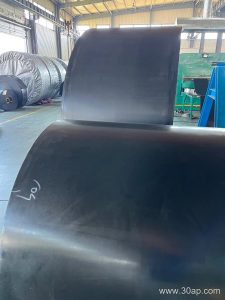
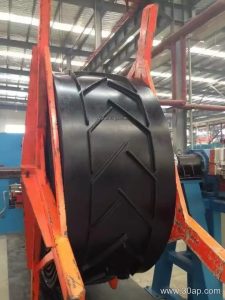
At these locations the belt itself matters as much as the roller. A thick top cover on an EP conveyor belt or a steel cord conveyor belt will tolerate more abuse, while a chevron conveyor belt or corrugated sidewall conveyor belt may need a modified idler layout because the cleats and sidewalls have to pass without interference. Where fine dust and static are concerns, an anti-static conveyor belt paired with well-sealed idlers reduces the risk of buildup around the bearings.
Selection Points for Buyers
Several details decide whether an impact idler performs well over its service life. Buyers should confirm the belt width, the trough angle, the drop height and the maximum lump size before choosing a ring thickness or roller diameter. A common mistake is to match the impact station to the belt width alone; the falling energy also depends on throughput and material density.
- Ring hardness and thickness: softer rings cushion more but wear faster under sharp rock.
- Bearing protection: dust and water ingress are the usual causes of seizure.
- Frame and bracket fit: the idler must sit correctly in the existing conveyor bracket.
- Spacing: impact sets are usually closer together than normal carrying idlers near the chute.
Abrasion resistant conveyor belt grades are often specified together with rubber-ring impact rollers in crushing circuits, while flame retardant conveyor belt and fire resistant conveyor belt grades are usual in underground coal mining conveyor systems. In those underground mining conveyor belt applications, the impact station also has to meet the mine’s fire-safety expectations, so the rubber compound is selected with care.
Installation and Maintenance Notes
Correct mounting height keeps the belt from sagging between impact rollers. If the station sits too low, the belt bows and the edges take extra stress; if it sits too high, the belt runs tight over the rings and the cushioning effect is lost. Checking alignment after installation and again after the first weeks of running is worthwhile.
During routine inspections, look for flattened or missing rubber rings, cracked shells, loose brackets and grease leakage at the seals. Replacing a worn impact roller early is cheaper than replacing a damaged belt. For a complete picture of the conveyor, read the impact idler together with the conveyor belt, the idler roller group and the conveyor pulley layout, because load, tension and tracking all interact.
For more information on matching impact rollers with belt specifications, visit www.example.com/conveyor-impact-idler or review our notes on conveyor belt selection and idler roller sizing.