What a High-Friction Lagged Pulley Does
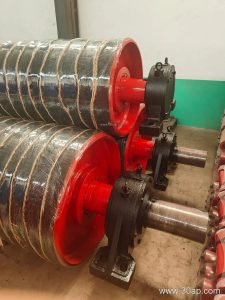
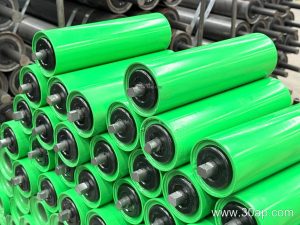
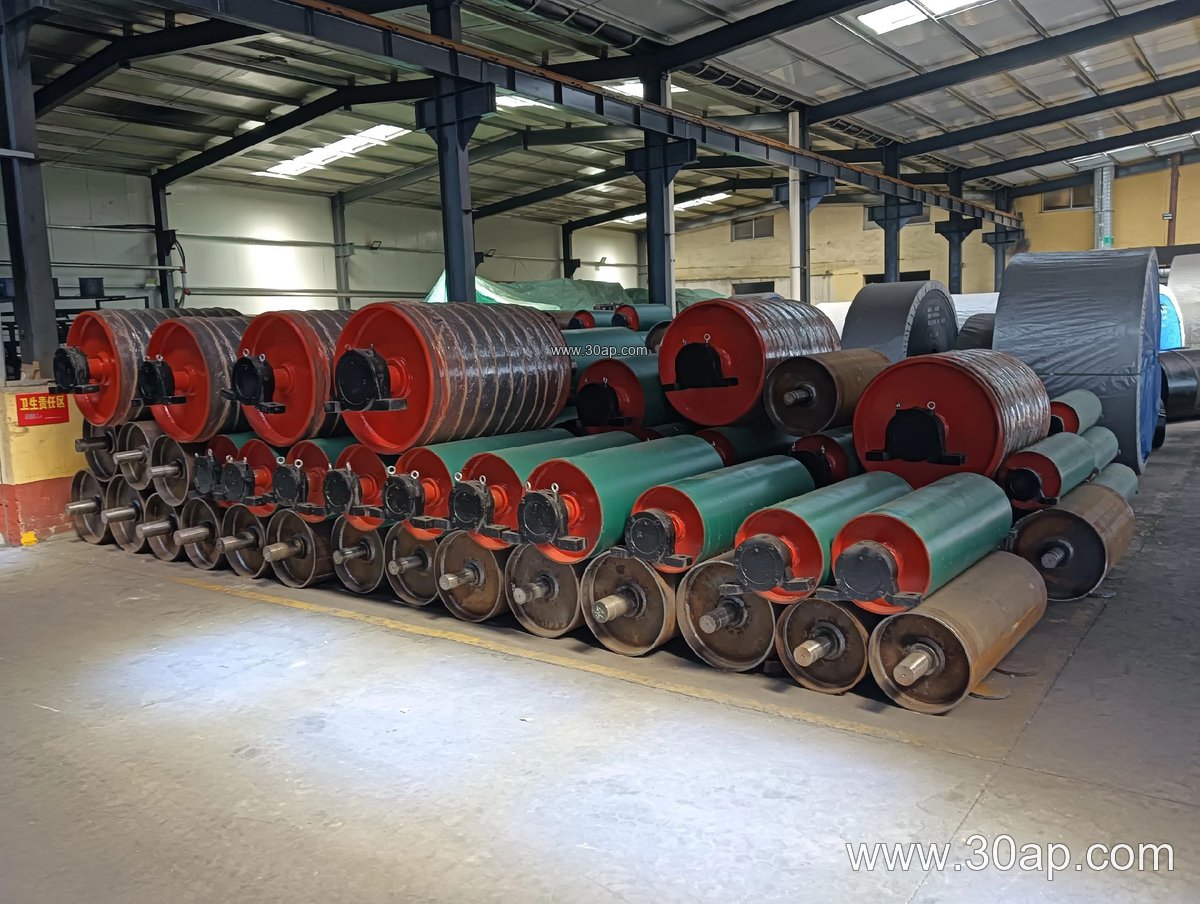
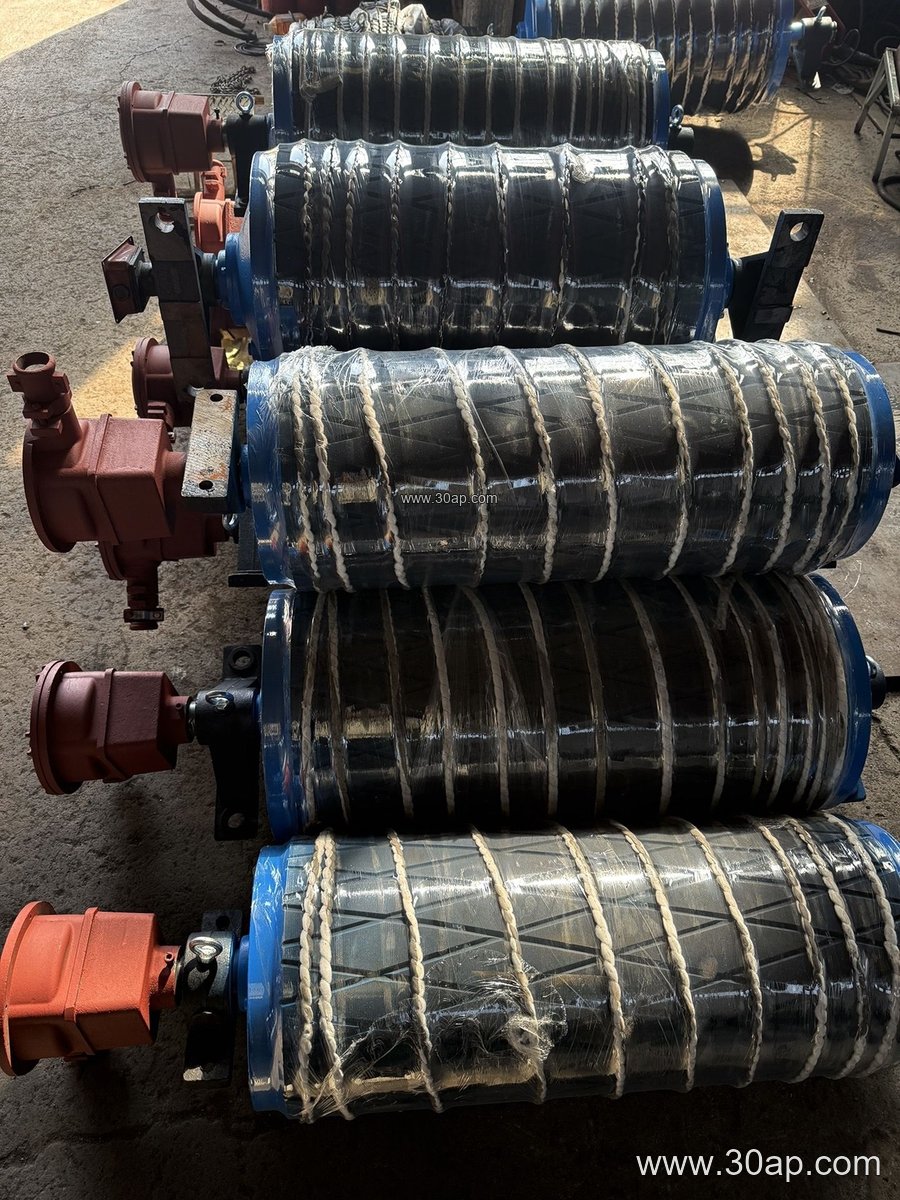
A high-friction lagged pulley is a conveyor pulley whose shell is covered with a rubber or ceramic lagging that raises the coefficient of friction between the drum and the conveyor belt. This added grip is what keeps the belt from slipping when the pulley is driving a loaded conveyor, especially on inclined sections or in wet and dusty conditions. The product is also known as a friction-lag pulley or a rubber-lagged drive pulley, and these accurate equivalents refer to the same component. In a belt conveyor system, this pulley works together with the conveyor belt, idler roller, and conveyor bracket to transfer motion without losing traction.
Construction and Surface Options
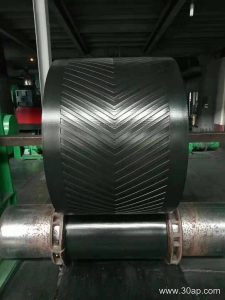
The base is a steel shell with welded end discs and a shaft, machined for balance. Lagging is applied either as cold-bonded rubber sheet, hot-vulcanized rubber, or ceramic tiles embedded in rubber. Common surface forms include plain, diamond, herringbone, and ceramic lagging. Thickness typically ranges from 8 mm to 20 mm, chosen according to the duty. The pulley face width is usually slightly wider than the belt; for example, a B800 belt often runs on a pulley face around 950 mm, while a B1200 belt may use a face near 1400 mm. Diameter and shaft size are determined by torque and load, not by belt width alone. A B1200 × Ø1000 or B800 × Ø500 combination may appear in designs, but no single diameter is mandatory for a given belt width.
Where It Fits in the Conveyor
This pulley is most often installed as the drive pulley at the head of the conveyor, where it pulls the belt and carries the main traction load. It can also serve as a tail pulley in some arrangements, but drive, tail, and bend pulleys are not interchangeable names and should be specified by their actual role. In a quarry or aggregate line, a high-friction lagged pulley helps start a fully loaded belt without slip. In a coal mining conveyor or underground mining conveyor, flame retardant lagging grades are often requested to match the fire safety requirements of the belt, such as a flame retardant conveyor belt or fire resistant conveyor belt. The same principle applies in a cement plant, power plant coal handling system, or port bulk terminal.
Matching the Pulley to the Belt and Load
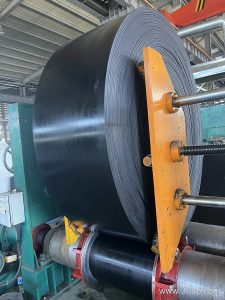
Traction depends on the wrap angle, belt tension, and the friction between lagging and belt cover. A high-friction lagged pulley is particularly useful when the conveyor belt is an EP conveyor belt or a steel cord conveyor belt carrying heavy bulk material. For abrasive duties, an abrasion resistant conveyor belt paired with ceramic lagging can reduce wear on both surfaces. In cold climates, a cold resistant conveyor belt may be used, and the lagging compound should be selected to remain flexible. Oil resistant and heat resistant conveyor belt grades also call for compatible lagging. The table below shows common reference dimensions; these are examples, not fixed pairings.
| Belt Width | Typical Pulley Face Width | Common Diameter Range | Common Lagging Thickness |
|---|---|---|---|
| B500 | ≈600 mm | Ø250–Ø400 | 8–12 mm |
| B650 | ≈750 mm | Ø315–Ø500 | 8–12 mm |
| B800 | ≈950 mm | Ø400–Ø630 | 10–15 mm |
| B1000 | ≈1150 mm | Ø500–Ø800 | 10–15 mm |
| B1200 | ≈1400 mm | Ø630–Ø1000 | 12–20 mm |
| B1400 | ≈1600 mm | Ø800–Ø1250 | 12–20 mm |
Shaft diameters commonly range from Ø50 to Ø200, selected by torque and bearing load. A buyer should confirm the actual belt width, pulley face, shaft, and lagging grade with the conveyor designer.
Buyer Checklist
- Confirm the pulley role: drive, tail, take-up, or bend. Do not substitute one type for another.
- Specify belt type and cover, such as EP200 or ST1600, and whether it is a mining conveyor belt or heavy-duty mining conveyor belt.
- State the environment: coal mining conveyor, cement plant, power plant, or aggregate conveyor belt line.
- Choose lagging surface and thickness based on slip risk and abrasion.
- Check compatibility with the conveyor bracket and idler roller frame.
For more information on matching pulleys with conveyor belts, idlers, and brackets, visit our site at www.example.com/conveyor-pulley or www.example.com/high-friction-lagged-pulley. A properly selected high-friction lagged pulley keeps the belt tracking and extends the service life of the whole conveyor system.