What an Aggregate Production Line Idler Does
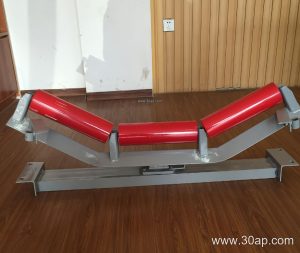
In a sand and gravel plant, the conveyor that carries crushed stone from the primary crusher to the screening deck is only as reliable as the rollers beneath the belt. The aggregate production line idler is the rotating support that holds the conveyor belt in its trough, keeps material centered, and absorbs the constant shock of jagged rock. Unlike a drive pulley that transmits power or a tail pulley that changes belt direction, an idler roller simply rolls with the belt. That distinction matters when specifying parts: a bend pulley cannot replace a troughing idler, and a return roller cannot substitute for a impact idler at a transfer point.
This article looks at how these rollers are built, where they fit in aggregate handling, and what a buyer should check before ordering. The same idler family appears in quarry conveyors, cement plants, and power plant coal yards, so the principles carry across bulk material handling.
Construction Details That Affect Service Life
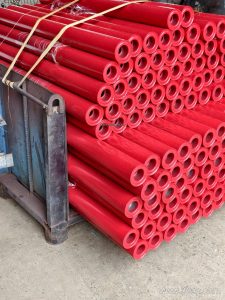
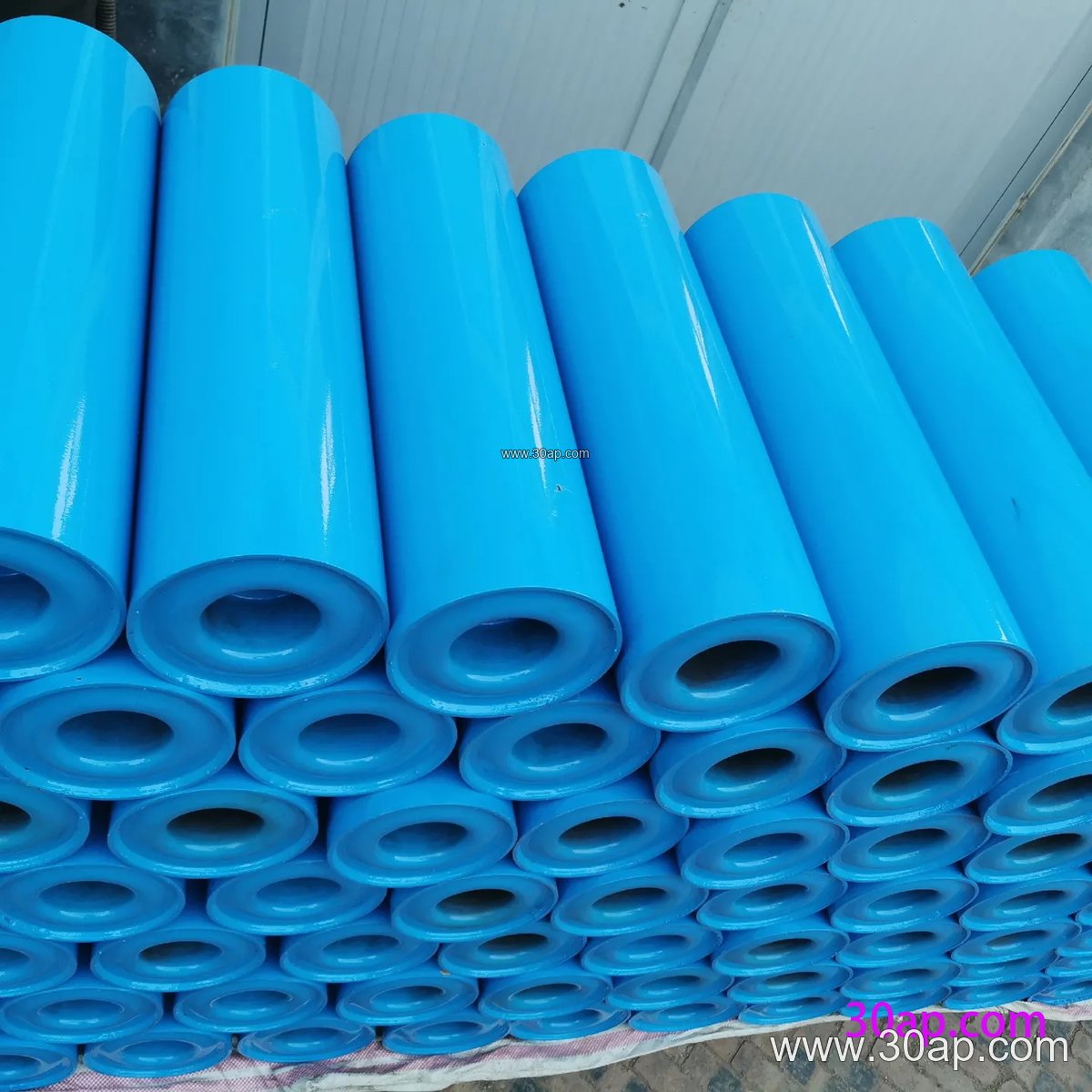
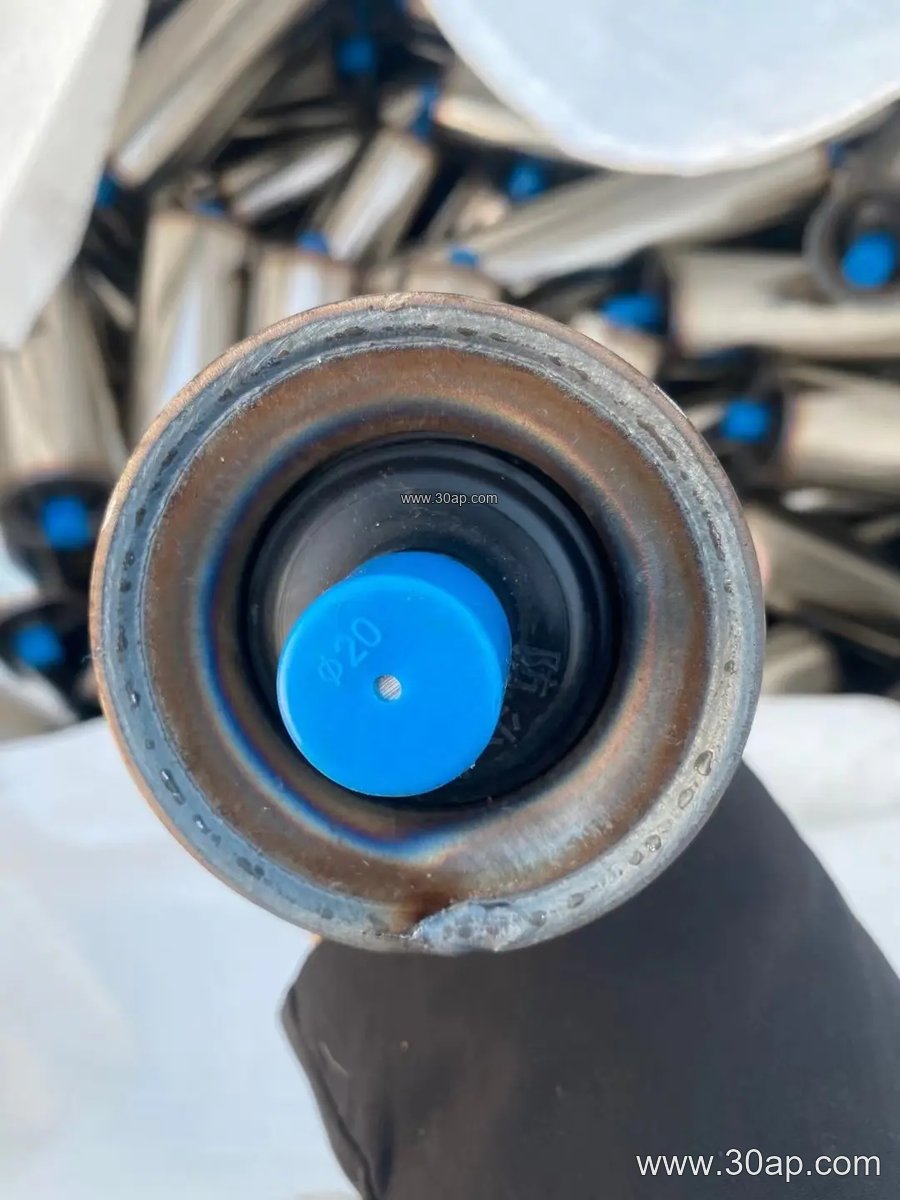
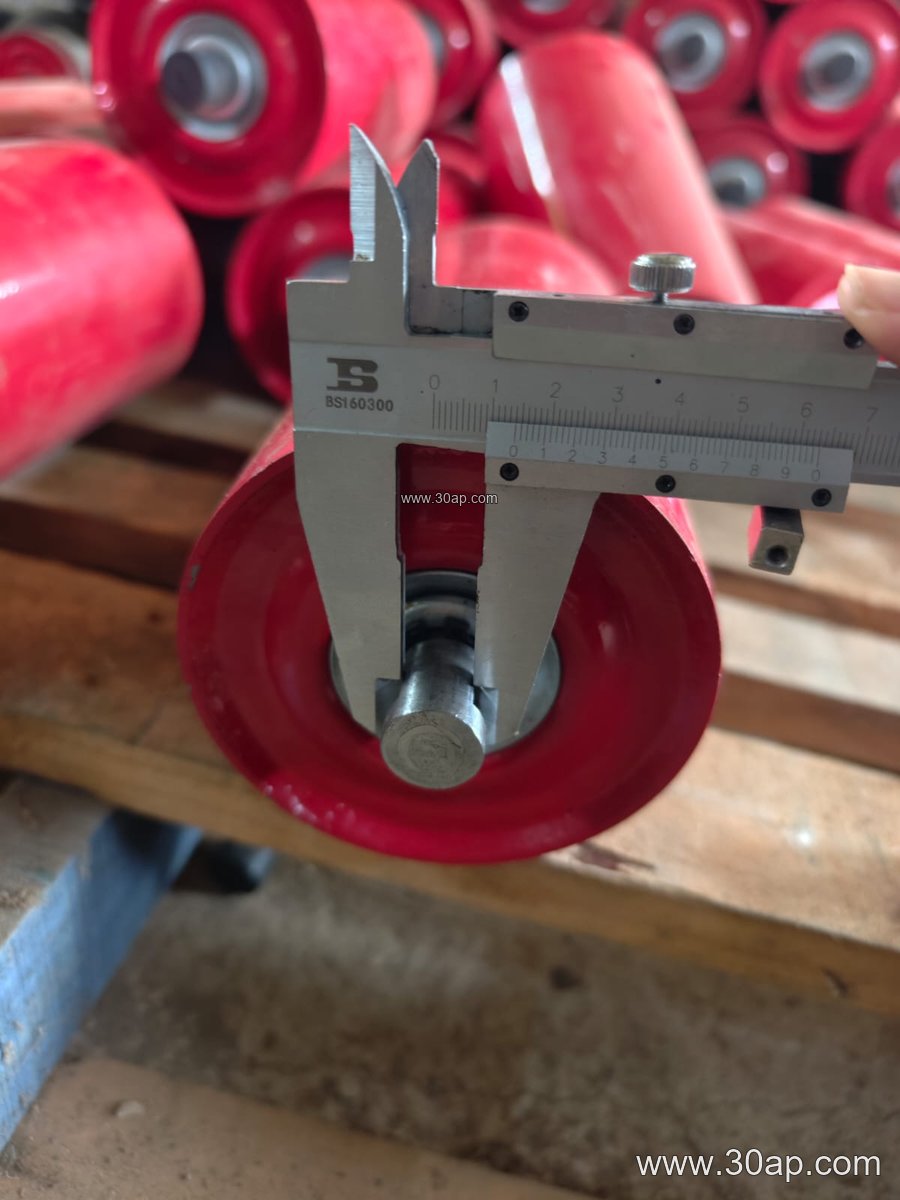
A typical idler roller consists of a steel tube shell, a shaft, bearing housings, and a sealing system. The shell may be plain steel, nylon-coated, ceramic-lined, or fitted with rubber rings for impact absorption. Bearing size is selected by load and speed rather than by belt width alone; common bearings include 6204, 6205, 6305, 6306, 6308, and 6310. The seal is often the deciding factor in dusty aggregate service, because fine stone powder will destroy an unprotected bearing quickly.
Roller diameter and length follow the conveyor design. Common diameters range from Ø63 to Ø219, and belt widths from B400 to B2400. A three-roll troughing set on a B800 belt may use rollers around 315 mm long, while a B1200 set often uses roughly 465 mm rollers, but side rollers and center rollers can differ. These are reference examples, not fixed matches. The conveyor bracket and frame determine the final mounting dimensions.
Where the Idler Fits on an Aggregate Conveyor
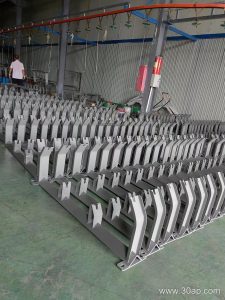
On a crushing and screening line, idlers appear in several positions. Troughing idlers support the loaded belt and set the trough angle, commonly 20, 30, 35, or 45 degrees. Impact idlers or rubber-ring impact rollers sit under the crusher discharge to cushion falling rock. Return idlers support the empty belt, and V-return or spiral return rollers help shed sticky material. Transition idlers ease the belt from flat to troughed profile near the head and tail.
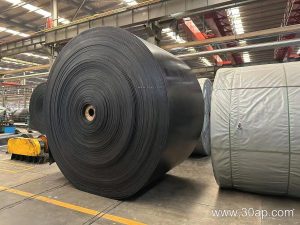
Self-aligning idlers, including friction and tapered types, correct minor belt wander on long quarry conveyors. The belt itself may be an abrasion resistant conveyor belt, a heat resistant conveyor belt near a dryer, or a flame retardant conveyor belt in a coal handling section. Matching the idler to the belt and the environment is more important than choosing the heaviest option available.
Common Reference Dimensions
The table below gives typical examples only. Final dimensions should be confirmed against the conveyor drawing and the actual bracket spacing.
| Item | Common reference values |
|---|---|
| Roller diameter | Ø63, Ø76, Ø89, Ø102, Ø108, Ø127, Ø133, Ø159, Ø178, Ø194, Ø219 |
| Belt width | B400, B500, B650, B800, B1000, B1200, B1400, B1600, B1800, B2000, B2200, B2400 |
| Trough angle | 20°, 30°, 35°, 45° |
| Roller shell | Steel tube, nylon, ceramic, rubber ring |
| Bearing examples | 6204, 6205, 6305, 6306, 6308, 6310 |
| Roller length examples (three-roll troughing) | B500 about 200 mm; B650 about 250 mm; B800 about 315 mm; B1000 about 380 mm; B1200 about 465 mm; B1400 about 530 mm; B1600 about 600 mm; B1800 about 670 mm; B2000 about 750 mm |
For a portable aggregate conveyor or a fixed quarry line, the idler set should be chosen with the belt width, trough angle, and material lump size in mind. A heavy-duty mining conveyor belt carrying large rock needs more impact protection than a fine sand conveyor, even at the same belt width.
Buyer Checklist for Aggregate Line Idlers
- Confirm the roller diameter, shaft end, and bracket type against the existing frame.
- Check the seal design for dust and water exposure; aggregate plants are abrasive and often wet.
- Match the idler to the duty: impact idlers at transfer points, troughing idlers on the carry side, return idlers underneath.
- Review the belt specification, whether an EP conveyor belt, NN conveyor belt, or steel cord conveyor belt, because belt stiffness affects training and troughing.
- Ask for dimensional drawings rather than relying on a single belt width to roller diameter rule.
Well-chosen idlers keep a crusher conveyor belt running straight and reduce downtime. For plant operators comparing components, the aggregate production line idler is a small part with a large effect on belt life and energy use.