What a High-Strength Idler Does on a Conveyor
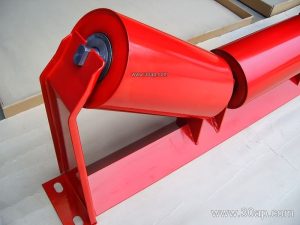
A high-strength idler is the load-bearing roller that supports the conveyor belt along its carrying and return runs, built for duties where standard rollers would wear out too quickly. In a quarry, a limestone mine, or a cement plant, the belt may be wide, the material heavy, and the operating hours long. Under those conditions, the idler frame, shell, shaft, and bearings are selected with extra margin so the roller keeps turning smoothly instead of seizing or flexing.
The product is often specified alongside the belt itself. A heavy-duty mining conveyor belt or a high abrasion resistant conveyor belt running at high tension puts more radial load on every roller, so the idler has to match that duty. The same logic applies on a power plant coal handling line or a port ship loading system, where a stoppage is costly.
How the Roller Is Built
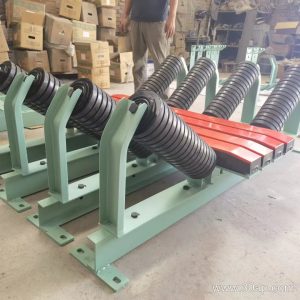
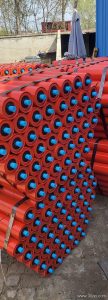
Most high-strength idlers share a common architecture: a steel tube shell, a through shaft, bearing housings at each end, and a sealing arrangement to keep dust and water out. The differences that matter are in wall thickness, weld quality, bearing selection, and seal design.
- Shell: thicker steel tube or a reinforced weld seam for impact zones; some designs use a rubber ring buffer roller where material drops onto the belt.
- Shaft: machined at the bearing seats, sized by load and belt tension rather than by belt width alone.
- Bearings: common sizes include 6204, 6205, 6305, 6306, 6308, and 6310; the correct choice depends on load, speed, and housing design, not on a single fixed pairing with one roller diameter.
- Seals: labyrinth or contact seals are typical in dusty service such as crushing and screening circuits.
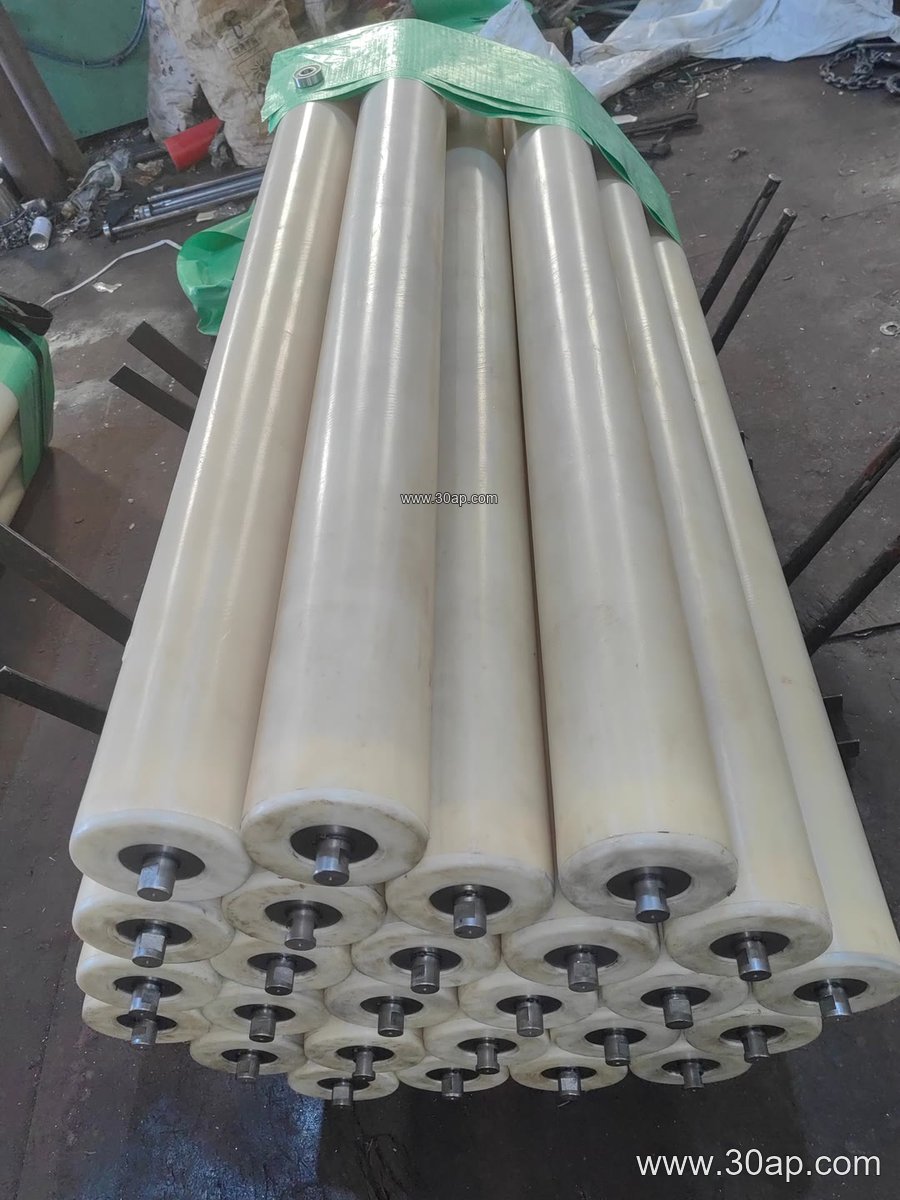
- Surface: plain steel, nylon, ceramic, or rubber ring, chosen for abrasion and material build-up.
Common Roller Dimensions and Group Forms
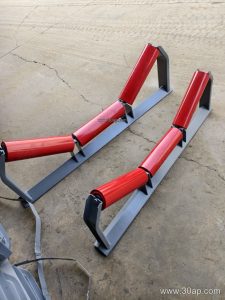
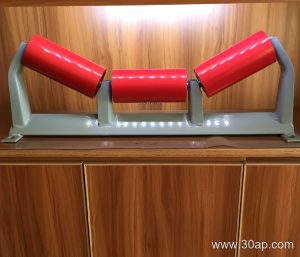
Roller diameter is usually selected together with belt width and the troughing arrangement. Typical roller diameters include Ø63, Ø76, Ø89, Ø102, Ø108, Ø127, Ø133, Ø159, Ø178, Ø194, and Ø219 mm. Belt widths commonly range from B400 to B2400, and the roller length follows the belt width, trough angle, and whether the station uses a single roller, two-roller, or three-roller trough set.
| Parameter | Common reference values |
|---|---|
| Roller diameter | Ø63, Ø76, Ø89, Ø102, Ø108, Ø127, Ø133, Ø159, Ø178, Ø194, Ø219 mm |
| Belt width | B400, B500, B650, B800, B1000, B1200, B1400, B1600, B1800, B2000, B2200, B2400 |
| Trough angle | 20°, 30°, 35°, 45° |
| Station form | single roller, two-roller, three-roller trough |
| Roller surface | steel tube, nylon, ceramic, rubber ring |
As an example of how roller length scales with width, three-roller trough sets are often around 200 mm at B500, 250 mm at B650, 315 mm at B800, 380 mm at B1000, 465 mm at B1200, 530 mm at B1400, 600 mm at B1600, 670 mm at B1800, and 750 mm at B2000. These are common references only; side rollers and center rollers can differ, and the final value is set by design.
Trough Angle, Sealing, and the Return Run
On the carrying side, the trough angle affects how the belt cradles the load. A 35° or 45° three-roller set holds bulk material more centrally, which helps on a bulk material conveyor belt moving ore or aggregate. On the return side, a flat return idler or a V-shaped return roller keeps the belt tracking and sheds loose material.
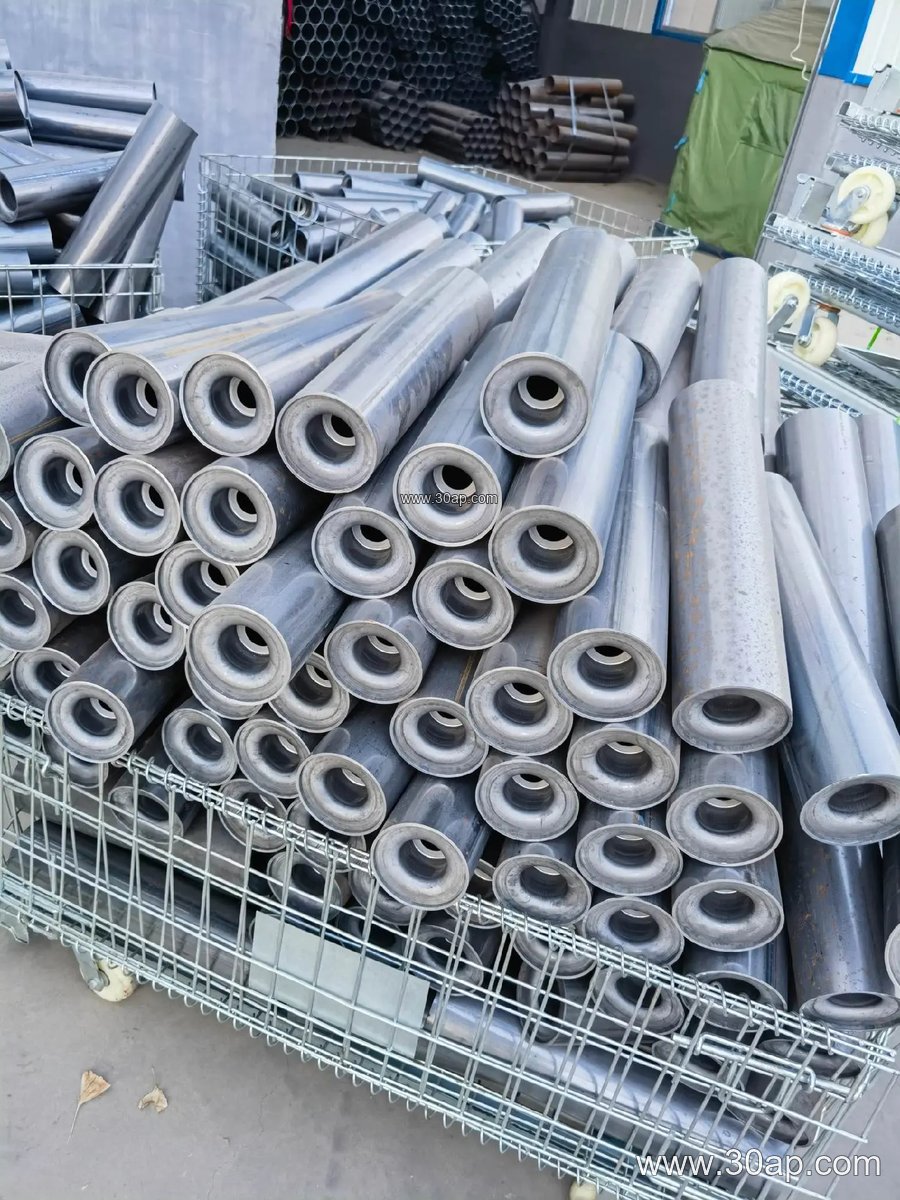
Sealing and bearing protection are what separate a long-life high-strength idler from a cheap roller. In a coal mining conveyor belt installation, fine dust and moisture attack bearings continuously, so seal quality is as important as shell thickness. Training idlers, including friction and tapered self-aligning types, are a separate function and should not be confused with the load-carrying roller described here.
Where These Idlers Are Used
You will find high-strength idlers in iron ore and copper ore handling, sinter plants, aggregate crushing lines, and tunnel spoil removal. They also suit a cement plant clinker line or a power plant coal yard where the belt runs loaded for long shifts. In these settings the roller often works together with an EP conveyor belt, a steel cord conveyor belt, or a flame retardant conveyor belt, and the idler specification should follow the belt tension and material characteristics.
For reference on related components, see the conveyor belt range and idler roller options at www.morningstarconveyor.com, plus conveyor pulley and conveyor bracket details for complete system planning. Matching the idler to the belt and the pulley layout at the design stage avoids premature failures later.
What Buyers Should Confirm
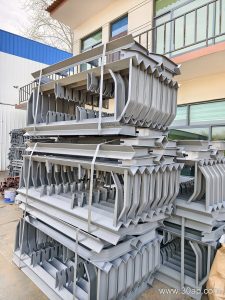
- Belt width, trough angle, and station form, so roller length and diameter are correct.
- Material lump size and drop height, which decide whether a buffer or impact roller is needed.
- Bearing size and seal type for the dust and moisture level on site.
- Shell thickness and surface option for abrasion and material sticking.
- Whether the same station must handle a high-strength conveyor belt under high tension.
Ask for drawings showing shaft diameter, bearing seat, and mounting dimensions rather than assuming a fixed relationship between belt width and shaft size. A well-selected high-strength idler protects the belt, reduces downtime, and keeps the whole conveyor line running at its intended capacity.