What a Ceramic Rubber-Lined Pulley Is
A ceramic rubber-lined pulley is a conveyor pulley whose shell is covered with a rubber layer embedded with small ceramic tiles. The ceramic blocks sit slightly proud of the rubber surface, so the lagging grips the belt through a combination of friction and a textured, wear-resistant face. In many plants this product is simply called a ceramic lagged pulley or ceramic pulley lagging, and it is chosen where ordinary rubber lagging would polish or wear too quickly.
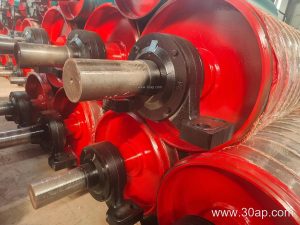
The pulley body itself is a welded steel drum with shaft, hubs and end discs. The lining is bonded to the shell, usually as tiles set in a rubber matrix, and the surface pattern may be square, diamond or a grooved layout depending on the supplier. The ceramic layer is the part that touches the conveyor belt, so its quality matters more than the drum inside it.
How the Lining Is Built
Ceramic lagging is normally produced as tiles or sheets with a rubber backing. The rubber provides flexibility and cushioning, while the ceramic inserts resist abrasion and keep a rough surface as the rubber between them slowly wears. Common lagging thicknesses are 8, 10, 12, 15 and 20 mm, with thicker layers used on heavily loaded drive pulleys. Bonding is done by hot vulcanization or cold adhesive, and the tile pattern is arranged so water and fines can escape rather than stay trapped under the belt.
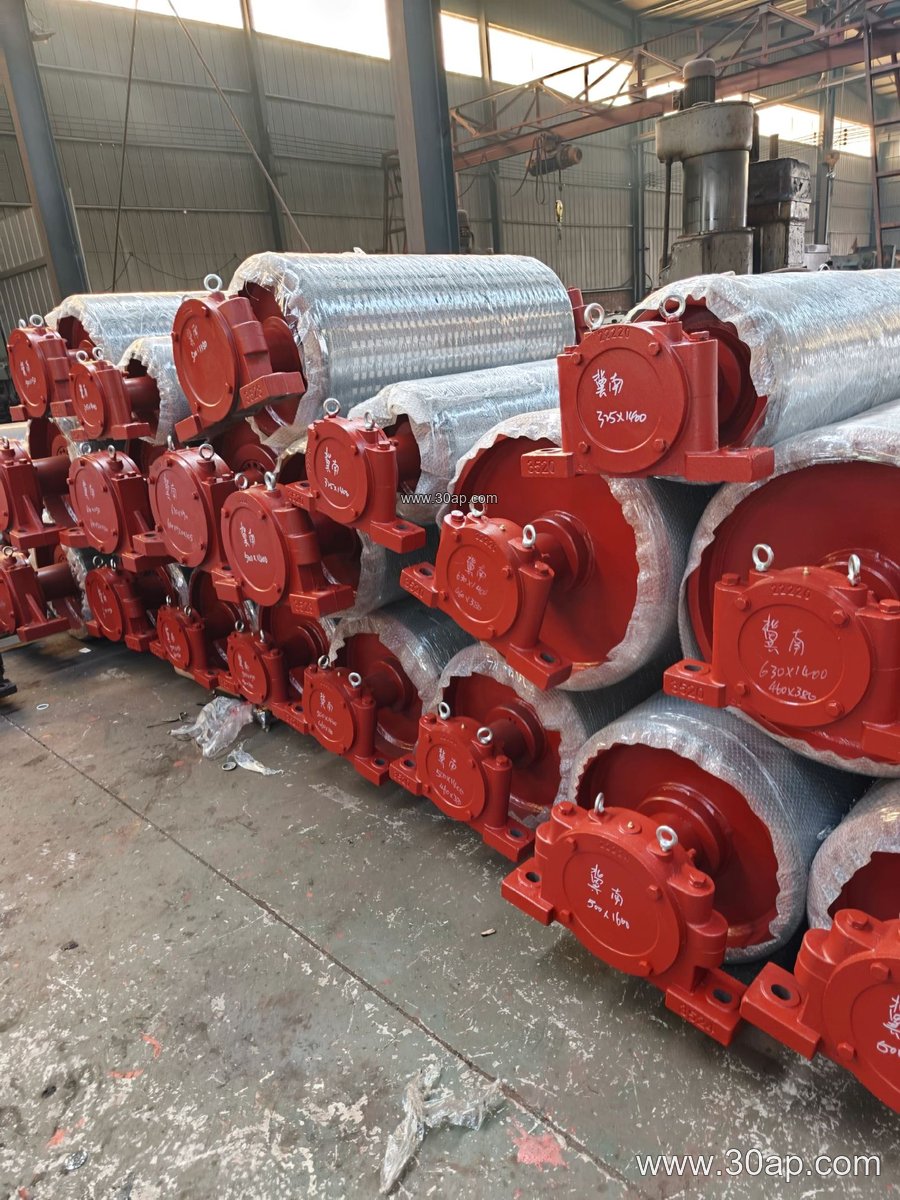
The pulley surface width is usually a little wider than the belt it carries. For example, a B800 belt commonly runs on a shell around 950 mm wide, and a B1200 belt on one around 1400 mm. Diameter is selected from torque, belt tension and wrap angle rather than from belt width alone; a B800 pulley might be Ø500 in one conveyor and Ø800 in another.
Where It Fits in a Conveying System
Ceramic lining is most useful on the drive pulley, where slip wastes power and generates heat. It also suits head or discharge pulleys in wet, gritty service and tail pulleys that see abrasive carryback. A bend pulley or tension pulley can be ceramic lagged too, but the benefit is smaller there because the wrap angle and load are lower. When comparing options, a plain smooth-faced pulley is fine for light duties, while a rubber-lagged pulley covers general needs; ceramic is the step up for high abrasion.
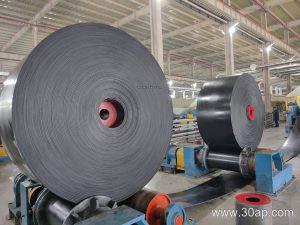
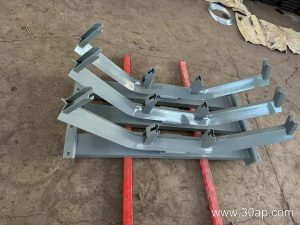
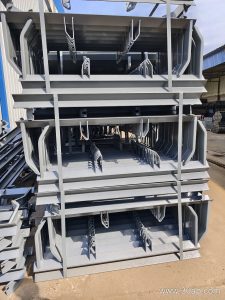
Typical service locations include a quarry or aggregate line handling crushed stone, a cement plant moving clinker and raw meal, a coal preparation plant, a power station coal yard, and a port bulk terminal. In these places an abrasion resistant conveyor belt, a heavy-duty mining conveyor belt or a steel cord conveyor belt often runs alongside ceramic-lined pulleys. A properly matched conveyor pulley, idler roller and conveyor bracket set keeps the belt tracking and reduces edge damage.
Selection Points for Buyers
Buyers should confirm the pulley type first: drive, head, tail, bend or tension. These are not interchangeable, and a ceramic lagged tail pulley is specified differently from a ceramic lagged drive pulley. Then check shell diameter, face width, shaft diameter and lagging thickness against the conveyor design. Shaft size follows torque and bearing load, so it should never be guessed from belt width.
- Confirm belt width and pulley face width, for example B650 with a 750 mm face or B1000 with a 1150 mm face.
- State the pulley diameter required by the layout, such as Ø400, Ø630 or Ø1000.
- Specify lagging thickness and tile pattern.
- Give shaft diameter, keyway and bearing centres from the engineering drawing.
- Describe the material and operating conditions, including wet or dusty service.
Maintenance and Practical Notes
Ceramic lagging is hard and abrasion resistant, but it can chip if the belt slips badly or if tramp metal strikes the face. Inspect tile edges and rubber bonding during scheduled shutdowns, and keep the belt cleaner working so fines do not pack into the pattern. Check that the conveyor belt is not over-tensioned, since excess tension shortens both belt and pulley life. On a quarry conveyor belt or a crusher conveyor belt, a worn ceramic face often shows as polishing or glazing rather than deep grooving.
Matching the pulley to the belt is a system decision. A ceramic rubber-lined pulley works best when the belt, idlers and brackets are in good condition and the lagging pattern is chosen for the actual material being carried.