What a Discharge Pulley Does
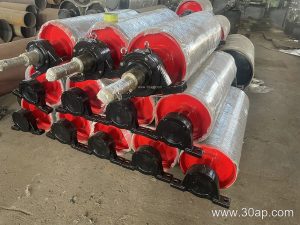
The discharge pulley, also called the head pulley or delivery pulley, is the rotating drum at the discharge end of a belt conveyor. It does two jobs at once. Its shell supports the loaded belt as it arrives from the carrying run, and its rotation transfers the drive torque that keeps the belt moving. Material leaves the belt as it passes over this drum, so the pulley position, diameter and surface condition directly affect trajectory, belt tracking and wear at the discharge point.
Because the belt wraps this drum under tension, the discharge pulley usually sees the highest combined bending and torsional load in the conveyor. In a quarry or a limestone crushing line, that load is constant and often dusty; in a power plant coal handling system, it may be intermittent but heavy. Either way, the drum must be sized for the duty rather than copied from a neighbouring conveyor.
Construction and Surface Options
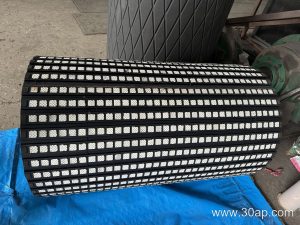
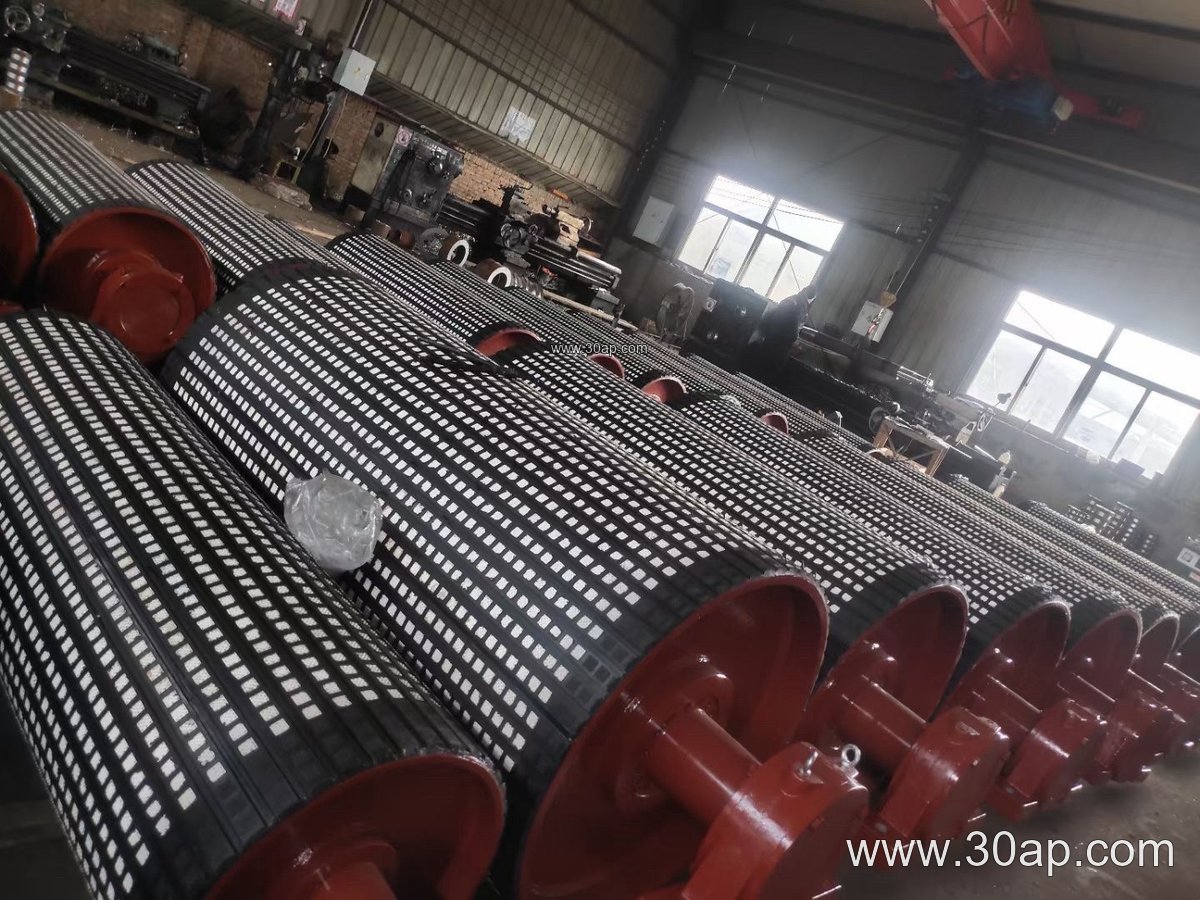
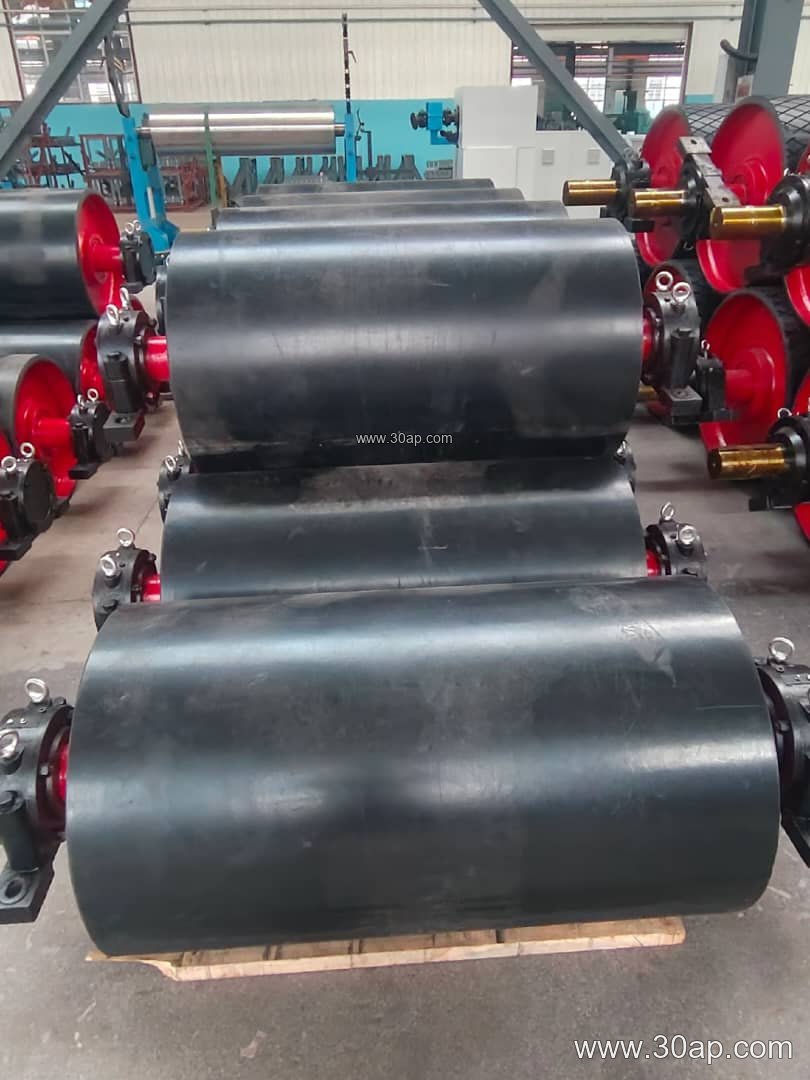
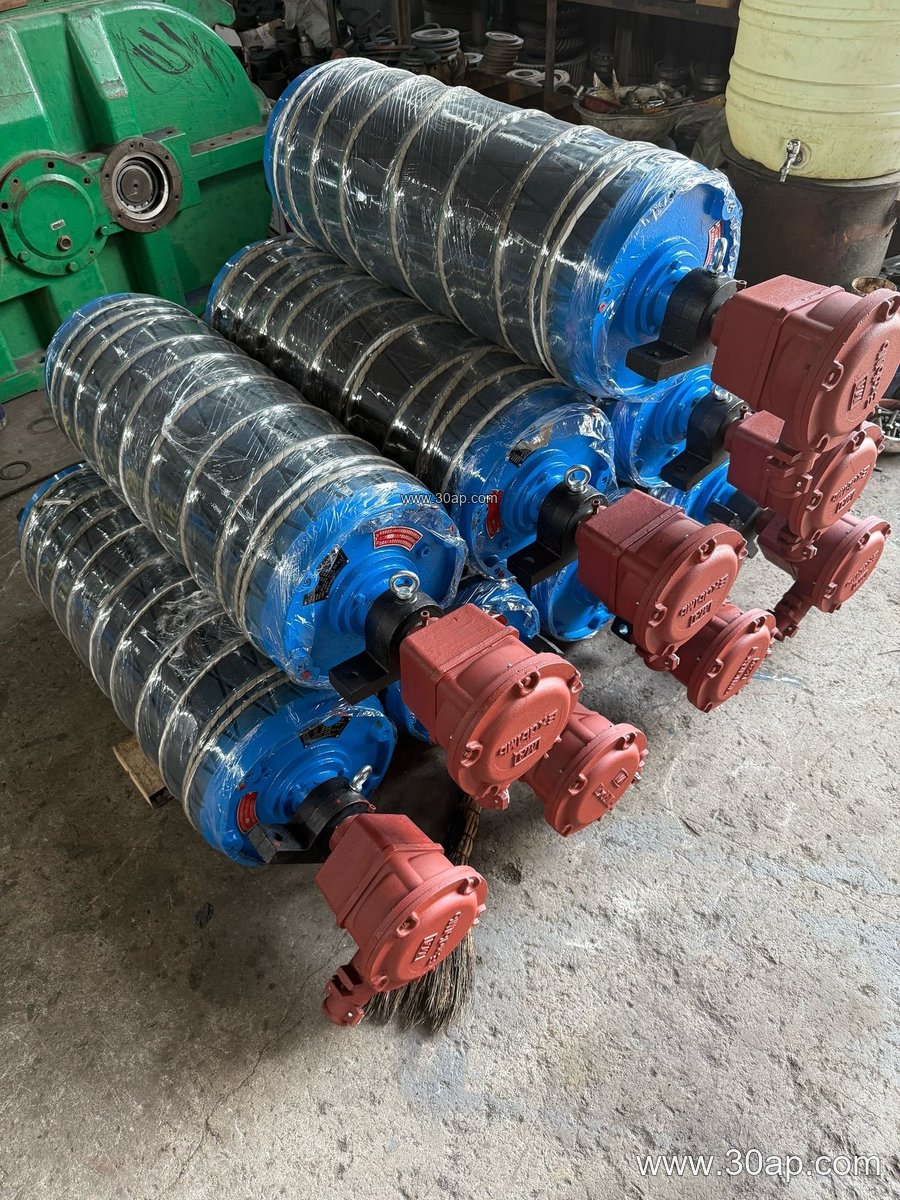
A typical unit is built from a rolled steel shell, welded end discs, a shaft and bearing housings mounted on a sturdy frame. The shell can be plain, or it can carry lagging to improve grip and protect the belt. Common surface forms include plain face, hot vulcanised rubber, cold-bonded rubber, diamond grooved lagging, herringbone lagging and ceramic lagging. Lagging thickness is often 8, 10, 12, 15 or 20 mm depending on the application.
For abrasive ore or aggregate duties, diamond or ceramic lagging helps reduce slip and extends service life. For a coal mining conveyor belt that must meet flame retardant requirements, the lagging and belt specification should be considered together, since friction behaviour and static build-up matter underground.
Matching Pulley Size to the Conveyor
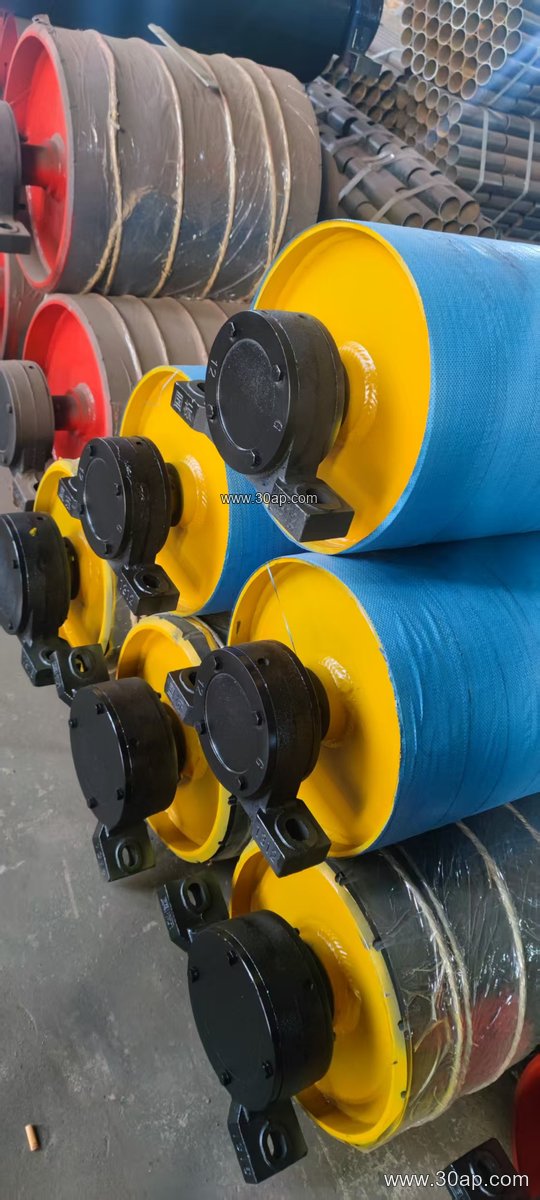
Diameter and face width are chosen from belt width, belt tension, wrap angle and the space available at the head station. Face width is normally somewhat wider than the belt, and the shaft diameter follows the calculated torque and bearing load, not the belt width alone. The table below shows representative combinations; treat them as reference points, not fixed rules.
| Belt width | Typical pulley face width | Example diameter |
|---|---|---|
| B500 | about 600 mm | Ø400 |
| B650 | about 750 mm | Ø500 |
| B800 | about 950 mm | Ø500 |
| B1000 | about 1150 mm | Ø630 |
| B1200 | about 1400 mm | Ø1000 |
| B1400 | about 1600 mm | Ø800 |
| B1600 | about 1800 mm | Ø1000 |
| B1800 | about 2000 mm | Ø1250 |
Typical shaft diameters fall in the range Ø50 to Ø200 mm, again determined by design calculations. A larger diameter reduces belt bending stress and can improve discharge trajectory, but it also raises frame height and cost, so the choice is a balance.
Where It Fits in the Plant
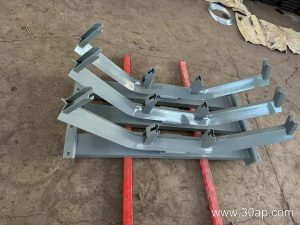
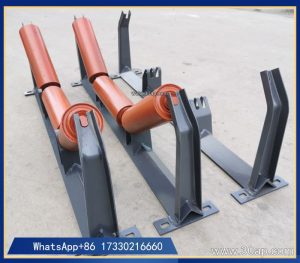
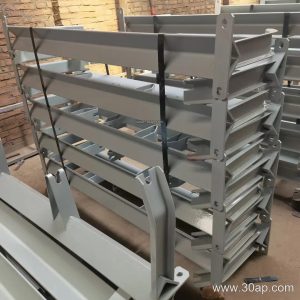
Discharge pulleys appear at transfer points in sand and gravel plants, cement clinker lines, iron ore and copper ore concentrators, port bulk terminals and tunnel spoil handling. At a crusher discharge, the pulley often works with an impact-resistant conveyor belt and a set of idler rollers that absorb lump loading. At a ship loading station, the same drum may be paired with a long boom conveyor and a skirted conveyor belt to control spillage. The pulley itself is only one part of the head station; the conveyor bracket, bearing base and take-up arrangement all influence how well it performs.
Buyer Checklist
- Confirm belt width, belt type and maximum working tension before selecting shell thickness.
- State the material: coal, clinker, wet aggregate or fertiliser all call for different lagging and sealing.
- Check whether the drum is driven or free-running; a driven head pulley needs a shaft sized for torque, while a bend or tail pulley does not.
- Ask for the balancing grade and run-out tolerance, since vibration shortens bearing life.
- Plan lifting points and access for lagging replacement, especially on large B1800 or B2000 installations.
For spare parts planning, keep the discharge pulley specification together with the belt data. A high abrasion resistant conveyor belt running over a worn, polished shell will slip sooner, and a mismatched lagging profile can damage the belt edge. Recording diameter, face width, lagging type and shaft size at commissioning makes later replacement straightforward.