What a Conveyor Support Bracket Does
A conveyor support bracket is the structural interface between the idler roller and the conveyor frame. It holds each roller at the correct height, angle and spacing so the belt keeps its trough shape and tracks smoothly. In a quarry, a crushing circuit or a coal handling system, these brackets carry steady loads and absorb the vibration that comes from moving rock, ore or aggregate. Because they sit close to the belt line, their condition directly affects wear on the conveyor belt and on every idler roller in the run.
How the Bracket Is Built
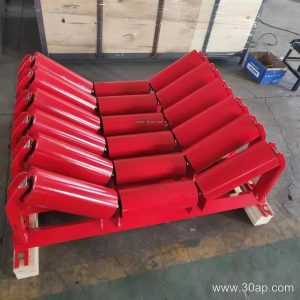
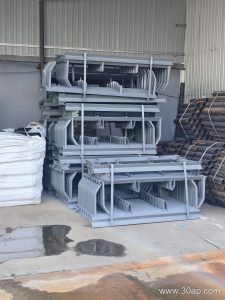
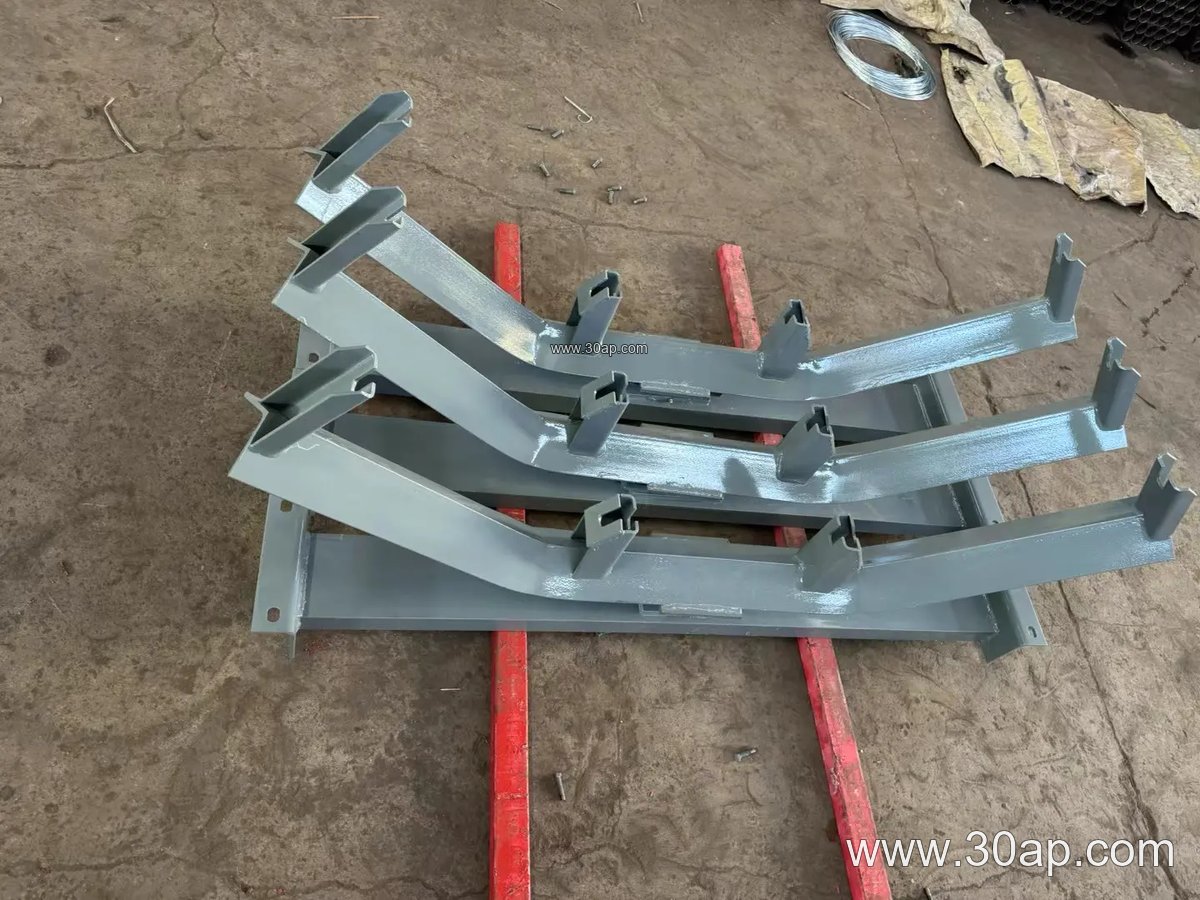
Most brackets are fabricated from angle steel, channel steel or folded steel plate. The frame is drilled or slotted to accept roller shafts, and the crossbeam length and hole spacing are set by the belt width and trough angle rather than by a single fixed figure. A typical troughing bracket carries three rollers; a return bracket supports one flat roller or a V-shaped roller set. Slots or adjustable arms allow the trough angle to be set between common values such as 20, 30, 35 and 45 degrees, and forward-leaning designs are often set at about 1.5 to 2 degrees to help centre the belt.
Common Forms and Where They Fit
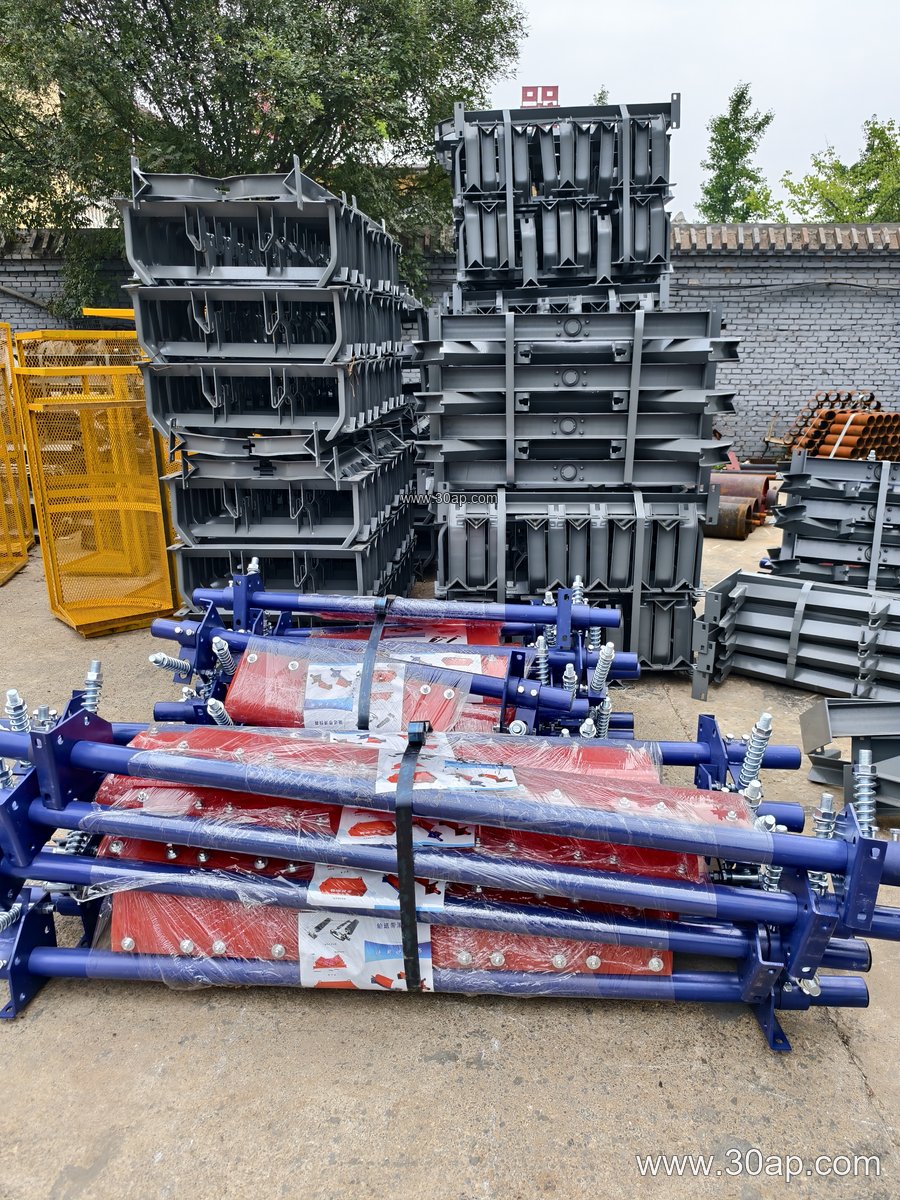
- Troughing and transition brackets shape the belt at the carrying side and ease the change from flat to troughed profile near pulleys.
- Return and V-return brackets support the empty belt and help clear spilled material.
- Impact brackets sit under loading points and pair with cushion rollers to soften the drop of heavy lumps.
- Self-aligning and forward-leaning brackets correct minor belt drift on long runs.
- Suspended and adjustable brackets suit frames where height or angle must be trimmed during commissioning.
On a cement plant clinker line or a power plant coal yard, the choice between fixed and adjustable brackets often depends on how much field alignment the installation team expects.
Matching Brackets to Belt Width and Roller Diameter
The bracket must match the belt width and the roller shaft it carries. Common belt widths run from B500 and B650 up through B800, B1000 and B1200, with wider lines at B1400, B1600 and B1800. Roller diameters such as Ø89, Ø108, Ø133 and Ø159 appear across these widths, but no single width dictates one diameter or one trough angle. A B800 line may run at 35 degrees with Ø108 rollers, while a B1200 line might use 45 degrees and Ø133 rollers, depending on load and belt stiffness. Installers should confirm hole pitch and crossbeam length with the frame drawing rather than assume a universal fit.
| Reference | Typical Range | Note |
|---|---|---|
| Belt width | B500 to B1800, wider on request | Match bracket span to frame design |
| Trough angle | 20, 30, 35, 45 degrees | Adjustable types cover several angles |
| Roller diameter | Ø89, Ø108, Ø133, Ø159 | Confirm shaft and fixing details |
| Material | Angle, channel, folded plate | Finish suited to the site environment |
Heavy-duty mining conveyors carrying abrasive ore often use reinforced brackets and thicker rollers, while a food or fertiliser line may need a cleaner, coated finish. For lines moving hot clinker or sinter, a heat resistant conveyor belt and heat-tolerant rollers should be considered together with the bracket spacing.
Buyer Checklist
- Confirm belt width, trough angle and roller diameter before ordering.
- Check hole spacing against the actual frame, not only the catalogue.
- Ask how the bracket is finished for dust, moisture or corrosive conditions.
- Consider adjustable or self-aligning types where the belt may drift.
- Plan inspection of brackets together with idler roller and conveyor pulley checks.
Well-chosen brackets reduce belt edge damage, cut roller replacement frequency and keep the whole conveyor line running quietly. Buyers who compare drawings, materials and adjustment range before purchase usually avoid the costly rework that comes from a bracket that almost fits.