What a Three-Roll Idler Bracket Does
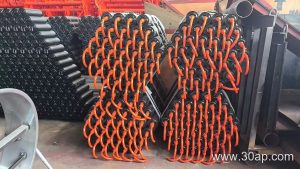
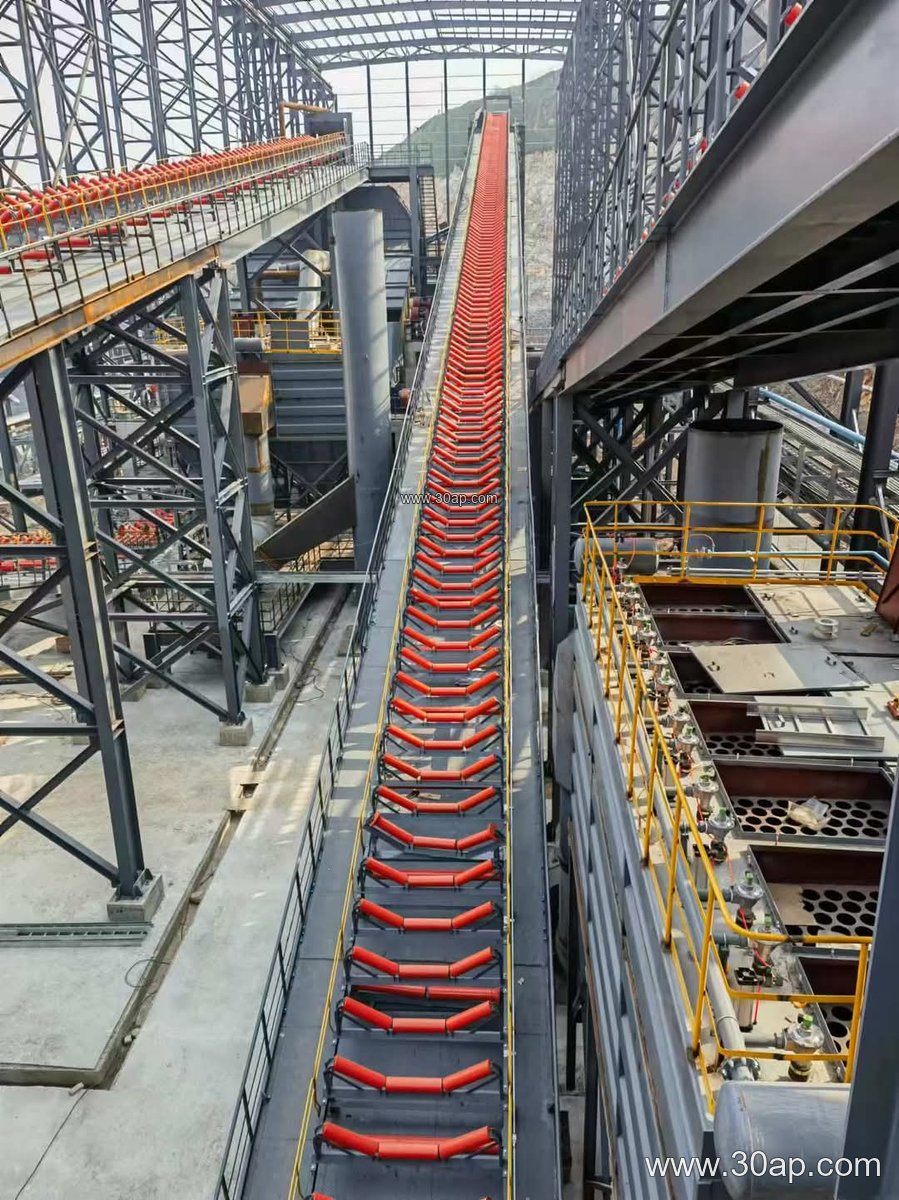
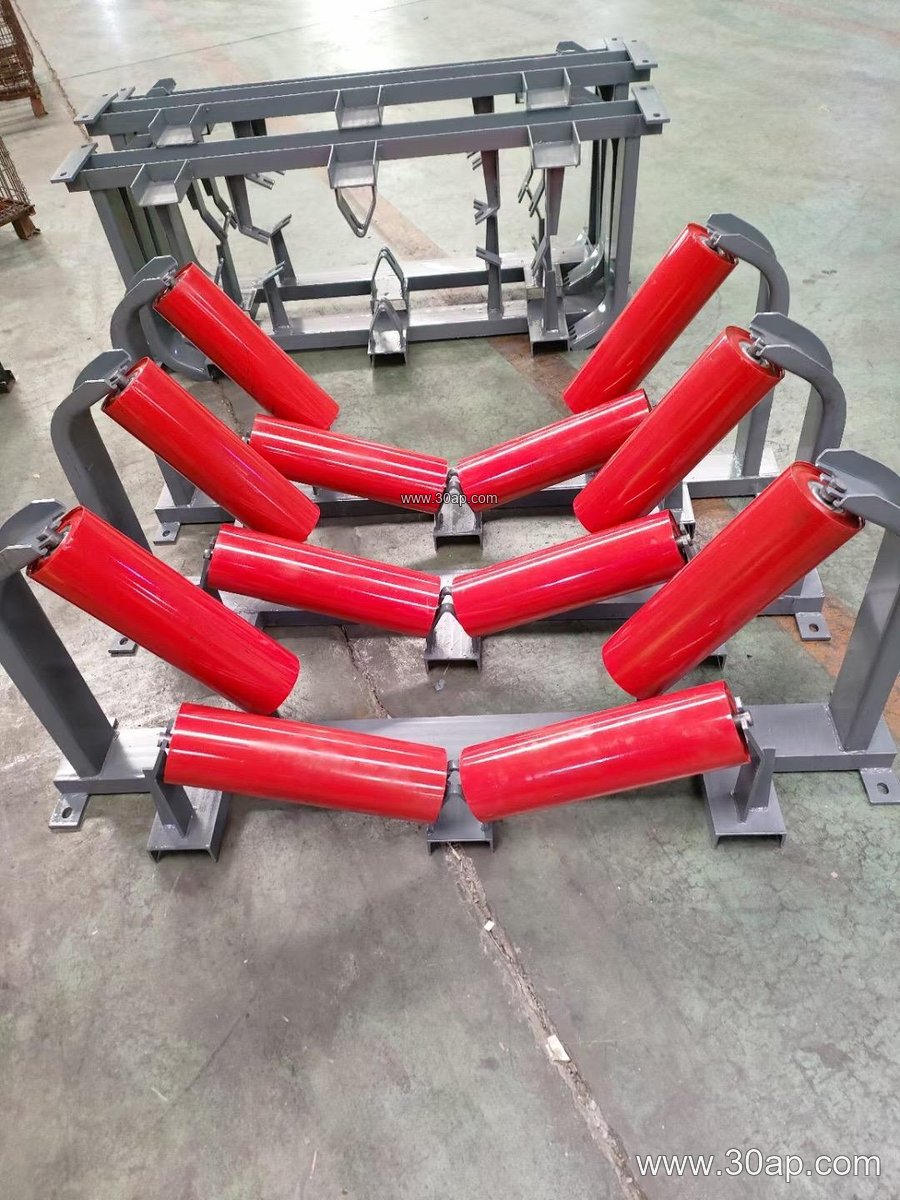
A three-roll idler bracket is the steel support that holds the three carrying idlers of a troughed conveyor in the correct position. The two side rolls sit at an angle, the centre roll stays flat, and together they shape the conveyor belt into a trough so bulk material stays on the line. In a quarry, a coal preparation plant, or a cement kiln feed line, this bracket is one of the quiet parts that decides how well the whole conveyor behaves. The same item is often called a troughing idler bracket or a three-roller idler frame, and those names describe the same product.
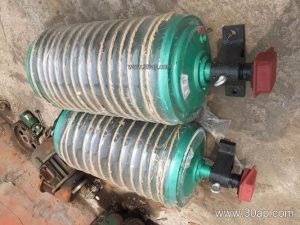
It should not be confused with other frame families. A return bracket carries the belt on the way back, a transition bracket eases the belt from flat to troughed, and an impact bracket sits under the loading point. Drive pulleys, tail pulleys and bend pulleys are different equipment again and are never a substitute for the bracket itself.
How the Bracket Is Built
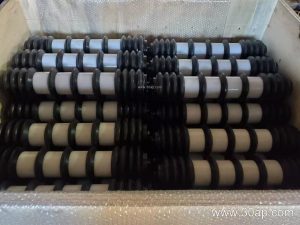
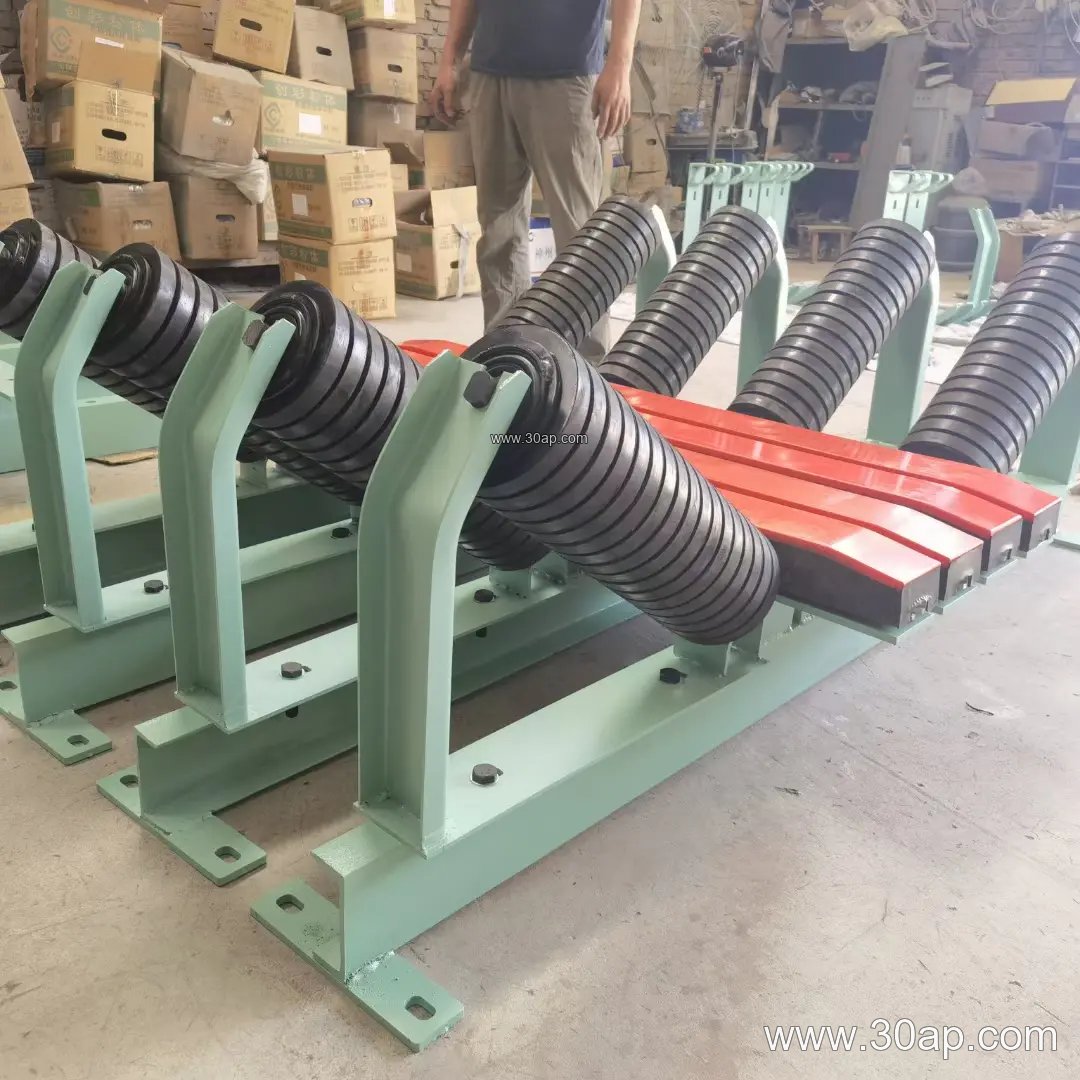
Most three-roll idler brackets are fabricated from angle steel, channel steel, or folded steel plate. The common build has a cross beam, two angled side wings, welded idler seats, and mounting holes that fix the frame to the conveyor stringer. The roll seats usually accept a hook or a bolt-on fixing, so the idler roller can be changed without cutting the frame.
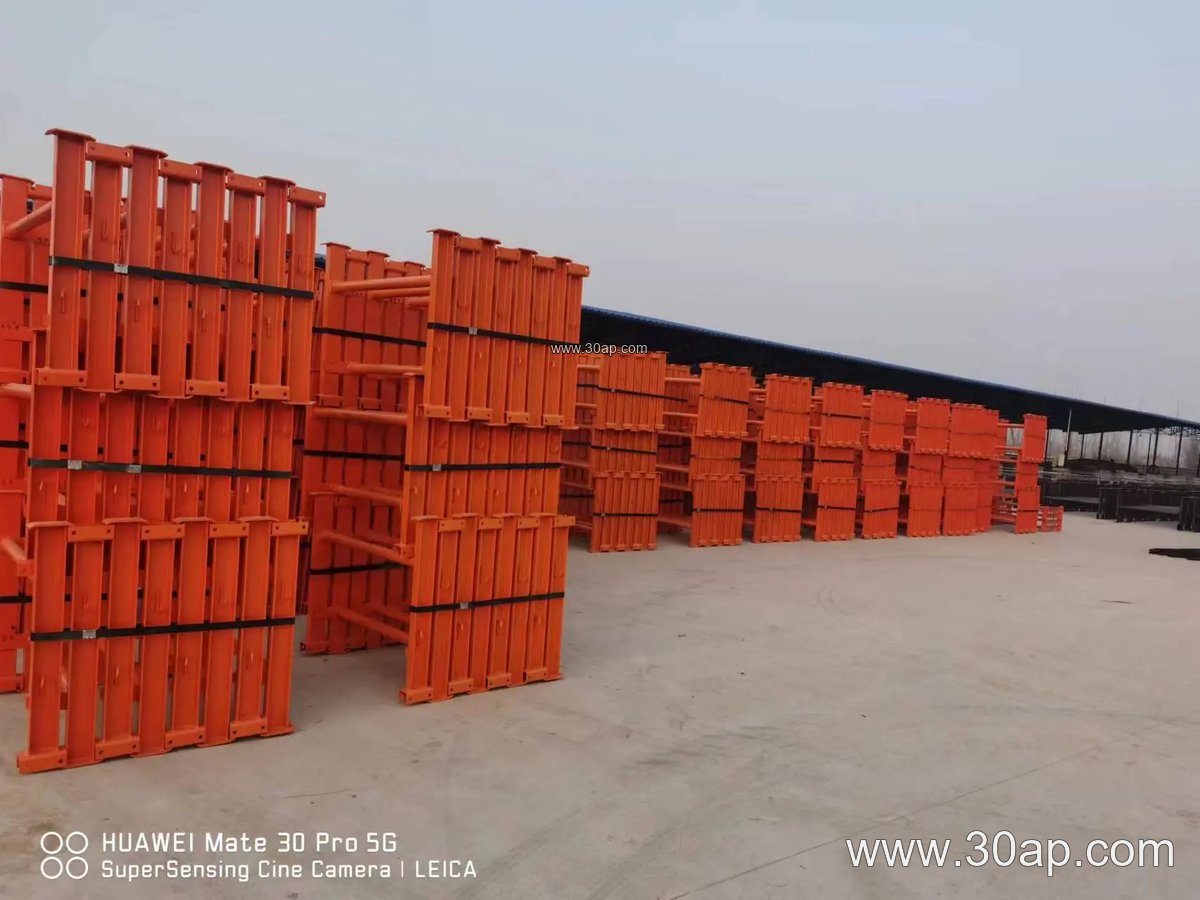
- Cross beam and side wings in welded angle or channel
- Idler seats positioned for the chosen trough angle
- Mounting holes matched to the stringer spacing
- Optional adjustable wings for changing trough angle on site
Galvanised or painted finishes are common in wet or dusty plants. The hole spacing and beam length are not fixed numbers; they follow belt width, trough angle, and the conveyor design.
Trough Angle and Roll Diameter Choices
The trough angle controls how deep the belt sits. A 20 degree frame suits light material and gentle lines, 30 and 35 degree frames cover most general duty, and 45 degree frames are used where capacity matters and the belt can take the extra bending. Adjustable brackets let maintenance teams move between these angles. A small forward tilt of about 1.5 to 2 degrees is sometimes built into the side wings to help centre the belt.
Roll diameter is chosen together with belt width and load, not from belt width alone. Typical references are listed below as examples only.
| Belt width | Trough angle | Common roll diameter |
|---|---|---|
| B650 | 30 degrees | Ø89 |
| B800 | 35 degrees | Ø108 |
| B1000 | 35 degrees | Ø108 or Ø133 |
| B1200 | 45 degrees | Ø133 |
| B1400 to B1600 | 35 to 45 degrees | Ø159 |
| B1800 and above | 35 to 45 degrees | Ø194 |
These are reference combinations, not rules. A B1200 line may run at 35 degrees with Ø133 rolls, and the same width can be built with other roll sizes. Always confirm the idler shaft, seat type, and frame length with the actual conveyor drawing.
Where It Fits on the Conveyor
The carrying side of a troughed conveyor is the main home of this bracket. In a limestone mine it sits along the load-carrying run behind the feeding point; in a power plant coal yard it supports the belt between the transfer house and the stockpile. Similar frames appear on a ship loading line at a port and on a crushing and screening circuit in an aggregate plant.
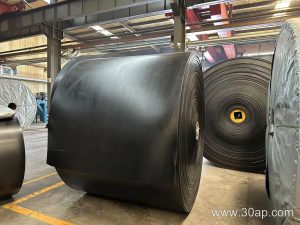
The bracket works as part of a set with the idler roller, the conveyor belt, and the conveyor pulley. A poorly aligned frame wears the belt edge, while a correct trough angle keeps the load centred. On heavy-duty mining conveyor belt runs, stiffer frames and larger roll diameters help absorb vibration. On a long overland line using steel cord conveyor belt, frame alignment matters even more because belt tracking is less forgiving. For dusty coal duty, a flame retardant conveyor belt is often paired with well-sealed idlers and rigid frames.
Buyer Checklist
- Confirm belt width and the required trough angle before ordering.
- Match the frame to the idler roller shaft and seat type already in use.
- Check mounting hole spacing against the stringer, since it changes with design.
- Decide between fixed and adjustable wings based on whether the angle may change.
- Ask about finish and material for wet, abrasive, or corrosive sites.
Spare brackets are worth keeping for high-wear positions near loading points. When replacing a frame, check that the new trough angle matches the neighbouring frames so the belt does not twist between stations. A three-roll idler bracket is a small item, but its fit and angle shape the life of the belt and the smoothness of the whole conveying line.