What a Belt Conveyor Bracket Does
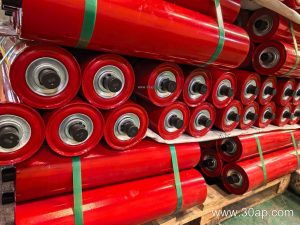
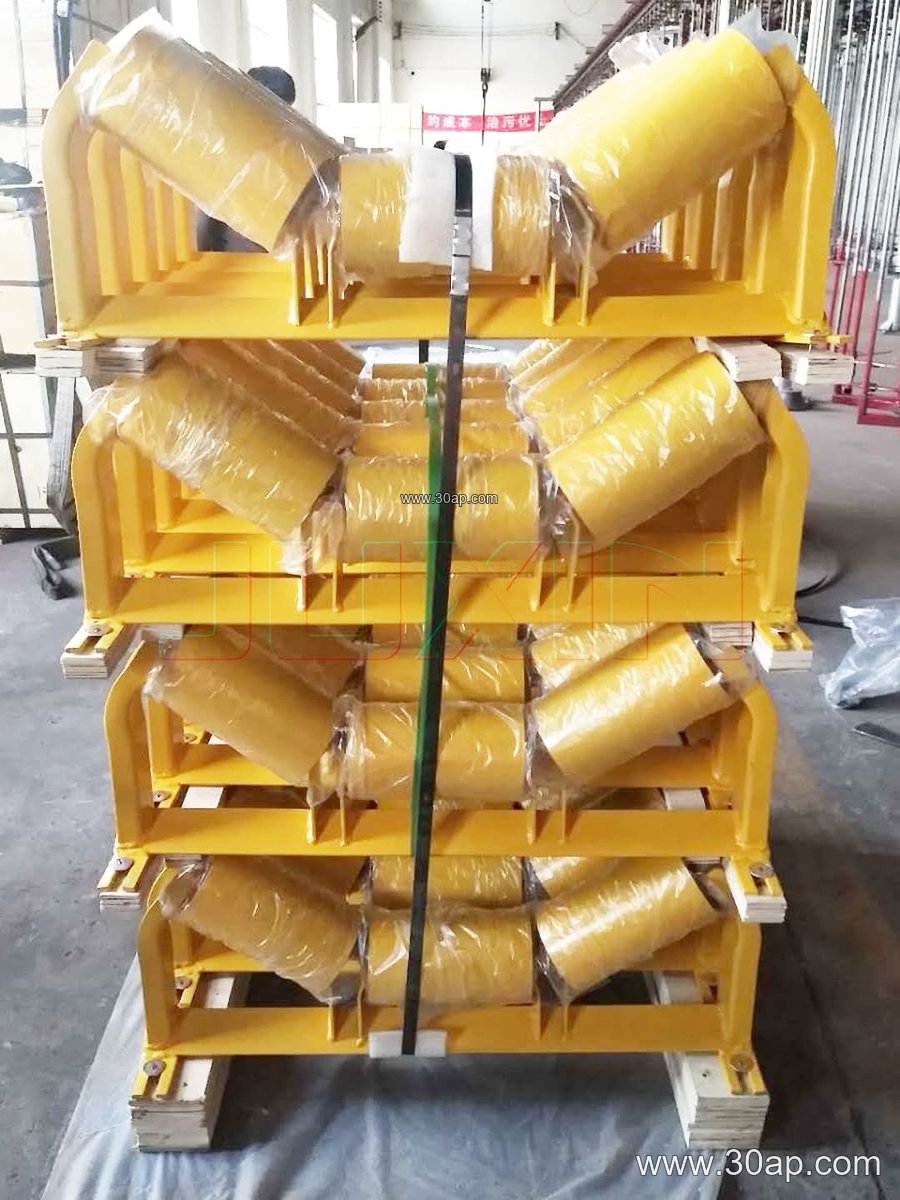
A belt conveyor bracket is the structural support that holds the idler roller in position along the conveyor frame. It carries the roller shaft, keeps the roll at the correct height and angle, and transfers the load of the belt and material into the main frame. In a quarry or a cement plant, the bracket is often the part that decides whether the belt tracks cleanly or wanders. The same bracket also sets the trough angle that shapes the belt into a carrying trough.
Brackets work together with the conveyor belt, the idler roller and the conveyor pulley. A poorly aligned bracket can wear the belt edge, overload one roller, and shorten the life of the whole conveyor bracket set. This is why buyers should treat the bracket as an engineered part, not a piece of angle iron.
How a Conveyor Bracket Is Built
Most brackets are fabricated from angle steel, channel steel or folded steel plate. The fabrication route affects stiffness and corrosion behaviour. A folded plate bracket is often lighter and more consistent in shape, while a channel bracket can be stiffer for heavy loads. Common features include slotted mounting holes for adjustment, a formed seat for the roller shaft, and a cross beam whose length follows the belt width and trough angle.
- Material: angle steel, channel steel or folded plate
- Mounting: bolted to the frame, sometimes slotted for alignment
- Roller seat: flat, V-shaped or adjustable, depending on the bracket type
- Finish: painted or galvanised, selected for the site environment
Main Types and Where They Sit
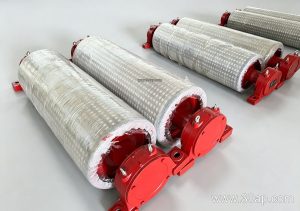
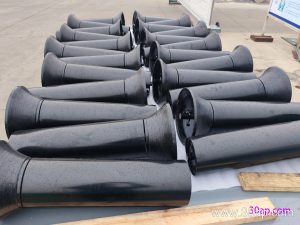
Trough brackets, also called carrying brackets, sit on the top run and hold the belt in a trough. A transition bracket is placed near the pulley to ease the belt from flat to troughed. Return brackets sit under the belt and support the empty run; a V-return bracket is a common choice there. Impact brackets are used at loading points to absorb the drop of material, and self-aligning brackets help correct belt drift on long runs. A spiral bracket is another option for training the belt on the return side.
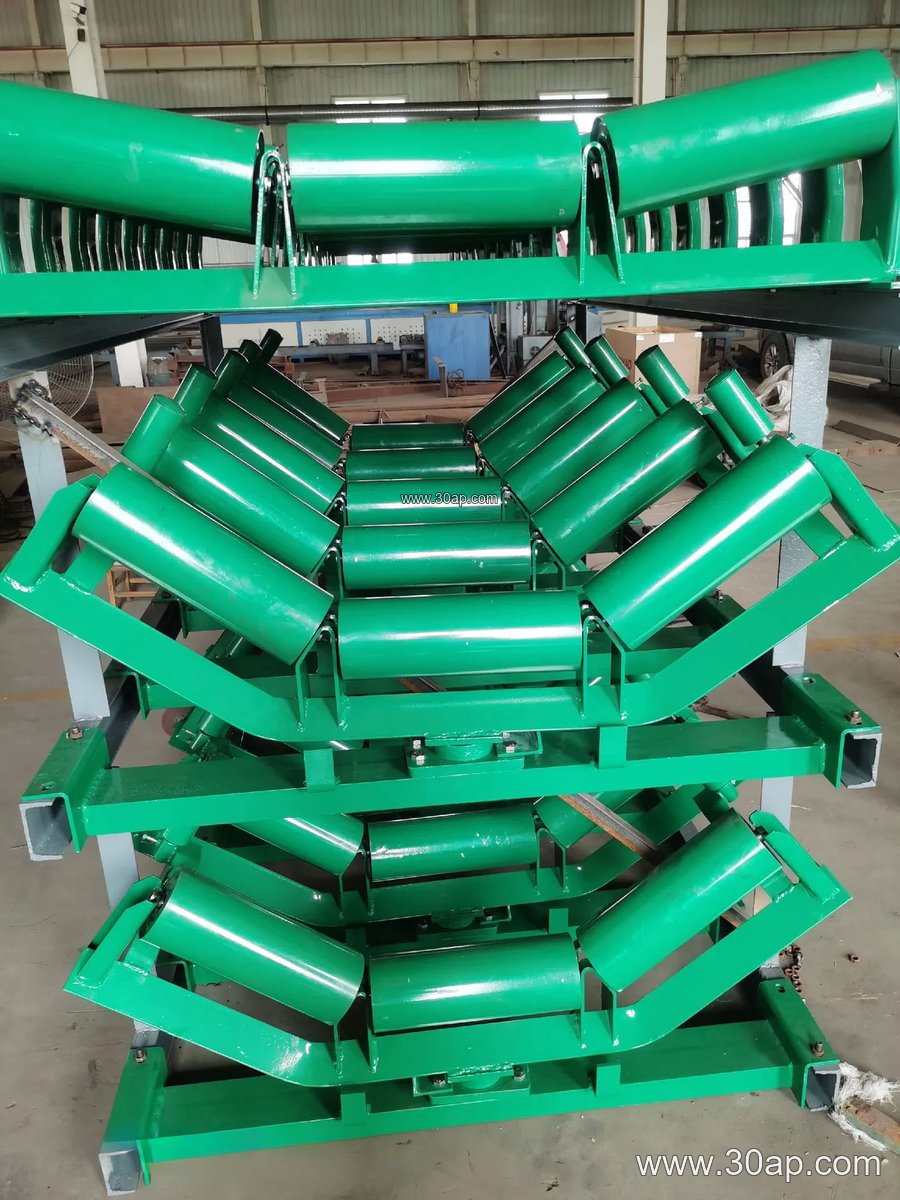
Adjustable brackets are useful where the trough angle may need to change or where the belt must be fine-tuned during commissioning. Fixed brackets are simpler and cheaper, but they lock the geometry. The choice between them is a design decision, not a rule.
Matching Bracket, Belt Width and Roller Diameter
Bracket dimensions follow the belt width and the roller diameter. A B800 frame with a 35 degree trough and Ø108 rollers is a common combination, and a B1200 frame with 45 degree troughing and Ø133 rollers is also seen in bulk handling. The table below gives typical reference values only; final sizes are set by the conveyor designer.
| Belt width | Typical trough angle | Typical roller diameter |
|---|---|---|
| B500 | 20 to 30 degrees | Ø89 |
| B650 | 30 degrees | Ø89 to Ø108 |
| B800 | 30 to 35 degrees | Ø108 |
| B1000 | 35 degrees | Ø108 to Ø133 |
| B1200 | 35 to 45 degrees | Ø133 |
| B1400 | 35 to 45 degrees | Ø133 to Ø159 |
| B1600 to B2000 | 35 to 45 degrees | Ø159 to Ø194 |
Hole spacing and cross beam length change with belt width and trough angle, so they should be confirmed against the frame drawing rather than assumed. A wider belt does not automatically require a larger roller, and one belt width can accept more than one roller size.
Where Brackets Are Used
In a coal preparation plant, trough and return brackets run along the main haulage conveyors, where flame retardant conveyor belt and anti-static conveyor belt are often specified. In a limestone quarry, heavy-duty brackets support crusher conveyor belt and quarry conveyor belt lines that carry sharp rock. In a power plant coal yard, brackets must resist dust and occasional washdown. In an iron ore terminal, steel cord conveyor belt and high abrasion resistant conveyor belt put extra load on the bracket seats, so stiffness matters.
Buyer Checklist
- Confirm belt width, trough angle and roller diameter as a set.
- State whether the bracket is fixed or adjustable.
- Give the frame hole pattern and cross beam length from the drawing.
- Choose the finish for the site: dusty, wet, or coastal.
- Check that the bracket suits the idler roller end type.
- Order spare brackets for transition and impact positions, where wear is faster.
On a well-built conveyor, the belt conveyor bracket is a small part with a large effect on tracking, roller life and belt life. Buyers who match bracket geometry to the belt, the roller and the frame get a quieter, longer-running conveyor.