What a Vertical Roller Does on a Conveyor
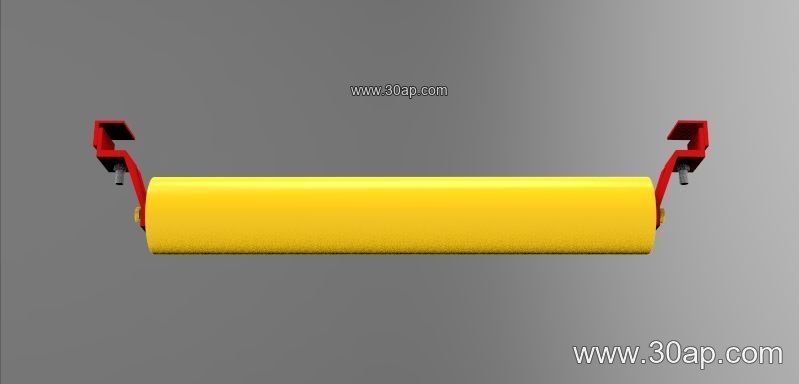
A vertical roller is a guide roller mounted with its axis upright, usually bolted to a conveyor bracket at the edges of the belt path. Instead of supporting the belt from beneath like a carrying idler, it stands at the side and keeps the belt edge in line, particularly where the belt changes direction, passes a transfer point, or runs through a confined structure. In a quarry, a coal preparation plant, or a cement plant, these rollers are often the difference between a belt that tracks quietly and one that rubs its edge against the frame.
Because the roller face contacts the belt edge rather than the load-carrying surface, it is built for lateral guidance rather than for impact. Its working position is vertical, and that is exactly what distinguishes it from a conventional idler roller lying horizontally under the belt.
Construction and Common Surface Forms
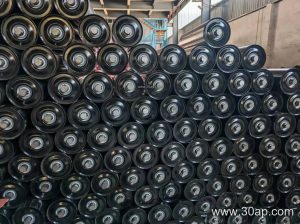
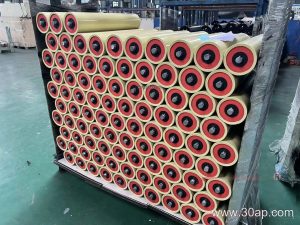
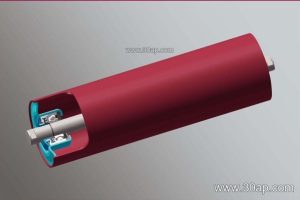
The body is normally a steel tube with a machined end disc and a sealed bearing housing at each end, so the roller spins freely on a fixed shaft. Sealing quality matters more than many buyers expect, since dust from limestone, iron ore, or clinker finds its way into anything that is not well protected. Roller surfaces vary with the duty: plain steel for general guidance, nylon or ceramic for reduced friction and wear, and rubber rings where edge contact is harsh. Shaft ends are usually threaded or flattened for mounting to a bracket.
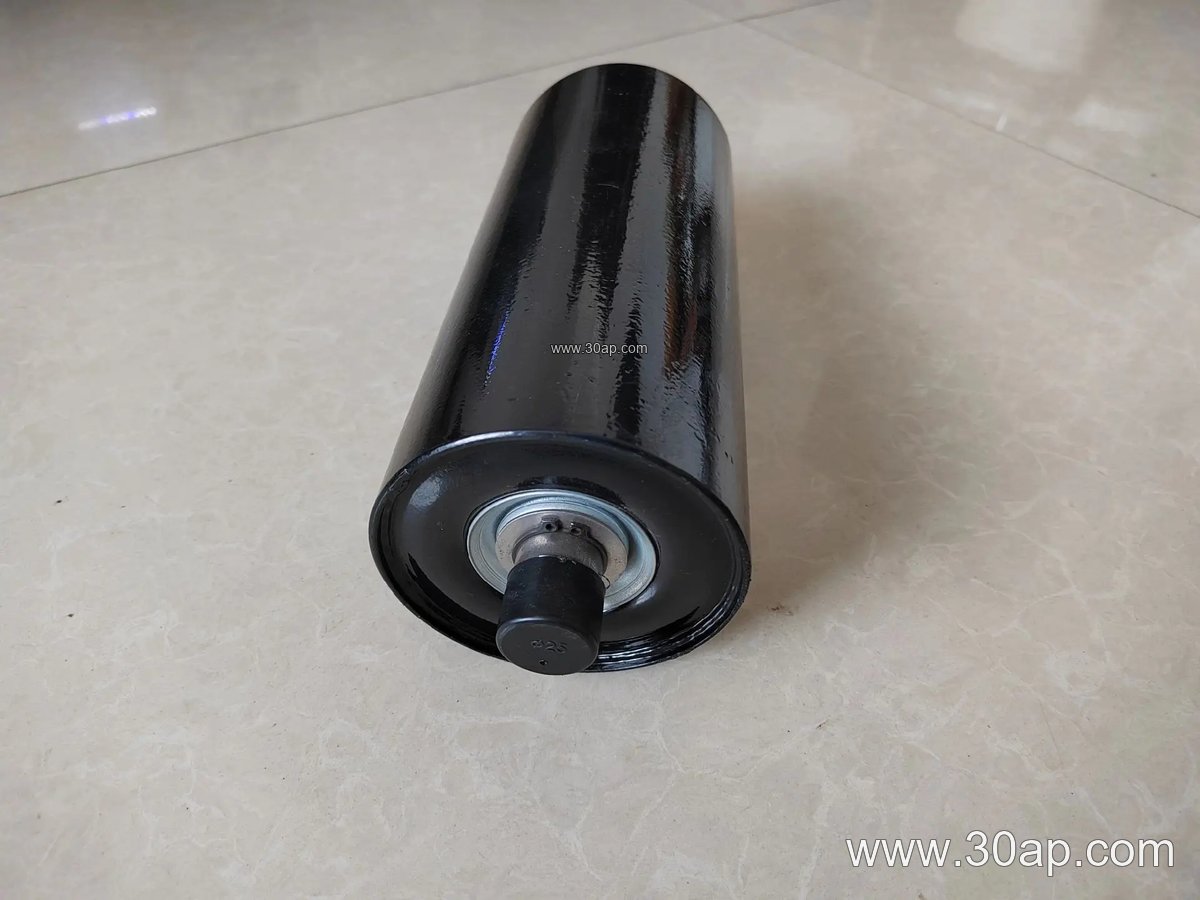
Typical roller diameters in this family follow the same range used across conveyor idlers, from about Ø63 mm up to Ø219 mm, with Ø89, Ø108, Ø127, and Ø159 among the more common choices. Bearing sizes are commonly 6204, 6205, 6305, 6306, 6308, or 6310, selected by load and shaft design rather than by roller diameter alone. Belt width and roller length are related but not fixed; a vertical roller for a B800 belt is not automatically the same length as one for a B1200 belt, and the mounting arrangement decides the final figure.
Where Vertical Rollers Fit in a Plant
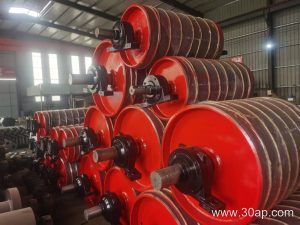
In a crushing and screening line, a vertical roller is often placed just ahead of a conveyor pulley where the belt can drift sideways after receiving a heavy load. In a power plant coal yard, it helps hold the belt in position on inclined galleries exposed to wind and uneven loading. Similar duties appear in aggregate plants, fertilizer handling, and tunnel spoil removal.
The roller does not replace the carrying idlers or the return rollers; it works alongside them, and alongside components such as the conveyor pulley, the conveyor bracket, and the belt itself. When a belt is fitted with a corrugated sidewall or a chevron profile, edge guidance deserves extra attention, because a wandering belt can damage the cleats or the sidewall before anyone notices the misalignment.
Matching the Roller to the Belt and the Duty
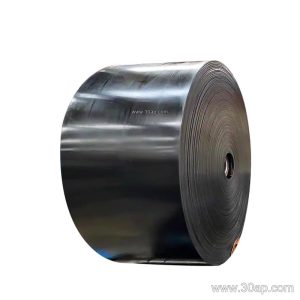
Selection starts with the belt, not the roller. A heavy-duty mining conveyor belt carrying ore at high tonnage will push harder against a guide roller than a lighter fabric core belt on a short transfer. The table below groups the practical reference points that usually come up in a quotation request; the values are typical examples, not fixed pairings.
| Parameter | Common reference values |
|---|---|
| Roller diameter | Ø63, Ø76, Ø89, Ø102, Ø108, Ø127, Ø133, Ø159, Ø178, Ø194, Ø219 mm |
| Belt width served | B400, B500, B650, B800, B1000, B1200, B1400, B1600, B1800, B2000 mm |
| Bearing | 6204, 6205, 6305, 6306, 6308, 6310 |
| Roller surface | Steel tube, nylon, ceramic, rubber ring |
| Mounting | Vertical shaft in a side bracket, position set by design |
A buyer should confirm four things: the belt width and running speed, the expected side load at the mounting point, the environment (wet, dusty, corrosive, or hot), and the available bracket space. A roller that is too small in diameter may spin fast and wear quickly; one that is oversized may not fit the frame. On a steel cord conveyor belt running at high tension, the guiding forces are larger, so the bracket and shaft deserve as much attention as the roller shell.
Installation and Maintenance Notes
- Align the roller so the belt edge meets it squarely; a skewed mount can itself cause tracking error.
- Check that the roller turns freely by hand before tightening the bracket bolts.
- Keep the seal area clean; re-grease only where the bearing housing is designed for it.
- Inspect after belt splicing or pulley changes, since a small shift in alignment shows up first at the guide rollers.
- Replace a roller with a damaged shell or a rough bearing early, before the belt edge suffers.
For plants handling abrasive rock or hot clinker, matching the roller surface to the belt compound is worthwhile. An abrasion resistant conveyor belt and a rubber-ring guide roller tend to last well together, while a heat resistant conveyor belt on a kiln feed line may call for a plain steel face and a heat-tolerant bearing grease.
Buyer Checklist
Request the drawing, not just the diameter. Confirm the shaft length, thread, and bracket interface, and ask how the bearing is sealed. State the belt width, the tonnage, and the plant conditions. On a port conveyor belt or a ship loading line, salt air and moisture shorten bearing life, so specify the protection needed. On an underground mining conveyor belt, flame retardant properties of the belt are separate from the roller, but the roller still has to survive the same dust and water. A clear specification up front avoids the common mistake of buying a guide roller that fits the frame but not the job.