What an Iron Ore Conveyor Idler Does on the Line
An iron ore conveyor idler is the rotating roller assembly that supports the loaded belt and controls its path along a bulk handling system. In a crushing and screening circuit or a pellet plant feed line, these rollers carry some of the heaviest and most abrasive material in the plant. The idler must keep the belt tracking, limit sag between frames, and protect both the belt cover and the material load from unnecessary flexing. Because iron ore is dense and often sharp-edged, the choice of roller body, bearing protection and frame spacing matters as much as the belt itself.
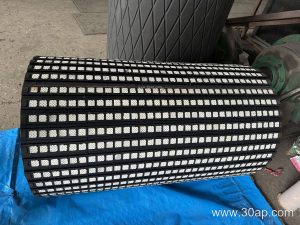
It helps to separate the idler from the pulleys at each end of the conveyor. A head or tail conveyor pulley drives or redirects the belt, while the idler is a passive support component mounted on a conveyor bracket along the carry and return runs. The two work together, but they are not interchangeable parts.
Construction Details That Affect Service Life
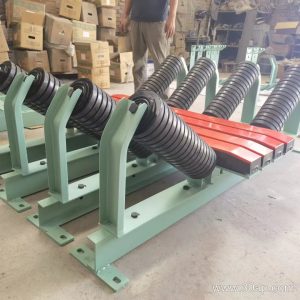
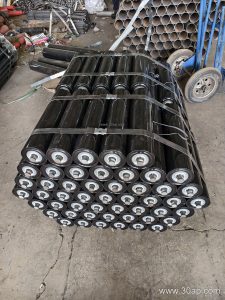
A typical iron ore conveyor idler is built around a steel tube shell, pressed bearing housings, a through shaft and sealed bearings. Roller surfaces may be plain steel, nylon, ceramic or rubber-covered depending on the duty. Rubber rings are common on impact sections beneath a transfer point, where lumps fall onto the belt. Bearing selection usually follows load and speed rather than belt width alone; common sizes include 6204, 6205, 6305, 6306, 6308 and 6310, but no single bearing is tied to one roller diameter.
Sealing is the quiet deciding factor in ore duty. Fine dust and moisture attack bearings from the inside out, so labyrinth seals, grease retention and housing fit deserve close attention during inspection. A well-sealed idler roller can outlast a heavier but poorly protected unit in a dusty transfer tower.
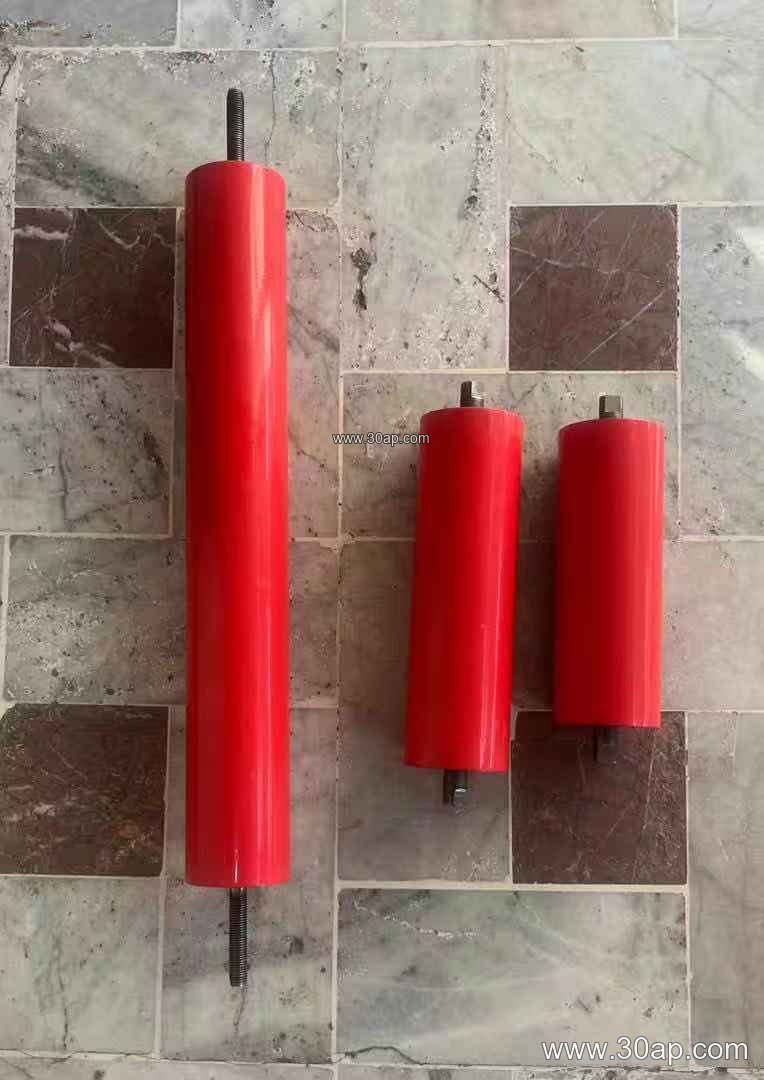
Common Arrangements in Iron Ore Duty
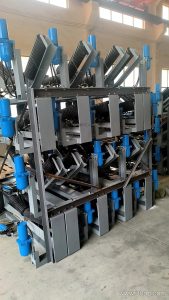
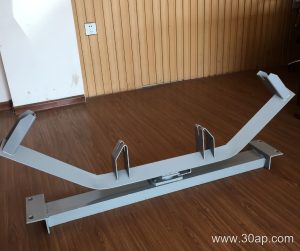
Troughed three-roll sets are the standard carry arrangement, with 20, 30, 35 or 45 degree trough angles shaping the belt into a material-holding curve. Return runs often use a flat or V-shaped roller set. Transition idlers ease the belt from flat to troughed profile near pulleys, and self-aligning types help correct drift on long flights.
- Troughing idlers for the main carrying run
- Impact or rubber-ring idlers below crusher discharge chutes
- Return and V-return rollers for the empty strand
- Training idlers on long straight sections and curves
The belt above these rollers is usually a heavy-duty Iron Ore Conveyor Belt or a high abrasion resistant conveyor belt with a robust cover. In some plants an EP conveyor belt or steel cord conveyor belt carries the same ore, so idler load ratings should be checked against the actual belt tension and material weight rather than assumed from width.
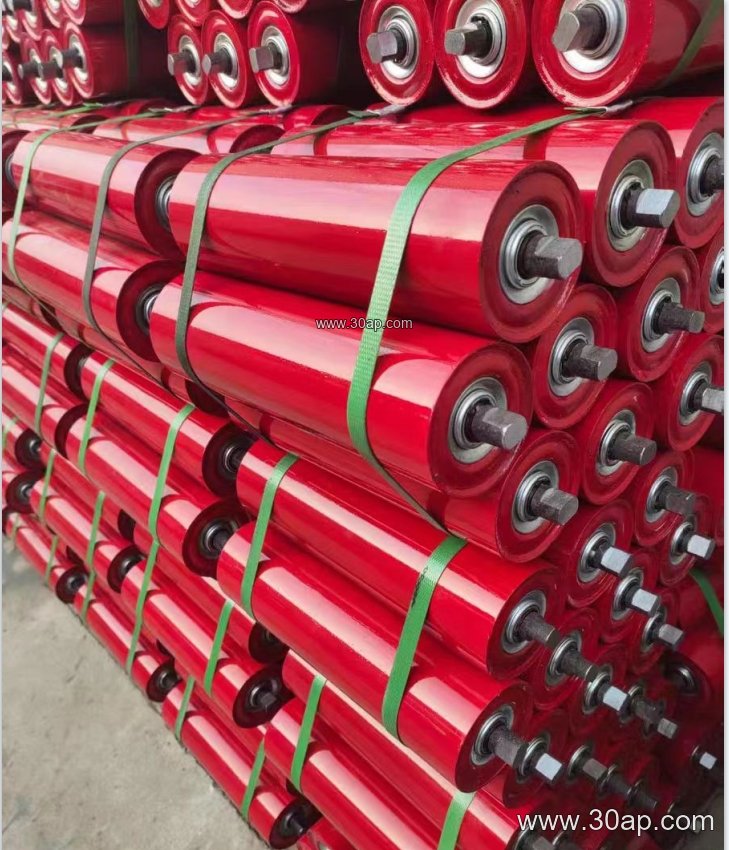
Matching Roller Diameter, Belt Width and Roll Length
Roller diameter and length follow the conveyor design. Larger diameters usually suit higher loads and faster belts, while roll length depends on belt width, trough angle and the number of rolls in the set. The figures below are common reference examples, not fixed pairings; final values are set by the conveyor designer.
| Reference item | Common example values |
|---|---|
| Roller diameter | Ø63, Ø76, Ø89, Ø102, Ø108, Ø127, Ø133, Ø159, Ø178, Ø194, Ø219 mm |
| Belt width | B400, B500, B650, B800, B1000, B1200, B1400, B1600, B1800, B2000 mm |
| Three-roll center roll length (examples) | about 200 mm at B500, 250 mm at B650, 315 mm at B800, 380 mm at B1000, 465 mm at B1200, 530 mm at B1400, 600 mm at B1600, 670 mm at B1800, 750 mm at B2000 |
| Trough angle | 20, 30, 35, 45 degrees |
| Roller surface | steel tube, nylon, ceramic, rubber ring |
Side rolls and center rolls can differ in length, and a wider belt does not dictate one specific pulley diameter. Buyers should supply the belt width, trough angle, frame spacing, load per meter and operating environment so the supplier can confirm the correct assembly.
Where These Rollers Are Used
Iron ore handling covers more than the mine pit. A pelletizing plant, a sintering line and a steel plant stockyard all rely on troughing idlers under heavy ore loads. Port ship loading conveyors and stockpile feed lines also use them, often alongside a conveyor belt selected for abrasion and impact. In a quarry or aggregate line handling similar dense rock, the same principles apply, though the material may be less abrasive than raw ore.
Buyer Checklist and Maintenance Notes
Before ordering, confirm the roller diameter, shaft end type, bracket spacing, sealing class and surface form. Ask how the idler will be lubricated and whether it is sealed for life. On site, listen for seized or noisy rollers, check for belt mistracking and inspect impact zones after each shutdown. Replacing a failed idler early protects the belt cover and avoids spillage. For a full conveyor review, the idler, pulley and belt should be assessed together rather than as isolated purchases.