What a Conveyor Belt Support Frame Does
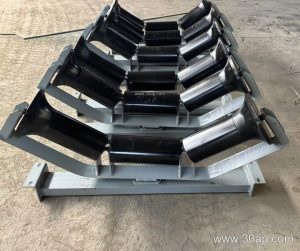
A conveyor belt support frame is the steel structure that holds the idlers in the right position under and above the belt. It carries the weight of the belt, the material and the idler sets, and it fixes the trough angle and the alignment of every station along the line. In a quarry, a cement plant or a power plant coal yard, the frame is the part that keeps the belt profile stable from the load point to the head end. Get the frame right and the belt tracks well; get it wrong and even a good belt will wander, spill and wear at the edges.
The frame is not the same as a conveyor bracket. A bracket is the small fixing piece that ties an idler shaft or a frame section to the main stringer. The support frame is the larger assembly that spans the conveyor width and sets the geometry of the whole station.
How the Frame Is Built
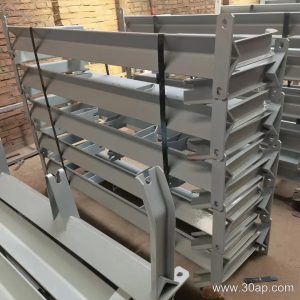
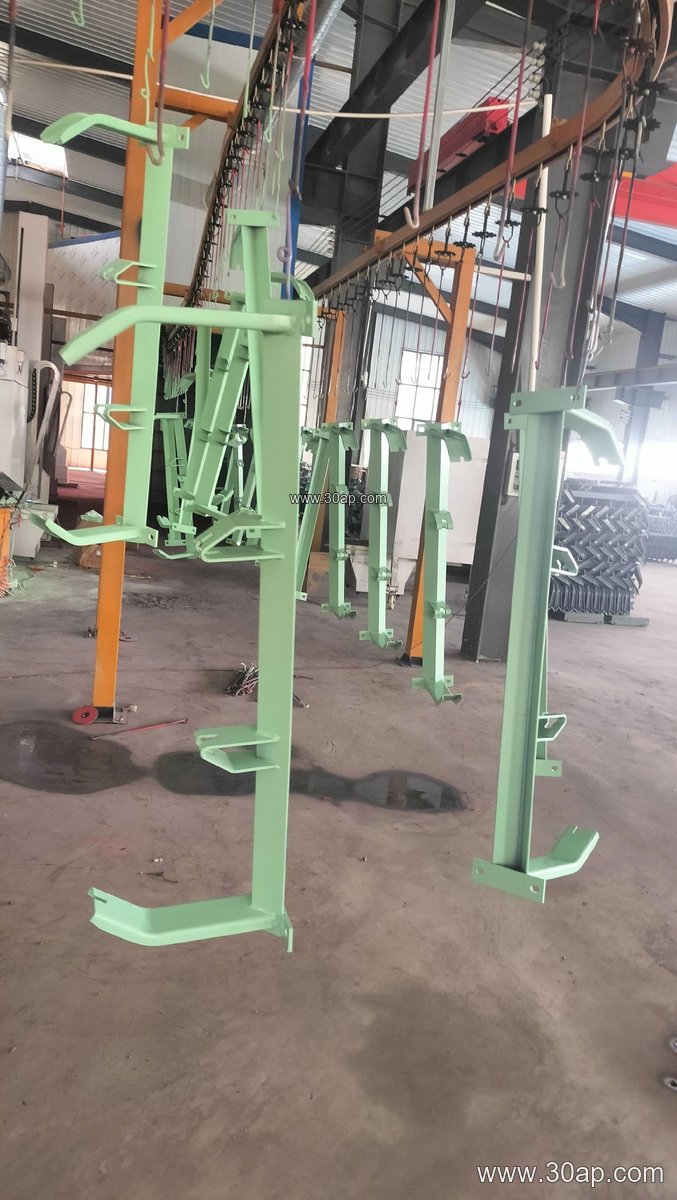
Most frames are fabricated from angle steel, channel steel or folded steel plate, then drilled or punched for idler mounting. A typical station has two stringers running along the conveyor, cross beams between them, and a set of mounting seats that accept the idler shafts. Surface treatment matters in wet or dusty plants, so hot-dip galvanizing or a heavy paint system is common for outdoor coal and ore lines.
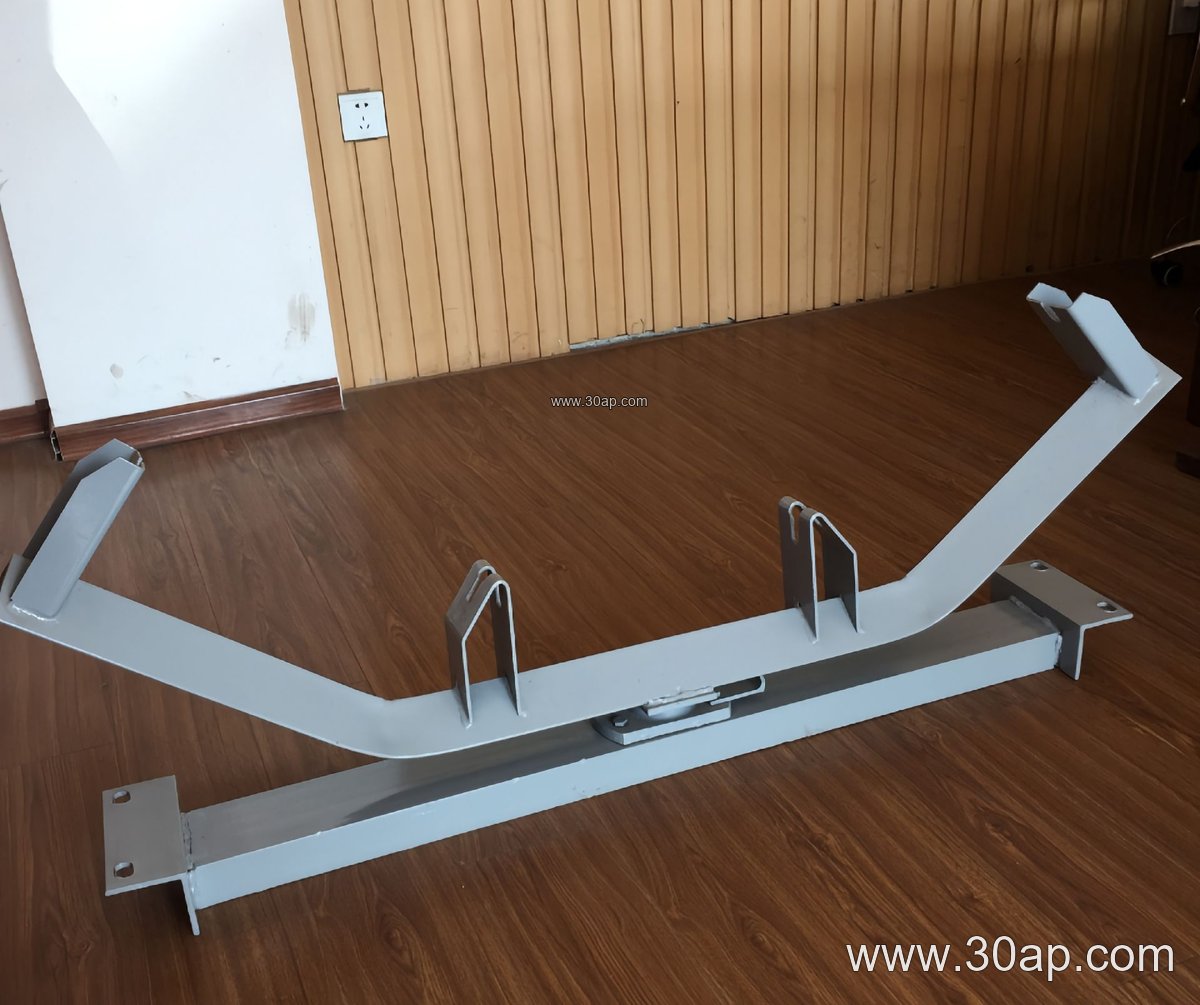
Frames are usually supplied in sections so they can be bolted on site. The hole spacing and cross beam length change with belt width and trough angle, so these are design values rather than fixed numbers. A frame ordered for B800 will not fit a B1200 line without new beams.
Common Frame Types on a Conveying Line
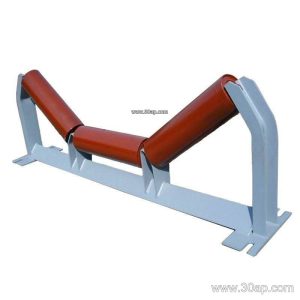
Troughing frames carry the loaded side of the belt and set the trough angle. Return frames support the empty side, and a V-return frame helps keep the belt centred on the way back. Transition frames sit near the pulleys, where the belt must change from flat to troughed without stress. Impact frames with cushion idlers are used under crusher discharge and transfer chutes. Self-aligning frames correct small tracking errors, and suspended frames are used where space under the belt is tight.
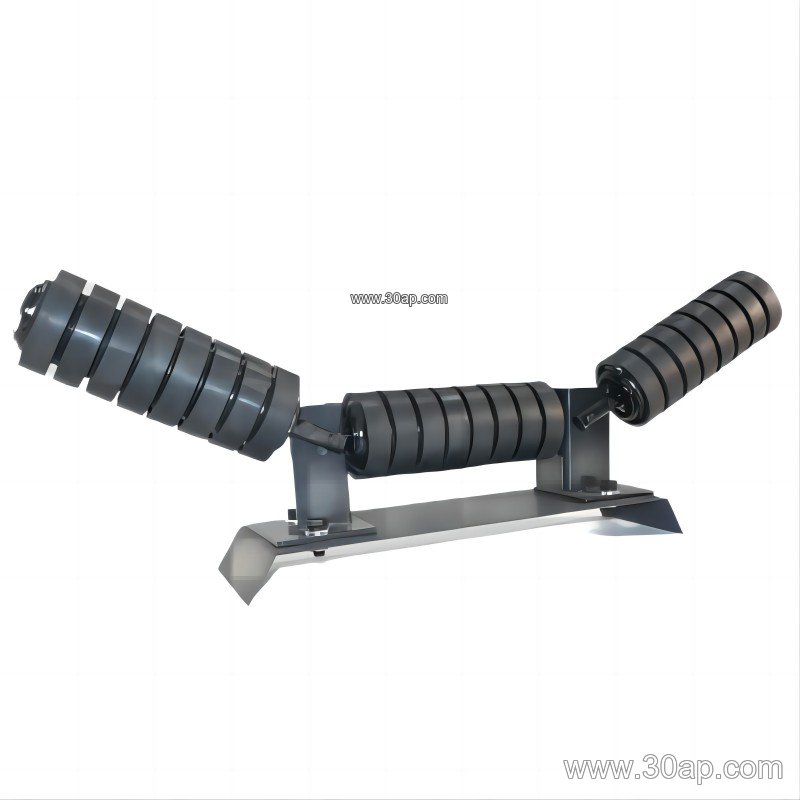
Adjustable frames let maintenance teams change the trough angle in steps. Fixed frames are simpler and cheaper but lock the profile. A plant that handles several products may prefer adjustable troughing stations, while a single-duty sand line can use fixed frames.
Matching Frame Geometry to Belt and Idler
Trough angle and idler diameter should be chosen together with belt width and material. The table below shows common combinations; these are examples, not mandatory pairings.
| Belt width | Trough angle | Idler diameter | Typical use |
|---|---|---|---|
| B500 | 20° | Ø89 | Small aggregate lines |
| B650 | 30° | Ø89 | Sand and gravel transfer |
| B800 | 35° | Ø108 | Cement plant raw material |
| B1000 | 35° | Ø133 | Coal yard, power plant |
| B1200 | 45° | Ø133 | Iron ore, heavy bulk |
| B1400 | 45° | Ø159 | Port and ship loading |
| B1600 | 35° | Ø159 | Large stone crushing |
| B1800 | 45° | Ø194 | High capacity ore lines |
A wider belt does not force one angle or one roller size. A B1200 line may run at 35° with Ø133 idlers for a smooth product, or at 45° with the same roller size for a higher capacity load. Forward-leaning frames, usually about 1.5° to 2°, are sometimes used to improve tracking on fast belts.
Where the Frame Fits in the Plant
In a limestone mine or a crushing and screening plant, troughing frames are exposed to impact and dust. In a coal-fired power plant, flame retardant and anti-static belt grades are common, and the frames must be sturdy enough to hold alignment under constant load. In a port terminal, long overland lines use many identical frames, so interchangeability and correct hole spacing save time during maintenance.
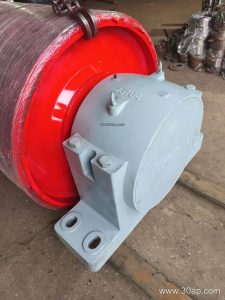
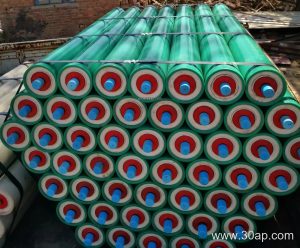
The frame works together with the conveyor belt, the idler roller and the conveyor pulley. A heavy-duty mining conveyor belt with a thick cover needs a frame that can handle the extra weight and stiffness. A steel cord conveyor belt on a long incline needs accurate frame alignment to avoid edge damage. On a pipe conveyor belt line, the frame holds special idler panels rather than simple troughing sets, so the design is different.
Buyer Checklist
- Confirm belt width, trough angle and idler diameter before ordering, and state them clearly on the drawing.
- Check mounting hole spacing and cross beam length against the existing stringers.
- Ask for the steel section, plate thickness and surface treatment.
- Decide between fixed and adjustable frames based on how often the duty changes.
- Plan transition and impact stations separately from standard troughing stations.
- Keep spare frames for high-wear points such as transfer chutes and crusher outlets.
A support frame is a simple steel component, but it decides how well the belt, idlers and pulleys work together. Buy on geometry, steel quality and fit, not on price alone.