What a Heavy-Duty Steel Conveyor Bracket Does
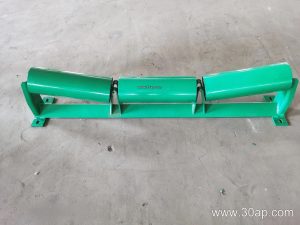
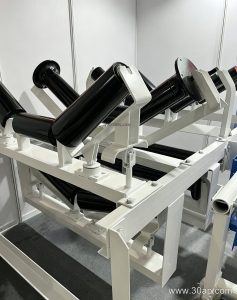
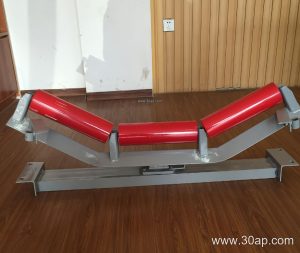
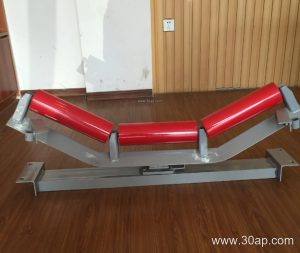
A Heavy-Duty Steel Conveyor Bracket is the structural support that holds idler rollers in the correct position under a moving belt. It carries the weight of the belt, the material load and the idler assembly, and it keeps the trough shape steady along the whole run. In a quarry, a coal washing plant or a cement kiln line, a light bracket soon distorts under impact and surge loads. The heavy-duty version is built from thicker sections so the trough geometry stays true and the idlers keep turning freely.
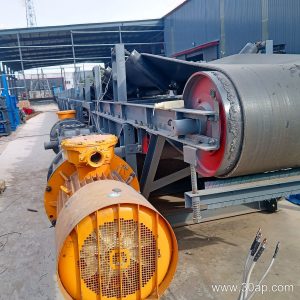
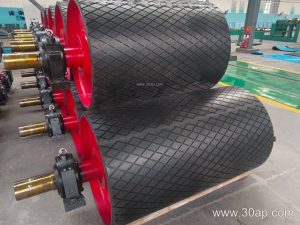
The bracket is not a standalone item. It works together with the conveyor belt, the conveyor pulley at the head and tail, and the idler roller sets it supports. On a long overland line feeding a crusher, the bracket is often the part that decides whether the belt tracks cleanly or wanders.
How the Bracket Is Built
Most heavy-duty brackets are fabricated from angle steel, channel steel or folded steel plate, then welded into a rigid frame. The cross member length and the mounting hole spacing change with belt width and trough angle, so they are set by design rather than taken as a fixed number. Common belt widths run from B500 and B650 up through B2000 and B2200, and the bracket frame is matched to the width it serves.
Surface treatment matters in wet or dusty plants. A painted or galvanized finish protects the steel from corrosion in a port terminal or a fertilizer store, while hot-dip galvanizing is often chosen for outdoor stockyard conveyors.
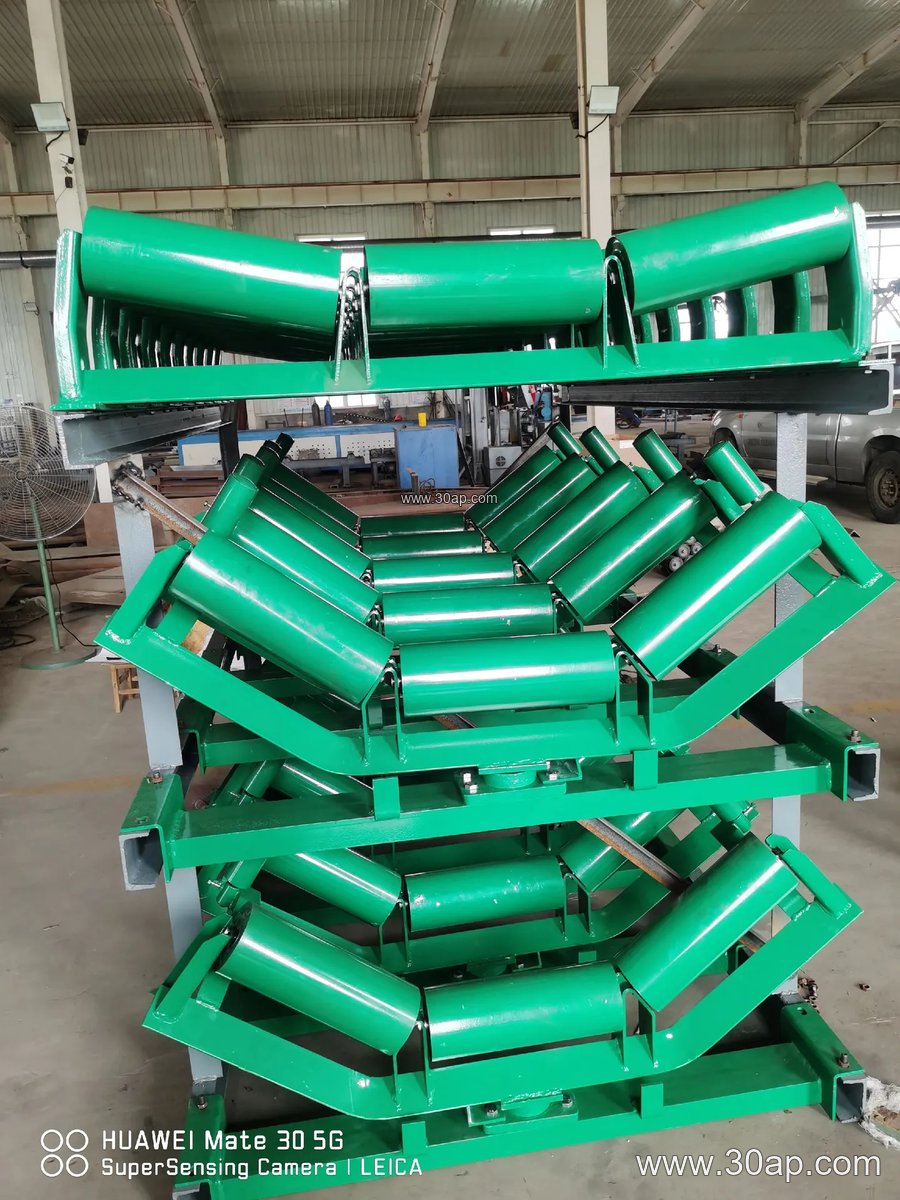
Common Bracket Types
- Troughing bracket, including the upper trough bracket that sets the trough angle
- Transition bracket near the head and tail pulleys
- Return bracket and V-return bracket for the empty side of the belt
- Impact bracket under the loading point
- Self-aligning bracket and forward-leaning bracket for belt tracking
- Suspended bracket and adjustable bracket for lines that need field adjustment
Trough Angle and Roller Diameter Selection
Trough angle and roller diameter are chosen together with the belt width and the material being moved. A 30 degree trough is common for general bulk material, while 35 degree and 45 degree troughs are used where higher capacity is needed and the belt can handle the extra flexing. A 20 degree trough suits wider belts and fragile material. Adjustable brackets allow the trough angle to be changed between these settings during commissioning.
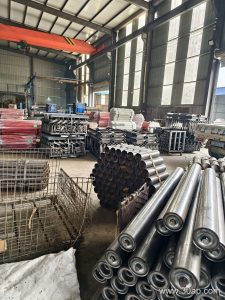
Roller diameter is usually matched to belt speed and load. Common sizes include Ø89, Ø108, Ø133, Ø159 and Ø194. A typical combination might be written as B800, 35 degree, Ø108, or B1200, 45 degree, Ø133. These are reference examples only; the correct match is confirmed by the conveyor design, and one belt width does not lock in a single trough angle or roller diameter.
| Belt Width | Typical Trough Angle | Typical Roller Diameter |
|---|---|---|
| B500 / B650 | 20 to 30 degree | Ø89 / Ø108 |
| B800 / B1000 | 30 to 35 degree | Ø108 / Ø133 |
| B1200 / B1400 | 35 to 45 degree | Ø133 / Ø159 |
| B1600 and above | 35 to 45 degree | Ø159 / Ø194 |
Values in the table are common ranges, not mandatory pairings. Final selection depends on belt tension, load and the transition distance at each end.
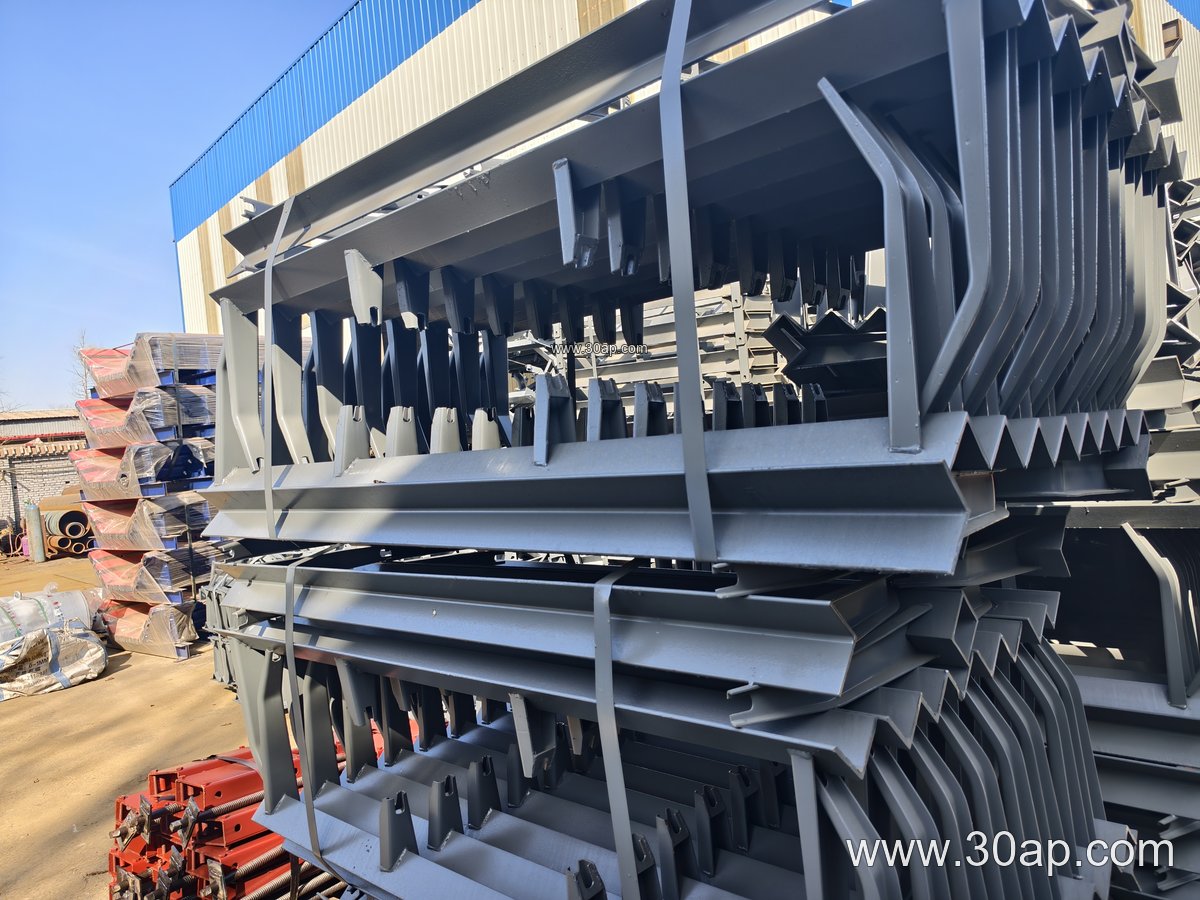
Where Heavy-Duty Brackets Are Used
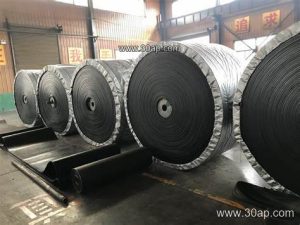
These brackets appear in iron ore and copper ore handling, in limestone quarries and aggregate plants, and in power plant coal yards where dust and impact are constant. A stone crushing line feeding a screen deck relies on impact brackets at the transfer point, while a tunnel muck removal conveyor uses compact suspended brackets in a confined space. In each case the bracket must suit the belt type above it, whether that is a steel cord conveyor belt on a long trunk line or a fabric core conveyor belt on a shorter yard conveyor.
Heat resistant conveyor belt and abrasion resistant conveyor belt installations also benefit from rigid brackets, because a flexing frame shortens belt life and stresses the splice.
What Buyers Should Check
Before ordering, confirm the belt width, the required trough angle, the roller diameter and the mounting hole spacing on the existing frame. Ask whether the bracket is fixed or adjustable, and whether it is for the carrying side, the return side or a transition zone. Check the steel section and the surface finish, since a thin bracket will not hold alignment under heavy load. Spare brackets kept on site reduce downtime when a frame is bent by a fallen rock or a jammed lump.
Buyers can view related conveyor components at www.minsconveyor.com, including idler roller, conveyor pulley and conveyor bracket options, and match them to the belt width and duty of the line.