What Conveyor Bracket Fabrication Really Involves
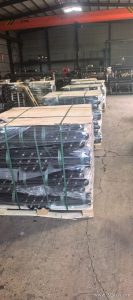
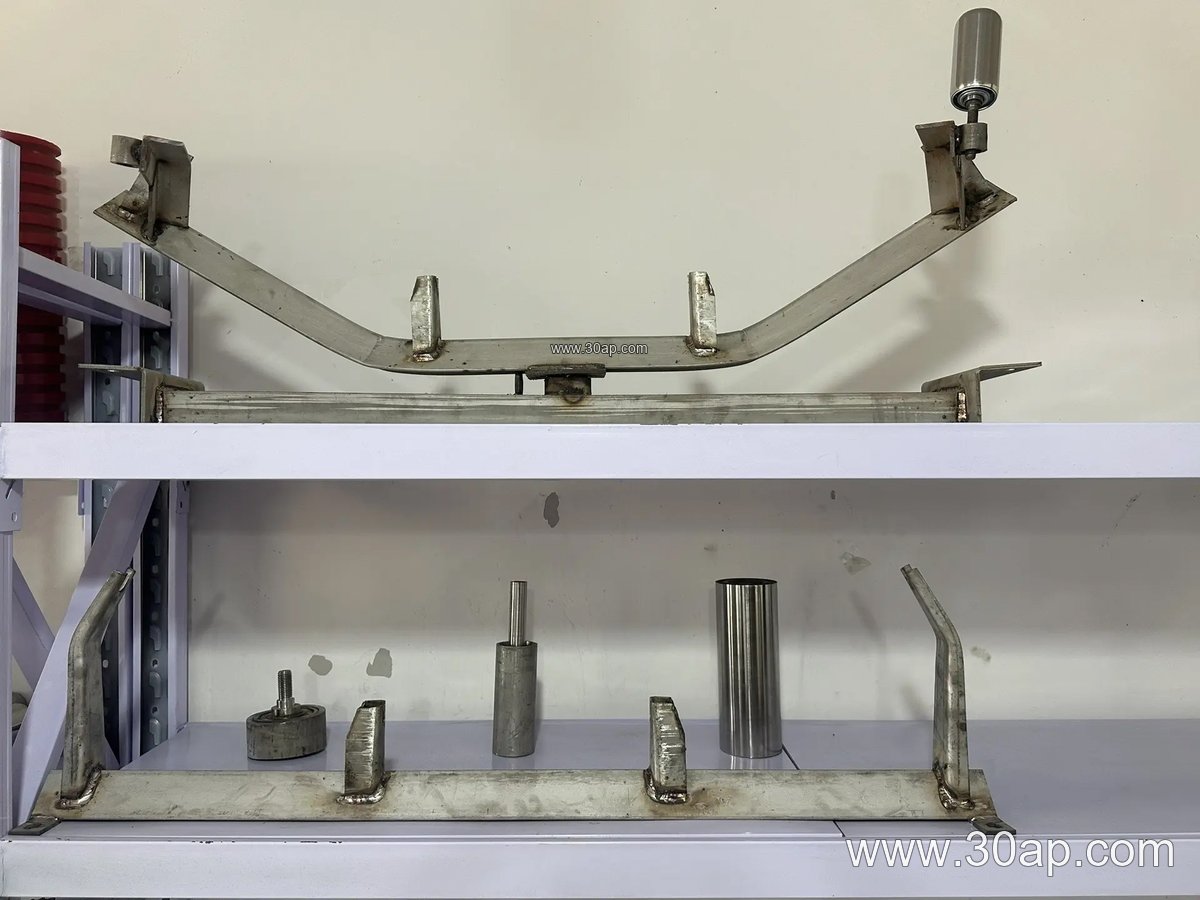
Conveyor bracket fabrication is the process of cutting, bending, drilling and welding steel into the support frames that hold idler rollers and carry the weight of a loaded conveyor belt. The bracket is a structural part, not an accessory. It sets the trough angle, keeps roller spacing consistent and transfers load into the conveyor stringer or foundation. In a quarry, a cement plant or a power station coal yard, a poorly made bracket shows up quickly as belt misalignment, roller wear and spillage.
The work usually starts from angle iron, channel steel or folded plate. Fabricators mark mounting holes, form the trough profile, then weld cross members and gussets. Hole spacing and beam length follow the belt width and trough angle, so a B800 frame and a B1400 frame are different assemblies even when they look similar at a glance. For more on matching frames to belts, see www.example.com/conveyor-bracket.
Main Bracket Types and Where They Sit
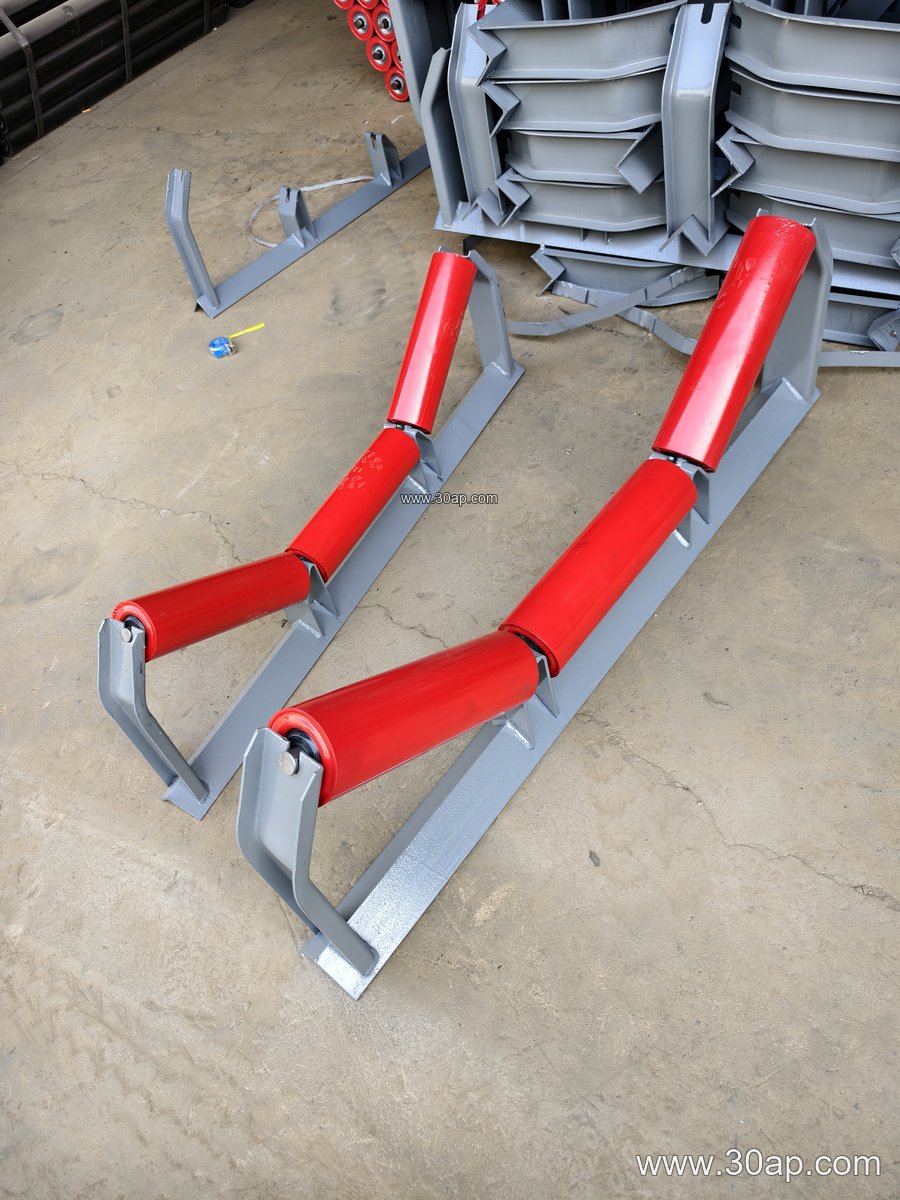
- Troughing bracket or upper trough bracket, carrying the loaded side of the belt
- Transition bracket, easing the belt from flat to troughed shape near pulleys
- Return bracket and flat lower bracket, supporting the empty strand
- V-return bracket, used where belt tracking needs extra control
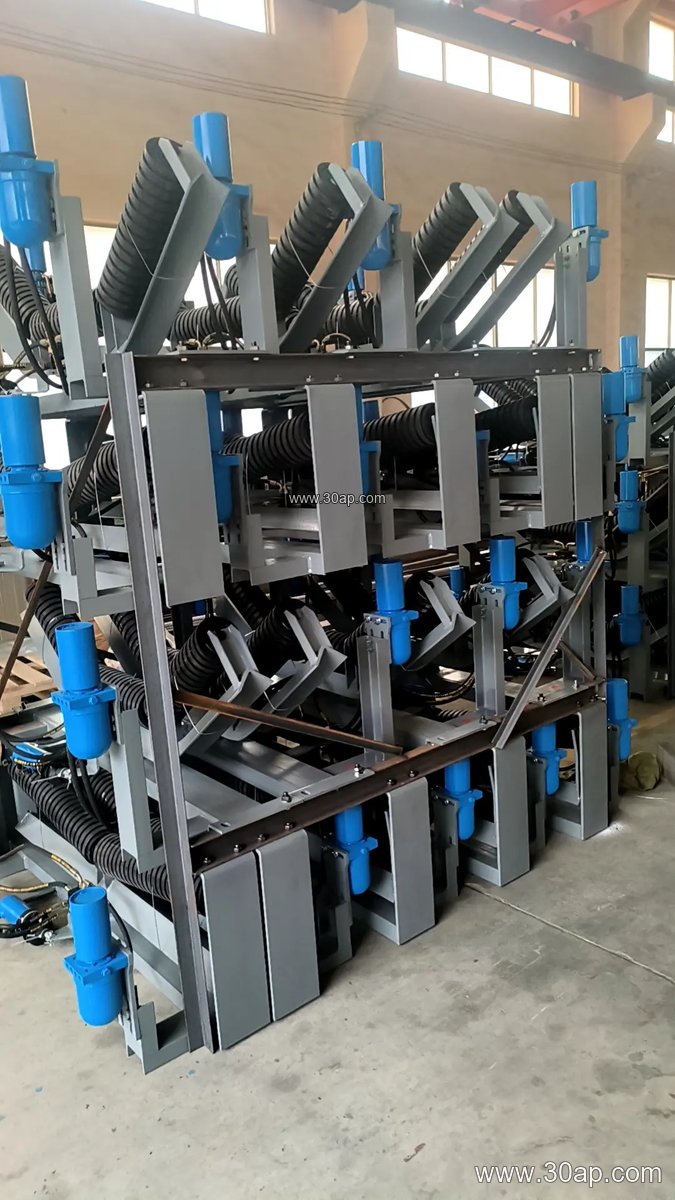
- Impact bracket, placed under loading points with cushion rollers
- Self-aligning and forward-leaning brackets, for training the belt
- Suspended and adjustable brackets, for lines that need field adjustment
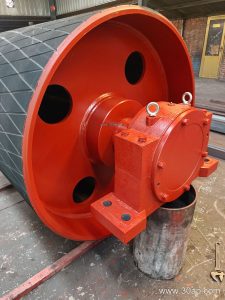
These are not interchangeable. A return bracket cannot replace a troughing bracket, and a bend pulley is a different component from a tail or drive pulley. Keeping the subtypes distinct during fabrication prevents assembly errors on site.
Fabrication Details That Matter
Squareness is the first check. If the two side plates of a troughing bracket are not parallel and level, the idler roller sits skewed and the belt drifts. Weld quality matters too, especially on impact brackets in a crusher discharge or a run-of-mine transfer point where shock loads are high.
Surface treatment is often overlooked. Paint or galvanizing should cover sharp edges and weld spatter, because a rough edge can catch a fabric core conveyor belt or a steel cord conveyor belt during threading. In dusty plants, drainage holes in the frame help avoid build-up.
Typical Reference Dimensions
The values below are common reference points, not fixed rules. Final dimensions are confirmed by design.
| Belt width | Trough angle | Roller diameter | Typical use |
|---|---|---|---|
| B500 | 20 to 30 degrees | Ø89 | Small transfer lines |
| B650 | 30 degrees | Ø89 or Ø108 | Aggregate and sand lines |
| B800 | 35 degrees | Ø108 | General bulk handling |
| B1000 | 35 to 45 degrees | Ø108 or Ø133 | Cement and coal conveyors |
| B1200 | 35 to 45 degrees | Ø133 or Ø159 | Heavy-duty mining conveyors |
| B1400 to B1600 | 35 to 45 degrees | Ø159 or Ø194 | Iron ore and port systems |
Forward-leaning brackets are commonly set at about 1.5 to 2 degrees. Adjustable brackets allow the trough angle to move between 20, 30, 35 and 45 degrees, which helps during commissioning.
Choosing the Right Fabrication for Your Line
A buyer should state the belt width, the expected load, the trough angle and the roller diameter before fabrication begins. If the conveyor carries an abrasion resistant conveyor belt in a stone crushing plant, or a flame retardant conveyor belt in an underground coal mining roadway, the bracket duty changes with the belt and the environment. Ask about steel thickness, weld inspection and hole tolerance. Confirm whether the frame is fixed or adjustable, and whether it suits a 500mm conveyor belt or a 2000mm wide conveyor belt.
For spare parts planning, request drawings with mounting dimensions so replacement brackets match existing stringers. Further notes on roller and frame pairing are available at www.example.com/idler-roller.
Installation and Maintenance Notes
Align brackets to a string line before tightening. Check roller rotation by hand after each section is assembled. In a port or ship loading conveyor, salt air makes coating quality important. In a sinter or cement plant, heat and dust call for periodic cleaning around the bracket seats. Replacing one worn bracket early is cheaper than replacing a damaged conveyor pulley or a torn belt later.
Good conveyor bracket fabrication is quiet work, but it decides how smoothly the whole conveyor runs. Review specifications with the fabricator at www.example.com/conveyor-pulley before the first cut.