What a Conveyor System Pulley Does
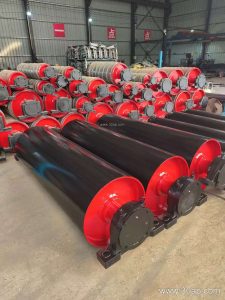
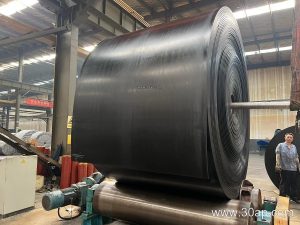
A conveyor system pulley is the rotating drum that turns a conveyor belt, keeps it tracking, and transfers the load from the belt to the conveyor frame. In a typical bulk handling line, it is the component that decides where the belt is driven, where it is returned, and how tension is maintained. Mines, cement plants, power stations, and aggregate yards all rely on these drums, and the choice of drum type, diameter, and lagging is often what separates a smooth-running line from one that slips, mistracks, or wears belts early.
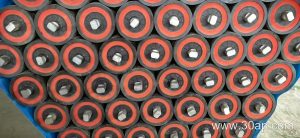
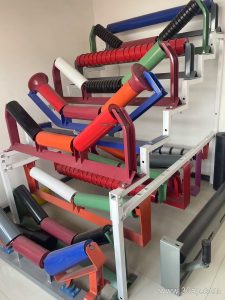
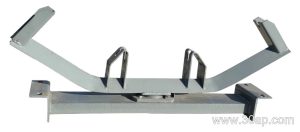
Because the drum is not a stand-alone product, it works together with the conveyor belt, idler roller, and conveyor bracket. A well-matched set keeps the belt centred and extends service life across the whole conveyor system.
Main Types and Their Positions
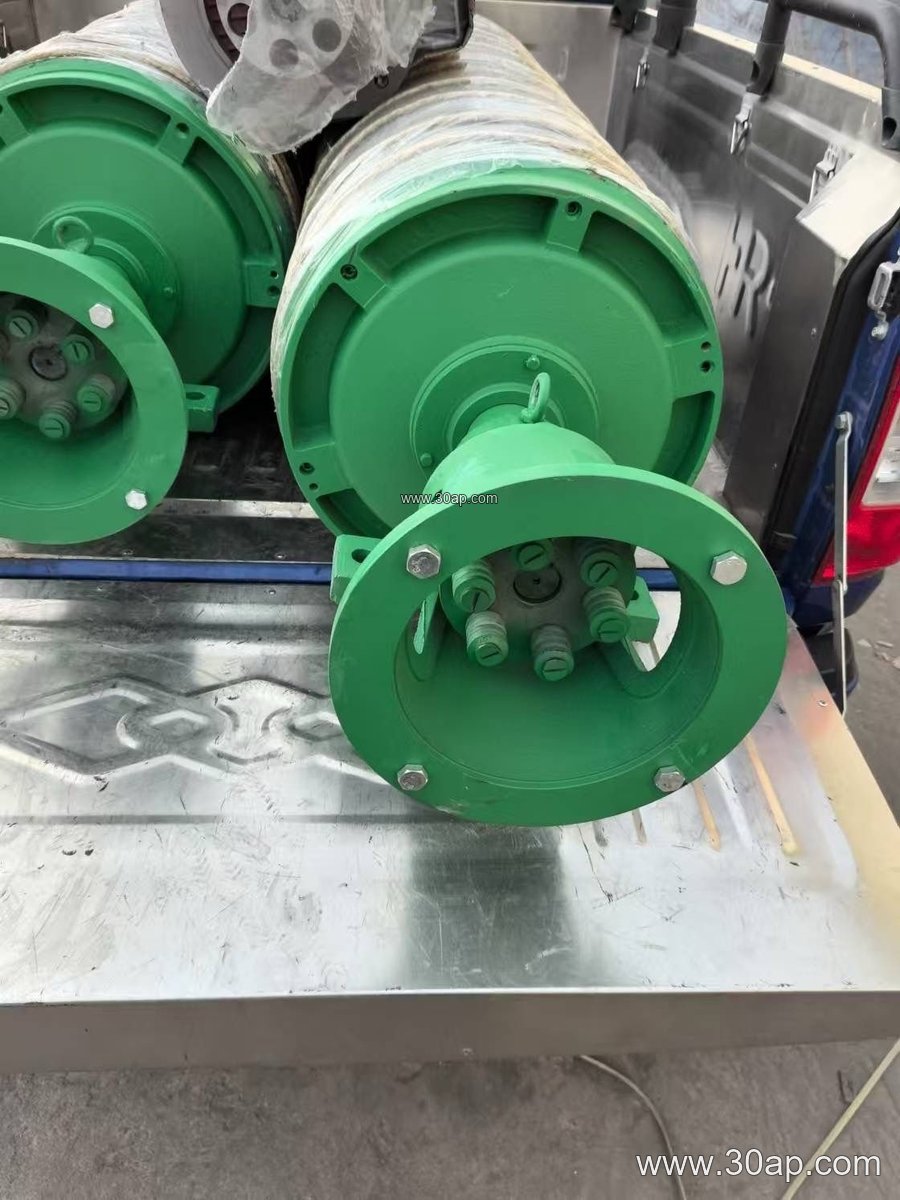
Drive pulleys, also called head pulleys, transmit power from the gearbox to the belt. Tail pulleys sit at the return end and redirect the belt. Bend pulleys change belt direction around take-up units, while snub pulleys increase wrap angle on the drive drum. These are distinct roles and are not interchangeable. An electric drum is a different arrangement in which the motor and reducer are built inside the drum, useful where space is tight.
- Drive or head pulley: power input, high torque, often lagged
- Tail pulley: belt return, sometimes self-cleaning or wing type
- Bend and snub pulleys: routing and wrap angle control
- Take-up pulley: tension adjustment in the take-up frame
For heavy-duty mining conveyor belts and long overland lines, the drive drum usually carries the highest load and needs the most careful specification.
Construction and Surface Options
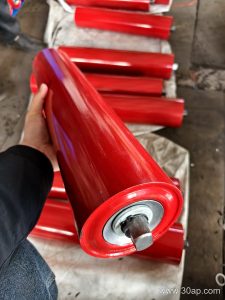
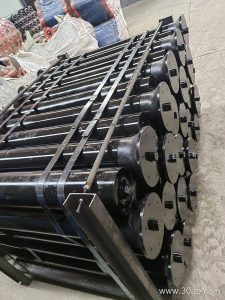
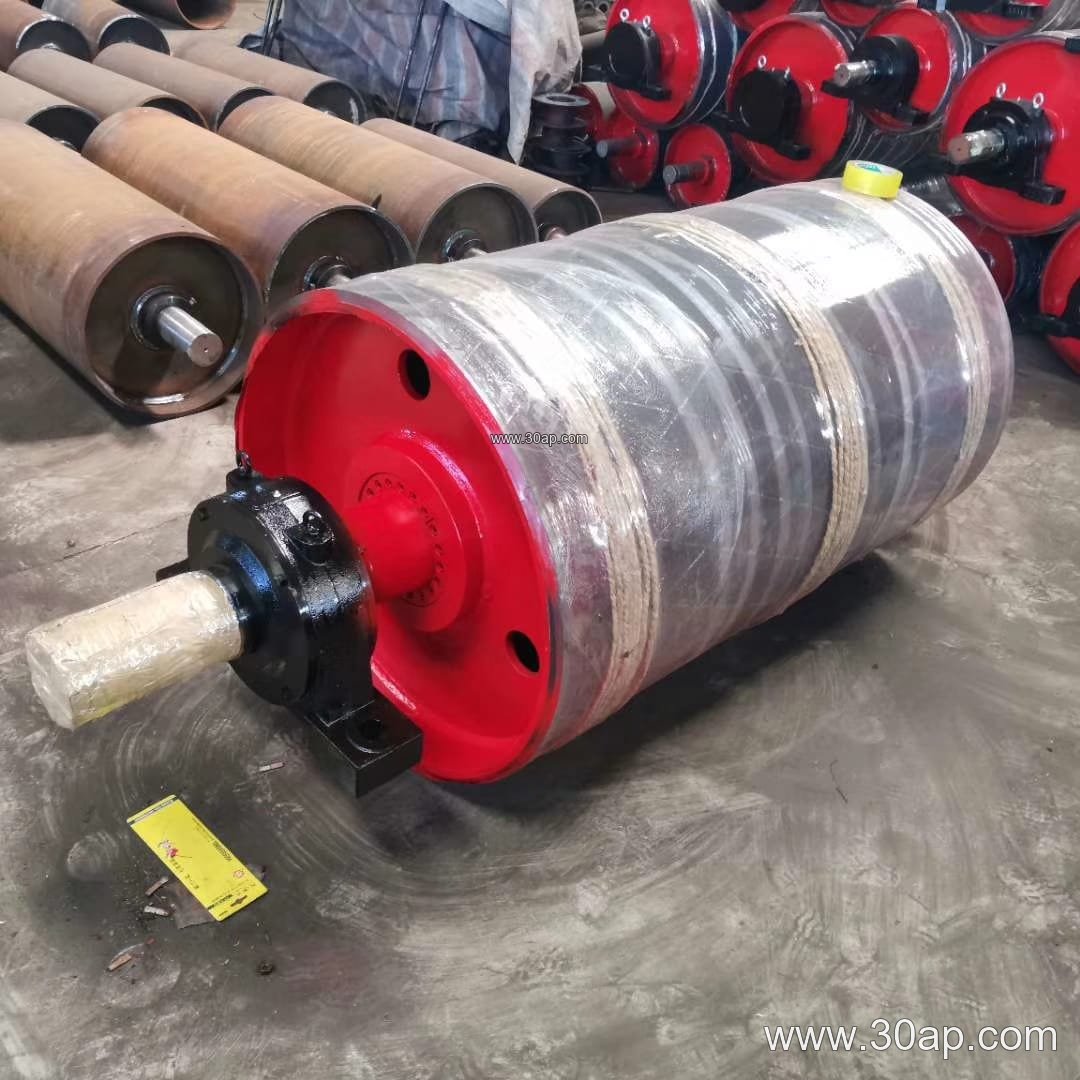
A standard drum is built from a steel shell, end discs, a shaft, and bearing housings. The shaft diameter is set by torque and load, not by belt width alone: common shaft sizes run from Ø50 to Ø200 mm depending on duty. Shell diameter commonly ranges from Ø200 to Ø1800 mm, and face width is usually slightly wider than the belt, for example about 500 mm face for B400 and about 1400 mm for B1200.
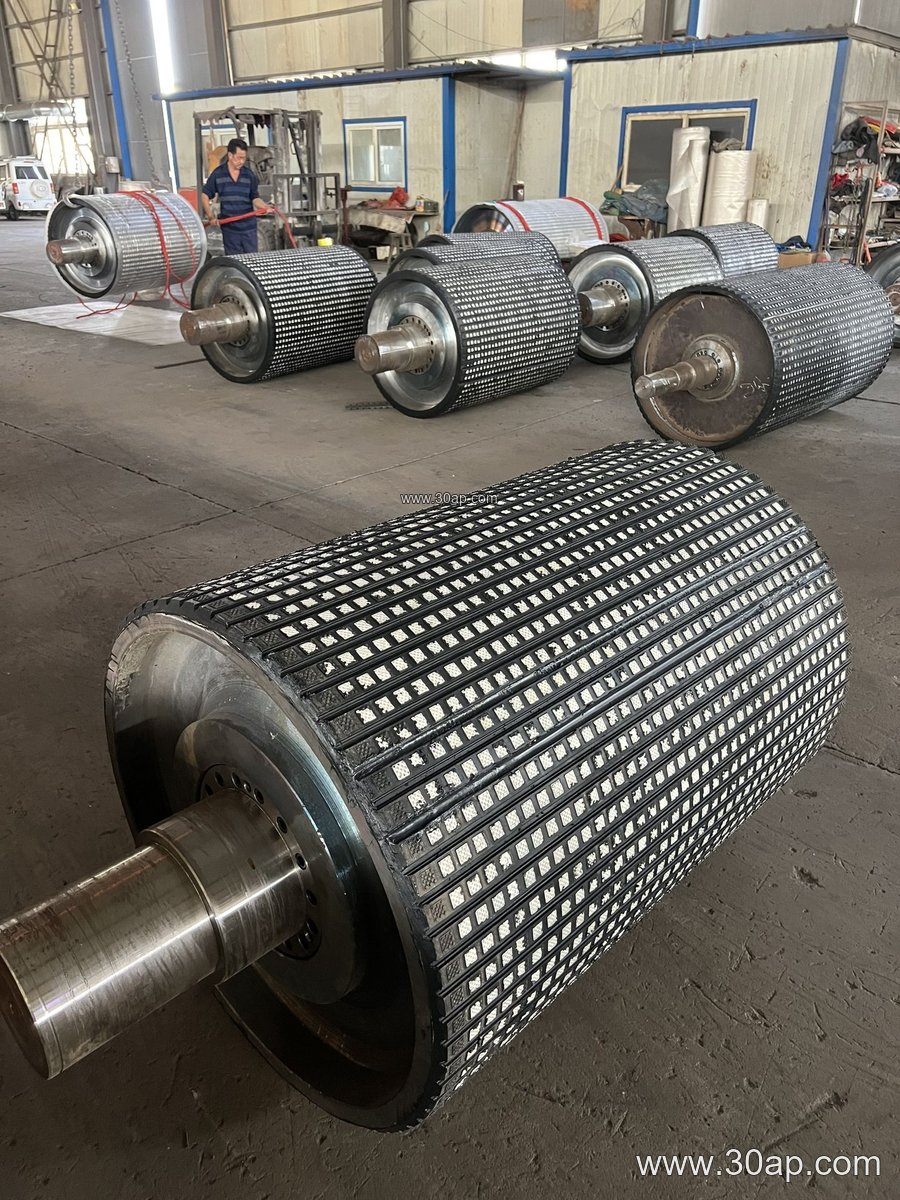
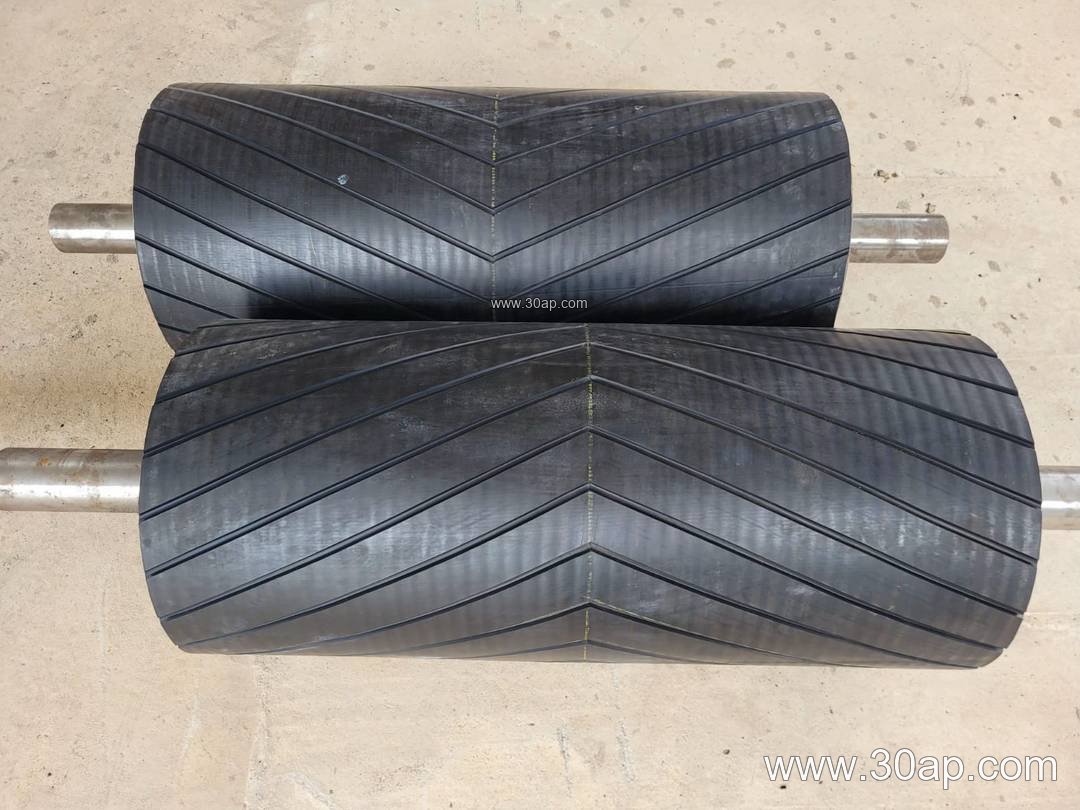
Lagging improves grip and protects the shell. Plain, cold-bonded rubber, hot-vulcanised rubber, diamond, chevron, and ceramic lagging are all available, with common thicknesses of 8, 10, 12, 15, and 20 mm. Diamond lagging sheds water well, while ceramic lagging suits high-traction drives in wet or dusty conditions.
| Parameter | Common Range |
|---|---|
| Belt width | B400 to B2400 |
| Drum diameter | Ø200 to Ø1800 mm |
| Shaft diameter | Ø50 to Ø200 mm |
| Lagging thickness | 8, 10, 12, 15, 20 mm |
| Surface | Plain, rubber, diamond, chevron, ceramic |
Examples such as B800 × Ø500 or B1200 × Ø1000 are useful references, but no single belt width fixes one drum diameter. Designers balance belt tension, wrap angle, and belt stiffness.
Where These Drums Are Used
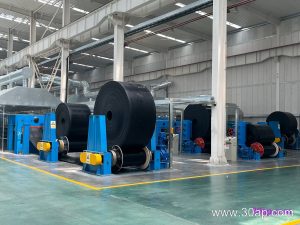
In a limestone quarry or sand and gravel line, a drive pulley at the head end pulls an abrasion resistant conveyor belt through the crusher discharge. In a coal washing plant or power station coal yard, flame retardant and anti-static belts run over lagged drums where dust and moisture are present. Cement plants use them on clinker and raw meal lines, and ports use large drums on ship loading conveyors handling bulk material. In each case the drum must suit the belt type, whether EP conveyor belt, NN conveyor belt, steel cord conveyor belt, or a corrugated sidewall belt on a steep incline.
Buyer Checklist
Before ordering, confirm belt width and belt type, the drum position, expected tension and torque, and the environment. Specify lagging only where traction or wear justifies it, and check that the shaft and bearings match the actual load. Ask for the face width, diameter, shaft size, bearing type, and balancing standard so the drum fits the existing conveyor bracket and take-up frame. A drum matched to the duty, rather than copied from an old drawing, keeps the conveyor belt running straight and reduces downtime.