What a Port Conveyor Idler Does at the Terminal
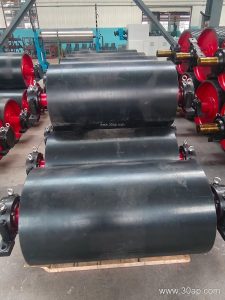
A port conveyor idler is the rotating support that carries the conveyor belt along a ship loading or unloading line. At a bulk terminal, the idler roller set holds the belt in its trough, absorbs the load of coal, ore, grain or aggregate, and keeps the belt tracking straight between the head and tail. Compared with a conveyor pulley, which drives or redirects the belt at the ends of the run, the idlers work continuously along the carrying and return sides. Drive, tail and bend pulleys are separate components and are never a substitute for the idler set.
Because terminal conveyors often run at high capacity and in salty, dusty air, the port conveyor idler must resist corrosion and impact. A well-built idler roller protects the conveyor belt from edge damage and keeps the whole line stable.
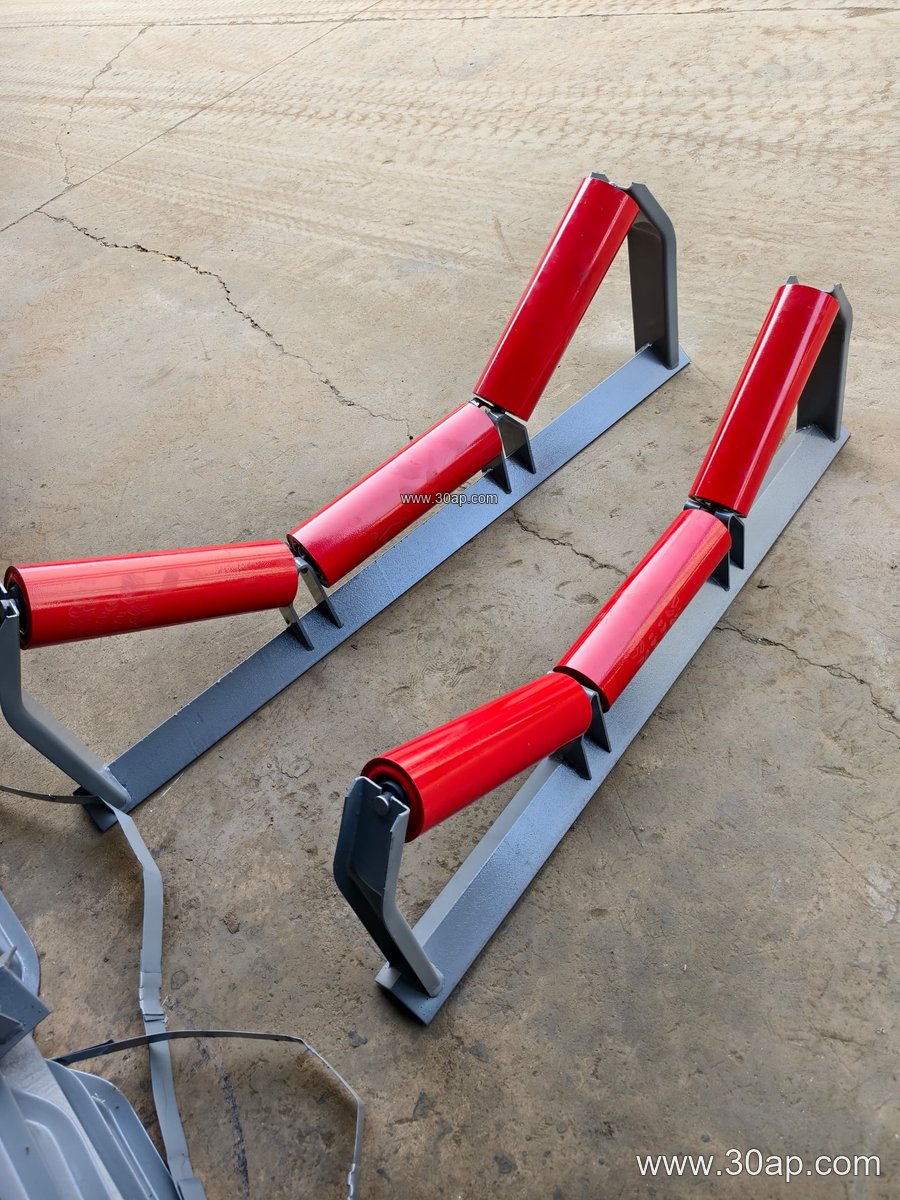
How the Idler Roller Is Built
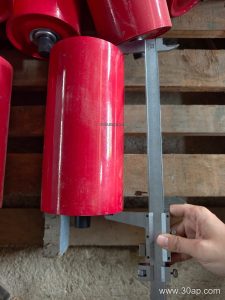
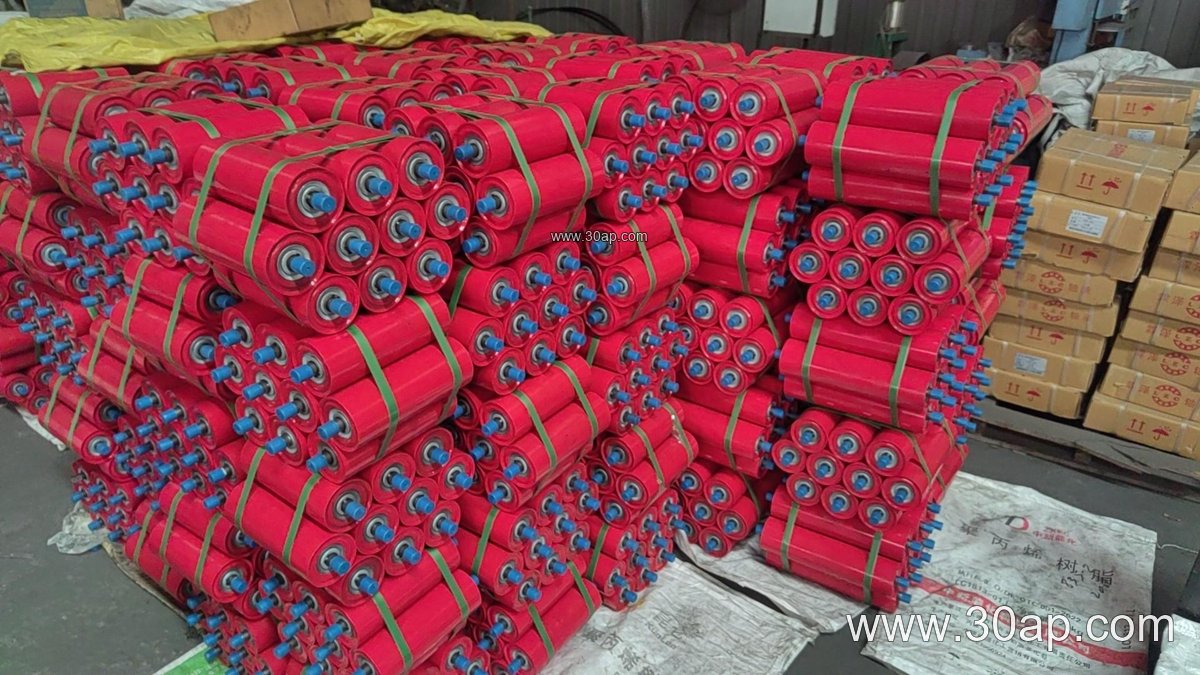
The basic structure is a steel tube shell, a shaft, bearing housings and a sealing arrangement. Common roller diameters include Ø89, Ø102, Ø108, Ø127, Ø133, Ø159 and Ø178, with larger sizes used where belt loads are heavy. Shell materials range from plain steel tube to nylon, ceramic and rubber rings. Rubber ring idlers are often chosen at transfer points where lumps drop onto the belt, while ceramic or nylon covers help in wet, sticky or abrasive service.
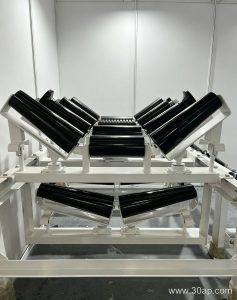
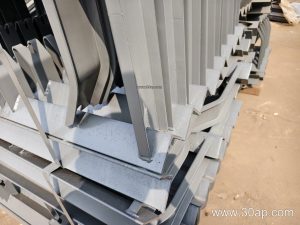
Bearings are typically deep-groove ball types such as 6204, 6205, 6305, 6306, 6308 or 6310. The bearing number is matched to the shaft and load, not fixed to one roller diameter. Sealing is the detail that decides service life at a port: a labyrinth seal plus grease retention keeps fine dust and salt spray away from the bearing. The idler is mounted in a conveyor bracket or frame, and a three-roll troughing set is the usual arrangement on the carrying side.
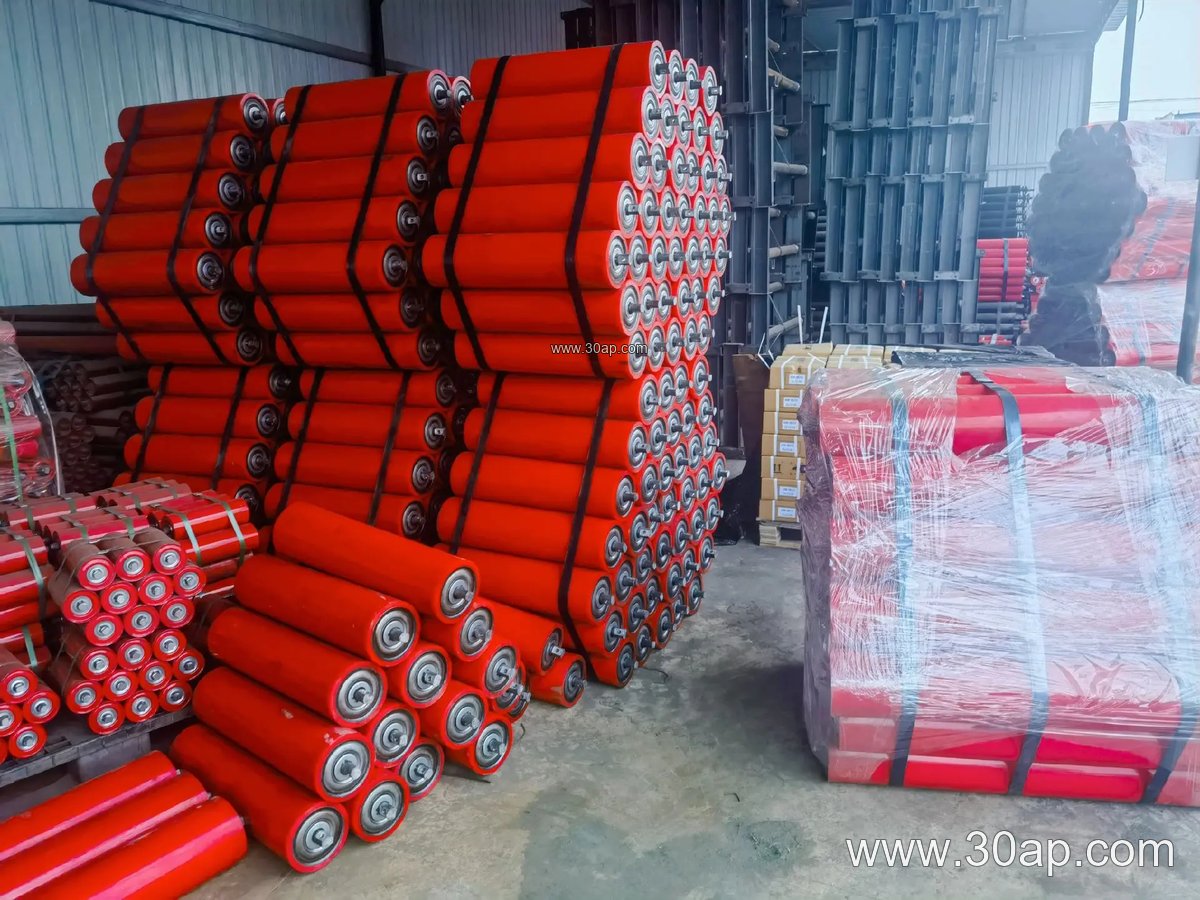
Troughing Sets, Angles and Belt Width
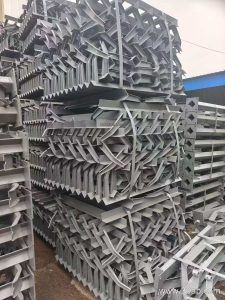
On the carrying run, a three-roll troughing set is common, with trough angles of 20, 30, 35 or 45 degrees. A steeper angle gives a deeper material profile and suits high-capacity lines, but it also increases the load on the side rollers. Belt width and roller length are chosen together. Typical examples only: a B800 belt may use a 315 mm roller in a three-roll set, a B1200 belt around 465 mm, and a B1600 belt around 600 mm. Side rollers and centre rollers can differ, so these are design references rather than fixed pairs.
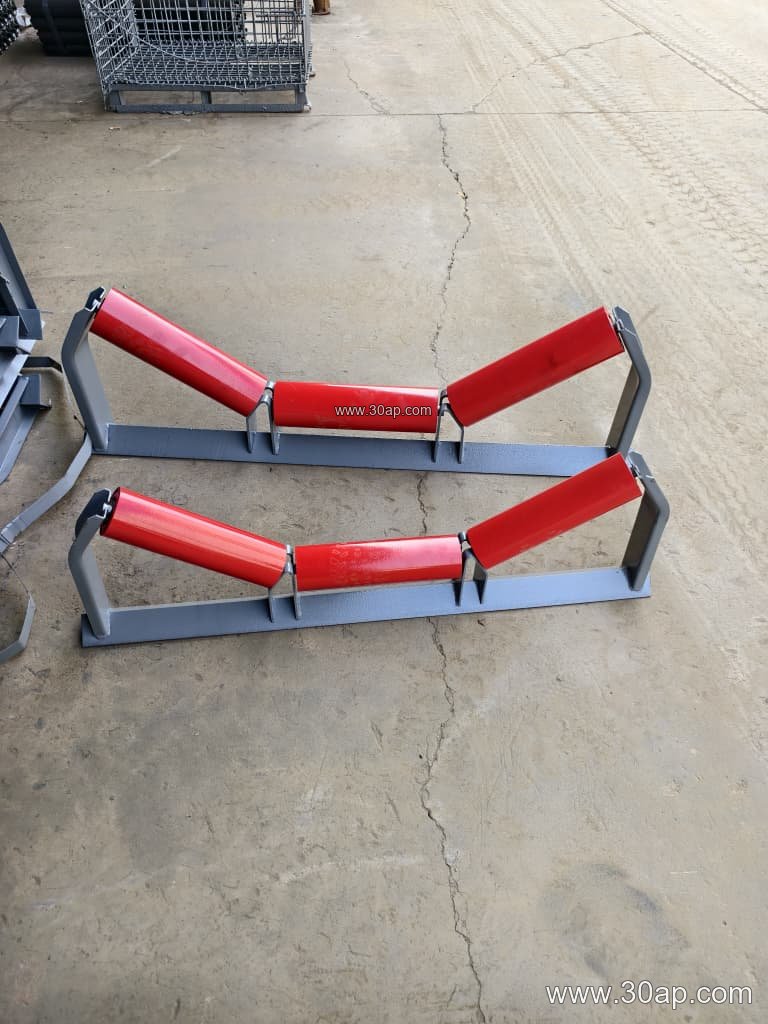
Return side idlers are usually flat or V-shaped, and training idlers with a slight forward tilt of about 1.5 to 2 degrees help keep the belt centred. Impact idlers with rubber rings are placed under the loading chute, and spiral or comb idlers help release sticky material.
Where Port Conveyor Idlers Are Used
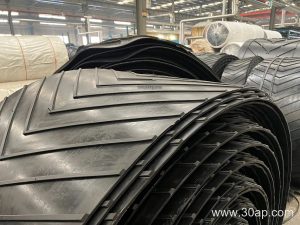
Port terminals handling coal, iron ore, copper ore, fertiliser or grain rely on long inclined conveyors. The same idler design appears in a power plant coal yard and in a cement plant unloading line. In these environments, the choice of conveyor belt matters as much as the idler: an abrasion resistant conveyor belt, a flame retardant conveyor belt for coal, or a steel cord conveyor belt for long high-tension runs all influence roller spacing and load. A heavy-duty mining conveyor belt or a bulk material conveyor belt moving dense ore needs a stronger idler frame and larger shaft than a light grain line.
Selection Notes for Buyers
- Match roller diameter and bearing size to the actual belt load and speed, not to belt width alone.
- Confirm the trough angle and roll length with the conveyor bracket drawing before ordering.
- Choose the shell and seal for the local conditions: salt air, washdown, dust or sticky cargo.
- Check that the idler set suits the belt type, whether EP conveyor belt, NN conveyor belt or steel cord.
- Ask for the grease and sealing specification, since this drives maintenance intervals.
Good maintenance practice includes checking for seized rollers, worn shells and loose brackets, and replacing a failed idler before it damages the belt. For terminal operators, a consistent port conveyor idler standard across the line simplifies spare parts and keeps ship loading on schedule. Further details on matching idlers with conveyor belt, conveyor pulley and conveyor bracket layouts are available from the supplier.