What a Mining Sealed Idler Is
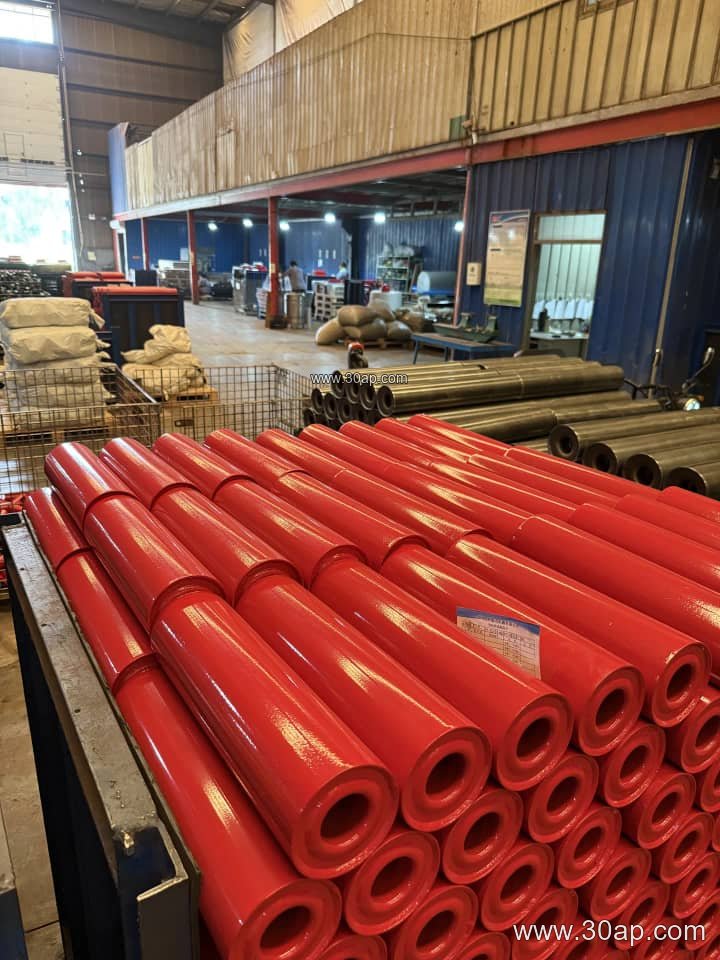
A mining sealed idler is a carrying or return roller built with a protected bearing housing so that dust, grit, and moisture stay away from the rotating parts. On a conveyor belt system, these rollers support the belt and the material load, and the seal is what keeps them turning freely in conditions where an open bearing would fail quickly. The sealed idler roller is a small component compared with the conveyor pulley, but a seized roller can damage the belt edge, raise power demand, and force unplanned stoppages.
In practice, the sealed design matters most on lines handling abrasive bulk material. A quarry conveyor belt or an ore conveyor belt moves rock dust that finds every gap, while a coal mining conveyor belt in a wash plant adds water to the mix. Sealed idlers are also a sensible choice for a cement plant conveyor belt, a power plant coal conveyor belt, and a port conveyor belt exposed to salt air and rain.
How the Seal and Bearing Package Is Built
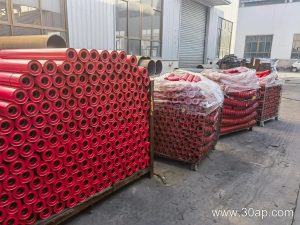
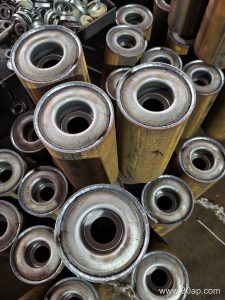
The typical construction is a steel tube shell pressed onto a shaft, with bearing housings at each end. The seal is usually a multi-lip arrangement, often with a labyrinth passage and a contacting lip, backed by grease. Some designs add a protective cap or a sacrificial ring so that the lip does not run directly against abrasive slurry. The shell surface may be plain steel, nylon, ceramic, or fitted with rubber rings for impact zones.
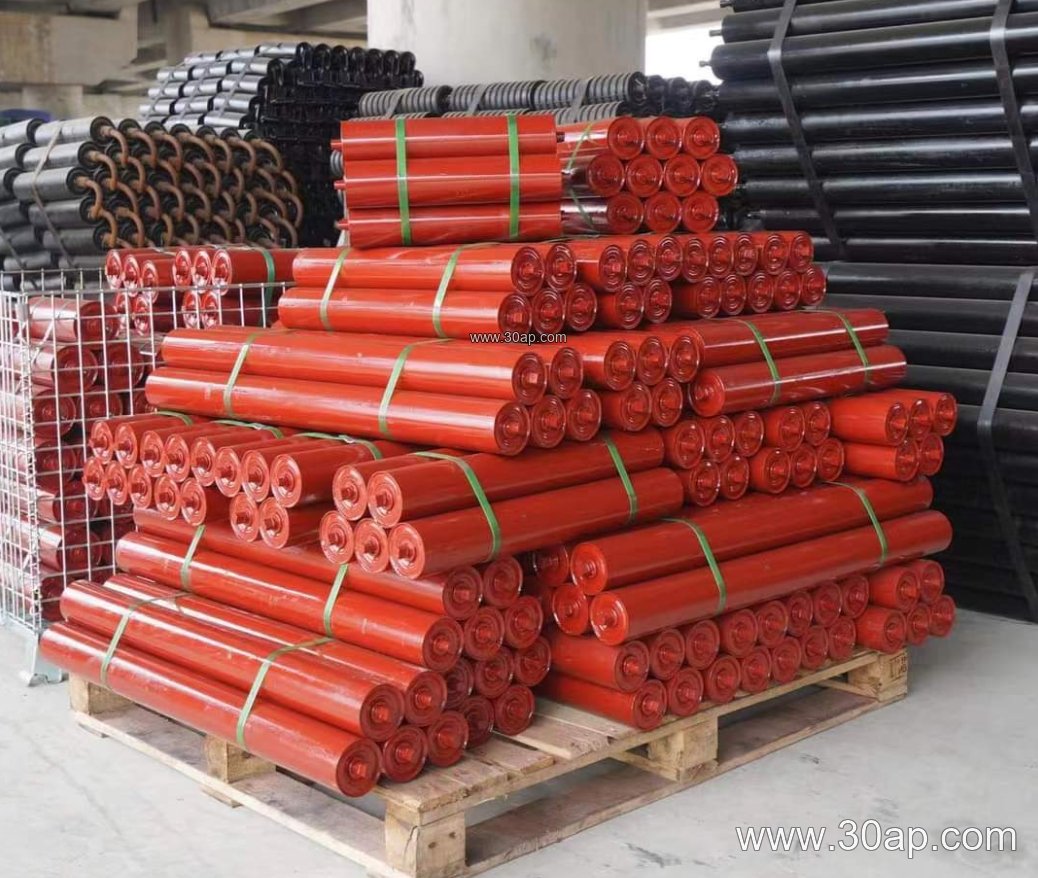
Common roller diameters include Ø89, Ø108, Ø127, Ø133, Ø159, and Ø178, with larger sizes such as Ø194 and Ø219 used on heavy-duty lines. Bearings are commonly 6205, 6305, 6306, 6308, or 6310, matched to the load and shaft design rather than to belt width alone. A sealed idler should be greased at the interval recommended by the supplier, and over-greasing should be avoided because excess pressure can push the lip seal out of position.
Where Sealed Idlers Fit on the Conveyor
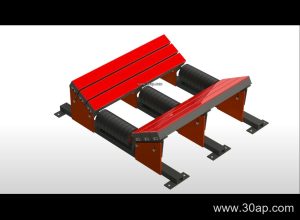
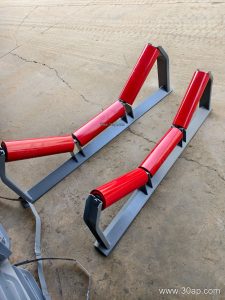
The main subject here is the sealed idler, and it appears in several positions. Troughing idlers form the carrying run, return rollers support the empty belt, and impact idlers sit below the loading point. A sealed impact idler with rubber rings is common under a crusher discharge, where lumps fall from height. Transition idlers near the head and tail help the belt change from flat to troughed without stressing the edges.
The belt itself is a separate item, but the two must suit each other. A heavy-duty mining conveyor belt with a thick cover needs rollers that can carry the weight without flat spots, while a thin EP conveyor belt on a long overland line benefits from low rolling resistance. Buyers often pair sealed rollers with an abrasion resistant conveyor belt or a flame retardant conveyor belt for underground coal mining conveyor belt duty, and with a heat resistant conveyor belt near kilns and sinter coolers. On steep inclines, a chevron conveyor belt or a corrugated sidewall conveyor belt may be used, and the idler selection then follows the belt profile and the load pattern.
Sizes and Selection Notes
Roller length follows belt width, trough angle, and the idler arrangement. The table below gives common examples for three-roll troughing sets; side rollers and centre rollers can differ, so these are references, not fixed matches.
- B500 belt width: roller length about 200 mm
- B650 belt width: roller length about 250 mm
- B800 belt width: roller length about 315 mm
- B1000 belt width: roller length about 380 mm
- B1200 belt width: roller length about 465 mm
- B1400 belt width: roller length about 530 mm
- B1600 belt width: roller length about 600 mm
- B1800 belt width: roller length about 670 mm
- B2000 belt width: roller length about 750 mm
Trough angles of 20, 30, 35, and 45 degrees are common. A 35 degree set is often used on medium-width lines, while 45 degrees suits lines that must hold a deep material bed. Forward tilt of about 1.5 to 2 degrees is used on some training idlers to help keep the belt centred, but this is a separate feature from the seal.
What a Buyer Should Check
- Confirm the shaft diameter and bearing number rather than assuming them from belt width.
- Ask how the seal is arranged and whether it is suitable for wash-down or dry dust.
- Match the roller shell and surface to the material: rubber rings at transfer points, ceramic or nylon where sticky fines build up.
- Check that the conveyor bracket and frame spacing accept the chosen roller length and shaft end type.
- Review the greasing plan and the expected service life with the supplier.
Sealed idlers do not replace good belt training or proper loading chutes, but they reduce the chance that a single gritty bearing stops a line. For more on matching rollers with conveyor belt, conveyor pulley, and conveyor bracket choices, contact the supplier with the belt width, trough angle, load, and operating environment.