What a Turning Pulley Does on a Conveyor
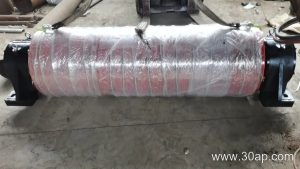
A turning pulley is the drum that changes the direction of the conveyor belt, guiding it from the carrying run back to the return run or around a tensioning station. In many plants it is simply called a bend pulley, and that name is accurate: its job is redirection, not power transmission. It should not be confused with a drive pulley that transmits torque, or a tail pulley that supports the belt at the loading end. Those are separate positions with separate duties, and mixing them up leads to poor specification decisions.
Because the turning pulley sees the belt at a relatively small wrap angle, its load profile differs from a head pulley. It still carries tension, and it still has to rotate freely, but the design emphasis shifts toward bearing reliability, shell stiffness and surface condition. In a quarry, a cement plant or a power plant coal yard, a seized bend pulley can mistrack the belt and damage edges within hours, so the component deserves real attention during selection.
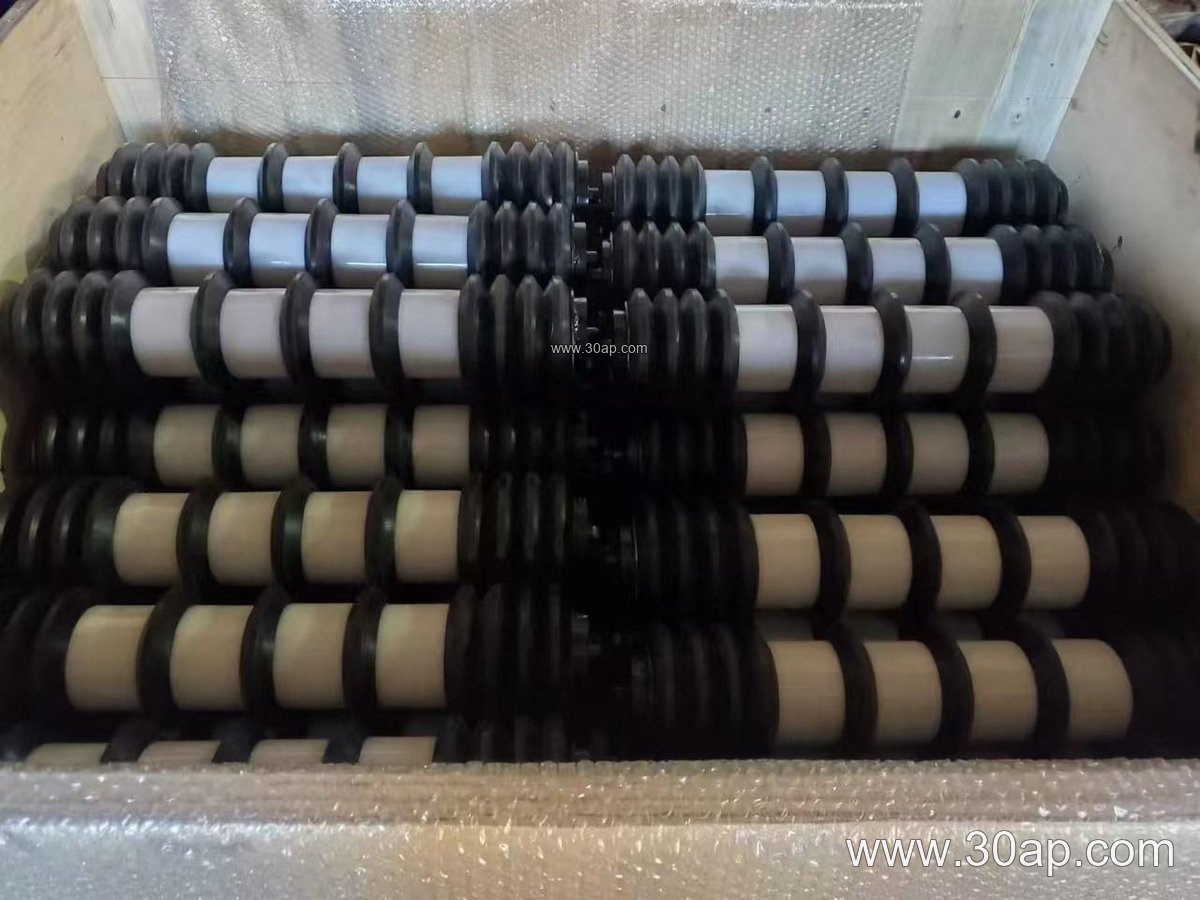
Construction of the Drum
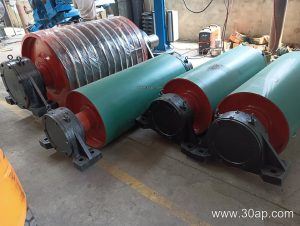
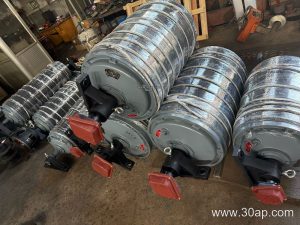
Most turning pulleys are built from a rolled steel shell welded to end discs, with a through shaft or stub shafts mounted in bearing housings. The shell is machined or ground so the belt runs on a true cylindrical surface. Bearing selection follows the calculated radial load, which depends on belt tension, wrap angle and the weight of the drum itself. Lubrication type, sealing arrangement and the ease of bearing replacement are practical details that matter more on a turning pulley than on a large drive drum, because access is often restricted.
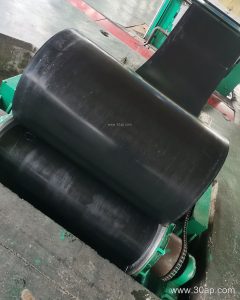
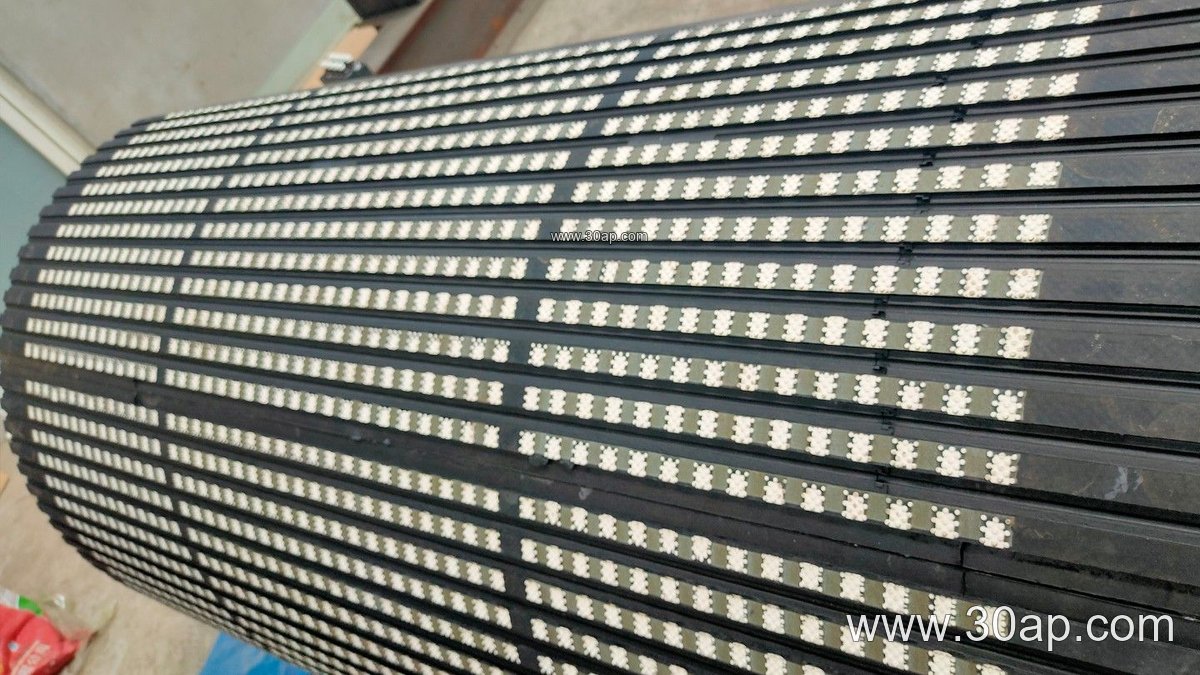
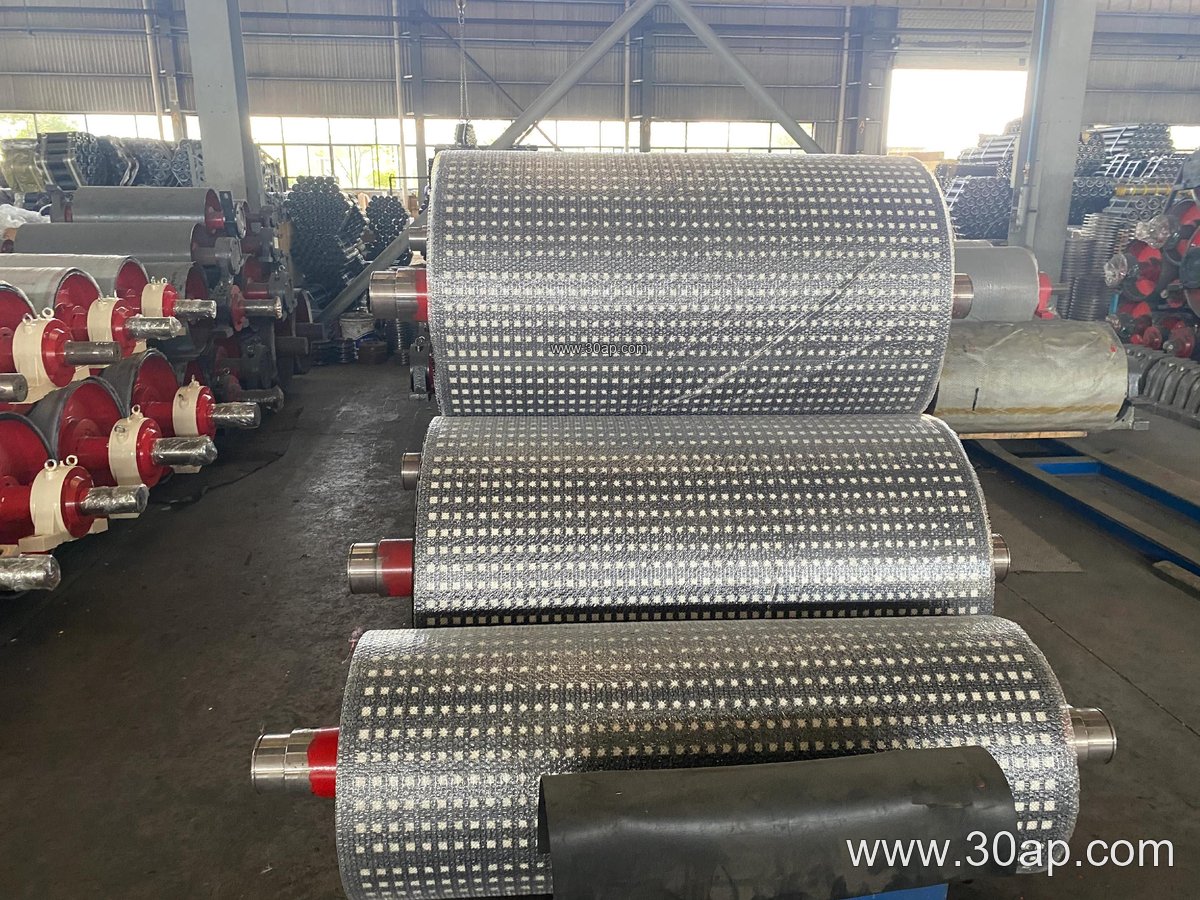
Surface treatment is usually simpler than on a drive pulley. Plain finish is common where the belt is clean and tracking is stable. Rubber lagging, either cold-bonded or hot-vulcanized, can be applied when extra grip or edge protection is useful, and diamond or herringbone patterns are available if the application calls for them. On a bend position, heavy ceramic lagging is rarely necessary, though it may appear when the pulley also serves a snubbing function.
Sizing the Pulley Against Belt Width
Diameter and face width are chosen together, and neither should be guessed from a single number. The face width is normally a little wider than the belt so that edge contact is avoided. Typical reference combinations look like this:
- B650 belt — pulley face around 750 mm, common diameters Ø315 to Ø500
- B800 belt — pulley face around 950 mm, common diameters Ø400 to Ø630
- B1000 belt — pulley face around 1150 mm, common diameters Ø500 to Ø800
- B1200 belt — pulley face around 1400 mm, common diameters Ø630 to Ø1000
- B1400 belt — pulley face around 1600 mm, common diameters Ø800 to Ø1250
These are reference ranges, not fixed pairings. A B1200 x Ø1000 turning pulley and a B1200 x Ø630 unit can both be correct on different conveyors, depending on belt stiffness, tension and the space available. Shaft diameter follows torque and bearing load, not belt width alone; Ø80, Ø100 or Ø120 shafts may all appear on the same belt size. Fabric core belts such as EP Conveyor Belt or NN Conveyor Belt grades flex more easily around smaller drums, while a Steel Cord Conveyor Belt generally needs a larger diameter to avoid excessive bending stress.
Where It Fits in the System
On a typical inclined conveyor in a sand and aggregate line, the turning pulley sits near the tension take-up, redirecting the return strand toward the counterweight. In an underground coal mining conveyor, a compact bend drum may be placed where headroom is limited, and flame retardant Conveyor Belt grades are used alongside it. In a port bulk terminal handling iron ore, the pulley may be part of a long transfer route where several redirections are needed to route the belt around structures.
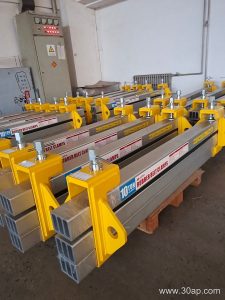
Whatever the site, the pulley should be checked against the conveyor bracket and frame dimensions during planning. A drum that fits the belt but not the bracket footprint creates costly rework. Matching the pulley to the conveyor pulley standard used in the plant also simplifies spare parts stocking.
Buyer Checklist
- Confirm the position: bend, snub or tension, not drive or tail.
- State belt width, belt type and calculated tension at that point.
- Specify face width, shell diameter and shaft diameter separately.
- Decide on surface: plain, rubber lagged or patterned, with thickness such as 10 or 12 mm if lagging is needed.
- Agree on bearing type, sealing and lubrication access.
- Check bracket and frame interfaces before ordering.
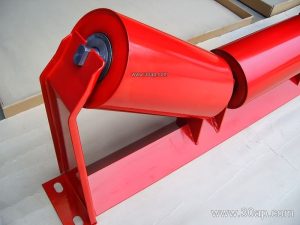
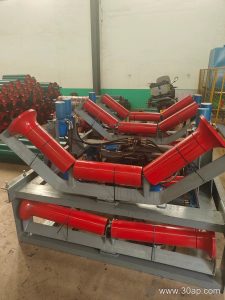
For broader conveyor components, including conveyor idler roller sets and the belt itself, keep the turning pulley specification consistent with the rest of the system so that tracking, tension and service life stay predictable.