What a Three-Roll Idler Bracket Does
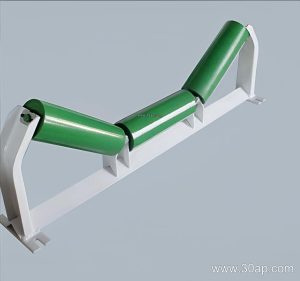
A three-roll idler bracket is the steel support that holds three idler rollers in a troughed arrangement under the carrying side of a conveyor belt. The two outer rolls sit at an angle, lifting the belt edges so bulk material stays centered during travel. This assembly is also called a troughing idler bracket or troughing frame, and it is one of the most common components on a bulk handling line, from a quarry conveyor to a power plant coal yard.
The bracket does not move material by itself. It positions the idler rollers so they can support the belt and the load. When the geometry is right, the belt runs smoothly and the rollers wear evenly. When it is wrong, the belt may mistrack, spill material, or wear along one edge.
Construction and Materials
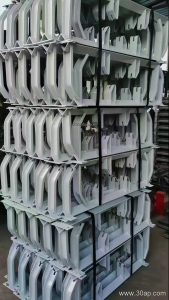
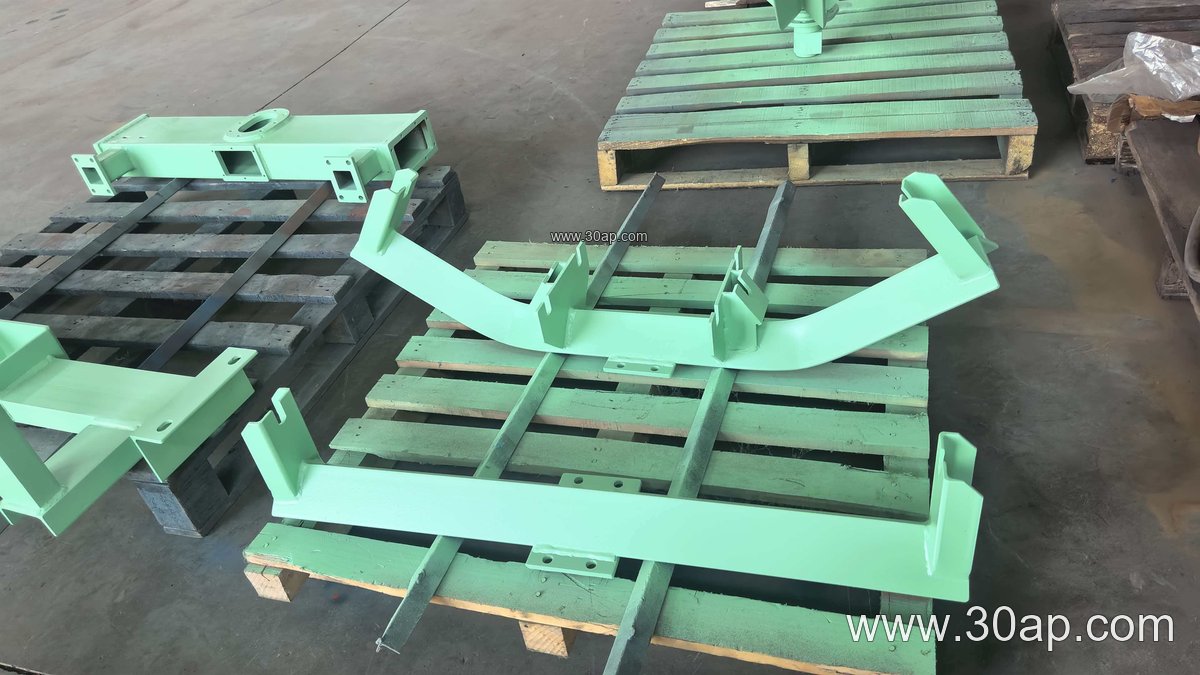
Most three-roll idler brackets are fabricated from angle steel, channel steel, or folded steel plate. The frame usually includes a cross beam, two inclined side arms, and mounting slots or holes for the idler shafts. Welded or bolted designs both exist, and bolt-on side arms are useful where the trough angle may need to change later.
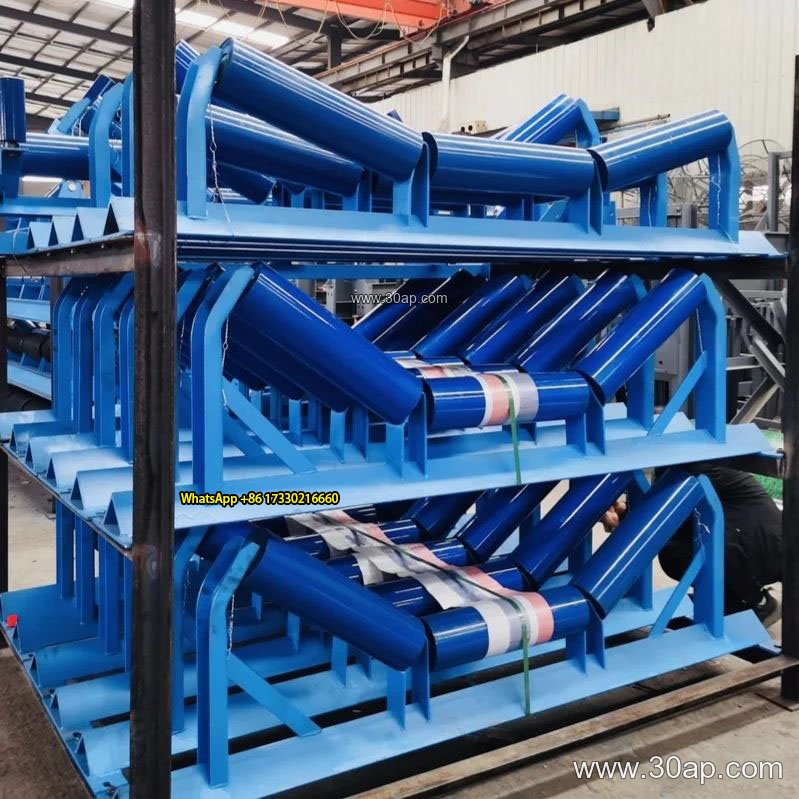
Common trough angles are 20, 30, 35, and 45 degrees. Adjustable brackets allow the outer arms to be set within that range. A slight forward tilt of about 1.5 to 2 degrees is sometimes built in to help the belt self-center. The correct angle depends on belt width, material characteristics, and the conveyor’s design speed, not on a single fixed rule.
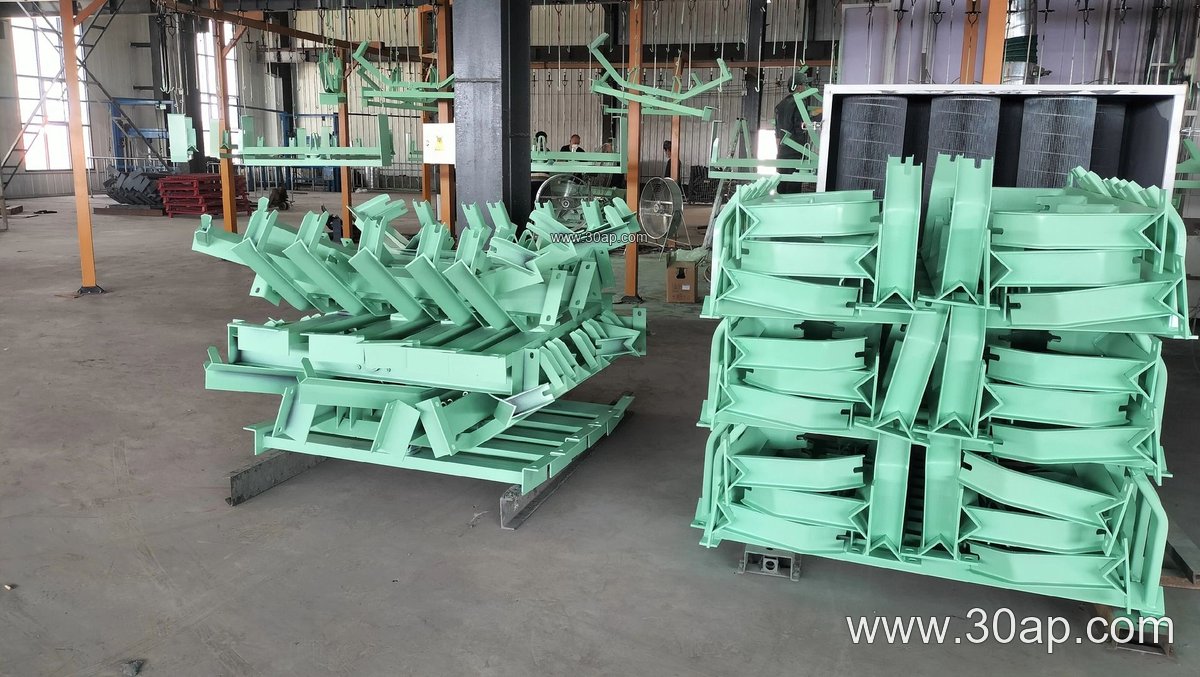
Typical Reference Dimensions
The table below shows common reference combinations for matching a bracket to belt width and roller diameter. These are examples, not fixed supply commitments. Actual hole spacing and beam length are determined by the conveyor design.
| Belt width | Common trough angle | Typical roller diameter |
|---|---|---|
| B650 | 30 degrees | Ø89 mm |
| B800 | 35 degrees | Ø108 mm |
| B1000 | 35 degrees | Ø108 mm |
| B1200 | 45 degrees | Ø133 mm |
| B1400 | 35 to 45 degrees | Ø133 mm |
| B1600 | 35 to 45 degrees | Ø159 mm |
| B1800 | 35 to 45 degrees | Ø159 mm |
| B2000 | 35 to 45 degrees | Ø194 mm |
On a wide conveyor, a 45 degree trough can increase capacity but also raises the load on the belt edges. A narrower belt may run well at 30 degrees. The bracket, the idler roller, and the conveyor belt should be selected together.
Where It Fits on the Conveyor
Three-roll idler brackets are used mainly on the carrying side. They are common in stone crushing lines, sand and gravel plants, cement works, and port bulk terminals. In a coal mine or a thermal power plant, they support the loaded belt between the tail and head areas. They are distinct from drive, tail, and bend pulleys, which transmit motion or change belt direction. The bracket does not replace a pulley, and the two should not be confused during maintenance planning.
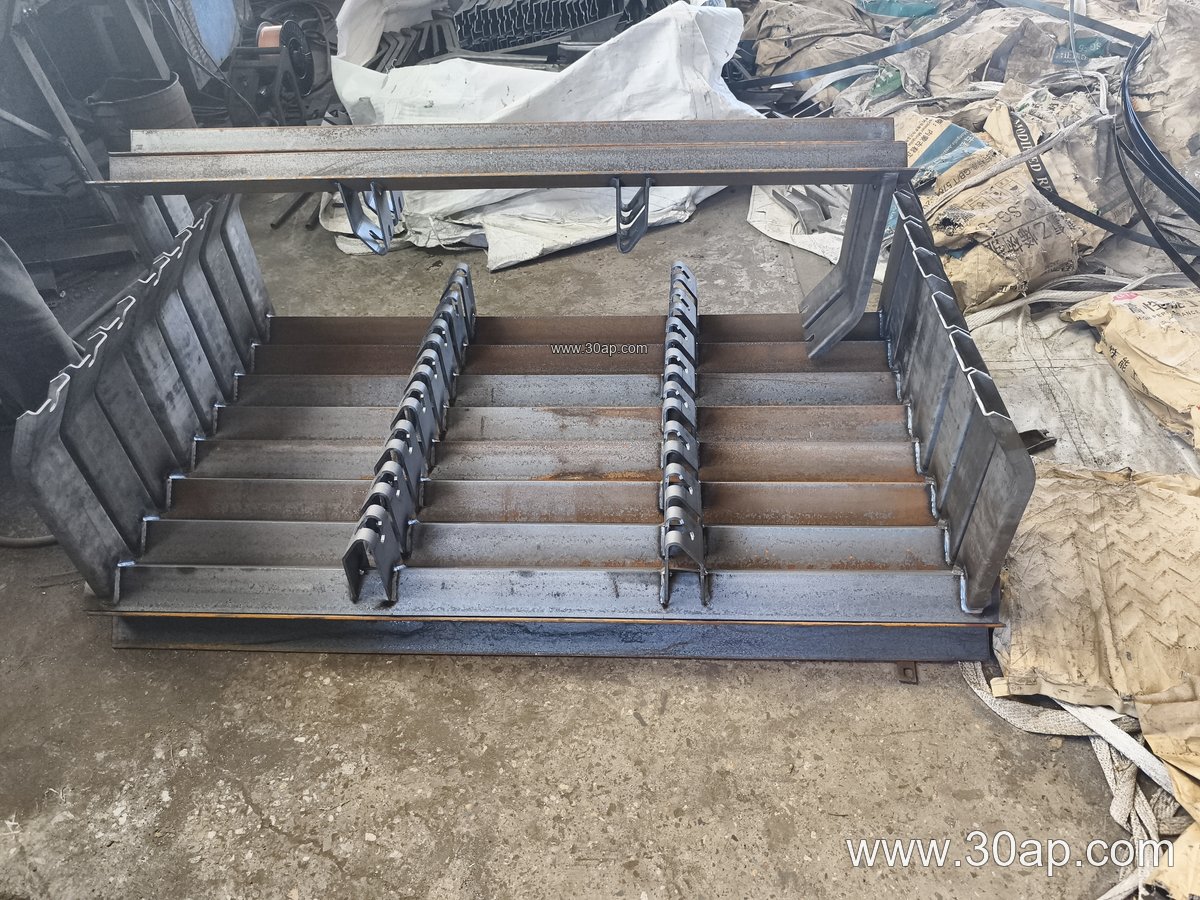
The bracket also works with the belt type. A heavy-duty mining conveyor belt carrying iron ore may need a robust frame with larger rollers, while a pipe conveyor belt uses different idler geometry entirely. In dusty or wet conditions, a self-aligning or training bracket can help control mistracking.
Buyer Checklist
- Confirm belt width, trough angle, and roller diameter before ordering.
- Ask whether the bracket is fixed or adjustable.
- Check material thickness and finish for the site environment.
- Match mounting hole spacing to the conveyor stringer design.
- Consider the belt construction, such as an EP conveyor belt, flame retardant conveyor belt, or abrasion resistant conveyor belt, when setting loads and maintenance intervals.
A well-matched three-roll idler bracket keeps idler rollers aligned, reduces belt edge wear, and supports steady material flow. Buyers should treat published dimensions as reference data and confirm the final geometry with the conveyor designer or a trusted supplier.