What a Stainless Steel Pulley Is
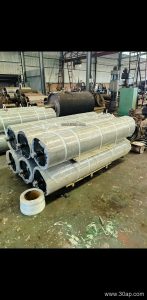
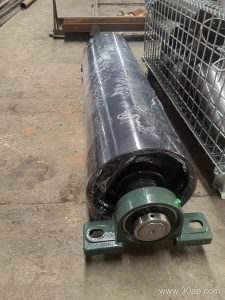
A stainless steel pulley is a conveyor pulley whose shell, end discs, and often the shaft are made from stainless steel rather than painted carbon steel. It carries and guides the conveyor belt, transmits drive torque, or changes belt direction in a conveyor system. In wet, salty, or chemically exposed areas, the stainless construction slows corrosion and keeps the pulley surface stable, which matters when a rubber conveyor belt or an EP conveyor belt runs day after day in a washdown zone or near the sea.
Buyers sometimes use the terms stainless steel roller or stainless steel drum for the same item, but in a conveyor line the pulley is the larger rotating component at the head, tail, or bend position, while the idler roller supports the belt along the carrying run.
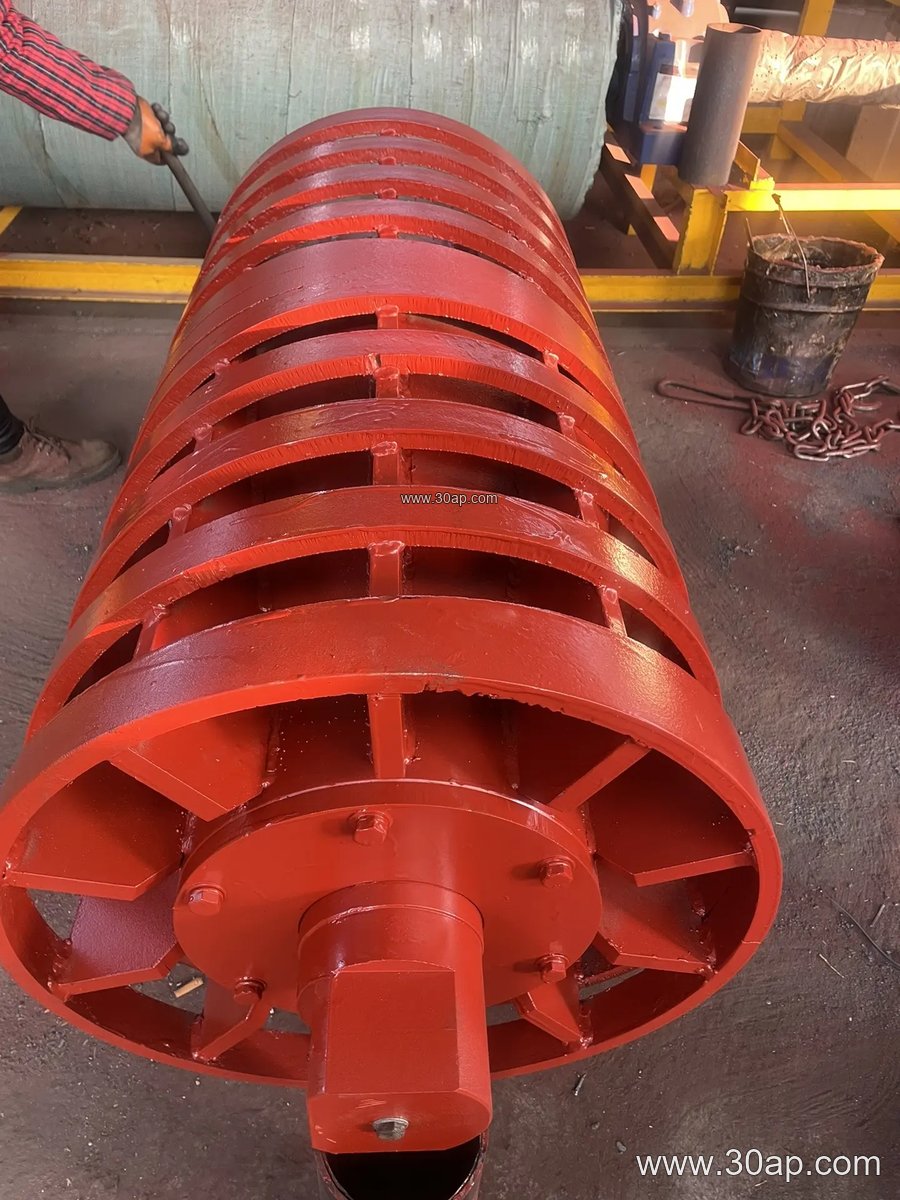
How It Is Built
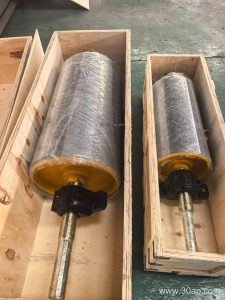
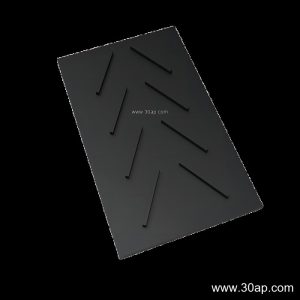
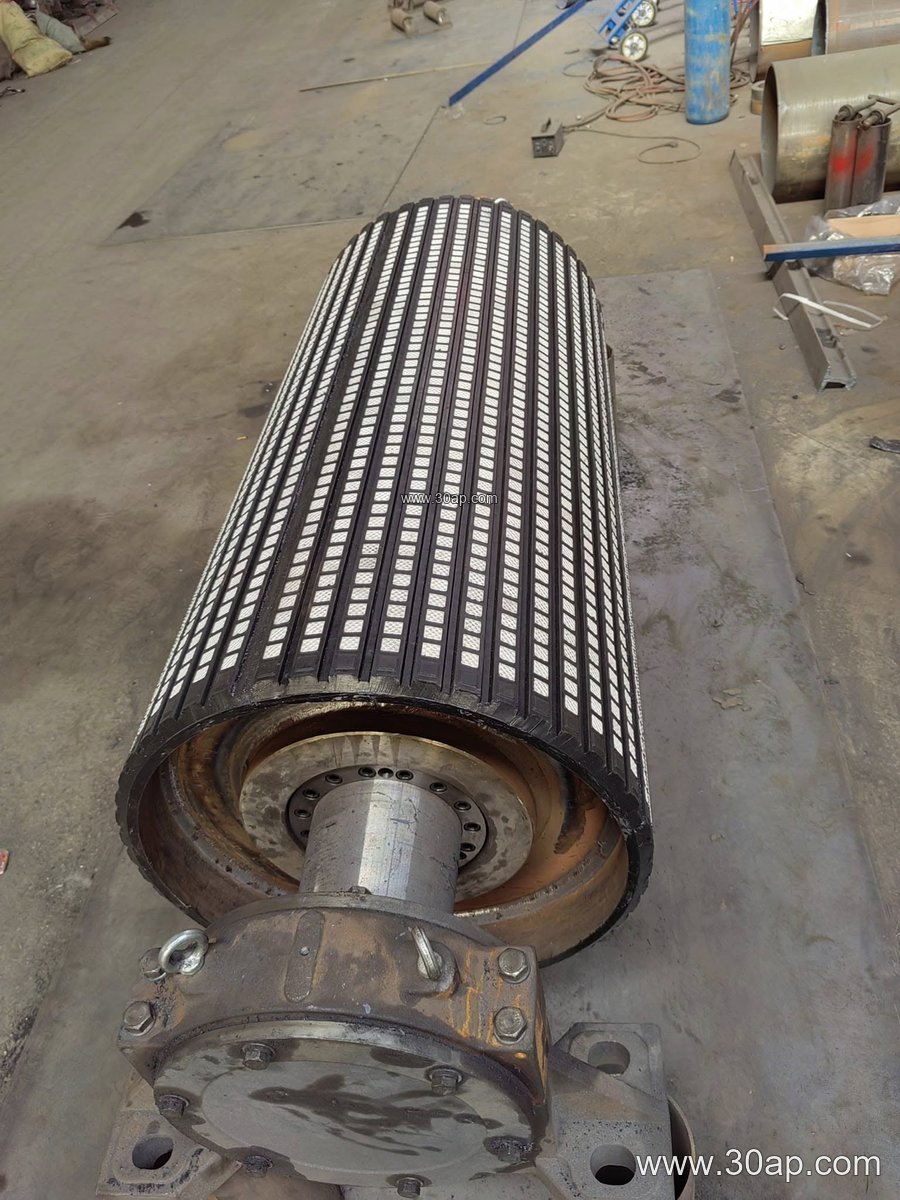
The pulley body usually combines a rolled stainless shell, two end discs, a hub, and a shaft. Welding quality and balance matter because an unbalanced shell can shorten bearing life and wear the conveyor belt edge. Surface options include plain finish, cast rubber, cold-bonded rubber, hot-vulcanized rubber, diamond grooving, herringbone grooving, and ceramic lagging. Lagging thickness is commonly 8, 10, 12, 15, or 20 mm, selected by grip demand rather than by belt width alone.
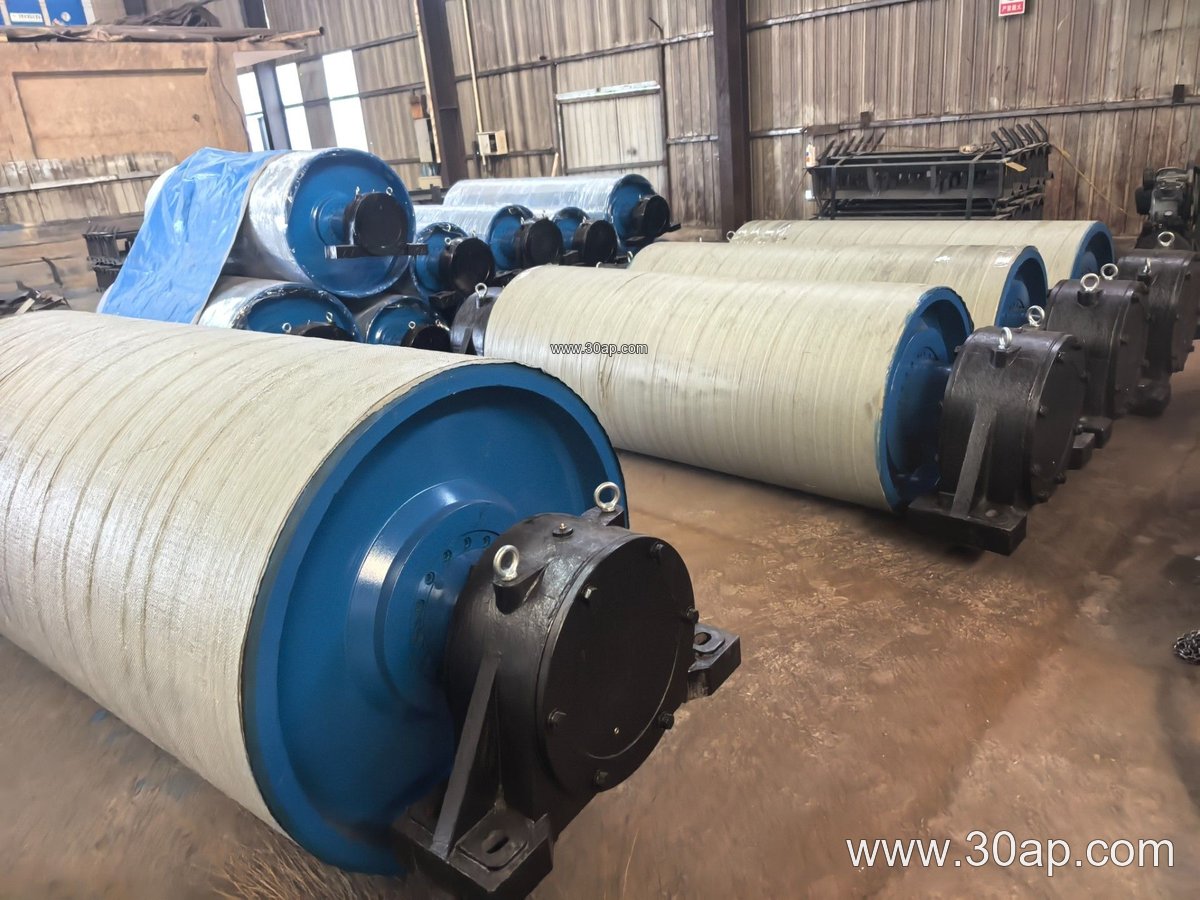
Stainless grades are chosen for the environment: a food grade conveyor belt line may need a different grade from a fertilizer or chemical plant. The shaft diameter is set by torque and load, with common sizes such as Ø50, Ø60, Ø80, Ø100, Ø120, Ø160, and Ø200 mm. No single shaft size should be assumed from belt width.
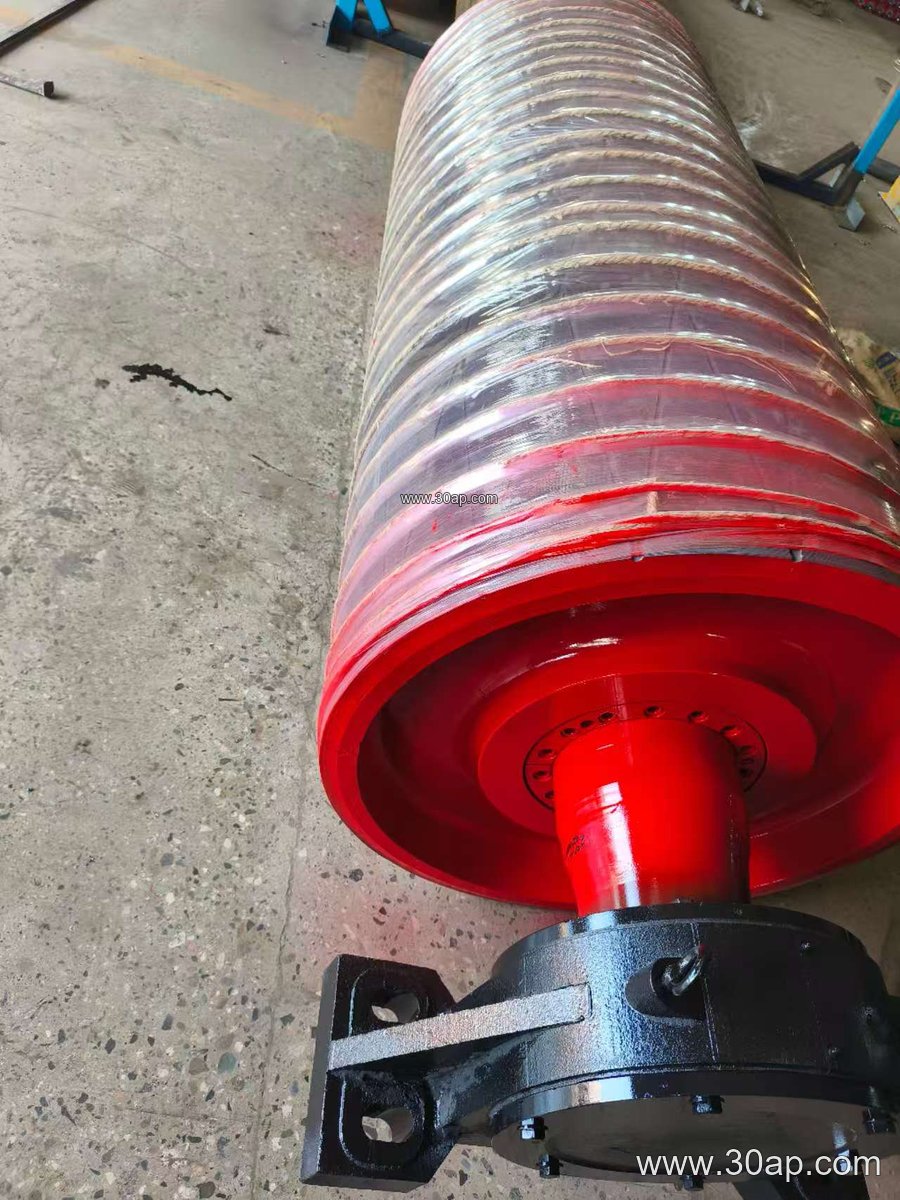
Where It Fits in the Line
Position decides the duty. A drive pulley transmits power and often carries lagging; a tail pulley returns the belt; a bend pulley changes direction; a take-up pulley maintains tension. These are not interchangeable names, and a stainless steel pulley ordered for one position may not suit another. In a quarry, a wash plant, a port bulk terminal, or a fertilizer handling line, stainless pulleys are often chosen where wash water, dust slurry, or salt air attacks ordinary steel.
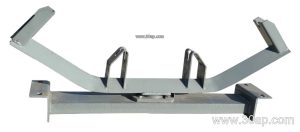
They work alongside conveyor brackets, conveyor frames, and idler rollers. On a long overland line with a steel cord conveyor belt, the pulleys must match the belt tension and training needs; on a short aggregate conveyor belt, a lighter stainless unit may be enough. A flame retardant conveyor belt or heat resistant conveyor belt brings its own temperature limits, so the pulley lagging and bearing seals should be checked against the belt rating.
Common Sizes and Surface Forms
The table below shows reference combinations, not fixed rules. Shell width is usually a little wider than the belt, and diameter grows with tension and wrap angle.
| Belt width | Typical shell width | Example diameter |
|---|---|---|
| B400 | about 500 mm | Ø200–Ø320 |
| B650 | about 750 mm | Ø315–Ø500 |
| B800 | about 950 mm | Ø400–Ø630 |
| B1000 | about 1150 mm | Ø500–Ø800 |
| B1200 | about 1400 mm | Ø630–Ø1000 |
| B1400 | about 1600 mm | Ø800–Ø1250 |
| B1600 | about 1800 mm | Ø1000–Ø1400 |
Typical shaft sizes run from Ø50 to Ø200 mm depending on load. A B1200 × Ø1000 drive pulley and a B800 × Ø500 tail pulley are both reasonable examples, but they are not universal matches.
Buyer Checklist
- Confirm the pulley position: drive, tail, bend, take-up, or snub.
- State belt type and duty, such as abrasion resistant conveyor belt in a crusher line or oil resistant conveyor belt in a recycling plant.
- Give belt width and required face width, plus the actual belt tension.
- Specify lagging type and thickness if grip or wear protection is needed.
- Check stainless grade against the site environment and cleaning method.
- Ask for balancing and runout data, since vibration affects both bearing and belt life.
For an underground coal mining conveyor belt or a coal mining conveyor belt system, fire safety rules may force a flame retardant conveyor belt and specific pulley materials. In a cement plant or power plant coal yard, dust and heat are the main concerns. Matching the stainless steel pulley to the belt, the load, and the location is more reliable than choosing by one dimension.