What a Mining Belt Conveyor Pulley Does
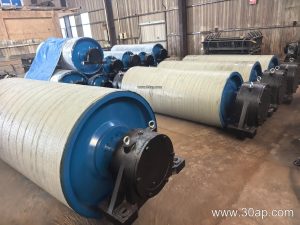
A mining belt conveyor pulley is the rotating drum that carries, drives, or redirects the conveyor belt in a bulk material handling system. In a coal mine, a quarry, or a cement plant, these drums sit at the head, tail, take-up, and bend positions of the conveyor frame. The head or drive pulley transfers torque from the gearbox to the belt through friction between the lagged shell and the belt cover, while the tail pulley guides the return strand and helps maintain belt tracking. Because the load can include sharp rock, wet ore, or hot clinker, the drum must be built for abrasion, shock, and continuous duty.
The same assembly is often called a conveyor pulley or a conveyor drum. In Chinese-linked supply chains, buyers may also see it referred to as a 滚筒. Within this family, drive pulleys, tail pulleys, and bend pulleys are separate positions with separate design duties, and they should not be treated as interchangeable parts.
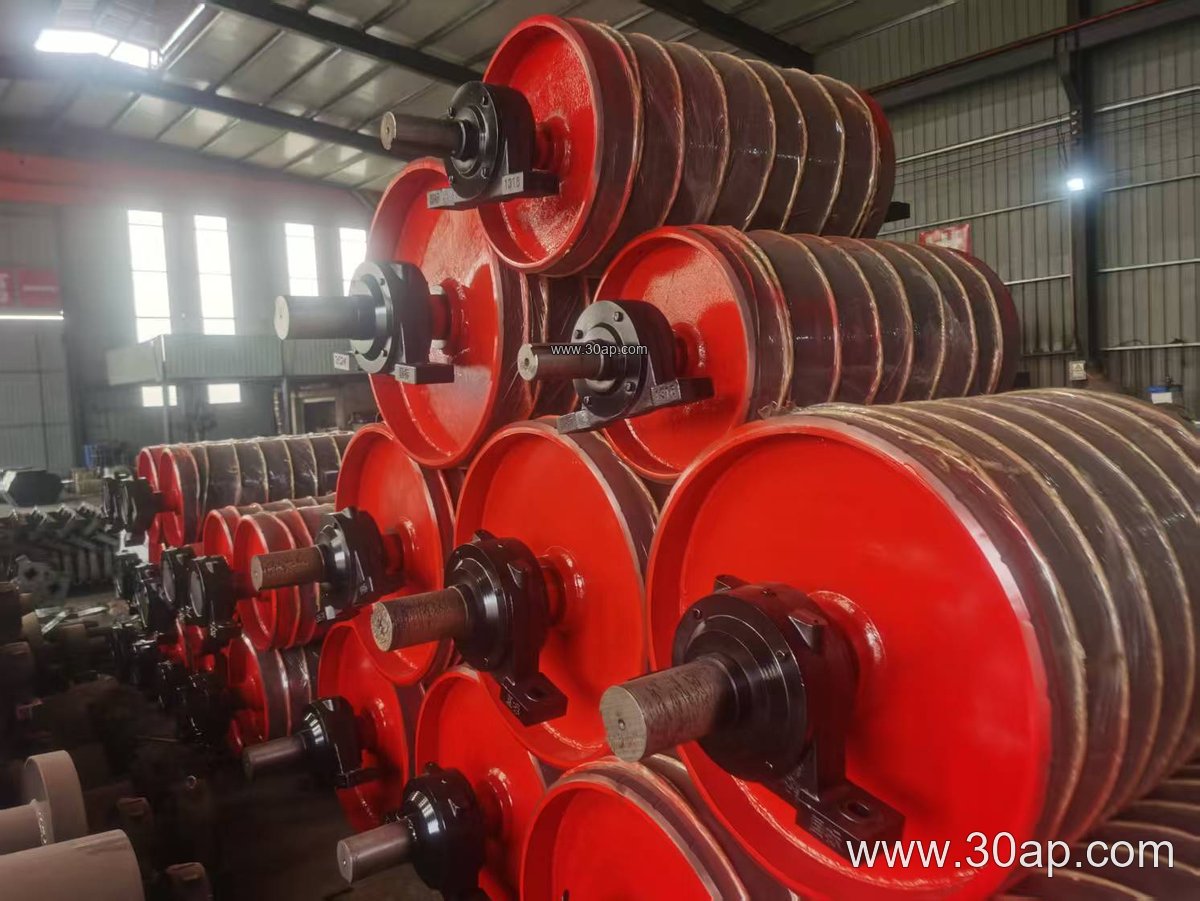
Construction and Surface Options
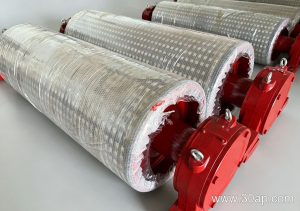
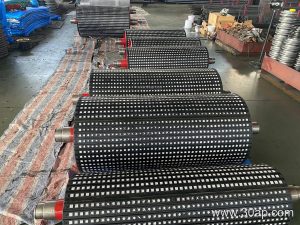
A typical heavy-duty drum uses a rolled steel shell, welded end discs, a shaft, and bearing housings mounted in conveyor brackets. The shell is machined to keep the belt centered, and the surface is finished with plain steel or lagging. Lagging choices include hot-vulcanized rubber, cold-bonded rubber, cast rubber, diamond groove, herringbone, and ceramic lagging, usually in thicknesses such as 8, 10, 12, 15, or 20 mm. Diamond or herringbone lagging helps grip a wet or dusty belt, while ceramic tiles suit high-slip drive positions on abrasive ore lines.
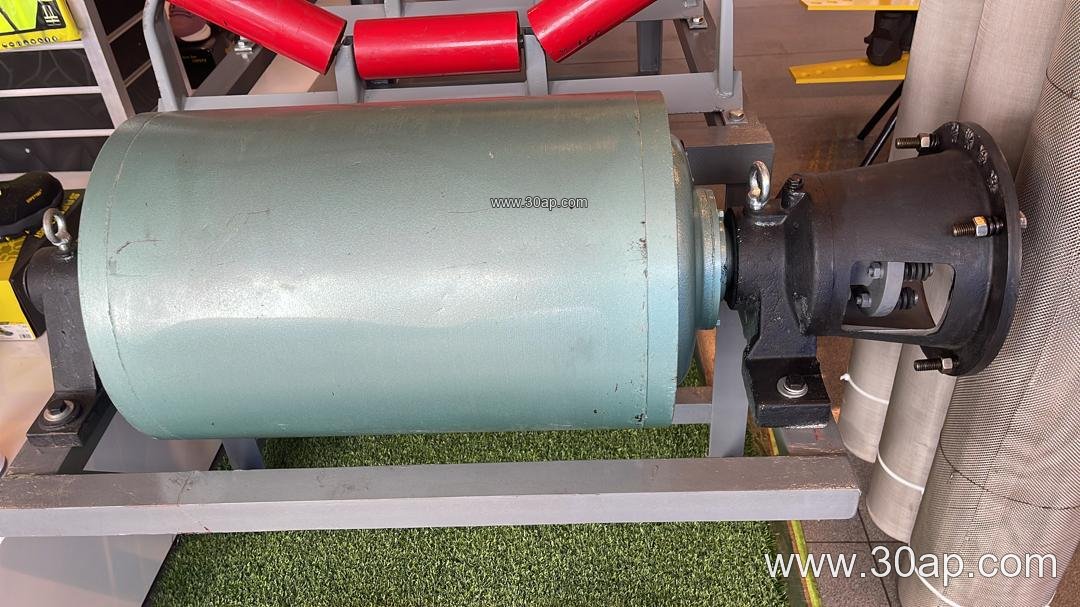
Shaft diameter is determined by torque and load, not by belt width alone. Common shaft sizes range from Ø50 up to Ø200, and a larger drive pulley may use a larger shaft than a bend pulley on the same conveyor. Shell diameter commonly ranges from Ø200 to Ø1800, with face width usually a little wider than the belt, for example B800 roughly 950 mm and B1200 roughly 1400 mm. A B1200 × Ø1000 drive pulley and a B800 × Ø500 tail pulley are both normal combinations, and one belt width can match several diameters depending on tension and wrap angle.
Where It Fits in the Plant
In a coal washing plant or underground coal mining conveyor, flame retardant and anti-static belting is common, and the drum lagging must work with that cover without building up static. In an iron ore or copper ore line, a high abrasion resistant conveyor belt pairs with ceramic or thick rubber lagging at the drive. In a power plant coal yard, a heat resistant conveyor belt may run near hot ash areas, and the pulley bearings need heat-tolerant grease. In a sand and gravel plant, an EP conveyor belt or NN conveyor belt on a short incline often uses a diamond-lagged tail pulley to reduce slip.
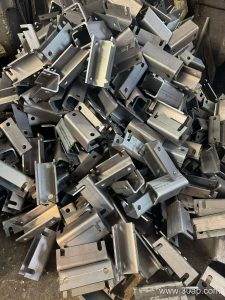
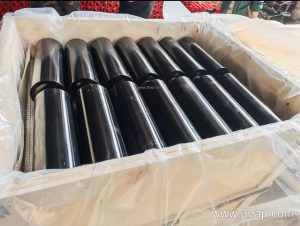
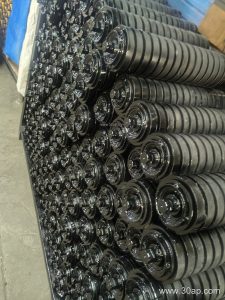
The drum also works beside the idler roller, the conveyor bracket, and the belt itself. A misaligned pulley can wear the belt edge faster than any idler, so tracking and crown are part of the same maintenance picture.
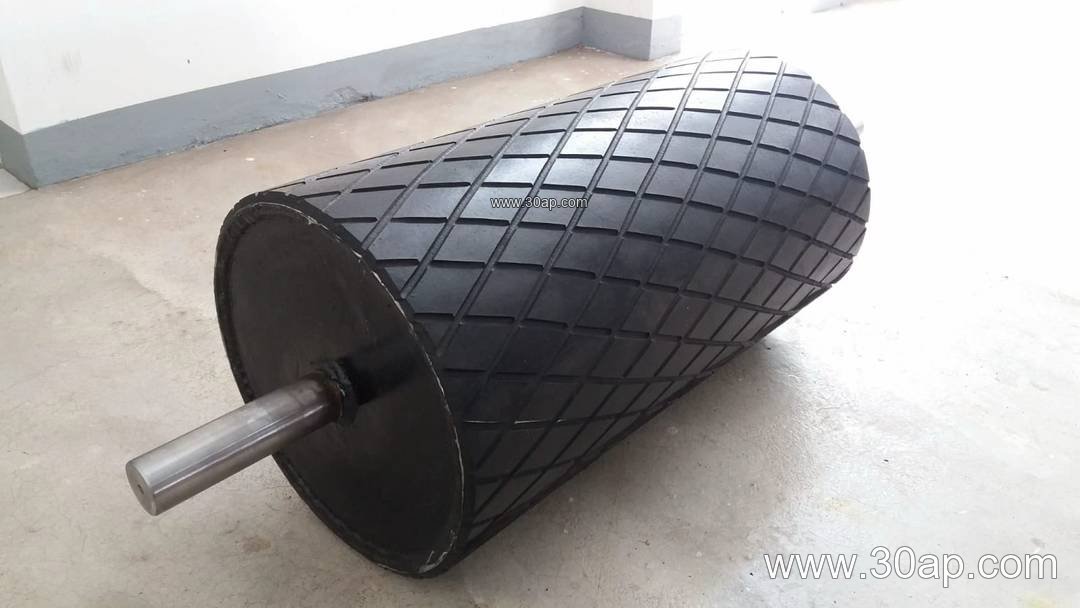
Selection and Maintenance Notes
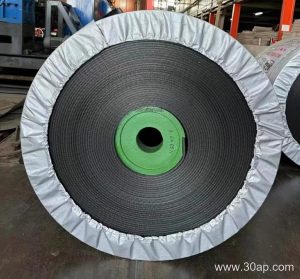
Buyers should confirm the belt width, the maximum belt tension, the wrap angle, the duty cycle, and the ambient conditions before choosing a drive, tail, or bend pulley. For a steep incline or a heavy ore load, a fabric core conveyor belt such as EP200 or EP300 may need a larger drive drum than a lighter conveyor belt. For long overland lines, a steel cord conveyor belt like ST1600 or ST2000 usually calls for a larger diameter drive pulley to limit bending stress.
- Check lagging wear at the drive pulley every shutdown; smooth lagging loses grip on wet coal or ore.
- Inspect bearing temperature and grease condition, especially on dusty quarry or cement lines.
- Verify belt tracking after any pulley replacement, and check that the drum face is square to the frame.
- Match lagging thickness and pattern to the belt cover, not only to the drum size.
For more on compatible belting and conveyor components, see the product ranges at conveyor belt and idler roller pages, and compare drum options at conveyor pulley. A well-matched mining belt conveyor pulley keeps the belt running straight, protects the splice, and reduces unplanned stops in the toughest bulk handling environments.