What a High-Strength Idler Does on a Conveyor
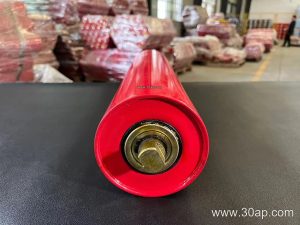
A high-strength idler is a carrying or return roller built to hold up under heavy loads, long spans and continuous duty. On a bulk handling line, the idler roller supports the conveyor belt and the material on it, so the roller shell, shaft and bearing housing all have to work together. When a line moves high-density ore, coarse rock or wet aggregate, a standard roller can deflect, wear through the shell or lose its seal early. A high-strength idler is specified for those positions where the load per roller is high and downtime is expensive.
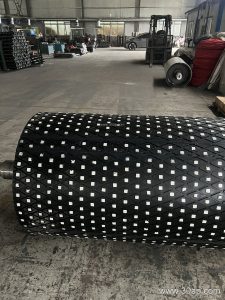
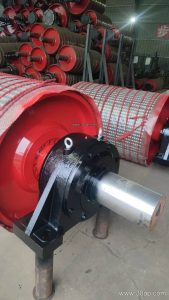
The product is still an idler roller, not a drive component. Drive pulleys, tail pulleys and bend pulleys are separate parts of the conveyor and are not interchangeable with a roller. A high-strength idler only carries the belt; the conveyor pulley pulls it.
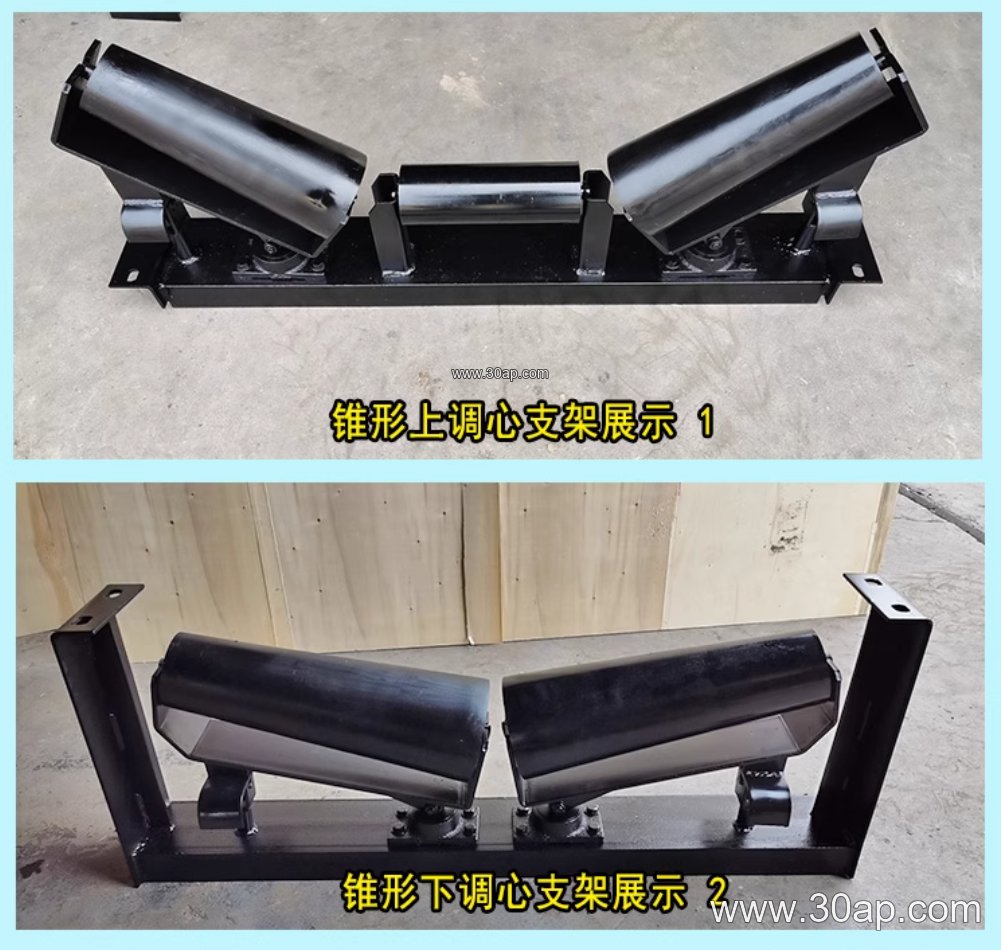
How the Roller Is Built
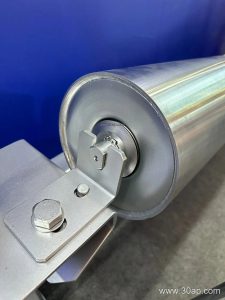
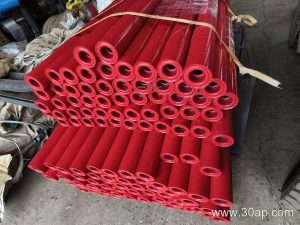
Construction starts with a heavier wall tube, usually steel, and a shaft sized to the load rather than to the belt width alone. Bearing seats are machined, and the bearing housing is sealed against dust and water. Roller end caps and the seal arrangement decide much of the service life in a quarry or a coal preparation plant, because fine grit is the main enemy of a bearing.
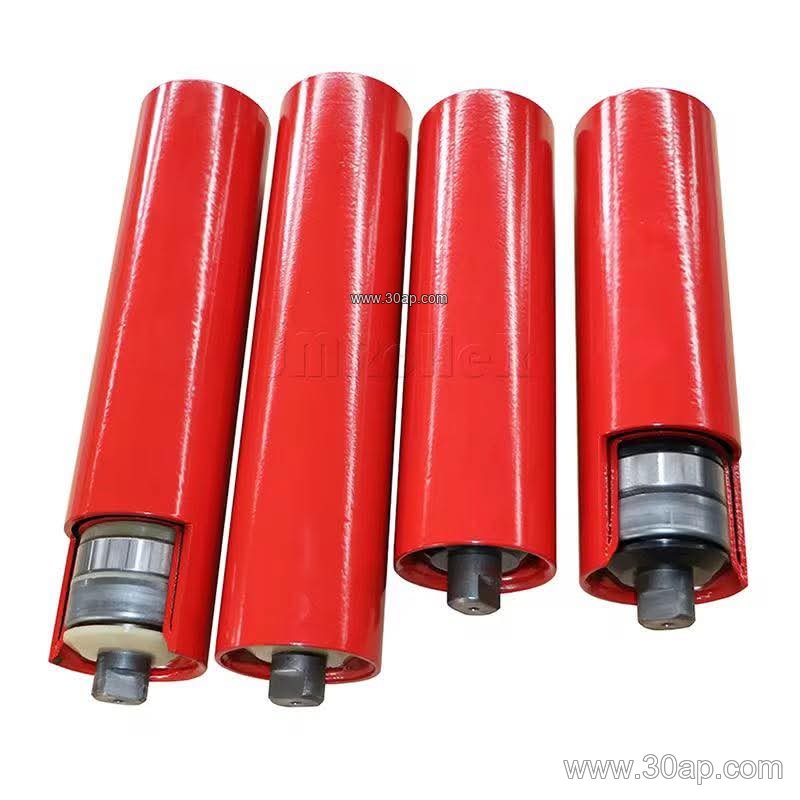
Common bearing numbers used in these rollers include 6204, 6205, 6305, 6306, 6308 and 6310. A given roller diameter does not lock you to one bearing number; the choice follows load, speed and seal design. Shell surfaces may be plain steel, nylon, ceramic or rubber rings, and the surface form should match the duty. Rubber rings help where impact is heavy, while ceramic or nylon can suit sticky or abrasive fines.
Where High-Strength Idlers Fit
These rollers appear in the load zone of a crusher discharge, on long overland runs, and at transfer points where the belt takes a repeated hit. In an iron ore or copper ore terminal, the carrying side often needs a robust idler roller with a thick shell and a good seal. In a cement plant or a power plant coal yard, the same logic applies wherever dust and fines are constant.
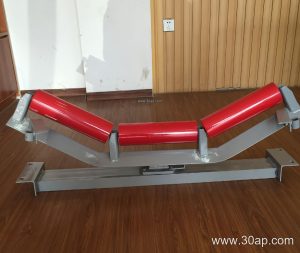
A high-strength idler is also a sensible choice under a heavy-duty mining conveyor belt or a steel cord conveyor belt, where the belt itself is stiff and the roller spacing is wide. The roller and the belt have to match: an abrasion resistant conveyor belt may tolerate coarse rock, but a weak roller underneath will still fail first. In sand and gravel plants, crusher conveyor belts and aggregate conveyor belts often use three-roll trough sets in the impact zone, and the center roll takes the hardest load.
Trough Angles, Roll Lengths and Belt Widths
Trough angle affects how the belt sits and how the load is shared. Common trough angles are 20, 30, 35 and 45 degrees. A three-roll trough set is the usual form for bulk material, while two-roll and single-roll arrangements appear in narrower or special positions. Roll length follows belt width, trough angle and roll set design, and side rolls and center rolls can differ.
The table below gives common examples only. They are reference figures, not fixed matches, and final dimensions are set by design.
| Belt width | Typical roll length, three-roll trough | Common idler diameter range |
|---|---|---|
| B500 | about 200 mm | 63 to 89 mm |
| B650 | about 250 mm | 76 to 108 mm |
| B800 | about 315 mm | 89 to 133 mm |
| B1000 | about 380 mm | 108 to 159 mm |
| B1200 | about 465 mm | 127 to 178 mm |
| B1400 | about 530 mm | 133 to 194 mm |
| B1600 | about 600 mm | 159 to 219 mm |
| B1800 | about 670 mm | 159 to 219 mm |
| B2000 | about 750 mm | 178 to 219 mm |
Roller diameters commonly range from Ø63 to Ø219. A wider belt does not automatically mean one fixed shaft diameter; shaft size depends on load, span and bearing selection. Buyers should ask for the load rating per roller and the seal type rather than choosing by belt width alone.
Buyer Checklist
- Confirm the duty: carrying, return, impact or transition. A high-strength idler in the wrong position wastes money.
- Check the shell wall, shaft size and bearing housing against the actual load per roller.
- Match the seal to the environment: dust, washdown, humidity or fines.
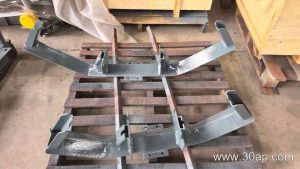
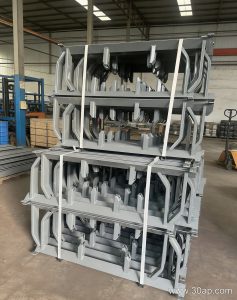
- Verify roller length and trough angle against the belt and the conveyor bracket.
- Ask how the roller is balanced and whether it runs true at line speed.
- Keep spare rollers of the same specification on site, because mixing dimensions in one frame set causes belt tracking problems.
On a well-run line, a high-strength idler is a wear part chosen for the hardest positions, not for every position. Pairing it correctly with the conveyor belt, the conveyor bracket and the surrounding conveyor pulley layout gives the longest, quietest service.